Baby Laundry Detergents: Are Specialized Formulas Really the Safest Choice?
A recent investigation reveals that baby-specific laundry detergents may contain harmful ingredients, challenging the notion that they are the safest choice for infants. Learn about safer alternatives and tips for protecting your child's skin.
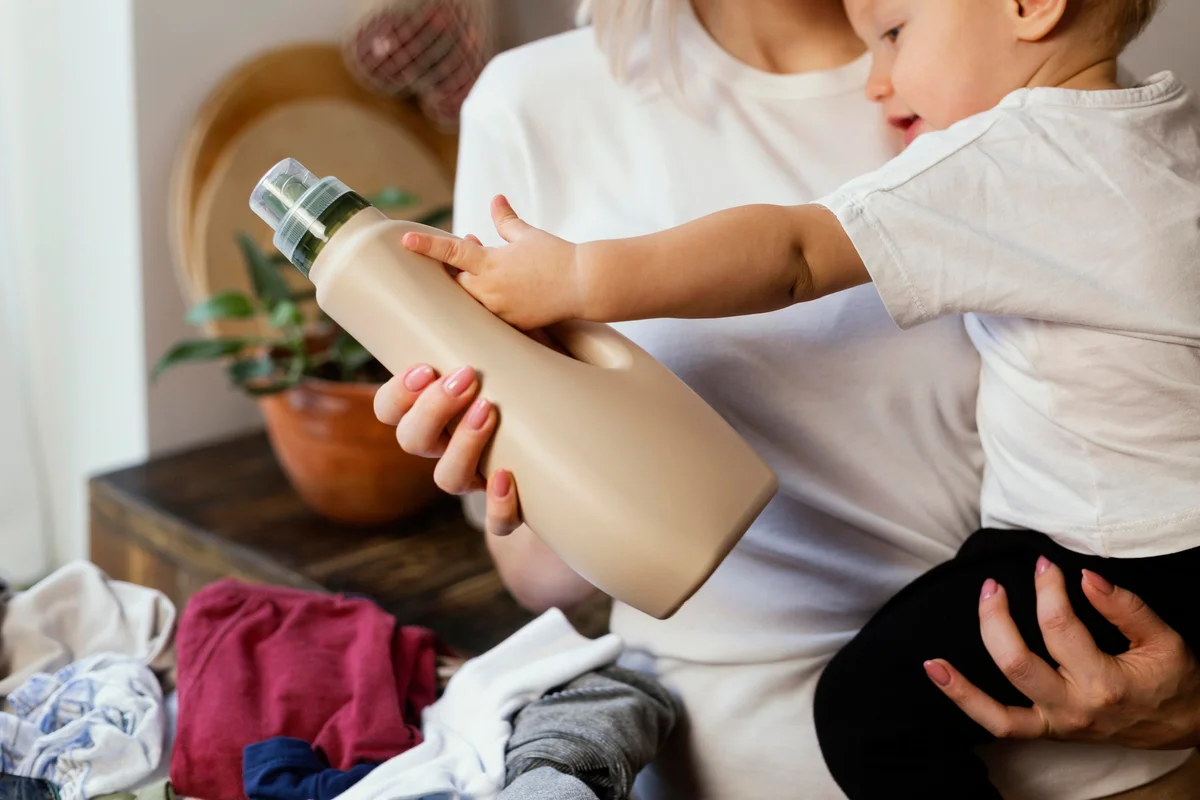
The arrival of a child often shifts our priorities, particularly when it comes to shopping for essentials. Many parents instinctively reach for products labeled "baby-specific" to safeguard their newborn's delicate skin. However, a recent investigation by 60 Millions de consommateurs challenges this notion, revealing that these products may contain some questionable ingredients.
Marketing Promises Do Not Guarantee Infant Skin Safety
Store shelves are filled with reassuring claims such as "hypoallergenic", "pediatrician tested", and "free from allergens". These soft-colored labels suggest complete safety for our little ones. Yet, the report published in February 2026 highlights a sobering reality: the term "baby" lacks strict legal definition and is primarily a marketing tool rather than a guarantee of purity.
An infant's skin is significantly thinner and more permeable than that of an adult. As their hydrolipidic film is not fully developed, it allows chemicals to penetrate more easily. By using products laden with irritating surfactants or synthetic fragrances, we inadvertently expose our children to risks such as rashes, eczema, or long-term allergic sensitization.
Ménag’Score Reveals Concerning Ingredients in Our Detergents
To provide clarity, experts evaluated several brands using the Ménag’Score. This scoring system rates products from A to E, assessing health factors at 70% and environmental impact at 30%. The findings are far from exemplary for leading brands. While some perform well, others receive dismal scores due to their ingredient compositions.
Certain formulas were found to contain sodium pyrithione, an irritating agent banned in cosmetics. Others include phenoxyethanol or preservatives from the isothiazolinone family, known for their high allergenic potential. It becomes even more challenging for parents as regulations do not require manufacturers to disclose all ingredients on packaging. To uncover the truth about what’s in your detergent, one often has to visit the brand's website.
An Unexpected Winner for Gentleness
Surprisingly, the highest score in the ranking was awarded not to a "baby-specific" detergent but to one designed for sensitive skin. The Briochin Peaux Sensibles detergent achieved a Ménag’Score of A, noted for its fragrance-free formulation and excellent balance between effectiveness and environmental respect.
Among products tailored for babies, L’Arbre Vert Bébé leads the ranking with an overall score of B. Although it still contains some debated surfactants and a bit of fragrance, it remains a satisfactory option compared to its competitors. Conversely, popular brands like Skip Peaux Sensibles and Persavon Bébé lag behind with scores ranging from C to E. These underperformers include substances deemed too harsh for daily use.
Simple Tips to Protect Your Child’s Skin
Experts recommend favoring formulas with the shortest ingredient lists possible. Fewer ingredients mean lower risks of skin reactions. It is also strongly advised to avoid scented detergents, as fragrances are among the leading causes of allergies in infants.
In practice, the use of fabric softeners is also discouraged. These products, often heavy in fragrances and surfactants, remain trapped in fabric fibers and come into direct contact with the skin throughout the day. To maintain the softness of clothing, adding a bit of white vinegar during the rinse cycle works wonders without any toxic risks. Lastly, be sure to follow the recommended dosages carefully: using more than necessary won’t enhance cleaning but will leave chemical residues within the fabric.