
Understanding the Ending of The Karate Kid: A Deeper Look
The Karate Kid, directed by John G. Avildsen, explores themes of personal growth and discipline through the journey of Daniel LaRusso. The film's ending highlights the significance of character over competition.
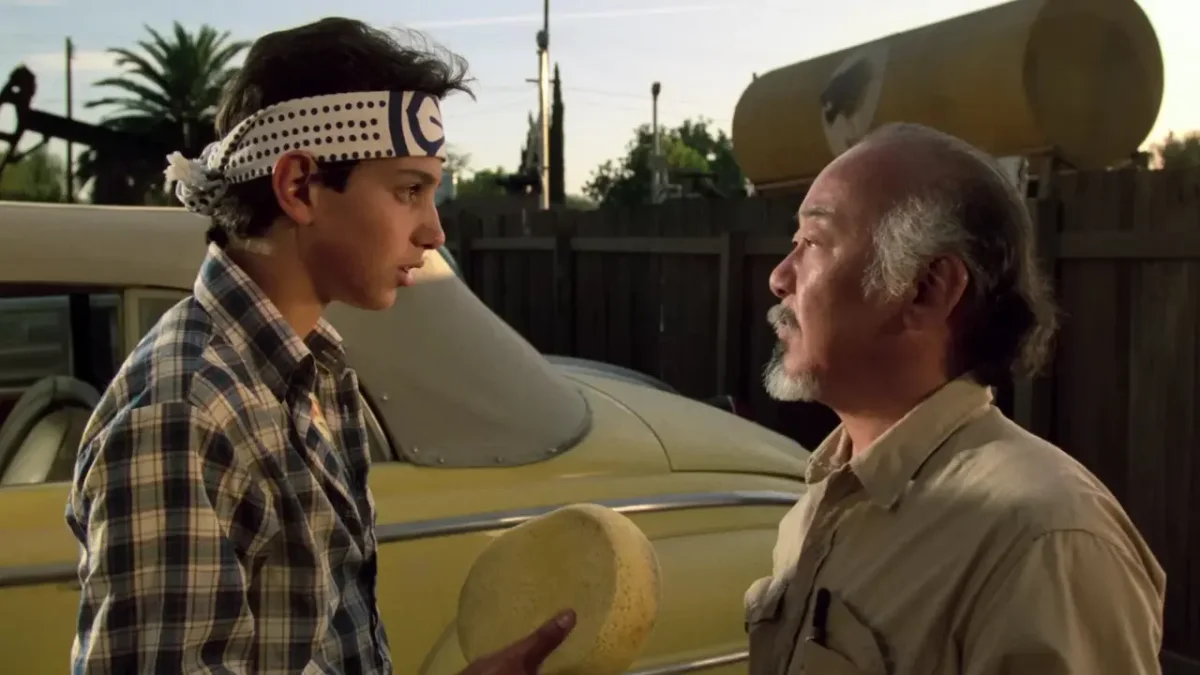
The release of The Karate Kid in 1984 marked a significant moment in cinema, transcending the realm of a mere sports film. Directed by John G. Avildsen, known for his work on Rocky, the movie narrates the journey of a teenager who must rebuild his identity in a challenging environment. It transforms a classic coming-of-age story into a profound exploration of discipline, respect, and self-control. The climactic tournament and the iconic "crane kick" serve as metaphors for an inner journey that emphasizes character over combat.
The film's conclusion has become one of the most memorable endings in cinematic history, resolving both the sports conflict and the moral dilemma. Daniel LaRusso's victory over Johnny Lawrence symbolizes not just his triumph over a rival but also the victory of a different philosophy of martial arts. To grasp the film's ending, one must view The Karate Kid as a clash between two opposing life philosophies, represented by Mr. Miyagi and John Kreese.
John G. Avildsen's Narrative of Growth Through Karate
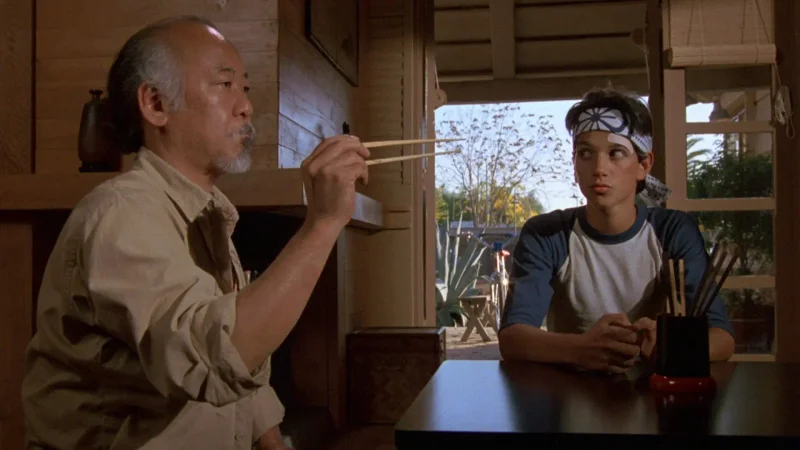
While The Karate Kid fits into the sports film genre of the 1980s, it prioritizes the protagonist's personal growth over the competitive aspect. Similar to Rocky, John G. Avildsen employs the language of sport to depict a maturation process, where each training session reflects a psychological transformation.
Upon arriving in Los Angeles from the East Coast, Daniel feels isolated, struggling to fit in and quickly becoming a target for the Cobra Kai students. His encounter with Mr. Miyagi drastically shifts his perspective, as the mentor teaches him not only combat techniques but also a different model of balance and awareness.
The famous training sequences, which involve seemingly trivial tasks like polishing cars, painting fences, and waxing floors, perfectly illustrate this philosophy. Initially, Daniel perceives these activities as exploitation, only to later realize they have unconsciously developed his muscle memory, coordination, and defensive skills.
Simultaneously, the human relationship between teacher and student deepens. Mr. Miyagi shares his own pain from losing his wife and son during World War II, demonstrating that the calm he embodies comes not from the absence of suffering but from the ability to navigate through it without being overwhelmed. This emotional layer makes his teachings far more profound than a simple karate course.
The Finale of The Karate Kid: Daniel's Victory and the Significance of the Crane Kick
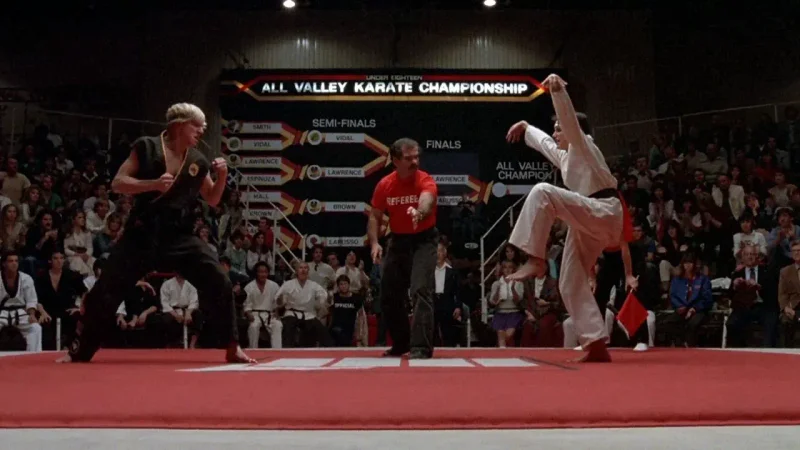
The climax unfolds at the All Valley Under 18 tournament, where Daniel surprises everyone by reaching the finals against Johnny Lawrence, the top student of Cobra Kai. This competition quickly becomes a battleground for the contrasting educational philosophies of their respective mentors.
After Daniel wins the semifinals, John Kreese instructs his student Bobby to illegally injure him, leading to Bobby's disqualification and Daniel sustaining a severe injury. This moment highlights a fracture within Cobra Kai, as even some students begin to recognize the unethical limits of Kreese's teachings.
In the locker room, the doctor declares Daniel unfit to continue. Although this seems like the rational choice, Daniel understands that withdrawing would allow his aggressors to claim victory through violence rather than merit. Mr. Miyagi uses his technique to temporarily alleviate Daniel's pain, ultimately leaving the decision to return to the mat up to him.
The final match is intense and closely contested. After Daniel surprises Johnny with an unexpected technique, Kreese orders Johnny to strike Daniel's already injured knee. Johnny complies, yet his expression reveals his internal conflict, recognizing that this action contradicts the true spirit of competition.
With the score tied at 2-2, Daniel suddenly adopts the crane stance, a move he previously observed during a beach training session. As Johnny attacks, Daniel executes the iconic flying kick, striking Johnny’s chin and scoring the decisive point to become champion.
However, the true significance of this victory unfolds moments later. Johnny hands the trophy to Daniel, publicly acknowledging his worth. This act signifies Johnny's personal transformation, a theme that later films would explore in greater depth.
The Philosophical Clash Between Mr. Miyagi and John Kreese
The film's true antagonist is not Johnny Lawrence but John Kreese. Johnny is a product of Kreese's upbringing, molded in an environment where victory is the only value, and any means are justified to achieve it.
In contrast, Mr. Miyagi advocates for a fundamentally different approach to martial arts. For him, karate is primarily about conflict avoidance, self-control, and maintaining inner balance. Fighting should always be a last resort, not the first impulse.
This dichotomy is evident throughout the tournament. Kreese views each match as a war to humiliate opponents, while Miyagi encourages Daniel to focus on himself, resisting anger or the desire for revenge.
Johnny gradually begins to understand this distinction. His discomfort while following Kreese's orders foreshadows his character development. When he presents the trophy to Daniel, he symbolically distances himself from the philosophy that shaped him.
The Crane Kick: More Than Just a Technique
Over the years, the crane kick has become one of the most iconic gestures in popular culture, often viewed as an unbeatable technique capable of ending a fight. However, the film assigns it a much deeper significance.
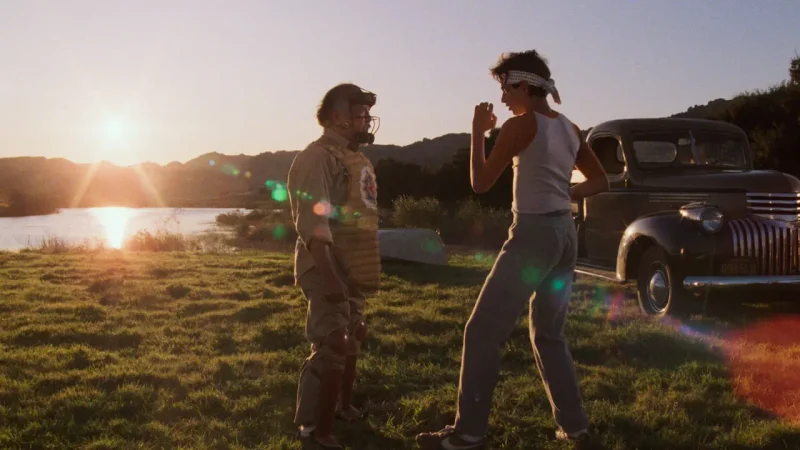
The crane position is first introduced during a beach scene where Daniel observes Mr. Miyagi executing it with perfect balance. At that moment, Daniel is not merely learning an offensive maneuver; he subconsciously absorbs a fundamental principle: stability arises from calmness and self-confidence.
When he decides to use this technique in the final, Daniel makes a mental choice. He embraces the risk, overcomes his fear of injury, and demonstrates that he has fully internalized his mentor’s teachings. The kick is effective because it encapsulates his entire journey.
Thus, the final gesture functions symbolically as well. Daniel's victory is not due to sheer physical strength but rather his ability to transform discipline, patience, and emotional control into a decisive action. It represents the culmination of everything he has learned from Miyagi.
The True Meaning of The Karate Kid's Ending: Personal Growth Over Victory
The ending of The Karate Kid resonates because it transcends a mere sports success narrative. While Daniel certainly wins the tournament, the most significant outcome is the person he has become throughout the journey. The insecure boy who arrived in Los Angeles evolves into a young man capable of facing challenges without compromising his values.
At the same time, Johnny undergoes a transformation. His final gesture signifies that even those raised under misguided principles can recognize the worth of their opponents and question the teachings they have received. This detail adds layers of complexity to the ending, which might be overlooked on a first viewing.
Mr. Miyagi's satisfied gaze as he watches Daniel lift the trophy encapsulates the essence of the film. The mentor understands that the true goal was never to win a tournament but to impart a different approach to life. Karate was merely the medium through which this transformation became possible.
This idea is what immortalizes the ending of The Karate Kid: true victory lies not in defeating an opponent but in becoming a better version of oneself while maintaining respect, balance, and humanity.
You may also like