
Adapting Black Soap for Oily and Dry Skin: A Comprehensive Guide
Understanding how to effectively use black soap on different skin types is crucial for optimal skin health. Misdiagnosing skin conditions can lead to adverse reactions. Learn how to adapt your black soap routine based on your skin's true needs.

Applying black soap to the face is a common practice aimed at unclogging pores, but many find that just days later, their skin feels tight, becomes red, or even produces more oil than before. The root of this issue often lies not in the product itself, but in a misdiagnosis of skin type: treating a shiny complexion as oily when it may simply be dehydrated. To effectively incorporate black soap and facial care into your routine, it's crucial to understand the true needs of your skin.
Oily Skin or Dehydrated Skin: Testing Before Using Black Soap
A shiny T-zone does not automatically indicate oily skin. Dehydration can cause the skin to overproduce sebum in an attempt to compensate for a lack of moisture. The visual outcome can be nearly identical: shine, enlarged pores, and blackheads. However, the treatments for these conditions are quite different.
To differentiate between the two, observe your skin in the morning before applying any products. True oily skin will exhibit a uniform oily film across the face, including the cheeks. Conversely, dehydrated skin may shine on the forehead and nose, but the cheeks could feel tight, possibly showing fine dryness lines when illuminated by side light.
Using black soap on dehydrated skin can exacerbate the issue. The purifying cleanse strips away the few remaining protective lipids, triggering even more sebum production. This creates a cycle where the skin appears increasingly oily while it is actually thirsty.
Avène emphasizes that a routine for oily skin should focus on cleansing, hydrating, and purifying, and neglecting hydration can paradoxically stimulate sebum production. This insight changes how one should integrate black soap into their facial care routine.

Using Cosmetic Black Soap on Oily Skin: Frequency and Proper Technique
When the skin is genuinely oily (with confirmed excess sebum, not just temporary shine), cosmetic black soap can be beneficial. It is essential to distinguish between household black soap, intended for cleaning purposes, and cosmetic black soap, which is formulated with olive or argan oil for skin use. The label should explicitly state that it is suitable for facial application.
The Correct Technique for the T-Zone
To use black soap, take a small amount and emulsify it with warm water in your palms. Gently massage the T-zone (forehead, nose, chin) in circular motions for about thirty seconds. It’s important not to exceed this time, as prolonged exposure may be suitable for the body in a hammam setting but can be too harsh for the face.
Rinse with warm water, avoiding hot water, as it can dilate pores and weaken the hydrolipid film, negating some benefits.
Recommended Frequency
Avène advises that a purifying scrub should not be used more than once a week to avoid irritating the skin. On the face, one application of black soap per week is sufficient if a gentle daily cleanser is already part of the routine. A maximum of two applications per week is reserved for very oily skin without sensitivity.
- Oily skin without sensitivity: once or twice a week, on the T-zone only or the entire face as needed.
- Combination skin: once a week, only on shiny areas, avoiding the cheeks.
- Dry or sensitive skin: should avoid black soap, as it strips too many lipids and weakens the skin barrier.
Dry Skin and Black Soap: What to Do (and What to Avoid)
Dry skin lacks both water and lipids. Black soap, with its cleansing properties, removes these protective lipids. The effect on dry skin is immediate: tightness, redness, and sometimes flaking can occur in the days following use.
Some black soaps enriched with argan oil or shea butter claim compatibility with dry skin. However, feedback on this varies. While the formulation may soften the contact, the cleansing mechanism remains the same: saponified agents dissolve skin fats.
If one wishes to use black soap on dry skin, limiting its use to the body and avoiding the face is the safest recommendation. The skin on the face is thinner and more reactive than that on the body. For arms or legs, a black soap scrub followed by rich hydration (body lotion, olive oil) generally works well for most skin types.
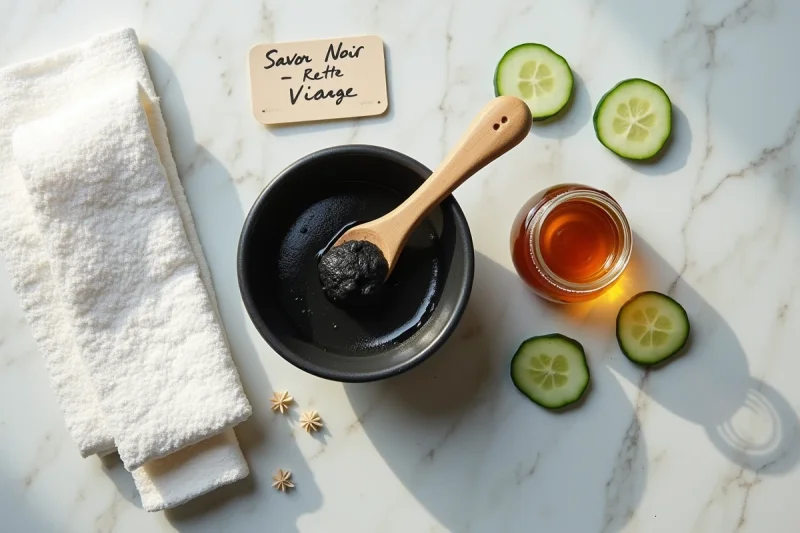
A Complete Routine: What to Apply Before and After Black Soap
Black soap is just one step in your skincare routine. When used alone without subsequent hydration, it can leave the skin vulnerable. Here’s a sequence that works for oily to combination skin:
- Cleanse the face with warm water to open the pores before application.
- Apply a thin layer of black soap, massage briefly, and rinse thoroughly.
- Use a floral water or alcohol-free toner to rebalance the pH.
- Finish with a lightweight, non-comedogenic moisturizer to protect the skin barrier without clogging pores.
Choosing non-comedogenic products after cleansing with black soap is crucial. Applying a product that is too rich on freshly cleansed skin can lead to blackheads and blemishes, which is precisely what one aims to avoid.
The Role of Lifestyle
The condition of the skin is influenced not only by applied products but also by diet, daily hydration levels, stress, and the consumption of tobacco or alcohol, all of which directly affect sebum production and the quality of the skin barrier. A well-chosen black soap cannot compensate for insufficient hydration or an unbalanced diet.
Moreover, skin type is not static. Oily skin at twenty can transition to combination or dehydrated skin by thirty-five. Regularly reassessing your skin diagnosis helps prevent sticking with an outdated routine. The best practice is to test black soap on a small area before incorporating it into your routine, especially after a change in season or hormonal contraceptive, both of which can significantly alter sebum production.
You may also like



![Ici tout commence: What to Expect in Episode 1488 on Monday, July 27, 2026 [SPOILERS]](https://glowculturehub.com/cdn/images/b2d3d6d788c39a22a548df320e6d9f77/w1200.webp)