
Enhancing Blue Eyes with Natural Makeup: Understanding the Color Wheel
Discover how to enhance blue eyes with natural makeup by understanding the color wheel. Learn which shades to choose and avoid for a radiant look.
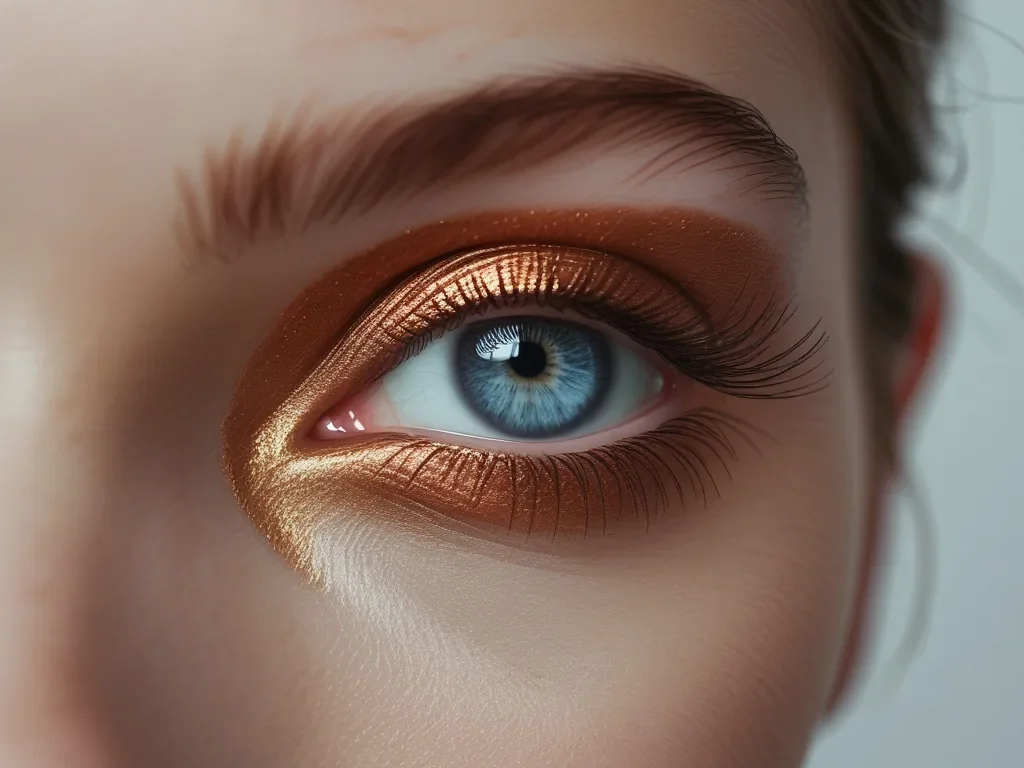
When it comes to enhancing blue eyes, many articles tend to follow a familiar formula: they present a list of supposedly miraculous colors, showcase stunning looks, and frequently use the term "enhance" to the point of losing its meaning. However, these discussions often overlook the fundamental mechanics behind why certain shades make blue irises pop while others can dull their appearance.
The answer lies in a principle of light physics, articulated through the color wheel since the 18th century and utilized in painting long before it made its way into makeup catalogs. Understanding this principle can significantly transform how one selects and applies makeup, especially when opting for natural formulations that behave differently from conventional products laden with silicones and synthetic dyes.
- Principle: Blue and orange are complementary colors on the color wheel, meaning they enhance each other when placed side by side.
- Recommended Shades: Copper, peach, apricot, golden brown, bronze, soft coral, light terracotta.
- Neutral Shades: Taupe, smoky gray, neutral brown—these create depth without strong chromatic contrast.
- Mineral Pigments: Yellow and red iron oxides provide the copper and peach tones in certified natural makeup.
- To Avoid: Blues that closely match the iris color can wash out the eyes, while pure greens may compete with the iris’s reflections.
- Eyeshadow Base: Essential for mineral powders to enhance longevity and prevent migration.
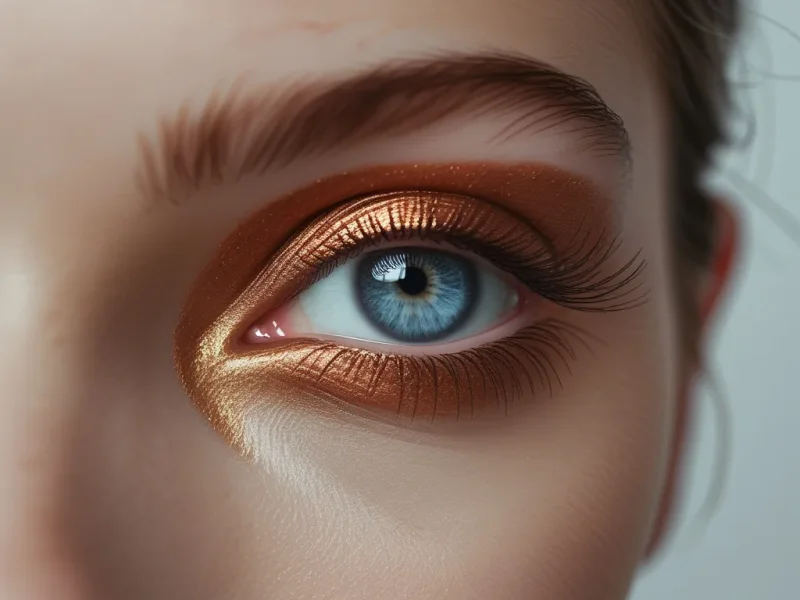
The Impact of Warm Tones on Blue Eyes
On the color wheel, blue and orange are opposites, meaning they visually intensify each other when placed next to one another. This complementary relationship makes blue irises appear more saturated, vibrant, and prominent. This effect can be achieved even with minimal eyeshadow application, which is great news for those who prefer a more natural look.
In practice, few people wear pure orange on their eyelids. Usable variations of this principle include copper, golden brown, peach, apricot, bronze, soft coral, and light terracotta—all of which contain orange undertones to varying degrees. The result on blue eyes is a naturally brighter gaze, with the reason often being hard to pinpoint. This subtle enhancement is a trick professional makeup artists have relied on for years.
Neutral shades like taupe, smoky gray, and neutral brown operate under a different mechanism; they offer value contrast (light/dark) without interfering with the iris color, creating depth. This palette is universally flattering for all shades of blue, making it ideal for everyday makeup.
Choosing Shades Based on Your Iris Hue
Blue eyes encompass a broad spectrum, and each shade requires specific adjustments. A very light and icy blue behaves differently than a deep blue or one with green or gray undertones. Taking a moment to identify your precise iris hue can help avoid disappointing purchases and target the shades that truly work.
| Iris Hue | Daily Shades | To Intensify | To Avoid | |---------------------------|--------------------------------|-----------------------------|------------------------------------| | Light, icy blue | Peach, apricot, light brown | Satin copper, rose gold | Deep blue, bright green | | Iris-close blue, vivid green | Steel blue, intense blue | Golden brown, warm taupe | Bronze, terracotta, copper | | Pure cool gray, silver | Blue-green, shifting hues | Coral peach, nude brown | Bright saturated green, blue-green | | Dark navy blue | Taupe, smoky gray, brown | Dark bronze, deep copper | Very light colors that wash out depth |
Why Mineral Pigments Behave Differently
Conventional eyeshadows often contain synthetic dyes (noted as D&C or FD&C in the INCI) that produce highly saturated, almost fluorescent shades, providing intense color payoff with a single layer. In contrast, natural mineral eyeshadows use iron oxides and mica, which yield subtler, blendable shades with a finish that is often satiny or pearlescent.
Yellow iron oxide (CI 77492) and red iron oxide (CI 77491) are the primary pigments that create copper, peach, and golden brown tones in certified natural cosmetics. When mixed with varying proportions of mica (CI 77019), they produce the entire spectrum of warm shades that complement blue eyes. This mineral chemistry explains why natural eyeshadows often deliver a more "skin-like" result: the pigments are less opaque, buildable, and integrate better with the natural texture of the eyelid.
Practically speaking, with mineral eyeshadow, the result after one layer may appear light. This is intentional. Layering two to three light coats with a clean brush gradually builds the desired intensity without the "mask" effect that can occur with heavily pigmented products applied all at once.
Selecting and Avoiding Natural Eyeshadows for Blue Eyes
To find a suitable natural or mineral eyeshadow for blue eyes, consider two key factors: the shade and the INCI list. As previously mentioned, the shade should lean towards warm copper and peach tones for chromatic contrast, or neutral taupe and brown for depth. The INCI list confirms the formulation: look for iron oxides, mica, and sometimes natural ochre or shadow earth, while avoiding synthetic colorants and high concentrations of bismuth oxychloride, which can irritate sensitive eyelids. Ideally, the product should be certified Cosmos Natural or Ecocert.
Shades to avoid for blue eyes when considering natural eyeshadows include those with heavy synthetic blue or green pigments (which can be counterproductive for the iris), eyeshadows with strong silver shimmer alone (which can "cool" and dull the blue), and overly rosy or purple shades that may lead to a fatigued appearance depending on skin tone.
Building a Minimalist Palette for Blue Eyes
A functional eyeshadow palette for blue eyes using natural products doesn’t need to contain twelve shades. Three well-chosen shades can cover most situations.
Shade 1: The Neutral Base: A nude brown or warm taupe, lightly pigmented, can be applied across the entire mobile eyelid as a base, providing structure without adding color. This is the everyday shade that subtly alters the gaze without being noticeable.
Shade 2: The Chromatic Accent: A satin copper or golden peach can be applied to the center of the eyelid or the inner corner to enhance brightness. This shade directly utilizes the color wheel principle—just a touch is sufficient.
Shade 3: The Depth: A dark brown or warm bronze is ideal for more defined looks, blended into the outer corner or crease of the eyelid. When paired with the first two shades, it adds dimension to the gaze without being overly colorful.
This three-shade logic is more practical than purchasing a large palette where three-quarters of the shades go unused. It works with any brand offering certified mineral eyeshadows in these color ranges.
Common Questions About Natural Eyeshadows for Blue Eyes
Can blue eyes wear blue eyeshadow? Yes, but with a specific approach. A blue too close to the iris can blend into the eye and wash out the gaze instead of defining it. However, a very dark navy or slate blue can create an interesting value contrast. Shades of blue tinged with gray or slightly metallic work better than pure opaque blue. The main risk is monochromaticity, rather than blue itself.
Brown or black mascara for blue eyes? Brown mascara is often recommended for a natural effect, as it softens the harsh contrast of black against light irises. In practice, both options work depending on the desired effect. Black provides intensity and suits dark or steel blue eyes well, while brown remains softer for light blue eyes and daytime looks. It’s not a hard rule—context matters.
Do natural mineral eyeshadows last as long as conventional ones? Longevity primarily depends on the base applied underneath and the eyeshadow formulation. Mineral powder eyeshadows with a high mica content generally hold up well, often better than low-cost pressed eyeshadows. The downside of loose mineral powders is that they can migrate into creases if the skin is oily or if no base is used. With a light eyeshadow base, their wear time is comparable to quality conventional products.
How to read INCI to identify truly natural eyeshadows? Look for mica (CI 77019), iron oxides (CI 77491, 77492, 77499), and titanium dioxide (CI 77891) at the top of the list. These mineral pigments form the basis of a natural eyeshadow. Avoid D&C Red, FD&C Blue, or Yellow references, which indicate synthetic colorants. A Cosmos Natural or Ecocert certification ensures the formula meets specific criteria regarding ingredient sourcing.
Can violet be worn on blue eyes? Violet lies midway between red and blue on the color wheel, making it close to blue but not complementary. It can work on certain shades of blue eyes with gray or cool undertones, creating a mysterious effect rather than one of brightness. However, it is less universal than copper tones and should be tested according to one’s iris. The risk for light blue eyes is looking fatigued or irritated if the violet leans too rosy.