
Enhancing Blue Eyes with Natural Makeup: A Simple Guide
Discover a simple four-step routine to enhance blue eyes using natural makeup. Learn about ideal shades, products, and techniques to achieve a radiant look without irritation.
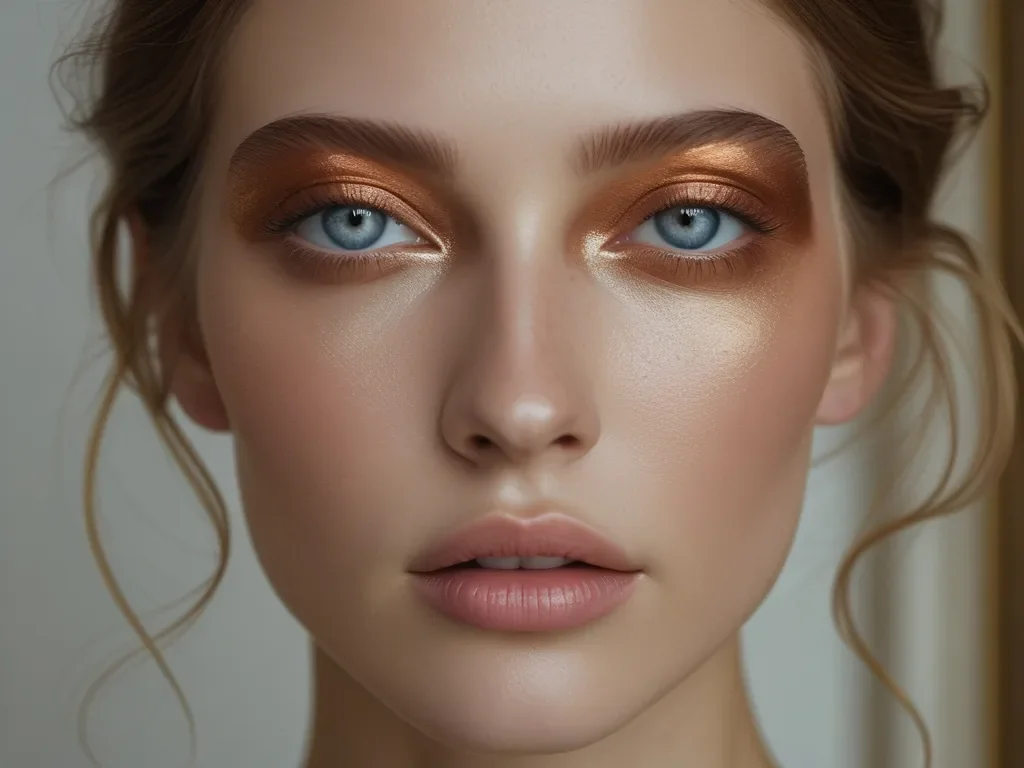
The quest for natural makeup that enhances blue eyes can often feel overwhelming. After reassessing my makeup collection a few months ago, I found that many products either irritated my sensitive eyelids or failed to complement my eye color. While there are countless online tips for achieving a natural look for blue eyes, many simply list colors without explaining how they interact with the iris.
The key lies in a principle I wish I had discovered sooner: the color wheel. Colors that are opposite to blue enhance each other, creating a subtle contrast that transforms an ordinary gaze into something memorable. Beyond color choice, texture and formulation play crucial roles in establishing a daily makeup routine that requires minimal time and effort.
- Principle: Warm tones (copper, peach, golden brown) naturally highlight blue eyes through chromatic contrast.
- For whom: Suitable for all shades of blue, from light blue to teal and steel blue.
- Products: Mineral pigment eyeshadows, brown mascara, and brown or bronze eyeliner.
- To avoid: Blues that are too close to the iris color and formulas with silicones for sensitive eyelids.
- Minimal routine: Peach shadow + brown eyeliner + brown mascara = 3 products, 4 minutes.
- Clean formula: Opt for mineral pigments certified by Cosmos Natural for eyelids.
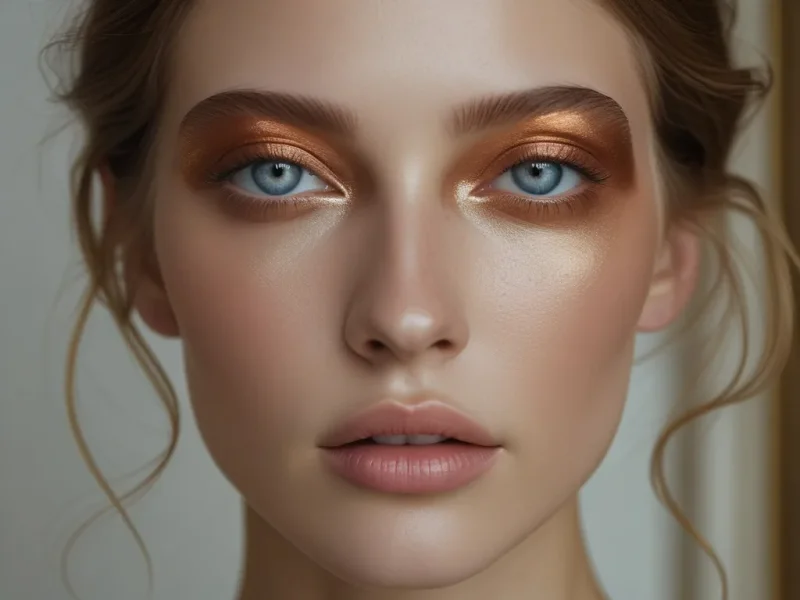
The Power of Warm Tones
The concept is straightforward but often poorly articulated. On the color wheel, orange is directly opposite blue. When an orangey hue is placed near a blue iris, both colors intensify: the blue appears brighter, and the orange seems warmer. This is a technique utilized by artists and makeup professionals alike for centuries.
In practice, applying pure orange to the eyelids isn’t the goal. Usable variations include copper, golden brown, peach, apricot, bronze, and soft coral. These shades incorporate orange undertones without the harshness of a saturated orange. The outcome is a naturally brighter and livelier gaze without a clear reason why it appears so.
Neutral shades like gray and taupe also work well by adding depth without interfering with the iris color. For discreet office makeup or effortless Sunday looks, this combination often proves to be the most elegant choice.
Choosing the Right Palette for Your Iris Shade
Not all blue eyes are the same. A light icy blue doesn’t call for the same shades as a deep blue or a changing blue-green. Taking a moment to identify your iris shade can help avoid makeup mishaps and select truly complementary products.
| Iris Shade | Ideal Daily Shades | Intensifying Shades | To Avoid | |-----------------------------|-------------------------------------|----------------------------------|-------------------------------| | Light blue, almost gray | Light taupe, golden beige, champagne | Bronze, honey brown, pale copper | Royal blue, turquoise | | Medium, bright blue | Peach, apricot, sandy brown | Copper, chocolate brown, warm plum | Electric blue, cool gray | | Deep blue, steel | Cocoa brown, sienna | Intense bronze, gold, plum brown | Black alone without gradient | | Blue-green, changing | Rosy peach, soft khaki, taupe brown | Lilac, plum, rosy copper | Saturated green, turquoise |
For blue-green eyes, violet is a particularly flattering option as it sits equidistant from blue and green on the color wheel, enhancing both hues simultaneously. A light plum or rosy lilac on the mobile eyelid can transform a changing iris into something captivating.
Natural Eyeshadows and Mineral Pigments: Understanding INCI
The skin on the eyelids is the thinnest and most permeable on the face, measuring less than half a millimeter in thickness and having significant vascularization that facilitates ingredient absorption. Daily application of conventional eyeshadows can expose this delicate barrier to preservatives, film-forming silicones, and synthetic fragrances, which may lead to irritations or clogged pores. Therefore, for truly clean natural makeup for blue eyes, formulation is just as crucial as color.
Mineral pigments, derived from natural sources, include mica for a pearlescent sheen, iron oxides (CI 77491, CI 77492, CI 77499) for reds, browns, and blacks, and chromium oxide (CI 77288) for greens. These ingredients are not absorbed by the skin and carry fewer risks compared to synthetic preservatives. For sensitive eyes that react to standard eyeshadows, switching to mineral formulas is often the only necessary adjustment.
A true natural makeup product will have mineral pigments listed among the first ingredients on the INCI label and should not contain PEG, silicones (names ending in -cone or -xane), or phenoxyethanol. Certifications like Cosmos Natural or Cosmos Organic ensure that these criteria are genuinely met.
INCI Tip: On your eyeshadow list, ingredients CI 77491, CI 77492, and CI 77499 correspond to natural iron oxides that produce the perfect brown-orange shades for successful natural makeup for blue eyes. There’s no need to search for exotic formulas; these pigments are present in most quality mineral eyeshadows. Need help deciphering ingredient labels? Check out our beauty ingredient comparison tool.
My Four-Step Natural Makeup Routine for Blue Eyes
I developed this routine by eliminating everything that didn’t hold up, didn’t work, or took too long in the morning. The result is a four-step process that takes less than five minutes, works on combination skin without heavy primers, and lasts all day without settling into the eyelid crease. This distilled version of natural makeup for blue eyes is adaptable for evening looks. If you’re also looking to prep your skin before makeup, our article on homemade facial scrubs will provide the perfect base.
Natural Makeup Routine for Blue Eyes
- Prepare the eyelid Apply a touch of setting powder or a clear base on the mobile eyelid. For combination skin, this prevents creasing by midday without weighing down the eyeshadow. For dry skin, a slightly nourishing base also extends wear.
- Apply the main eyeshadow with your finger Using your finger warms the mineral formula and enhances color deposit better than a brush for cream or satin shades. Apply peach or copper eyeshadow across the mobile eyelid, blending slightly above the crease for an imperceptible gradient.
- Define with brown eyeliner Draw a fine line of brown (or bronze) eyeliner along the upper lash line. If your hands tremble, first dot between the lashes and then connect them. Add a touch of champagne eyeshadow or pearlescent highlighter to the inner corner of the eye to dramatically open the gaze.
- Apply dark brown mascara on the upper lashes Start at the root with a zigzag motion. Brown mascara is softer than black and frames blue eyes with an elegance that black doesn’t always achieve. For very light lashes, a touch on the lower lashes completes the look without weighing it down.
Tailoring Your Makeup to Skin Tone and Hair Color
Eye color is just one factor among three. Skin tone and hair color also significantly influence the final makeup result, as they create the visual context in which the blue iris is set.
With a fair complexion and blonde hair, blue eyes naturally appear delicate and luminous. Intense or overly saturated shades may dominate the face. The strategy for natural makeup for blue eyes on this skin type is to stick to light and sandy tones, peach, golden beige, nude taupe, with dark brown mascara and nude or light brown eyeliner. The goal is to provide definition without creating a harsh contrast.
With brown or chestnut hair and a Mediterranean complexion, blue eyes create a strong natural contrast. Darker shades can be embraced: chocolate brown or rich copper eyeshadows, dark brown eyeliner, and black mascara on darker features. The look remains natural as the shades stay within the warm family, but the intensity is more pronounced.
For red-haired individuals, soft khaki shades work beautifully. Khaki serves as a neutral against the blue iris (no competition), while resonating with the red tones in the hair for a visually appealing harmony. A natural, slightly muted khaki is ideal, avoiding saturation.
Your Questions on Natural Makeup for Blue Eyes
What eyeshadow color enhances blue eyes? Warm tones are natural allies for blue eyes: copper, peach, bronze, and golden brown. These shades sit opposite blue on the color wheel and create a contrast that intensifies the iris effortlessly. Taupe and golden beige also work well for a discreet daily look.
Can you use blue eyeshadow on blue eyes? Yes, as long as you choose a blue that contrasts with the iris shade. A deep navy or teal can create a beautiful contrast on light blue eyes. However, a blue too close to the iris color may wash out the gaze and make it appear dull.
What mascara is best for natural makeup on blue eyes? Dark brown mascara is the most natural choice for blue eyes, defining lashes without the harsh contrast of black, particularly suitable for light lashes or blonde hair. For a more intense effect while remaining clean, opt for organic mascara with mineral pigments.
Which natural eyeshadows are suitable for sensitive skin around the eyes? The skin on the eyelids is the thinnest on the face. Eyeshadows with mineral pigments (mica, iron oxide) are the least irritating as they lack synthetic preservatives and silicones. Choose formulas certified as Cosmos Natural or Cosmos Organic, free from parabens, fragrances, and ophthalmologically tested.
Should you avoid violet with blue eyes? Violet can work well for blue eyes, provided you select one with a warm undertone (plum, aubergine, rosy mauve). Cool violets with a strong blue dominance may blend into the iris and soften the gaze. On blue-green eyes, a lilac violet is particularly flattering.
How to achieve a natural office look for blue eyes? For a discreet office makeup look: apply a golden beige or peach shadow on the mobile eyelid, a fine brown eyeliner along the upper lash line, a touch of pearlescent highlighter in the inner corner, and finish with brown mascara. Four products, under five minutes, for an open and polished gaze.