
Exploring Humanity in Damon Lindelof's Watchmen
Damon Lindelof's adaptation of Watchmen expands on its philosophical themes, exploring the nature of conflict and humanity's imperfections in a contemporary context.
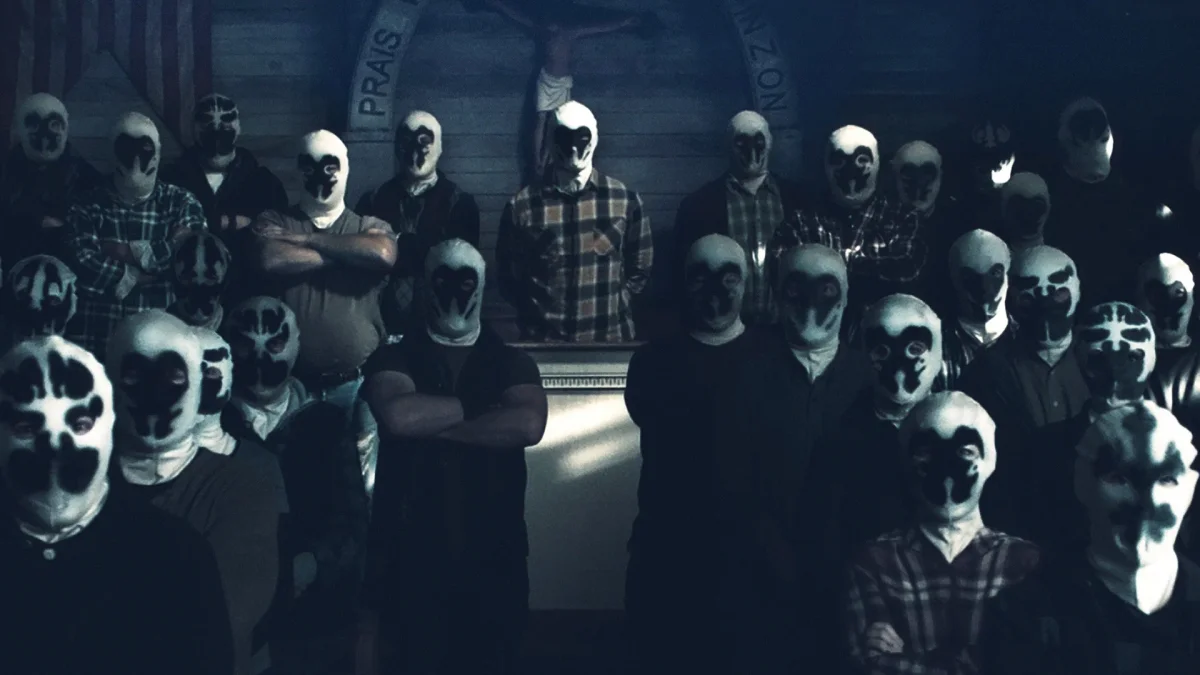
Damon Lindelof's adaptation of Alan Moore's Watchmen has sparked a significant debate among fans of the original comic, leading to polarized opinions about its merits. Some view the series as a sacrilege, while others see it as a fitting continuation of the narrative. Regardless of these differing perspectives, the series introduces a fresh philosophical discourse that Moore intentionally left open-ended.
The original comic concluded with Adrian Veidt, also known as Ozymandias, deploying a colossal extraterrestrial threat on New York, resulting in the deaths of three million people. Veidt rationalized this act as the only means to prevent global catastrophe during the heightened tensions of the Cold War. This morally ambiguous decision left readers questioning the ethics of utilitarianism as a solution for peace.
Fast forward several decades, and Lindelof's series suggests that the nature of conflict remains unchanged. Instead of achieving a long-awaited peace, society merely redirects its animosity into new forms. The series emphasizes that systemic violence, particularly the oppression of Black individuals by white populations in the southern United States, predates the Cold War depicted in the comic. From its opening scene, which portrays the Tulsa massacre, Watchmen challenges the comic's conclusion, asserting that utilitarianism is not the ideal philosophy to embrace.
The narrative of the series expands upon the comic's themes by exploring the persistent nature of conflict and its multifaceted aspects. Episode 6 pays homage to Schindler's List through its visual storytelling, utilizing splashes of color in a predominantly black-and-white setting—a technique reminiscent of Steven Spielberg’s work. This artistic choice serves as a poignant reminder that organized violence transcends specific times and places.
Attempting to resolve such entrenched conflict appears futile, as exemplified by the character Looking Glass, portrayed by Tim Blake Nelson. He grapples with the trauma inflicted by the extraterrestrial event in New York, highlighting that Veidt's attempt to save humanity inadvertently sowed new divisions.
The character of Rorschach, initially a complex figure in the comic, morphs into a symbol of allegiance for the violent supremacist group known as the Seventh Cavalry in the series. This transformation illustrates the ongoing struggle against societal violence: in the comic, Rorschach reflects a devastating social critique, while in the series, he embodies the terror propagated by extremist factions.
This leads to a rather bleak conclusion presented by the series—an unrelenting world plagued by violence, seemingly impervious to resolution.
In contrast, Lindelof's series delves deeper into the enigmatic character of Adrian Veidt. Unlike the comic, where he emerges only towards the end, the series explores his character more thoroughly, with Jeremy Irons providing a compelling portrayal. Veidt's storyline on Europa, one of Jupiter's moons, adds complexity to the narrative. While he creates a new form of life there, devoid of violence, it ultimately lacks substance and depth, leading him to grow weary of it. This juxtaposition reflects on our own humanity, suggesting that while reason is crucial, the passions that drive us—though often destructive—are also what give life its meaning.
Veidt’s journey throughout the nine episodes reveals a deeper desire for recognition among his peers, illustrating that even he prefers the flawed human condition over a sterile existence. The series uses David Bowie’s song Life on Mars to underscore this theme, posing the question of a better life elsewhere but quickly questioning its value. Humanity, with all its imperfections, is what gives existence its richness.
The series ultimately conveys that while human passions often manifest violently, they also shape our lives. The character Angela Abar, played by Regina King, exemplifies this notion. Her experiences, marked by pain and trauma, forge her resilience and foster a sense of camaraderie and solidarity, enabling her to rebuild from destruction.
In a central theme of the series, it suggests that the roots of violence may lie more in societal structures than in human nature itself. The character Judd Crawford, portrayed by Don Johnson, embodies this duality, being part of both the justice system and the Seventh Cavalry, representing the ongoing conflict. This idea resonates with Alan Moore’s own anarchist views, bringing the two narratives full circle.
You may also like

![Ici tout commence: What to Expect in Episode 1488 on Monday, July 27, 2026 [SPOILERS]](https://glowculturehub.com/cdn/images/b2d3d6d788c39a22a548df320e6d9f77/w1200.webp)