
Mastering the Sleeveless Jacket: Style Tips for Everyday Wear
The sleeveless jacket is a versatile wardrobe staple that can elevate your style. Learn how to choose the right materials, pair with trousers, and accessorize effectively.
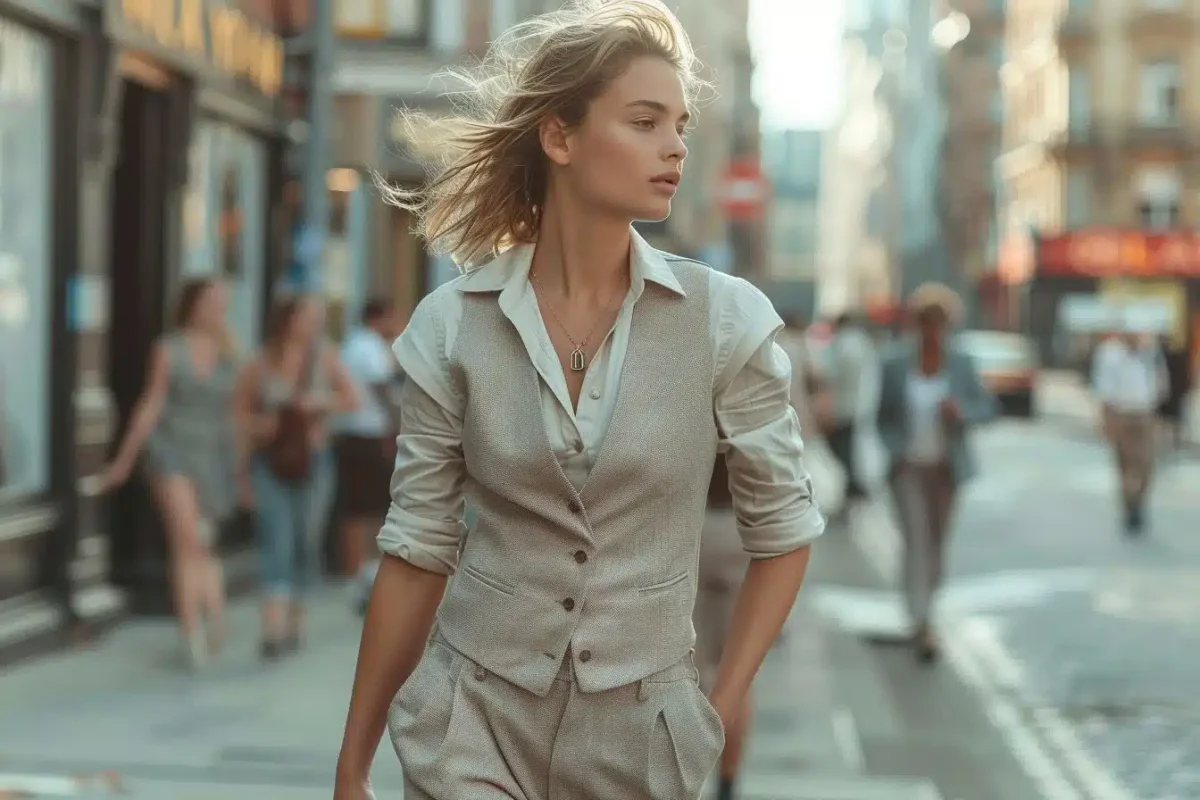
The sleeveless jacket holds a unique position in everyday wardrobes. Neither a full coat nor a simple mid-layer, it reshapes the silhouette by structuring the torso while freeing the arms. What truly sets apart successful outfits from mediocre ones lies less in the chosen model and more in how each material, cut, and accompanying piece interacts. Wearing a sleeveless jacket with style requires an understanding of these interactions.
Materials for Sleeveless Jackets and Their Appropriate Contexts
| Material | Visual Effect | Suitable Contexts | Recommended Layering | |---------------------------------|-----------------------------|----------------------------------------|---------------------------------| | Leather or faux leather | Structured, sharp edges | Urban outings, semi-formal evenings | Fitted shirt, fine turtleneck | | Denim | Raw, casual | Weekends, brunches, strolls | Solid t-shirt, striped sailor | | Padded (down or synthetic) | Controlled volume, sporty-chic | Mid-season, outdoor activities, daily commutes | Light sweater, simple sweatshirt | | Fleece or softshell | Technical, matte | Hiking, outdoor activities | Thermal underlayer, technical t-shirt | | Wool or tweed | Textured, dressy | Office, smart casual events | Oxford shirt, V-neck sweater |
Leather and tweed suggest a more formal aesthetic, while padded jackets and fleece lean towards functionality. Denim remains a versatile option. The choice of material dictates the overall tone of the outfit far more than color or brand.
Combining Sleeveless Jackets with Trousers
A common mistake is treating a sleeveless jacket as merely an accessory, neglecting the bottom half. The harmony between the top and bottom is crucial for overall balance.
Professional Attire
Pairing a structured sleeveless jacket (made from wool, tweed, or fine leather) with chinos or tailored trousers creates a sharp silhouette. The fit is key: a jacket that is too long over slim trousers can disrupt proportions. The jacket should end at the hip to maintain a fluid line.
Casual Outfits
For off-duty days, a denim jacket or padded sleeveless jacket worn with straight jeans or cargo pants creates a cohesive look. Here, layering is just as important as matching: a hoodie under a sleeveless down jacket from Pyrenex offers a textural contrast that adds effortless depth.
However, pairing a leather sleeveless jacket with joggers is a risky choice. The disparity in style between the two pieces often results in a visual dissonance that few cuts can resolve.
Accessories and Footwear to Complement a Sleeveless Jacket
Accessories should not merely "enhance" an outfit (a vague term); they should anchor the overall style. With a sleeveless jacket, a few deliberate choices suffice:
- A visible belt when the jacket is worn open: it defines the waist and structures the silhouette, particularly when paired with high-waisted trousers.
- A simple leather or metal watch: it draws attention to the exposed wrist, one of the visual advantages of going sleeveless.
- A crossbody bag instead of a traditional handbag: it aligns with the active and mobile vibe suggested by the piece.
When it comes to footwear, the choice depends on the trousers, not the jacket. Heels work with fitted trousers and a leather jacket for a formal context. White sneakers or flat-soled ankle boots suit denim or padded combinations. The rule is straightforward: the more technical or sporty the jacket, the more the shoes should match that aesthetic.
Wearing a Sleeveless Jacket in Cold Weather
While sleeveless jackets shine in mid-season, they can also be effective in winter if layering is done correctly. The principle is to focus on layers rather than the thickness of a single piece.
A sleeveless down jacket worn between a sweater and a coat adds thermal insulation to the torso without weighing down the arms. This three-layer setup (base layer, sleeveless down, coat) is particularly effective for daily commutes where one alternates between heated interiors and cold exteriors.
For chilly, dry conditions, a thick wool sleeveless jacket over a turtleneck serves as a standalone outfit. Insulation isn’t the only factor; cut plays a direct role in heat retention. A fitted jacket retains warmth better than a loose model, which allows air to circulate.
Care Tips for Sleeveless Jackets Based on Material
The longevity of a sleeveless jacket is closely tied to how well it is maintained. Common mistakes often involve washing:
- Leather: Clean with a specific product (leather milk or balm), never water in a machine. A light polish once or twice a season keeps it supple.
- Down jackets: Machine washing is possible on a delicate cycle, with tennis balls in the drum to prevent clumping. Dry on low heat.
- Denim: Wash inside out, in cold water, to limit fading. Avoid the dryer.
- Synthetic (polyester, fleece): Machine wash at moderate temperatures, but always check the care label before the first wash.
Proper maintenance can extend the lifespan by several seasons. For a piece worn as frequently as a sleeveless jacket, this habit makes a tangible difference over time.
The sleeveless jacket remains one of the most versatile pieces in any wardrobe. Its ability to transition from professional to casual looks hinges on three concrete factors: material, cut, and coherence with the rest of the outfit. Selecting the right combination for each context can transform a basic item into a standout piece.
You may also like


![Ici tout commence: What to Expect in Episode 1488 on Monday, July 27, 2026 [SPOILERS]](https://glowculturehub.com/cdn/images/b2d3d6d788c39a22a548df320e6d9f77/w1200.webp)