
The Complete Guide to Monoï de Tahiti for Skin and Hair
Monoï de Tahiti is a traditional Polynesian oil that hydrates skin, nourishes hair, and enhances tanning. Learn how to use it effectively and recognize genuine products.
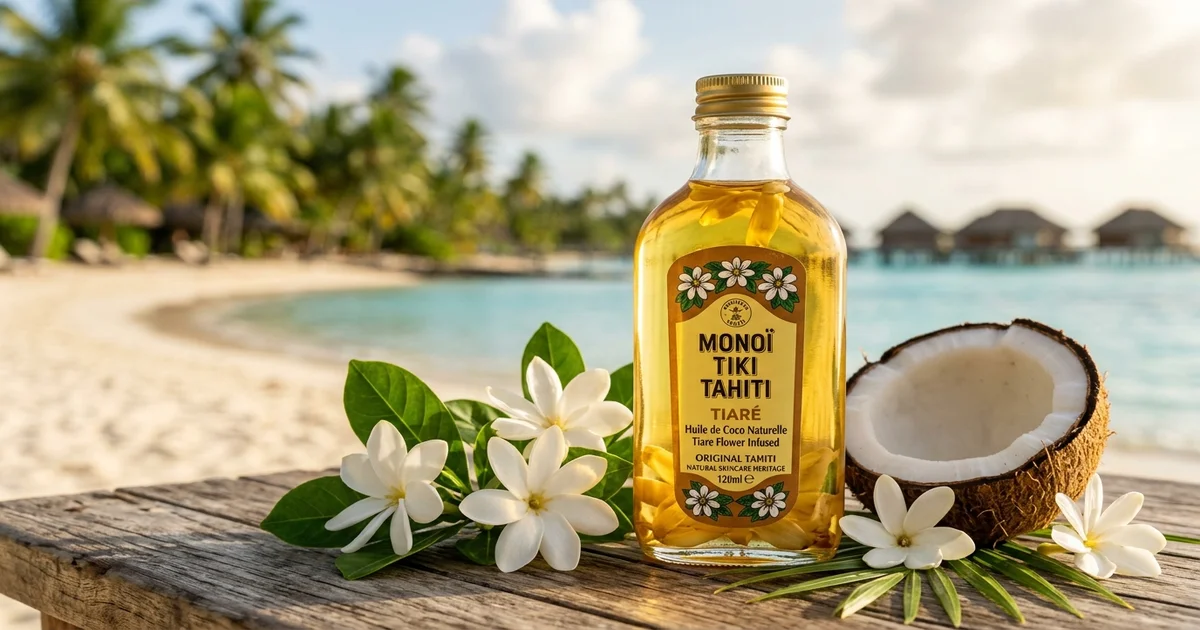
Monoï de Tahiti is not just an ordinary beauty oil; it is a true cosmetic treasure from French Polynesia, blending ancient tradition with modern efficacy. This monoï oil is created by macerating Tiaré Tahiti flower buds in refined coconut oil, resulting in a natural product with numerous benefits. If you're looking for a simple, versatile, and authentic solution to hydrate your skin, nourish your hair, or extend your summer tan, this article will guide you on how to incorporate monoï into your beauty routine, how to identify genuine products, and the precautions to take for safe use.
What is Monoï de Tahiti?
You might have heard of monoï without fully understanding what it is. This fragrant oil is crafted following a traditional Polynesian recipe that has been passed down through generations. The process is straightforward yet meticulous: Tiaré Tahiti flower buds, known for their iconic white petals, are slowly macerated in high-quality virgin coconut oil.
This maceration allows the flower's properties to gradually infuse into the oil, resulting in a unique product with a captivating scent and recognizable cosmetic benefits. The Appellation d’Origine (AO) ensures that the monoï originates from French Polynesia and adheres to strict traditional standards. It's crucial to note that only monoï bearing this certification can truly be called "monoï de Tahiti."
Benefits of Monoï for Your Skin
Describing this oil as a magic wand for the skin is not an exaggeration. Monoï provides intense and lasting hydration thanks to the richness of coconut oil, which penetrates quickly without leaving an unpleasant greasy film. Dry areas such as elbows, knees, and heels will regain their softness and suppleness after regular use.
The nourishing action of monoï is particularly noticeable during seasonal changes or after sun exposure. When applied in the evening on cleansed and slightly damp skin, it helps repair and soothe minor irritations. You can also use it as a facial mask once a week: apply a few drops to your face, avoiding the eye area, let it sit for 10 to 15 minutes, and then remove the excess with a soft tissue.
For summer, many women use it as an after-sun treatment: its soothing properties help maintain hydration for skin exposed to the sun and prolong the longevity of your tan.
Monoï for Hair: A Natural Nourishing Treatment
Are your hair strands parched from the sea, sun, and heat styling tools? Monoï is precisely what you need. This is one of its most popular uses, and for good reason: it provides intense nourishment without weighing down even fine hair.
The best way to use it is to apply a few drops on freshly washed, damp hair, focusing on the lengths and ends. You can also create a nourishing mask by applying it 30 minutes before shampooing if your hair is very dry. During summer, with repeated swimming, this routine becomes essential: it will repair damage caused by saltwater and chlorine.
As a delightful bonus, monoï leaves a light tropical fragrance in your hair, which is both pleasant and natural.
Monoï and Tanning: The Secret of the Savvy
Do you love having a sun-kissed glow in summer? Monoï de Tahiti plays a dual role during the warm season. First, it prepares your skin for tanning by deeply hydrating it, allowing for a more even and longer-lasting tan. Well-nourished skin tans better than dry skin.
Additionally, some monoï formulas are enriched with tanning accelerators, such as beta-carotene, which slightly and naturally enhance your tanning ability. Apply it before sun exposure, but always use a sunscreen suitable for your skin — monoï should never replace sun protection, which is very important.
How to Choose and Identify Genuine Monoï de Tahiti
With the market flooded with fake monoï or products of questionable quality, here’s how to avoid being misled:
- Look for the Appellation d’Origine (AO) label on the packaging — this is the official guarantee that you have authentic monoï de Tahiti.
- Read the ingredient list: pure monoï should primarily contain coconut oil and Tiaré flower extracts, not a plethora of chemical additives.
- Check the country of manufacture: it should be French Polynesia for true quality control.
- Consider the price: authentic monoï costs a bit more than regular oil but remains accessible (between €15 and €40 for a standard bottle).
- Observe the color and texture: it should be liquid at room temperature, with a light golden or pale yellow hue.
If you have any doubts or are looking for a selection of verified products, Miss Monoi, a boutique dedicated to Monoï de Tahiti, offers a range designed to help you find what you need for your skin and hair.
Practical Tips and Usage Precautions
Before diving in, here are some important rules to enjoy monoï without issues:
- Perform a compatibility test by applying a small amount on your inner arm 24 hours before using it on your face — it’s rare, but some sensitive skin types may react to coconut oils.
- Don’t overuse it: a few drops are sufficient, as monoï is highly concentrated.
- Avoid the eye area unless you’re using a formula specifically designed for it.
- Store it away from direct sunlight and extreme heat to preserve its properties.
- On hair, apply it only to the lengths, never on the scalp.
- Always remember that monoï never replaces suitable sun protection.
If you have very oily or acne-prone skin, it’s better to use it sparingly (as a hair mask or after-sun treatment) rather than applying it daily on your face.
Frequently Asked Questions
What exactly is Monoï de Tahiti?
It is a traditional Polynesian cosmetic oil obtained by macerating Tiaré Tahiti flower buds in refined coconut oil. It combines effective care with natural beauty.
What are the true benefits of monoï?
Monoï deeply hydrates the skin, nourishes and repairs dry hair, soothes after sun exposure, and can help slightly amplify tanning. It is a versatile and natural treatment.
How can I recognize genuine Monoï de Tahiti?
Look for the Appellation d’Origine (AO) on the label, check that the country of manufacture is French Polynesia, read the short list of simple ingredients, and ensure the color is pale yellow to light golden.
Can I use monoï on my face every day?
It depends on your skin type. For dry skin, yes. For oily or combination skin, it’s better to use it occasionally or as a mask. A 48-hour test will confirm if your skin tolerates it well.
Does monoï replace sunscreen?
No, absolutely not. While monoï offers slight antioxidant protection and can enhance tanning, it does not contain UV filters. You must always pair it with appropriate sunscreen.
Now you know how to confidently integrate Monoï de Tahiti into your summer beauty routine! It’s an authentic, gentle, and effective product for taking care of yourself naturally. ✨
You may also like