
Understanding the Layers of Human Skin
Discover the fascinating structure of human skin, its three layers, and their vital functions in protecting and regulating the body.
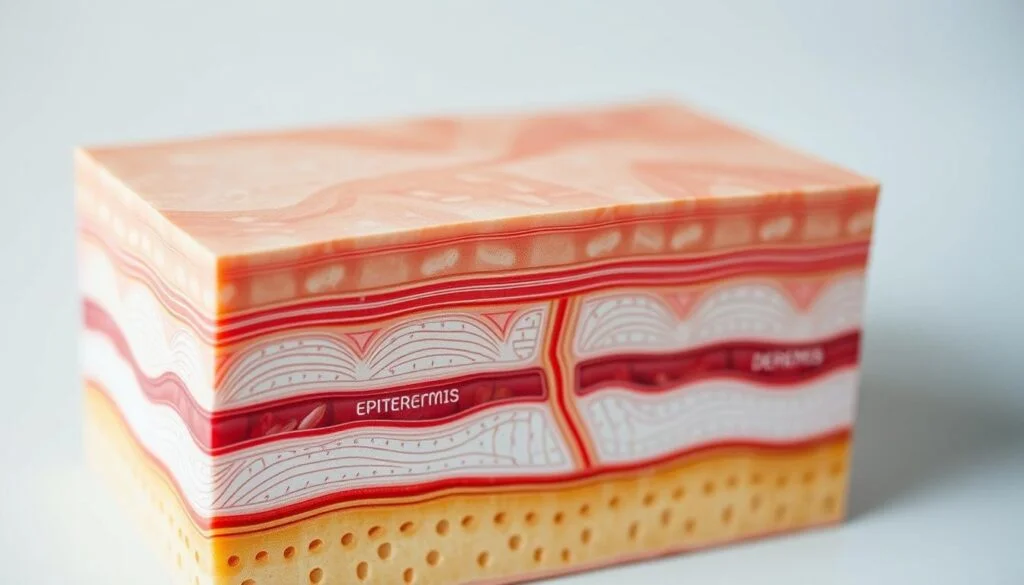
How many layers does human skin have? This remarkable organ covers an average of 1.8 square meters—more than many sofas! As the body's protective shield, it combines seemingly opposing features: it is thin on the eyelids yet robust enough to withstand daily wear and tear.
The intricate architecture of our skin accounts for its versatility. Three specialized layers work together seamlessly, regulating temperature, storing nutrients, and blocking harmful environmental factors.
Without this marvel, we would be unable to harness sunlight or feel touch. Each area of the skin adapts perfectly to its function—from the sensitive lips to the shock-absorbing soles of the feet.
Introduction: Skin – Our Largest Protective Organ
Our vital protective barrier connects us with the environment daily—often without our conscious awareness. Healthy skin functions like a high-performance computer: it analyzes touch, filters out harmful substances, and adapts to temperature changes in milliseconds.
More than Just a Covering
This multifunctional organ performs seven key tasks simultaneously. From defending against pathogenic germs to storing nutrients, every cell has a specific role. Notably, our skin surface constantly communicates with internal organs and the nervous system.
“The skin is a reflection of our physical and mental health.”
Why Care Requires Knowledge
A deep understanding of the three-layered structure explains why different creams have varying effects. The outermost layer blocks irritants, while deeper layers retain moisture. This insight revolutionizes modern skincare routines.
| Function | Mechanism | Health Impact | |-------------------|-------------------------|---------------------------| | Protective Shield | Physical Barrier | Prevents infections | | Temperature Regulation | Sweat Production | Prevents overheating | | Sensory Perception | Nerve Receptors | Early warning system | | Metabolism | Vitamin D Synthesis | Strengthens bones |
Recent research shows that each of the three skin layers contains unique cell types. This specialization allows for complex protective and regulatory processes. Understanding these relationships helps individuals make better decisions for their well-being.
Anatomy of Human Skin
Our body's protective system demonstrates perfect division of labor. From the surface to the deep tissue, specialized layers form a complex network. This architecture explains why we can feel heat, withstand pressure, and store nutrients.
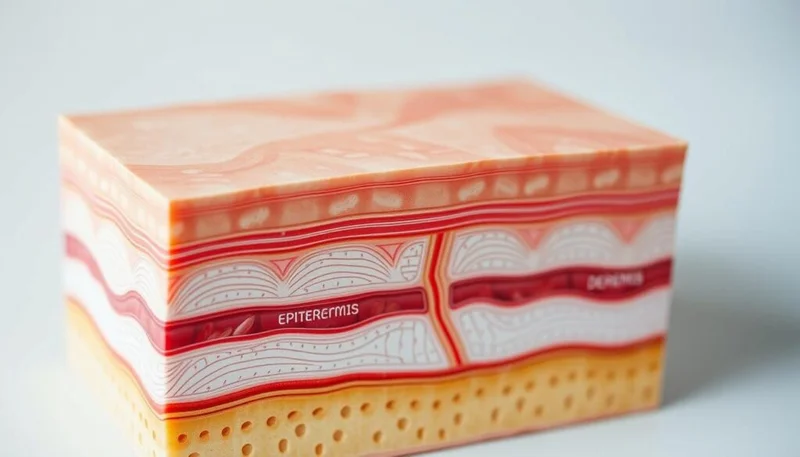
The Three Main Layers: Epidermis, Dermis, and Subcutis
The epidermis forms the outer barrier. Here, cells renew every 28 days, creating a protective horn layer. Immune cells constantly patrol to fend off pathogens.
Beneath it lies the dermis, composed of elastic collagen fibers. It contains hair follicles, sweat glands, and fine nerve endings. This dermis provides our surface with elasticity and responds to touch.
The deepest layer—the subcutis—serves as an energy reservoir. Fat cells cushion bones and insulate against cold. Blood vessels supply all layers with nutrients.
| Layer | Thickness | Key Structures | Main Functions | |------------|-------------|-------------------------------|--------------------------------------| | Epidermis | 0.05–1.5 mm | Keratinocytes, Langerhans cells | Protection against environmental influences | | Dermis | 1–4 mm | Collagen fibers, nerve endings | Support function, sensory perception | | Subcutis | Up to 30 mm | Fat tissue, blood vessels | Energy storage, heat insulation |
Functional Differences and Interactions
Each layer takes on specific roles that enhance one another. While the epidermis filters UV rays, the dermis regulates temperature through sweat glands. Simultaneously, the subcutis absorbs shocks and provides energy.
Connecting structures such as blood capillaries and nerve pathways link the layers. This three-dimensional structure allows the organ to respond rapidly to stimuli—from itching to wound healing.
How Many Layers Does Human Skin Have? – Our Answer
Medically speaking, every healthy adult has precisely three main levels in the skin's protective system. This clear division into epidermis, dermis, and subcutis is recognized worldwide as an anatomical standard—regardless of age or gender.
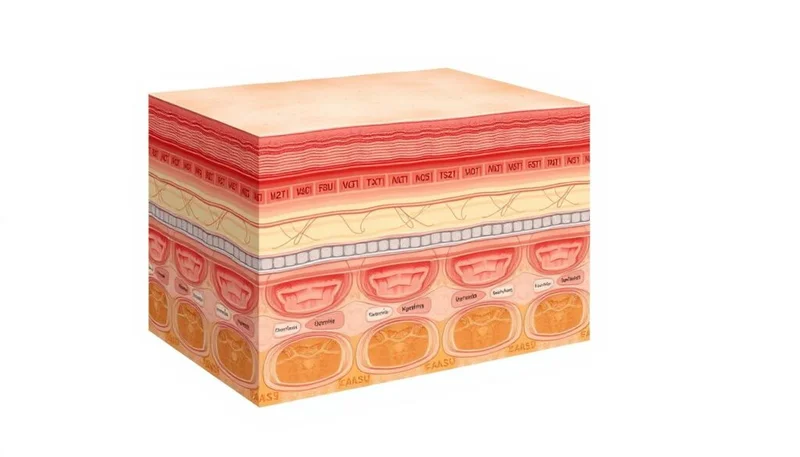
- Epidermis: The outer defense against germs and UV rays
- Dermis: Elastic support structure with sensory receptors
- Subcutis: Energy cushion and temperature buffer
Researchers confirm that this tripartite structure enables optimal division of labor. While the epidermis sheds millions of dead cells daily, deeper layers continuously produce new collagen fibers. Even genetic variations do not alter this fundamental structure.
An interesting fact: within the main layers, there can be up to five sublayers. This microarchitecture explains why sunburn affects the skin differently than mechanical injuries. Our body utilizes each layer as a specialized protective barrier.
“The three-layer structure is an evolutionary success—it combines efficiency with adaptability.”
For skincare, this knowledge means that active ingredients must penetrate various barriers. Lightweight serums reach the epidermis, while rich creams nourish deeper layers. In the next section, we will analyze the top layer and its renewal mechanisms in detail.
Detailed Examination of the Epidermis
The epidermis forms our outer protective barrier—a dynamic system composed of several levels. Its thickness varies depending on exposure: at sensitive areas like the elbows, it measures only 0.3 mm, while in heavily stressed areas like the soles of the feet, it can reach up to 4 mm.
Architecture and Regeneration
Five specialized sublayers collaborate here. The basal cell layer continuously produces new cells that ascend to the horn layer within 28 days. This process ensures protection against environmental influences and mechanical friction.
Cellular Dream Team
Four key cell types dominate the epidermis: keratinocytes form horn substances, while melanocytes produce pigments against UV rays. Langerhans cells alert the immune system, and Merkel cells transmit touch signals.
This complex system explains why palms react differently to skincare than other areas. Each cell layer fulfills precise functions—from moisture management to infection defense.
FAQ
How many layers does human skin have?
Our skin consists of three main layers: the epidermis (outer layer), dermis (middle layer), and subcutis (inner layer). Each layer serves specific functions to ensure protection, temperature regulation, and sensory perception.
What is the function of the epidermis?
The epidermis acts as the outer protective barrier. It contains the horn layer (stratum corneum), which shields against environmental influences, and constantly generates new cells through the basal cell layer (stratum basale). Melanocytes in this layer also regulate UV protection.
Why is the dermis so important?
The dermis contains blood vessels, nerve endings, and hair follicles. It supplies the epidermis with nutrients, supports wound healing, and enables sensory perceptions like pressure, pain, or temperature.
How does the subcutis contribute to health?
The subcutis stores fat tissue, serving as an energy reserve and protecting against cold. It also cushions muscles and bones and contains sweat glands that contribute to temperature regulation.
How often does the epidermis renew itself?
The epidermis regenerates approximately every 28–30 days. Old horn cells are shed at the surface, while new cells grow from the stratum basale. This process slows down with age.
What role does the horn layer play?
The horn layer consists of dead, keratinized cells (corneocytes) that form a physical barrier against germs, chemicals, and water loss. It is particularly thick on the palms and soles.