
Balayage Techniques for Concealing Gray Hair on Brown Tresses: Optimal Shades to Consider
Balayage is a popular method for reducing gray hair visibility on brown hair. This article explores effective shades, techniques, and maintenance tips for achieving a natural look.
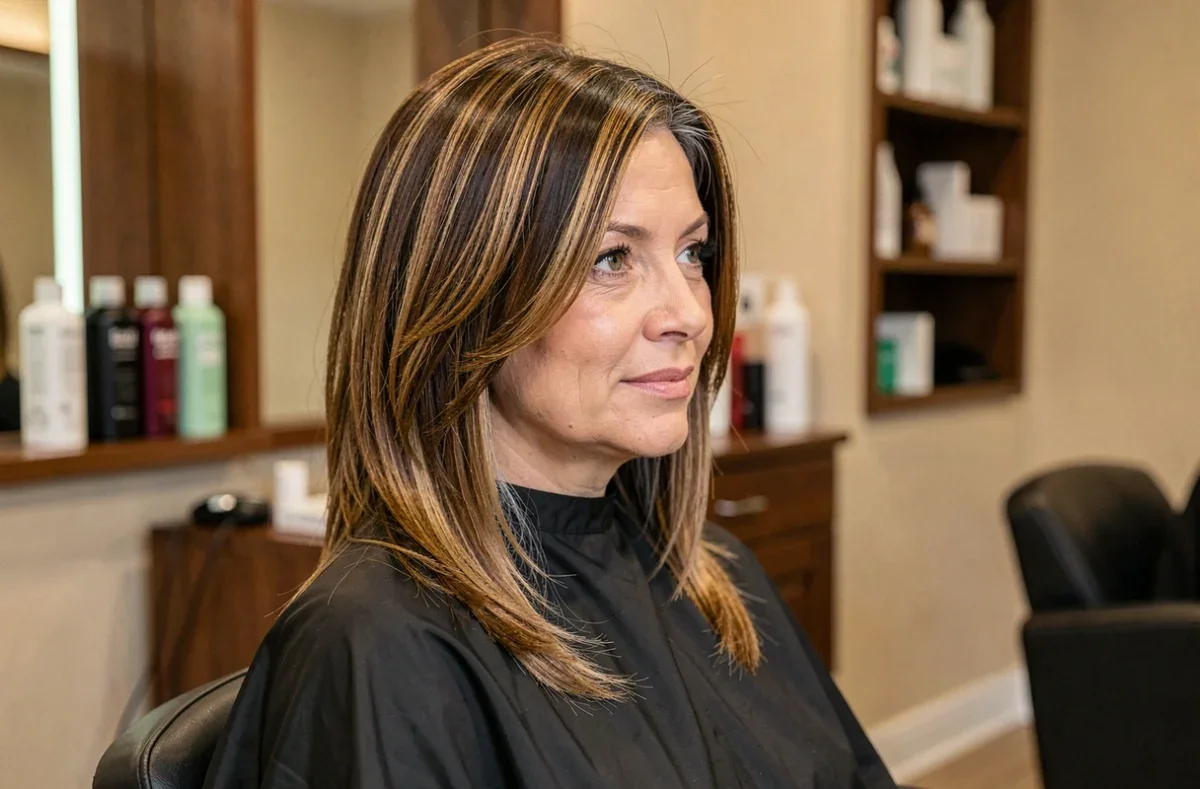
The balayage technique remains a top choice in salons for those looking to reduce the visibility of gray hair without resorting to a full color treatment. This method involves selectively lightening certain strands, thereby diminishing the contrast between pigmented hair and those that have lost their color.
Understanding Color Temperature and Brown Hair: What Works for Gray Strands
Gray hair lacks melanin, which causes it to react differently to hair dye compared to pigmented strands. When a color is applied, the result can often appear cooler or more translucent than anticipated.
For brown hair, warm tones yield a more natural appearance than cooler shades. Colors such as gold, chocolate, or caramel blend seamlessly with brown hair, which typically has warm undertones leaning towards orange-brown. On the other hand, neutral or ash tones might look artificial on gray strands, creating an unwanted grayish effect.
This aspect of color temperature is seldom covered in mainstream guides, which often simply recommend "a balayage" without explaining why certain shades may fall short. The issue often lies not in the technique itself but in the choice of pigment.
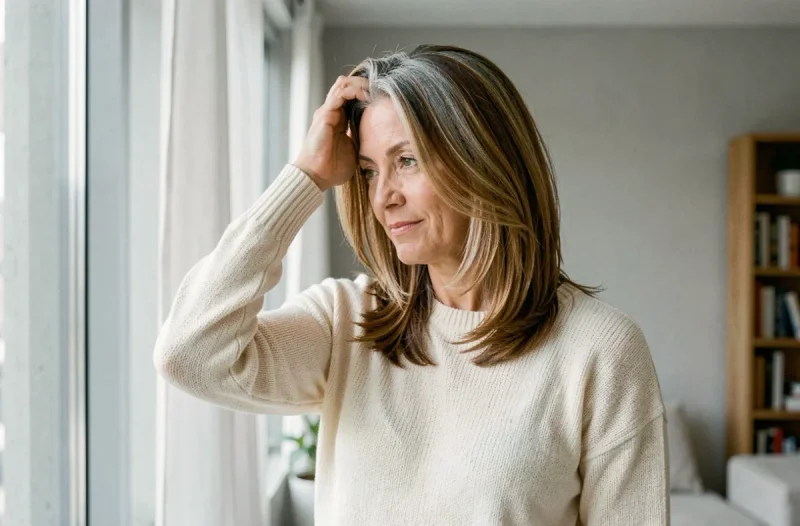
Comparing Gold, Caramel, and Beige Balayage on Brown Hair
Colorists consistently recommend three families of shades for brown hair with gray strands, each offering distinct effects:
- Gold or Honey: This shade brightens the hair and integrates well with medium brown. The regrowth is subtle due to the minimal contrast with the natural roots, making it ideal for those with scattered gray hairs.
- Caramel or Warm Chocolate: A richer shade suited for darker browns, caramel balayage creates depth that diverts attention from gray strands without overly lightening the overall look. Maintenance remains manageable.
- Beige: This newer option, promoted by colorists from L'Oréal, subtly reduces the contrast between roots and lengths better than traditional highlights. It works particularly well on light to medium brown bases.
All three choices share a common trait: they prevent stark contrasts in brightness. For instance, a very platinum blonde balayage on dark brown hair might highlight gray strands instead of concealing them, as the contrast remains evident at the roots.
Applying a Shade One Tone Lighter Than Desired
A crucial guideline often emphasized by professional colorists is to use a shade one tone lighter than the intended final result on gray hair. This is because gray strands, lacking natural pigment, absorb color more intensely. If the exact desired shade is applied, the outcome on gray hair can appear denser and more opaque than on pigmented hair.
By opting for a shade one level up, the result on gray strands visually aligns with the colored strands, creating a more cohesive appearance without the dreaded "helmet" effect that many fear.
This precaution is particularly important for balayages done with tone-on-tone or semi-permanent dyes. In contrast, when using a bleaching process followed by a gloss, the mechanics differ since the hair is first stripped of color before being recolored.
Grey Blending on Brown Hair: Merging Rather than Hiding Gray Strands
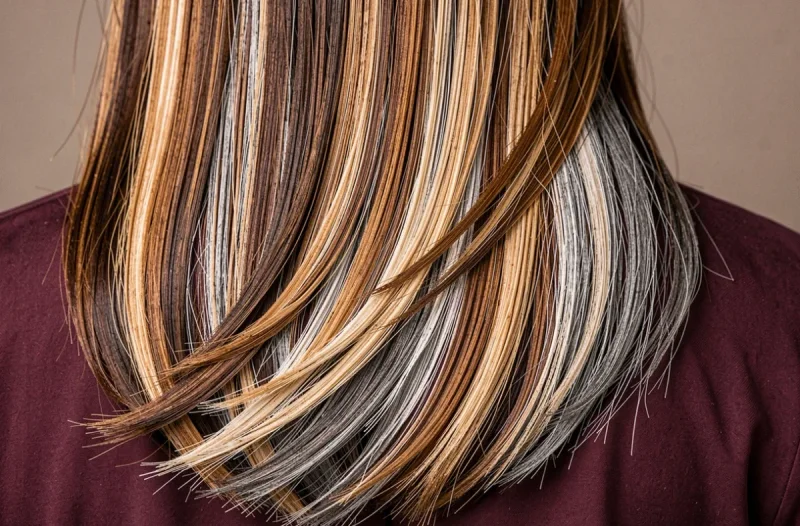
Grey blending is gaining popularity as an alternative to complete coverage. Unlike traditional balayage, this technique dilutes the overall contrast between gray and pigmented areas rather than covering every gray strand.
For brown hair, this means mixing slightly lightened strands with natural areas, including gray hair. The outcome resembles a gradual gradient rather than uniform coverage. A key advantage is the maintenance; regrowth occurs without sharp demarcations, allowing for longer intervals between salon visits.
This method is particularly suited for individuals with a noticeable proportion of gray hair. For those with only a few isolated gray strands, a traditional balayage in warm tones remains more effective.
Limitations of Balayage for Concealing Gray Hair on Brown Tresses
While balayage does not entirely cover gray hair, it visually integrates them into a play of reflections. However, each gray strand remains visible between appointments. For complete coverage, only permanent oxidative dyeing can achieve near-maximal coverage.
Experiences vary regarding the durability of tone-on-tone balayages on resistant gray hair. Some gray strands, being thicker and with smoother cuticles, poorly absorb surface pigments. In such cases, a repigmenting treatment between sessions can help prolong the effect, but it cannot replace an oxidative dyeing.
The frequency of touch-ups also depends on the rate of hair growth and the proportion of gray. On medium brown hair with concentrated gray around the face, regrowth becomes apparent more quickly than if the gray is dispersed across the scalp.
Choosing between balayage and permanent coloring is not merely an aesthetic decision. It involves a trade-off between coverage level, maintenance frequency, and tolerance for visible regrowth. An experienced colorist can combine both techniques, applying root color and balayage on lengths to achieve a tailored compromise for each hair situation.