
Blu-ray 4K Ultra HD Review: Fight Club - A Cinematic Examination
A deep dive into the cinematic impact and enduring legacy of Fight Club, exploring its themes, direction, and performances as it arrives on Blu-ray 4K Ultra HD.
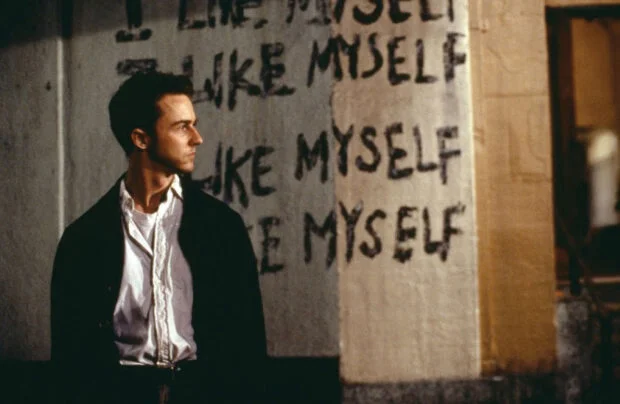
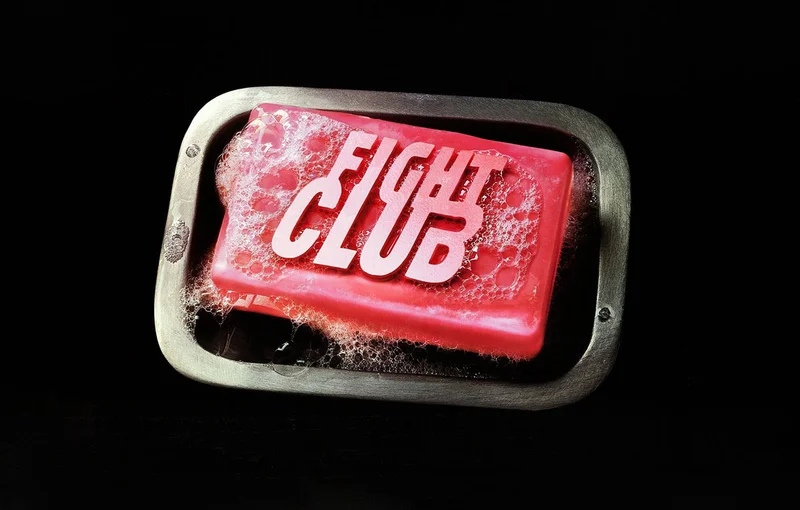

Release Information United States, Germany: 1999 Original Title: – Director: David Fincher Screenplay: Jim Uhls Cast: Edward Norton, Brad Pitt, Helena Bonham Carter Distributor: 20th Century Studios Runtime: 2h19 Genre: Thriller Theatrical Release Date: November 10, 1999 DVD/BR/4K Release Date: June 17, 2026
Jack, seeking an escape from his mundane existence, soon encounters Tyler Durden, a charismatic soap salesman with a twisted, anarchistic philosophy. Together, they establish an underground fight club, which quickly gains a following worldwide. Rule number one: do not talk about Fight Club. Rule number two: do not talk about Fight Club...

The Film
Rating: 5/5
Upon its release in 1999, Fight Club left an indelible mark, evoking scents of powder, soap, and fresh plaster. David Fincher's film burst onto the Hollywood scene like a rogue computer glitch that had suddenly chosen to become a manifesto. Initially met with skepticism from critics and avoided by audiences unsure of how to engage with it, the film ultimately established itself as one of the most influential works of its time. Fight Club was ahead of its era, capturing a moment when the internet was just beginning to infiltrate homes, and consumer society still wore a pristine facade. Fincher depicted individuals consumed from within, men reduced to IKEA furniture with loyalty cards in place of hearts, in a world where possession defined identity. Today, that illusion has merely shifted from paper catalogs to touchscreen devices.
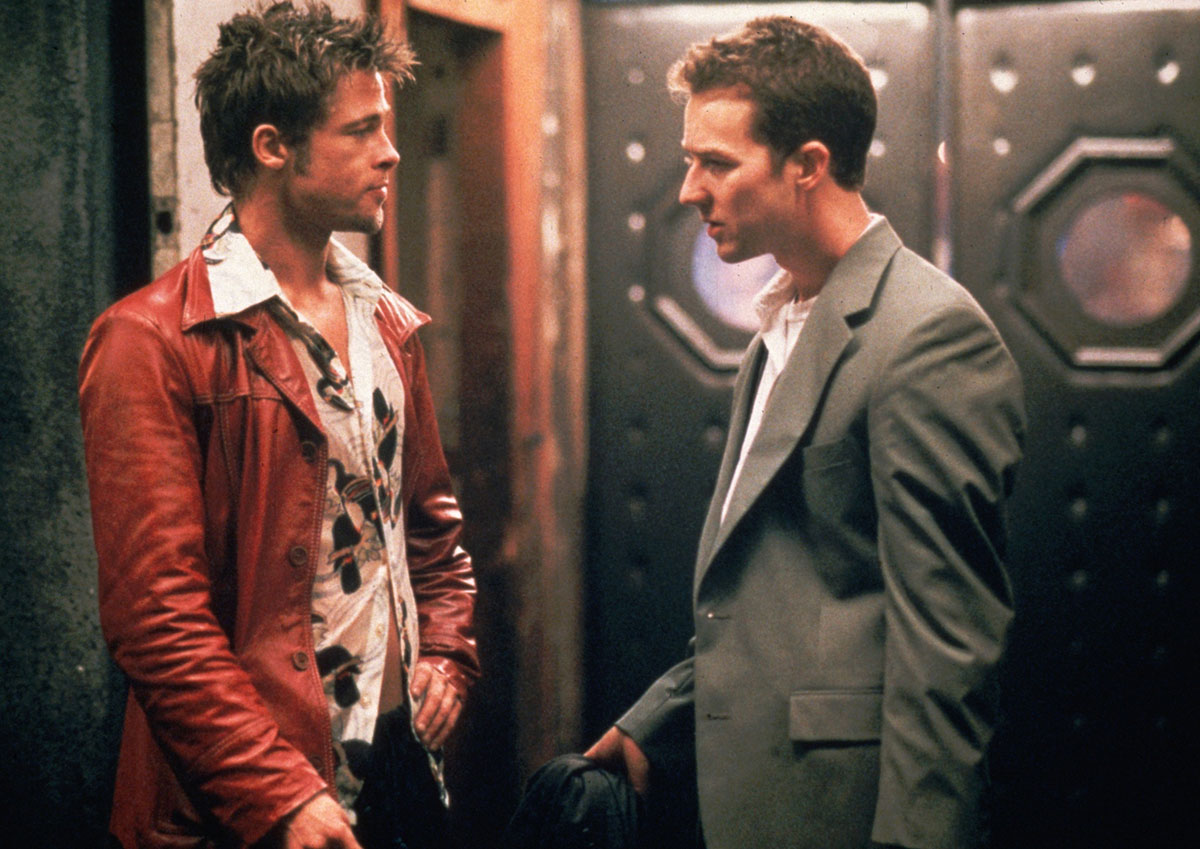
What stands out in Fight Club is its audacious transformation of existential crisis into a sensory experience. Adapted from Chuck Palahniuk's novel by Jim Uhls, the screenplay does more than narrate the tale of an insomniac man who meets the magnetic Tyler Durden. It orchestrates the gradual disintegration of a personality devoured by modern demands: soulless offices, open spaces before they became a staple of work culture, advertising slogans, and an odd religion of efficiency that turns humans into mere accessories of their own apartments. Fight Club probes contemporary masculinity with a rusty scalpel, cutting less cleanly but leaving far more intriguing scars. Each scene seems to respond to an unasked question: what remains when an individual is stripped of their job, possessions, social image, and even their own reflection?
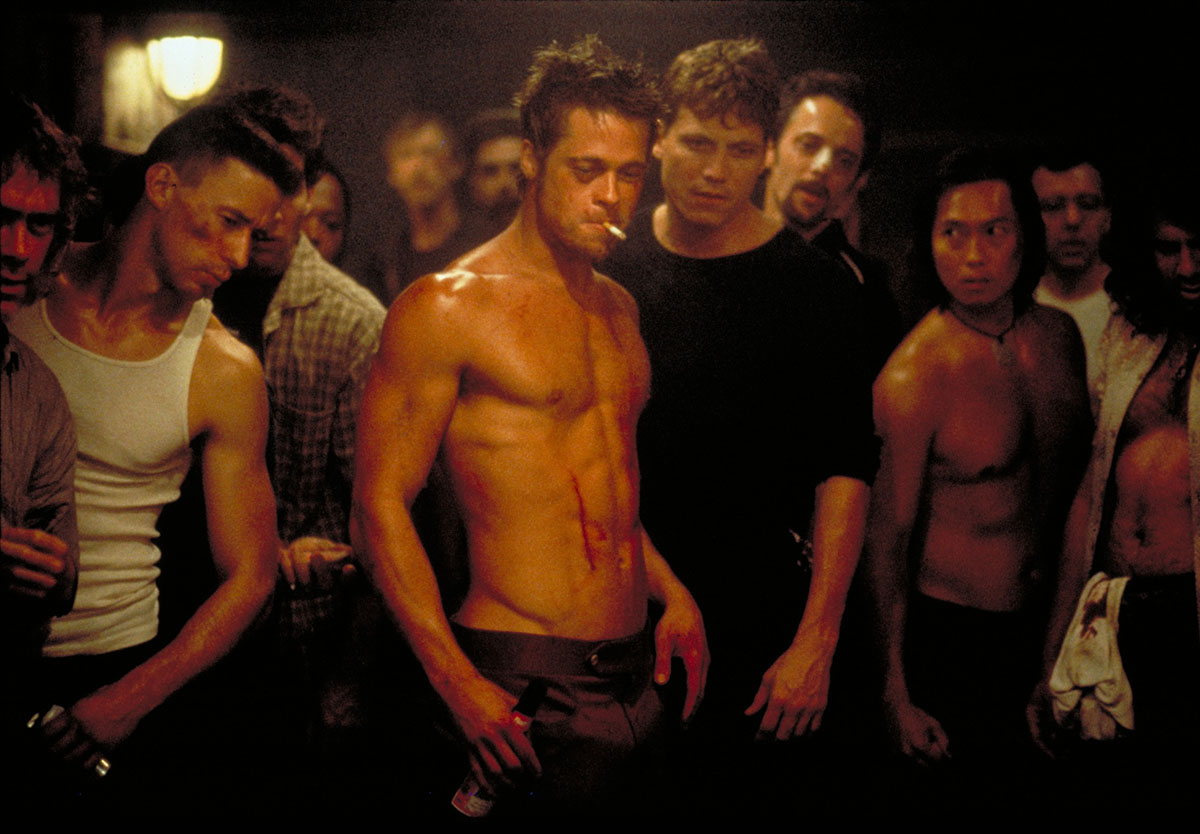
This sense of perpetual vertigo is no accident. Fight Club is likely one of the films where David Fincher's direction aligns most intimately with the narrative. Every camera movement seems infected by the Narrator's psyche, and each transition appears to seek a crack in reality. The famous impossible tracking shots that penetrate walls, pipes, or the insides of a building are not mere technical displays; they provide viewers with the sensation of inhabiting a brain whose electrical connections are beginning to spark. Long before digital effects became an end in themselves, Fight Club utilized them as a natural extension of the narrative, akin to James Haygood's syncopated editing, subliminal overlays, or abrupt shifts in rhythm. The imagery doesn't just tell a story; it thinks, it doubts, and sometimes it lies with an almost audacious confidence.

Jeff Cronenweth's cinematography contributes significantly to this strange hypnosis. Sickly greens, nicotine yellows, murky blacks, and fiery oranges create a universe seemingly covered in a thin layer of industrial dust, as if the entire city breathes through an old charcoal filter. Fight Club transforms underground parking lots, basements, dilapidated buildings, and impersonal offices into genuine mental landscapes. Even the apartments tell stories about their occupants: the Narrator's resembles a perfectly ordered catalog page, while the Paper Street house appears built from damp memories, creaking pipes, and nightmares forgotten in a cellar. Architecture becomes a psychological mirror, with walls sweating as much as the characters.
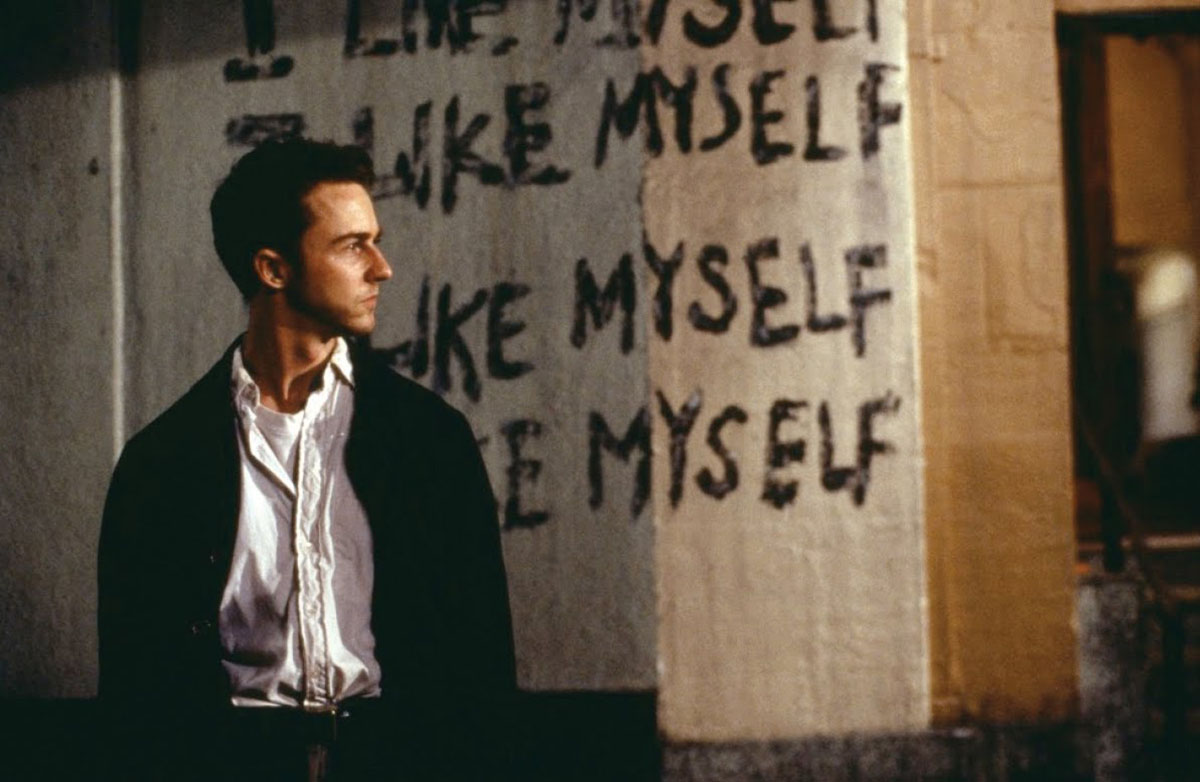
The brilliance of Fight Club also lies in its ability to blur the lines between satire and tragedy. Beneath its iconic lines and almost battered black humor, the film observes a society that turns individuals into trademarks of their own existence. More than twenty-five years after its release, this interpretation seems almost prophetic. Catalogs have given way to algorithms, designer furniture to digital storefronts, and support groups to social media, yet the mechanics remain surprisingly similar: crafting an appealing image to mask the emptiness it conceals. In this regard, Fight Club does not merely criticize consumerism; it delves into the desperate need to construct an identity from the gaze of others, even if it means waging war against one's own reflection. A peculiar mental gymnastics, where the mirror ends up demanding a raise.

Discussing Fight Club inevitably leads to the film's intriguing ambiguity that permeates each sequence. For over twenty-five years, Fincher's work has sparked debates and provoked discussions precisely because it stubbornly refuses to point in any one direction. Some view it as a celebration of violence, others as a fierce satire of toxic masculinity, while a third interpretation sees it as the story of profound depression choosing chaos as a makeshift antidepressant. The most fascinating aspect is that all these interpretations can coexist without negating one another. The film progresses like a tightrope walker who has intentionally replaced their line with a bicycle chain: every step seems risky, yet the balance remains miraculously intact. This richness likely explains why Fight Club continues to fuel discussions long after the credits roll, while many other well-crafted works fade away quietly.

This polysemy extends even to the portrayal of violence. The underground fights are never merely spectacles designed to appease primal instincts. Fincher depicts them as rituals of rebirth, almost primitive ceremonies where pain paradoxically becomes a means to feel something again in an anesthetized daily life. Bodies absorb blows with dry brutality, faces covered in bruises resembling roadmaps tracing the detours of a consciousness in full implosion. Physical suffering does not erase anything; it reveals. Behind every broken nose and split lip lies a clumsy attempt to reclaim oneself, even if it means taking the worst shortcut imaginable. Fight Club never presents this forward flight as a miraculous solution. Instead, it lucidly illustrates how sincere rebellion can gradually fossilize into dogma, and how a challenge to systems can sometimes create its own mechanisms of indoctrination. Tyler Durden becomes less of a man and more of a contagious idea, a figure capable of slipping into the blind spots of any era.

Perhaps this is where the true modernity of Fight Club lies. At a time when certainties are crafted in seconds, where the most radical discourses circulate with the fluidity of an electric shock, and where anyone can reinvent their identity behind a screen, the film resonates with an almost unsettling clarity. What seemed dystopian in 1999 now appears as a slightly distorted reflection of reality. This anticipatory ability is not magic; Fincher, Uhls, and Palahniuk simply understood that the deepest fractures do not arise from technology but from human beings themselves. The tools may change, but the wounds retain a similar shape.
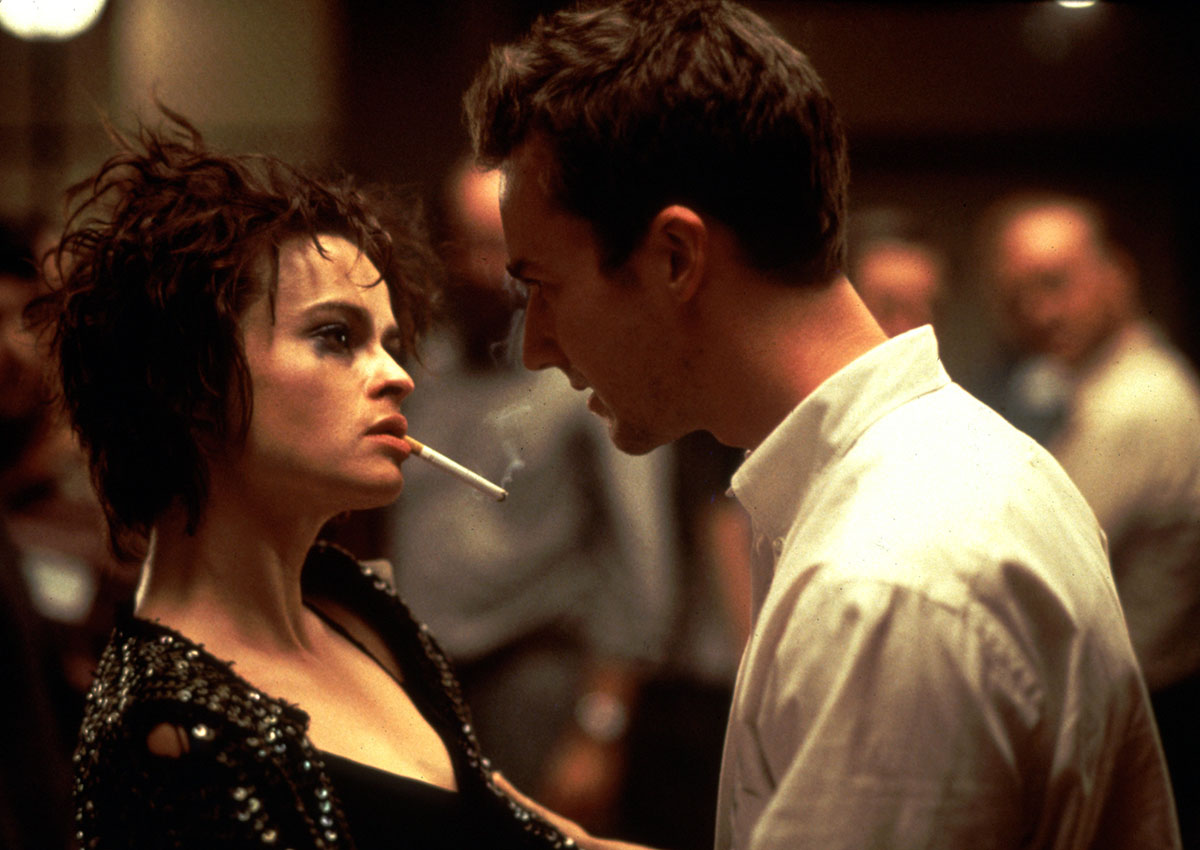
Finally, it is impossible to discuss Fight Club without acknowledging a cast that strikes a rare balance between embodiment and risk. Edward Norton crafts a Narrator with almost surgical precision, marked by restraint, evasive glances, and emotional micro-cracks. His performance perfectly mirrors a personality that disintegrates without ever appearing excessive. Opposite him, Brad Pitt transforms Tyler Durden into a charismatic ticking time bomb. The actor never attempts to make his character likable; instead, he renders him irresistible, which is infinitely more unsettling. Helena Bonham Carter infuses Marla Singer with a battered fragility, morbid humor, and a weary sensuality that continuously prevents the narrative from descending into an exclusively masculine worldview. Even supporting roles, from Meat Loaf to Jared Leto, enrich this universe with immediately memorable silhouettes, as if Fight Club had determined that no face should leave the scene without leaving an imprint.
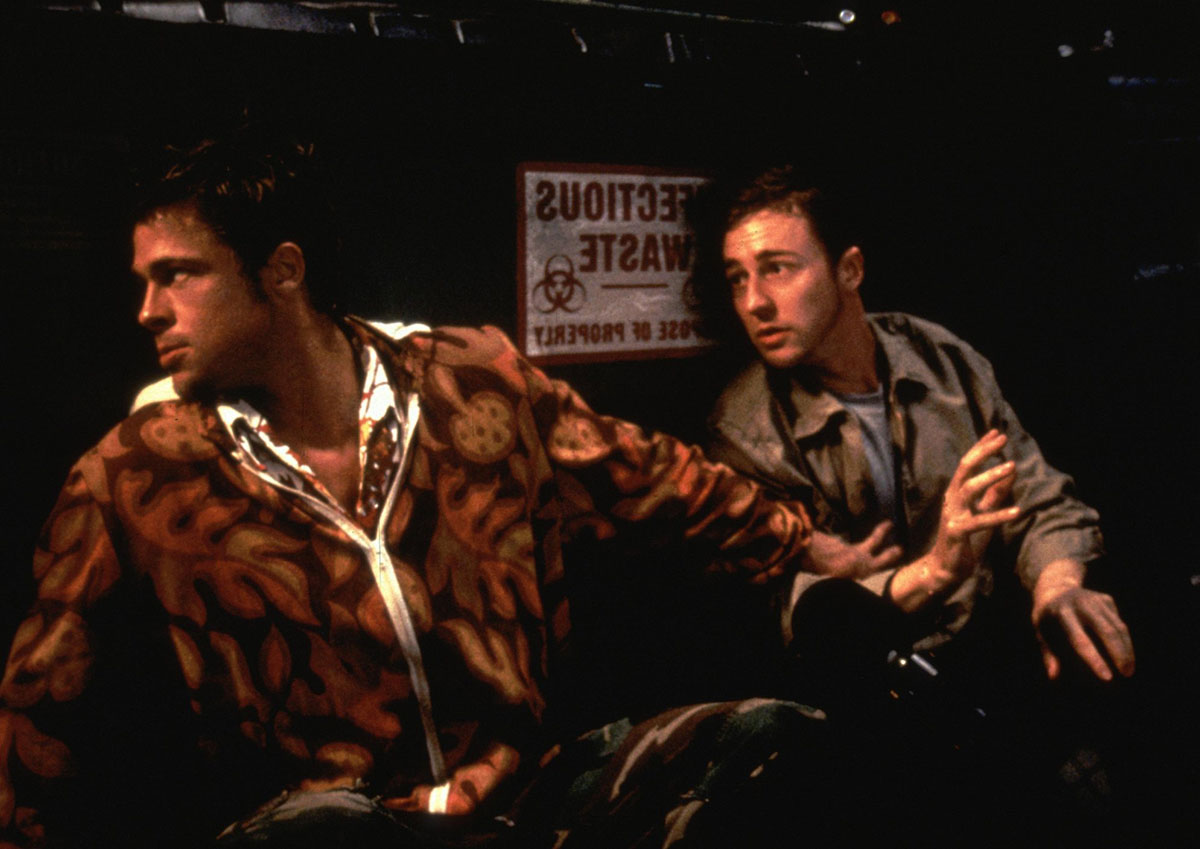
The fate of Fight Club is as captivating as the film itself. Its relatively poor box office performance upon release contrasts sharply with the immense legacy it has gradually built through word of mouth, DVD, Blu-ray, and now Blu-ray 4K Ultra HD. Many works become cult classics because they belong to a generation; Fight Club, however, seems to subtly change its visage with each passing decade. Sometimes a pamphlet against consumerism, other times a reflection on identity crises, or a radiography of mechanisms of control or the almost pathological need to belong to a group, the film stubbornly refuses to be confined to a single definition. This plasticity likely explains why each new viewing reveals a forgotten detail, an unnoticed directorial intention, or a line whose meaning has gradually shifted over the years. The best films do not age; they simply rearrange their internal furniture.
You may also like


![Ici tout commence: What to Expect in Episode 1488 on Monday, July 27, 2026 [SPOILERS]](https://glowculturehub.com/cdn/images/b2d3d6d788c39a22a548df320e6d9f77/w1200.webp)