
Choosing Between Nikon and Essilor Lenses: A Comprehensive Guide
Choosing the right lenses is crucial for visual comfort and health. Explore the differences between Nikon and Essilor lenses to make an informed decision.

Selecting the right lenses for your glasses is a crucial decision that directly affects your visual comfort and overall well-being. Two leading names in the optical industry, Nikon and Essilor, stand out with remarkable innovations tailored to meet diverse needs. Nikon is known for its Japanese heritage, combining durability and precision in its products, while Essilor excels in offering advanced customization and sophisticated treatments. This comparison goes beyond mere commercial choice, prompting individuals to consider how high-quality lenses impact visual performance, protection against blue light, and the experience of eye fatigue. Let’s explore the distinctions between these two iconic brands to help you make an informed decision.
In Summary:
- Nikon lenses provide excellent value for money, focusing on durability through the SeeCoat treatment and a binocular design for natural visual comfort.
- Essilor is recognized for its Visioffice customization technology, Varilux progressive lenses, and high-end Crizal anti-reflective treatment.
- Both brands offer blue light protection, with Essilor’s Eyezen and dedicated treatments from Nikon.
- Your choice will largely depend on your prescription, budget, lifestyle, and preference for specific treatments.
- A knowledgeable optician is essential for achieving a perfect fit and personalized guidance.
Understanding the Optical Expertise of Nikon and Essilor for an Informed Choice
In the demanding world of corrective lenses, two brands capture the attention of glasses wearers: Nikon and Essilor. Each brand has a rich history of innovation. Nikon, a renowned Japanese brand, draws on its expertise in photography to create lenses that balance robustness with finesse. Its SeeCoat treatment is a technological marvel that enhances scratch resistance and clarity. Additionally, Nikon’s Presio W progressive lenses feature a binocular design that allows for quick adaptation and superior visual comfort.
Conversely, Essilor has made a significant impact in optics with its Varilux progressive lenses, the result of decades of continuous improvement. The personalization offered through Visioffice ensures that each pair is uniquely tailored to the user’s morphology and specific needs. The Crizal treatment not only enhances clarity but also boosts scratch and smudge resistance, reducing eye fatigue by managing reflections more effectively. This personalized approach appeals to both single-vision and progressive lens wearers.

Key Technologies: How Nikon and Essilor Enhance Vision
Nikon’s innovations emphasize durability and comfort. The SeeCoat technology goes beyond scratch protection; it also includes an anti-reflective treatment that improves visual quality in various bright environments. Special care is taken to filter blue light, which is essential for those who spend long hours in front of screens. The binocular design of the Presio W progressive lenses optimizes natural vision, significantly reducing fatigue from the outset.
Essilor pushes boundaries with its precise customization tools. The Visioffice system meticulously measures eye positioning and analyzes movements to configure bespoke lenses. This results in Varilux lenses that offer very natural focal transitions. The Crizal treatments complement this pursuit of comfort by eliminating bothersome reflections and ensuring long-lasting lens protection. The Eyezen lenses specifically cater to digital needs, filtering blue light to alleviate the fatigue it can cause.
Comparing Nikon and Essilor Lenses: Quality, Price, and Adaptation
Beyond innovations, the choice between Nikon and Essilor also hinges on practical and personal criteria. One key factor is the quality-to-price ratio. Nikon offers an accessible range, with simple lenses priced between €100 and €200, while progressive lenses range from €300 to €600. Adding treatments like anti-reflective and blue light protection typically incurs an extra cost of around €50-60 per lens, which remains competitive given the assured durability.
Essilor, on the other hand, often positions itself at a slightly higher price point, particularly with Varilux lenses and Crizal treatments. While these provide undeniable additional visual comfort, they can also increase the overall cost.
Characteristics
| Nikon | Essilor | |-----------|-------------| | Average price (single lens) | €150 | €180 | | Anti-reflective treatment | Included (+€50) | Included (+€60) | | Blue light protection | Available (+€60) | Available (+€70) | | Durability | High | Very High | | Vision quality | Excellent | Excellent |
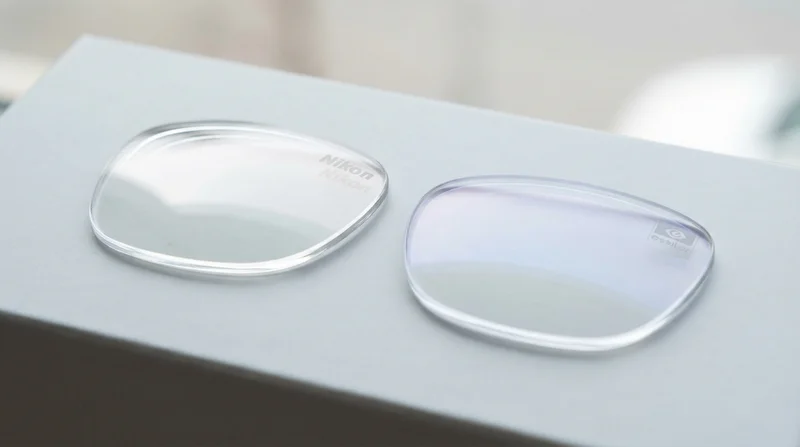
Criteria for Choosing Between Nikon and Essilor Based on Your Daily Life
The selection of lenses should be guided by your prescription, as well as your professional and personal environments, along with your sensitivity to light.
- Screen time: Essilor Eyezen effectively filters blue light to reduce visual fatigue, making it an advantage for digital professionals.
- Activities requiring precise vision: Nikon’s binocular design enhances clarity and precision, ideal for photography enthusiasts or athletes.
- Budget considerations: Nikon is often favored for its balanced quality-to-price ratio, especially for simple prescriptions.
- Treatment preferences: Essilor’s Crizal treatments ensure excellent scratch and smudge resistance, simplifying daily maintenance.
The Crucial Role of the Optician in Your Visual Experience
Beyond brand choice, the human factor remains essential. Your optician, a true expert, will accurately assess your needs based on your habits and physiology. They will not only advise you on the most suitable brand and treatments but also ensure the proper fitting of the lenses for lasting comfort.
The adaptation period, especially for progressive lenses, can vary. With personalized follow-up and precise adjustments, you can maximize the performance of your glasses. Additionally, maintaining your lenses with appropriate products will extend their quality and your visual comfort.
It's also important to consider the environmental impact of the materials used for your lenses and frames. For insights on how lens selection affects pollution, a thorough reading of the article comparing glass and plastic highlights valuable information.