Choosing the Right Hairstyle for Fine Curly Hair
Fine curly hair has unique challenges due to its structure and requires specific cutting techniques and styles for optimal maintenance. Discover how to choose the right haircut and care routine.
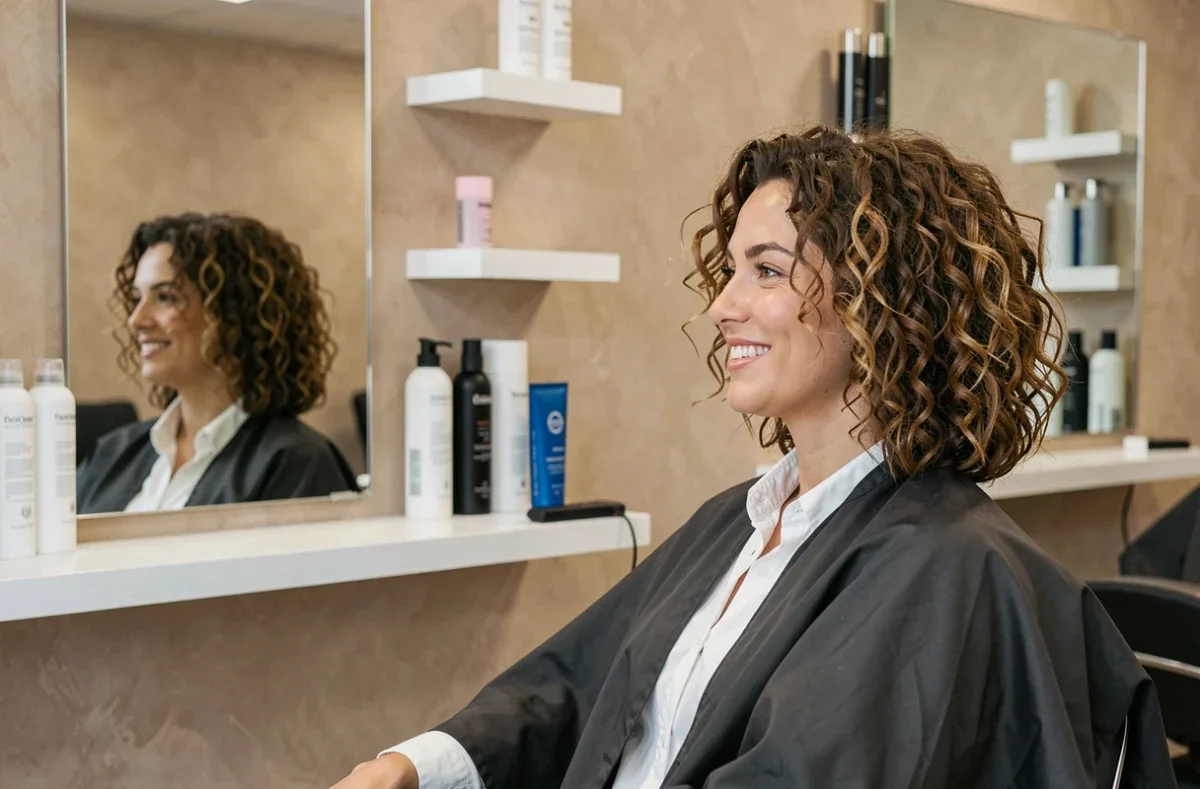
Fine, curly hair presents unique challenges due to its reduced diameter and natural springiness, which can unevenly distribute weight along the strands. Selecting an appropriate haircut for this hair type involves more than just browsing through style catalogs. It requires a careful consideration of the haircut and realistic styling time, as a style that demands daily use of a diffuser is not ideal.
The Importance of Dry Cutting for Fine Curly Hair
Dry or semi-dry cutting is becoming increasingly popular among stylists who specialize in curls. For fine hair, this technique is deemed the most reliable approach. When hair is wet, the strands stretch under the weight of water, losing their natural bounce. Consequently, the stylist works with a false length.
Once dried, the hair can shrink back up to several centimeters. While this shrinkage is manageable for thick hair, it can be unpredictable for fine hair due to varying densities and growth directions across the scalp.
Cutting dry allows the stylist to see the actual fall of each curl and adjust the angle on a strand-by-strand basis. Salons that embrace this method also consider natural growth patterns and cowlicks before shaping the style. Cutting against these natural flows often leads to more styling work to tame rebellious strands, which contradicts the goal of a low-maintenance haircut.
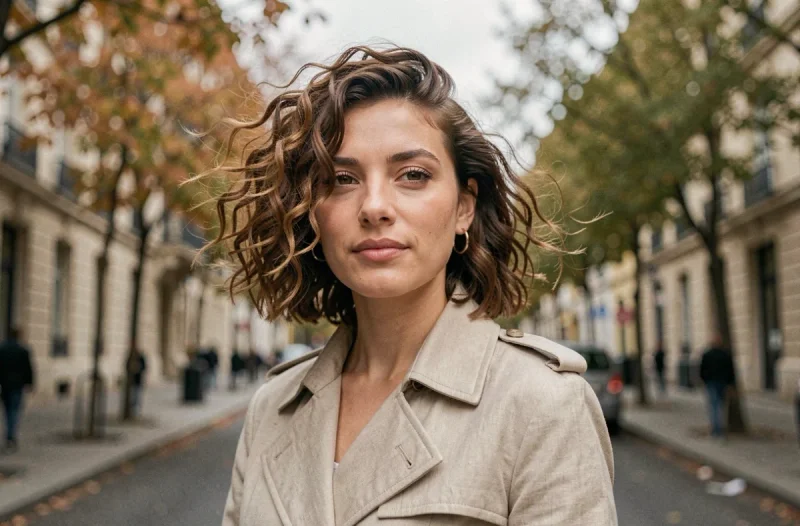
Hairstyles That Hold Without a Diffuser or Blow-Drying
When it comes to fine, curly hair, the key criterion for selecting a hairstyle is not the latest trend but its ability to maintain shape the next day without any styling intervention. A successful cut should retain its form after air drying, without a diffuser, blow-drying, or heavy styling products.
The Curly Shag: Volume with Frequent Maintenance
The shag is more than just a layered cut. It features long layers on top and shorter ones around the face, with a specific cutting angle that directly influences how the curls fall. For fine hair, the volume created at the roots compensates for the lack of density.
The curly shag dries well naturally, as the shorter layers on top do not weigh down the curls, allowing them to form freely. However, the shape can lose its definition faster as the hair grows, necessitating a refresh every six to eight weeks to maintain the structure.
The Curly Bob: The Easiest Maintenance Style
A one-length bob, falling between the chin and shoulders, is the least demanding haircut for fine, curly hair. This style evenly distributes weight, preventing the curls from becoming imbalanced due to varying lengths.
A one-length curly bob retains its shape for several days without the need for touch-ups. Air drying alone suffices, although it may offer less root volume compared to a shag, resulting in a more compact appearance.
Long Layers: Beware of Over-Thinning
Traditional layering works well for thick hair that has substance to redistribute. However, on fine hair, overly pronounced layers can lead to transparent ends and isolated strands that fail to form cohesive curls. If layering is desired, an internal layering technique (invisible layers that lighten without thinning the outer edges) is preferable to surface thinning.
Considering Face Shape When Choosing a Style
While face shape plays a role in hairstyle selection, it is not as straightforward as generic guides suggest. For fine, curly hair, the focus should be on where natural volume occurs and whether it aligns with areas where volume is needed.
- An elongated face can benefit from a curly bob with lateral volume, as curls naturally widen the silhouette without extra styling effort.
- A round face is best complemented by volume concentrated on the top of the head (the shag excels here) rather than on the sides, which can further round the appearance.
- Shorter face-framing strands work well for fine curly hair, as they create tighter, more defined curls compared to longer lengths, providing a natural frame.
The direction of growth at the fringe and temples also determines whether a curly fringe will be practical. A fringe on fine, curly hair that grows forward will hold its shape naturally, whereas a side-growing fringe will require daily styling to maintain its position.
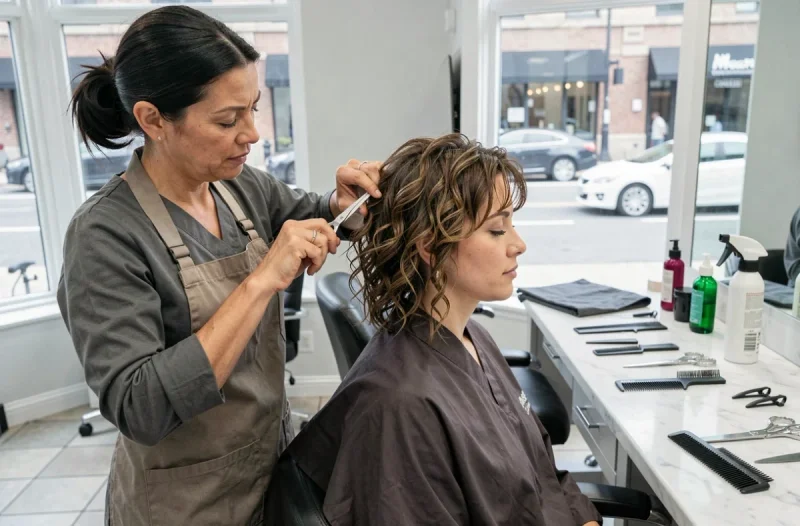
Tailored Hair Care Routine: Lightweight Products and Drying Techniques
Even the best haircut can fall flat if the products used weigh down the strands. For fine, curly hair, every extra gram of product pulls the curls down and flattens volume.
- Opt for a sulfate-free shampoo that effectively cleanses without leaving residue, which can weigh down fine hair more quickly than thick hair.
- Avoid heavy butter-based masks (like shea or avocado) applied all over; instead, focus on the ends and never apply to the roots.
- Lightweight styling mousses are better suited for defining fine curls than creams, as they do not add weight. A mousse applied to damp hair, followed by air drying, often yields sufficient curl definition.
- The technique of "scrunching" (crumpling the lengths upward) during product application encourages curl formation without adding bulk.
Air drying remains the most suitable method for fine curly hair when the cut is well-executed. If curls fail to form without a diffuser, it may indicate that the haircut is not aligned with the hair's true texture.
A well-cut, dry, fine curly hair should require no more than five minutes of styling in the morning. If your daily routine exceeds this time, consider revisiting your haircut with a stylist experienced in working with curly textures.