Christopher Nolan's "L'Odyssée": A Possible Nod to Batman?
Christopher Nolan's 'L'Odyssée' draws from ancient Greek literature while hinting at connections to Batman. Explore the filmmaker's insights on these links.
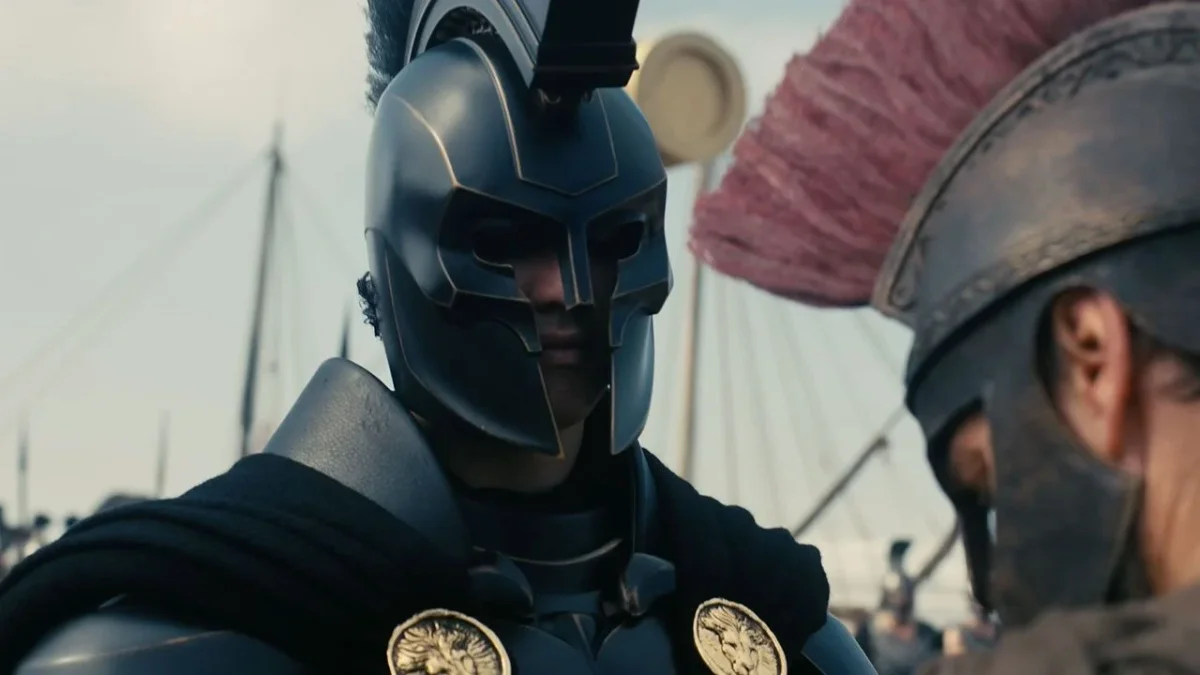
Christopher Nolan's latest film, "L'Odyssée," draws inspiration from one of the most renowned tales in ancient Greek literature, yet it appears to carry subtle references to Batman. Was this intentional? Nolan shares his thoughts.
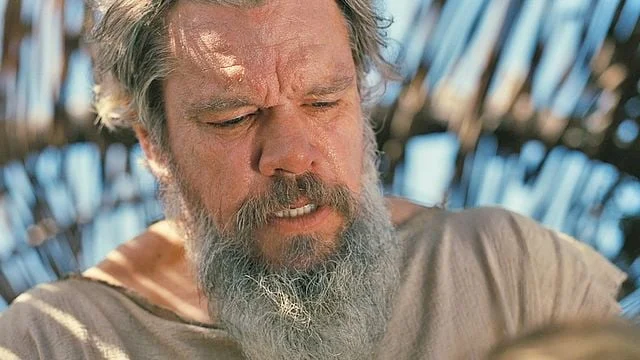
"I reread the poem over and over, and I found very strong connections, positively, with my previous work," Nolan remarked earlier this month regarding his new adaptation of Homer's epic. He described "L'Odyssée" as a narrative that encompasses various storytelling patterns: "It's an incredible adventure tale but also, as you pointed out, a story of vengeance, love, and loss. It’s a coming-of-age story about a return home that also addresses the consequences of war. I discovered many timeless themes that are essential to human nature. And as a storyteller, those are the aspects that resonate with me deeply."
The film, released on July 15, showcases how closely its narrative aligns with Nolan's previous works, which frequently explore themes of vengeance, obsession, and a protagonist's journey home, akin to characters in "Inception," "Interstellar," or "Dunkirk." Furthermore, "L'Odyssée" can be seen as a reflection of "Oppenheimer," examining the past to comment on the present, particularly regarding human violence and the aftermath of conflict. Could it also echo elements from his "Dark Knight" trilogy?
In May, during an appearance on The Late Show with Stephen Colbert, Nolan noted the intriguing casting of his thirteenth feature, which includes former Catwoman Anne Hathaway alongside current Batman Robert Pattinson and Spider-Man Tom Holland. He explained that superheroes and Greek heroes share a connection: "They are the original superheroes. A significant portion of comic book culture, whether from Marvel or DC, stems from the epic poems of Homer."
He further elaborated, "No one really knows if Homer was a single person; he might have been the George Lucas of his time. We don’t know if he was one individual or a collective, but he was the Marvel of his era. There exists within us a strong desire to believe that gods walk among us, and modern comic books are an expression of that."
This raises the question: is the image of a hooded Ulysses in "L'Odyssée," where his face remains unseen during his return to Ithaca, a deliberate reference to Batman, or is it part of Nolan's broader exploration of the concept of the 'hero'?
"Reading Homer, You See The Count of Monte Cristo, Thus Batman"
Nolan clarified in early July, "That wasn’t my intention, but there is a strong link between them, as Batman is inspired by 'L'Odyssée.' This is also what makes revisiting this foundational text so interesting: it contains many elements found in other stories because they draw from it. When watching Batman, I saw echoes of 'The Count of Monte Cristo.' But in reading Homer, you see 'The Count of Monte Cristo,' thus Batman (laughs). There’s a lineage of powerful elements stemming from this story."
He continued, "There’s this idea of returning home disguised, to assess the situation and see how he can reclaim his kingdom. It’s a potent trope, a form of storytelling we’ve seen in many ways. I didn’t seek to shy away from these connections; I allowed them to be as powerful as possible because that’s where the fun lies in 'L'Odyssée': discovering this grand adventure, which you might recognize in other forms. But it is in Homer that you find the purest and most extreme version."
Ultimately, "L'Odyssée" stands as a quintessential Nolan film, intricately woven into his broader body of work and connecting with his other cinematic endeavors.
Interview conducted by Maximilien Pierrette in Paris on July 9, 2026