Exploring the Locations of Christopher Nolan's 'L'Odyssée'
Christopher Nolan's 'L'Odyssée' utilizes real-world locations for its epic narrative. Discover the stunning sites where the film was shot, from Morocco to Iceland.
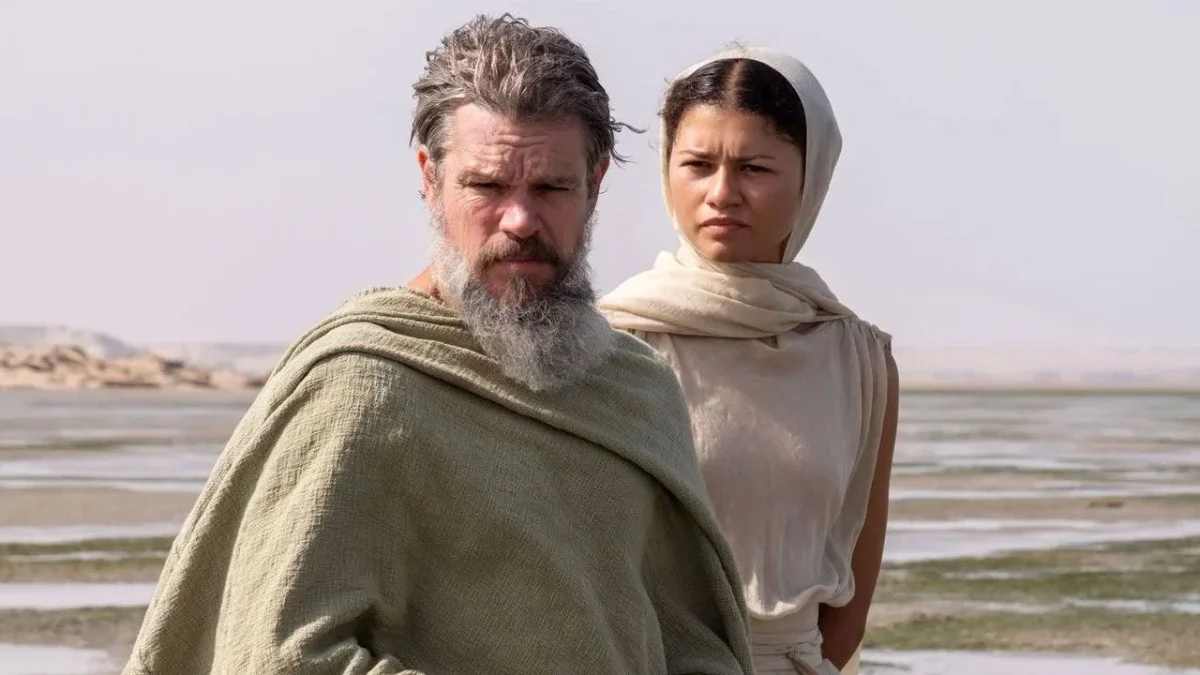
Christopher Nolan's latest cinematic venture, "L'Odyssée," debuted in theaters on July 15, showcasing a significant reliance on real-world locations for its breathtaking visuals. This is not merely an impression; the film's production has indeed taken viewers on a journey through some stunning landscapes.
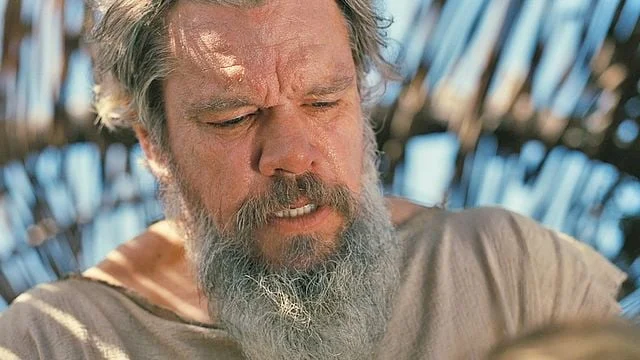
During a promotional visit to Paris for his recent film "Smashing Machine," director Benny Safdie, who plays the fierce Agamemnon in "L'Odyssée," hinted at the film's impressive backdrop. While he couldn't divulge too much due to the secrecy surrounding Nolan's projects, he shared an intriguing insight: "Going to the places where the book was born was one of the most incredible experiences of my life. Being there, seeing the production, and thinking that if 'L’Odyssée' had really existed, it would have happened here."
The film’s credits reveal a list of diverse locations, each integral to the epic journey depicted in the story. Among these, Los Angeles stands out as the least expected site, specifically the Universal Studios, where certain scenes, including maritime sequences and interior shots of Ulysses and Penelope's castle, were filmed. The exterior of this castle is modeled after the Castello di Santa Caterina, a 15th-century structure located on the island of Favignana, off the coast of Sicily.
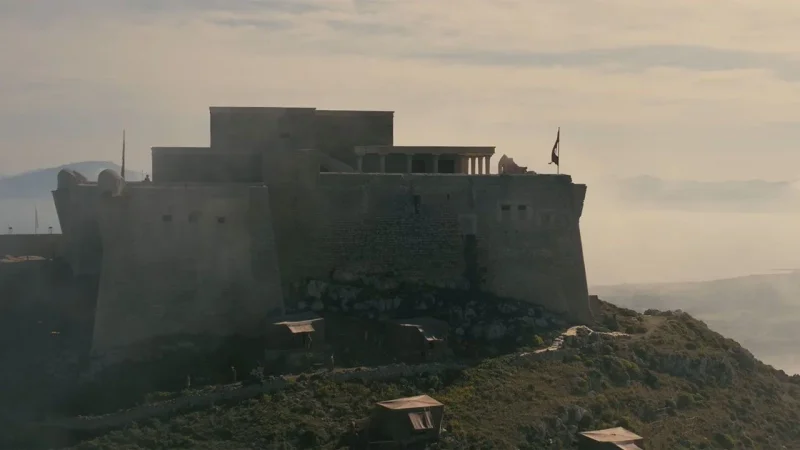
Thanks to permissions granted by the Italian Minister of Culture, production designer Ruth de Jong constructed several structures on a mountain rising 310 meters, providing panoramic views of the surrounding landscape and sea. This included a pigsty and Eumaeus's home, along with temporary annexes to enhance the grandeur of the palace. The crew developed a fondness for the island, even installing a funicular and utilizing helicopters for transportation, as building a road was not feasible.
Walking was highly encouraged during the three-week shoot, a physically demanding choice that helped forge camaraderie among the cast and crew, many of whom had already endured a significant amount of filming.
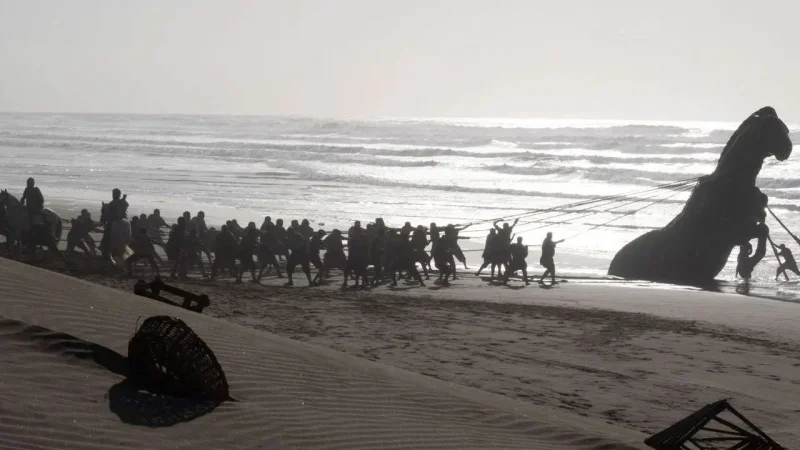
The filming process began in February 2025 in Morocco, where scenes were shot on the beaches of Essaouira, featuring the discovery of a Trojan Horse presented as a gift from Poseidon, and the moment Ulysses departs, believing his journey home will be swift. Additionally, the village of Aït Benhaddou, near Ouarzazate and the Atlas Mountains, served as the basis for the doomed city of Troy.
According to the press kit, every element was designed to seamlessly integrate with Aït Benhaddou, enhancing the monumental and spectacular portrayal of Troy. This included transporting fifteen mature olive trees to provide greenery in newly constructed areas. The film features a sprawling set of over 10,000 square meters, consisting of around sixty buildings, including the towering temple of Athena, which reaches fifteen meters in height and twenty-six meters in depth.
Filming also took place in the Sahara Desert, capturing scenes between Ulysses and Athena, played by Zendaya, along with multiple versions of the Trojan Horse, each standing eleven meters tall. This extensive filming spanned ninety-one days, from February 25 to August 5, 2025. However, the challenges encountered in Greece presented their own set of difficulties.
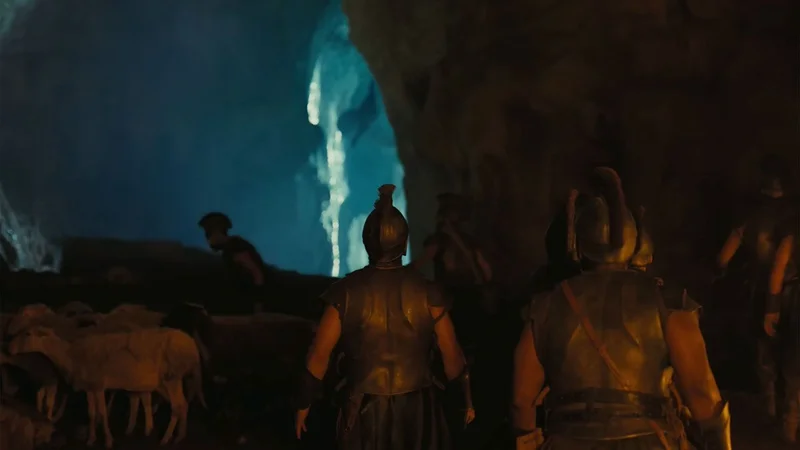
In the Peloponnese region, Nolan filmed one of the most striking sequences of "L'Odyssée," where Ulysses and his crew confront the Cyclops Polyphemus, who is never explicitly named in the film. The challenge lay not in the picturesque Voidokilia Bay, known for its turquoise waters, but rather in the Grotto of Nestor, located nearby.
In this mythological setting—rumored to be where Hermes hid cattle stolen from Apollo—the team installed an eighteen-meter puppet of the Cyclops, complete with necessary armatures and cables, creating one of the film's most visually impressive moments.
Another memorable and slightly eerie scene features the enigmatic Circe, played by Samantha Morton, filmed in Scotland at the ruins of Findlater Castle, overlooking the Moray Firth. This location served as the backdrop for six weeks of shooting, including scenes where the heroes face an army of giant soldiers, captured both on the beach and in the Culbin Forest.
Finally, the film ventured north to Iceland, where sequences depicting Ulysses' descent into the Underworld were filmed, featuring spirits such as Sinon, portrayed by Elliot Page. These scenes were shot in June 2025, under the midnight sun, amidst a landscape exposed to wind and rain, enhancing the film's immersive experience. Nolan noted, "I knew early on that I wanted the landscapes of Iceland to represent the underworld."
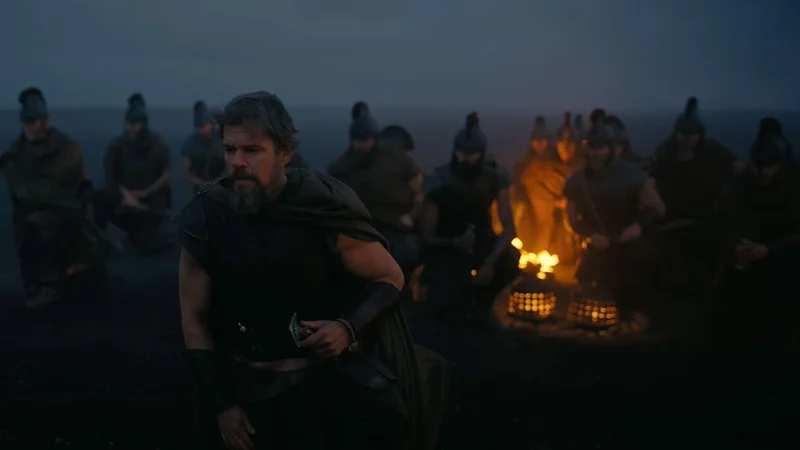
He added, "This journey north, where it gets increasingly colder, is the opposite of Ithaca, Ulysses' homeland." Should the film achieve the anticipated success, it may pave the way for tour operators to offer experiences that allow fans to embark on their own cinematic odyssey, visiting the stunning locations featured in Nolan's thirteenth feature film.