
Distinguishing Between Rejection and Irritation in Nose Piercings: What You Need to Know
Is your nose piercing red and slightly swollen? Learn how to differentiate between normal healing, irritation, and rejection to ensure proper care.

Experiencing redness and slight swelling around your nose piercing can be concerning, especially if you're unsure whether it's serious. This situation is common for many individuals in the weeks following the procedure. The healing process for a nose piercing can be lengthy, and during this time, the body exhibits various responses.
Redness, crusting, and mild swelling can all be normal reactions. However, the initial signs of rejection often mimic those of ordinary irritation. Learning to differentiate between the two can help you avoid unnecessary panic or, conversely, prevent worsening conditions from being neglected.
Understanding the Healing Process of Nose Piercings
Before addressing rejection, it's essential to understand what the skin around the piercing goes through. A nostril piercing typically takes between six to nine months to heal completely, including deeper layers of skin. Throughout this period, localized reactions are expected.
Here are some signs that should not cause alarm in the initial weeks:
- A slight localized redness around the piercing, particularly during the first month, without spreading beyond the immediate area.
- Clear or pale yellow discharge that dries into small crusts around the jewelry: this is lymph fluid, not pus, and is part of the tissue repair process.
- Moderate itching, indicating that the skin is healing.
- A mild swelling during the first three to five days, which gradually decreases.
These manifestations are not indicative of problems; rather, they confirm that the body is functioning as it should. An irritation from healing will resolve on its own if proper care is maintained.
The challenge lies in the duration. Since the internal healing of the nostril can take several months, irritations may appear later, sometimes around the fourth or fifth month. Many individuals misinterpret these signs as rejection, while the piercing is merely undergoing an active healing phase.
Signs of Rejection in Nose Piercings
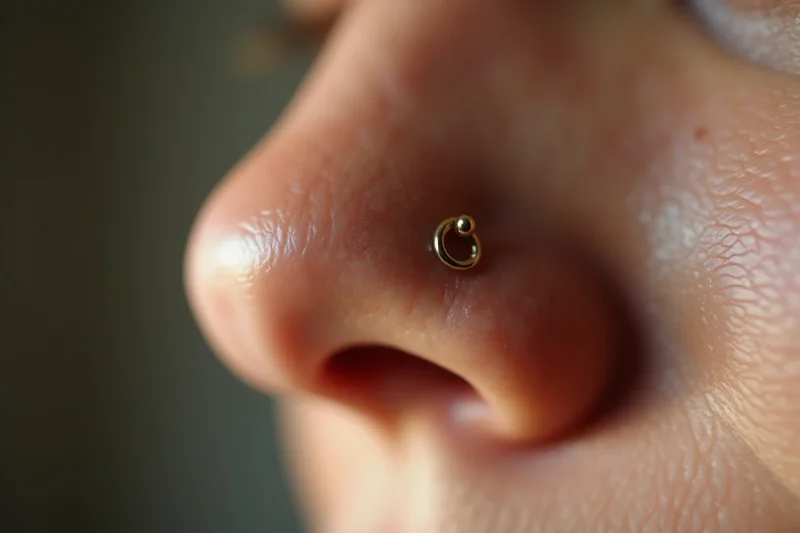
Rejection is a different mechanism altogether. The body perceives the jewelry as a foreign object and begins to push it toward the surface of the skin. This is not a temporary inflammatory response but a gradual and irreversible process if not addressed promptly.
Jewelry Appearing to Move Toward the Surface
The first tangible sign is a change in the position of the jewelry. The stem may become more visible under the skin, and the distance between the two ends of the piercing decreases. If the jewelry looks more superficial than when it was first placed, it is likely migrating.
To track this change, a simple method is to take a photo of your piercing each week from the same angle. Comparing two images taken weeks apart can reveal even slow migrations.
Thinning of the Skin Between the Holes
As rejection progresses, the skin covering the stem becomes increasingly thin and may appear slightly translucent. This indicates that the body is actively pushing the metal outward.
If you notice that the jewelry bar is becoming more visible under the skin, consult a professional piercer promptly. Delaying could increase the risk of visible scarring.
Persistent Dull Pain Without Obvious Cause
Normal irritation typically causes intermittent discomfort linked to specific actions, such as snagging, vigorous cleaning, or premature jewelry changes. In contrast, rejection is accompanied by diffuse and constant sensitivity, even at rest, that does not improve with standard care.
Comparing Irritation, Infection, and Rejection
The symptoms of irritation, infection, and rejection can overlap, making diagnosis challenging without clear indicators. The table below summarizes the practical differences:
| Criterion | Normal Irritation | Infection | Rejection | |---------------------------|-------------------------------------|----------------------------------------|-----------------------------------------| | Redness | Localized, stable | Spreads beyond the piercing | Variable, often moderate | | Discharge | Clear or pale yellow (lymph) | Thick, greenish or grayish pus, with odor | Little to no discharge | | Swelling | Mild, decreases in a few days | Pulsatile, warm to the touch | Minor, but the jewelry changes position | | Jewelry Position | Stable | Stable | Moves closer to the surface | | Pain | Intermittent, related to an action | Constant, sometimes with fever | Dull and persistent, without identifiable cause | | Response to Care | Improves | Requires medical attention | Does not improve, progresses slowly |
A simple guideline summarizes the logic of this table: irritation responds to care, infection worsens without medical intervention, and rejection progresses regardless of your actions.
The Material of the Jewelry and Its Link to Rejection
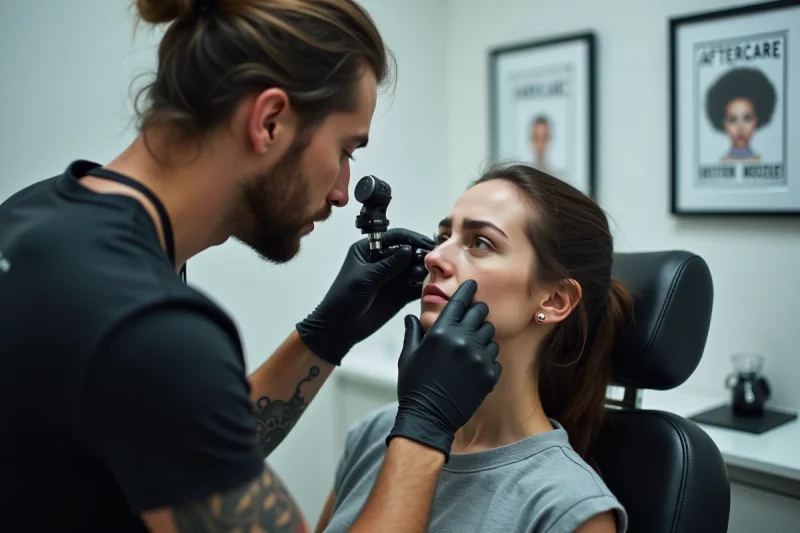
The choice of metal is crucial in determining the risk of rejection. Not all jewelry is created equal, and the nostril is an area subject to friction, moisture, and daily contact (such as blowing your nose, wearing masks, and applying makeup).
Implant-grade titanium is the most well-tolerated material for the vast majority of skin types. It is nickel-free, which is the primary allergen that can trigger or accelerate rejection. Despite its reassuring name, surgical steel contains a small amount of nickel, which can provoke reactions in sensitive individuals.
Jewelry of inadequate quality, with rough finishes or uneven polishing, can cause repeated micro-irritations. These mechanical irritations lead to chronic inflammation that the body seeks to resolve by expelling the object.
When Changing Jewelry Is Not Enough
If your piercing shows signs of migration despite having a well-fitted titanium piece, merely changing the material won't resolve the issue. At this point, removing the jewelry before the skin breaks through can minimize scarring. An experienced piercer can assess whether there is still room for maneuver or if removal is necessary.
Forcing a piercing that is in the process of rejection to stay in place only prolongs skin trauma. The scar will be more pronounced the longer you wait.
The line between irritation and rejection is not always clear-cut at first glance. Weekly photos, attention to the jewelry's position, and the quality of the material remain your best tools for monitoring. At the first sign of doubt regarding your nose piercing's condition, consulting a professional piercer will provide a much more reliable diagnosis than online searches.
You may also like


![Ici tout commence: What to Expect in Episode 1488 on Monday, July 27, 2026 [SPOILERS]](https://glowculturehub.com/cdn/images/b2d3d6d788c39a22a548df320e6d9f77/w1200.webp)