
Virtual Love: The New Relationship Trend Among Teens That Concerns Experts
More and more young adolescents are developing romantic relationships with highly customizable chatbots on their phones. This phenomenon, nearly invisible to parents, disrupts socialization and intimacy norms during the age of first loves. Understanding these virtual exchanges is essential to support our children without demonizing technology.
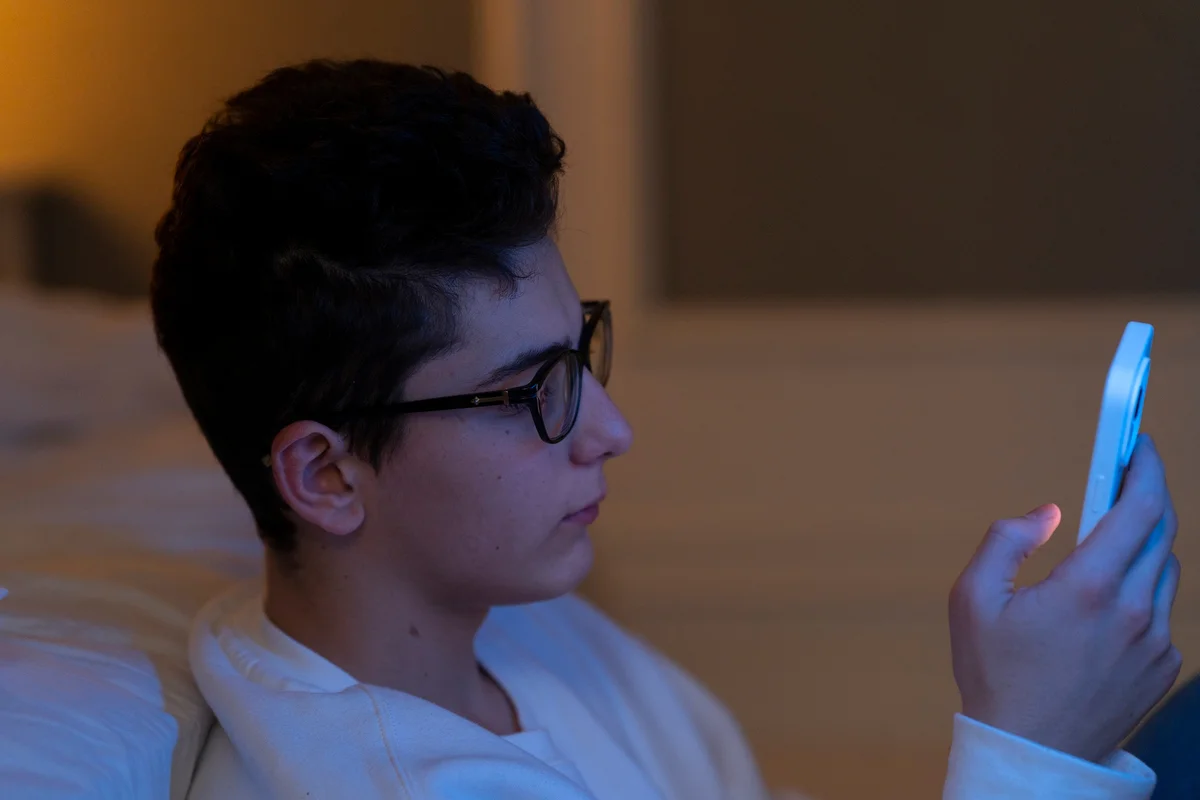
An increasing number of young adolescents are forming emotional bonds with highly customizable chatbots on their smartphones. This nearly invisible phenomenon for parents disrupts the norms of socialization and intimacy during the formative years of first loves. Understanding these virtual exchanges is crucial for guiding our children without demonizing technology.
Gone are the days of star posters pinned above beds. Today, adolescent fascination has found a new, more interactive, and unsettling outlet. Thanks to virtual companion apps like Character.AI, Candy AI, and OurDream AI, teens can create a partner from scratch in just a few minutes. Eye color, fashion style, personality traits, and even physical attributes are all adjustable. These artificial intelligences, often designed to resemble anime heroines or hyper-realistic avatars, are programmed to be attentive, always available, and especially submissive.
The Quiet Influx of Virtual Love into Teen Lives
A significant study conducted in the UK by Male Allies UK, involving a thousand boys aged 12 to 16, reveals that 85% of them have interacted with a chatbot. Even more striking is the finding that one in five boys is either engaged in or knows another boy who is in a romantic relationship with a companion AI.
This rapid rise in popularity can be attributed in part to extensive exposure. Advertisements for these apps directly target younger audiences on their favorite platforms, such as YouTube and online gaming. Psychologist Lee Chambers notes that parents often have no idea what is happening, simply because they do not inhabit the same algorithmic bubble as their children. Continuous download suggestions are presented to teens as a fun way to build confidence with the opposite sex or alleviate loneliness. For 43% of the boys surveyed, these virtual spaces serve as a refuge to ask intimate questions without the fear of embarrassment in front of adults or classmates.
The Illusion of Conflict-Free Relationships Skews Real-World Learning
In a relationship with a chatbot, there is no friction, no disagreements, and no compromises required. The AI is programmed to flatter the user, agree with them, and cater to their every desire. These interactions do not reflect the essential reciprocity found in human relationships.
By becoming accustomed to completely smooth and conflict-free exchanges, adolescents may develop unrealistic expectations towards their real-life peers. Genuine relationships involve awkwardness, disputes, refusals, and mutual adjustments. It is precisely through these challenges that young people develop empathy and emotional resilience. When these teens attempt to apply the dynamics of their virtual relationships in real life, they may face a harsh reality. The disappointment from rejection or disagreement from a girl can lead to immense frustration, sometimes resulting in anger and misogynistic behaviors.
Digital Isolation Hides Behind the Illusion of Play
Detecting this phenomenon at home can be a challenging task for families. Unlike traditional inappropriate content, these applications do not resemble adult websites at first glance. The interface often closely resembles a harmless video game or a simple messaging app.
Moreover, adolescents tend to keep these relationships secret for fear of being stigmatized or mocked by their peers. This taboo reinforces their isolation. A teen who spends hours on their phone chatting with an AI might appear to be simply conversing with friends, while actually sinking into profound emotional solitude. These apps exploit this vulnerability by encouraging the purchase of virtual gifts, replacing real social fabric with a commerce of attention.
Open Family Dialogue as the Strongest Defense
In light of a legal vacuum where laws struggle to regulate these autonomous platforms, the role of parents is crucial but requires sensitivity. Brutally banning screens or shaming the adolescent may irreparably damage the trust bond and push them to hide further.
The most effective approach is to initiate discussions in a gentle and unpretentious manner. One can broach the topic indirectly by talking about new technologies, encouraging the adolescent to articulate their feelings. The goal is to help them understand that feelings of loneliness or shyness are perfectly normal for their age, but a machine can never replace the richness of a true human connection. By valuing shared family moments and encouraging offline activities, we provide our children with the best possible grounding to navigate their emotional lives smoothly.