
How Often Does Skin Renew Itself? Understanding the Cycle
Discover how often your skin renews itself and the factors influencing this process. Learn about the skin's structure, its functions, and how aging affects renewal.
How often does skin renew itself? Did you know that your skin accounts for up to 16% of your body weight? This remarkable organ is not just the outer covering of our bodies but a vibrant ecosystem. With an area of up to two square meters, it serves as the largest interface between our internal and external environments.
Every day, millions of cells work tirelessly to regenerate the skin surface. This process is not random; it is a precise protective mechanism that ensures injuries heal, harmful substances are repelled, and temperature is regulated.
Interestingly, the renewal process does not occur uniformly across the skin. Some areas may take only 14 days to renew, while others can take up to eight weeks. These variations highlight the individual responses of our largest organ to environmental stimuli.
Basics of Skin Renewal
Our largest organ is composed of three intricately layered structures. This masterpiece of evolution combines protective functions with metabolic activity, creating a perfectly tuned system.
Architecture of the Body Shield
The epidermis (outer skin) forms the first line of defense. It consists of five specialized layers, ranging from the basal cell layer to the dead horn layer, which acts as a biological climbing protection against environmental influences.
Beneath it lies the dermis, the powerhouse filled with blood vessels and nerve fibers that nourish the epidermis and house important glands. Its collagen fibers provide elasticity to the skin.
Synergy of the Layers
The hypodermis functions as a shock absorber and temperature regulator. Its fatty tissue stores energy and insulates against cold. All three layers work together seamlessly:
- Epidermis acts as a barrier against germs
- Dermis facilitates metabolism and sensory perception
- Subcutis serves as padding and temperature buffer
"The skin layers form a living shield," explains a dermatologist. "Each layer has specific tasks—from UV filtering to pain signaling." This structure allows for the continuous renewal of our outer protective system. See also What Tightens the Skin.
The Renewal Cycle of the Epidermis
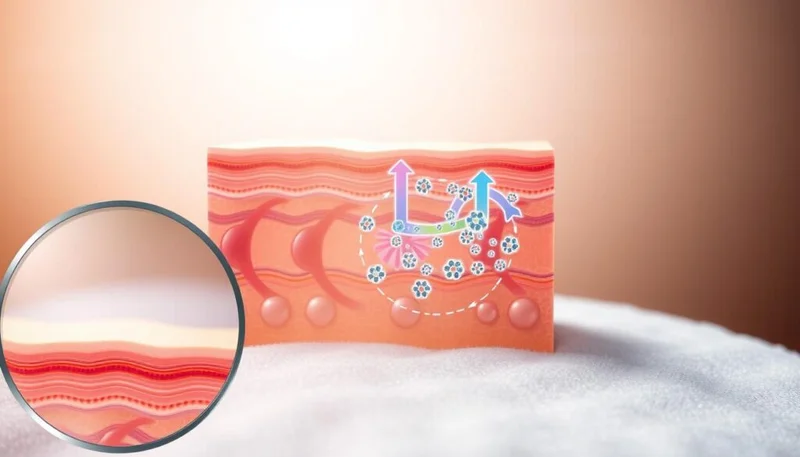
An unnoticed biological wonder occurs: every four weeks, our outer protective layer receives a complete update. This precisely controlled mechanism begins in the basal cell layer, where new cells are constantly generated, pushing older cell layers upwards like elevator cabins in a high-rise.
From Life to Protective Shield
Fresh basal cells start with an 80% water content. During their 28-day journey, they lose moisture and form keratin. Once they reach the upper layer, they have transformed into flat horn plates—a vital protective barrier against germs and environmental influences.
Daily, we shed up to 14 grams of these dead cells, roughly equivalent to two teaspoons of microscopic particles. This natural exfoliation process makes room for incoming cell generations.
| Phase | Duration | Cell Change | Renewal | |----------------|----------------|----------------------------------|-------------------------| | 0-7 days | Water-rich basal cells emerge | Migration | | | 8-21 days | Keratinization begins, moisture loss | Exfoliation | | | 22-28 days | Complete keratinization and shedding | | |
"Each cell follows a programmed developmental path," emphasizes skin expert Dr. Lena Bergmann. "This cycle ensures that our epidermis remains intact—even under daily stress." Disruptions to this rhythm often lead to visible changes such as flaking or redness.
The natural rhythm of our outer shield is influenced by numerous factors. While the scientifically established 28-day cycle serves as a guideline, this mechanism continuously evolves—especially as we age.
Factors Influencing the Renewal Process
Environmental conditions and lifestyle habits play a crucial role in skin renewal. For instance, UV radiation accelerates cell oxidation, while stress hormones can inhibit regenerative processes. These disruptors directly impact the skin structure:
| Influencing Factor | Effect | Preventive Measures | |--------------------|---------------------------------|-------------------------------| | UV Radiation | Destroys collagen fibers | Broad-spectrum sunscreen | | Air Pollution | Clogs pores | Regular cleansing | | Sleep Deprivation | Reduces cell division | 7-9 hours of sleep |
Changes with Age
Starting in the mid-twenties, a gradual shift occurs. Sebum production decreases by up to 30%, weakening the protective mantle. Simultaneously, cell migration slows from 28 to up to 50 days—an effect that intensifies with each decade.
"The combination of reduced moisture and a thinner acid mantle leads to visible signs of aging," explains dermatologist Prof. Markus Heine. "Additionally, the breakdown of elastic fibers diminishes skin firmness."
These aging processes illustrate the need for skincare concepts to be adjusted over time. Antioxidants and moisture boosters become increasingly important to support natural regeneration.
Special Functions of Skin and Its Glands
Our outer protective system features a sophisticated network of glands. These invisible helpers work around the clock to maintain the delicate balance of the organ.
Sebaceous Glands and Their Role in Skin Fat Balance
Sebaceous glands produce up to two grams of fatty substances daily. This natural film protects against dryness and pathogenic organisms. When overactive, they can clog pores—one of the main causes of blemishes.
The lipids from the sebaceous glands combine with sweat to form the hydrolipid barrier. This protective layer stabilizes the pH level and prevents harmful substances from penetrating.
Sweat Glands: Cooling and Detoxifying
Sweat glands can release up to ten liters of fluid daily—not just in heat. The evaporative cooling lowers body temperature by up to 5°C. They also excrete urea and metals.
Apocrine glands in the armpits and groin produce odor substances that play an underestimated role in bacterial defense and social communication.
FAQ
What Role Does the Dermis Play in Elasticity?
The dermis contains collagen fibers and blood vessels that ensure firmness and nutrient supply. It acts as a shock absorber and keeps our skin supple. As we age, the renewal of these fibers slows down.
How Do Sebaceous Glands Support the Acid Mantle?
Sebaceous glands produce fatty acids that, along with sweat, form a hydrolipid film. This protects against germs and moisture loss. When the balance is disrupted, dryness or acne can occur.
Does UV Radiation Affect the Renewal Speed?
Yes, excessive sun exposure damages cells in the basal layer and accelerates skin aging. While melanocytes produce pigments for protection, prolonged exposure increases the risk of skin cancer.
Why Does the Process Slow Down with Age?
From around age 25, cell division in the basal layer decreases by 1-2% per year. Concurrently, collagen production diminishes, leading to thinner epidermis and visible wrinkles.
Can Skincare Products Accelerate Regeneration?
Ingredients like vitamin A (retinol) or peptides stimulate cell renewal. Exfoliating components remove dead horn layer cells, allowing fresh cells to reach the surface more quickly.
What Function Do Sweat Glands Serve Besides Cooling?
They help excrete toxins such as urea or alcohol. At the same time, they regulate body temperature through evaporative cooling—releasing up to 10 liters of fluid daily.