
How to Protect the Eye Area from the Sun
Discover effective ways to protect the delicate eye area from harmful sun exposure, including recommended sunscreens and the importance of sunglasses.
As summer arrives, bringing with it sunny days and the desire for a sun-kissed glow, it’s crucial to remember that the sun and its ultraviolet (UV) rays can be harmful to our skin. While most people have made applying SPF a routine, many still question how to effectively protect the delicate eye area from sun exposure.
Why is the Eye Area Particularly Vulnerable to the Sun?
The skin surrounding the eyes is significantly different from the rest of the face. It is notably thin, measuring only 0.3 to 0.5 mm in thickness, which is four to five times less than other facial areas that typically range from 1 to 1.5 mm.
Additionally, this area has very few sebaceous glands, making its natural hydrolipidic film—our skin’s protective barrier—less effective. As a result, the eye contour can dehydrate more quickly and is less resilient against external aggressors, recovering more slowly after sun exposure. Many have noticed that after a day at the beach or outdoors, it is often the eye area that begins to feel tight, dry, or shows fine lines first. Furthermore, collagen and elastin, which are vital for skin firmness and elasticity, are naturally less abundant in this region.
When UV rays penetrate the skin, they trigger the production of enzymes known as matrix metalloproteinases (MMP), which break down collagen. This damage is more pronounced in the eye area due to its already limited collagen reserves, leading to visible signs of photo-aging much sooner. This phenomenon highlights the importance of protecting the eye contour—not just to avoid sunburn but also to preserve collagen quality for the long term.
Can You Apply Sunscreen on the Eye Contour?
Absolutely! It is highly recommended to apply sunscreen to the skin around the eyes. It’s important to note that approximately 80% of skin cancers, including carcinomas, are linked to excessive and unprotected sun exposure. Thus, applying sun protection to all skin areas, including the eye contour, is essential.
Dermatologists advise applying sunscreen to the eyelids as well, including the mobile eyelid, due to its thin and UV-exposed nature. However, many find it uncomfortable, especially if they have oily eyelids, as the product can migrate, causing irritation or even entering the eye during perspiration. Therefore, many people prioritize protecting the eye contour (the area of dark circles) and the area under the brow, which are also significantly exposed to the sun.
What Type of Sunscreen Should You Use on the Eye Contour?
Most sunscreens can be safely used on and around the eyelids. It is advisable to choose a mineral sunscreen, such as Antipodes’ Supernatural, which contains zinc oxide or titanium dioxide. These filters are generally better tolerated by sensitive skin and eyes and are less likely to cause stinging if they accidentally migrate into the eye. If your eye area is particularly reactive, opt for a fragrance-free formula and avoid products with alcohol or other potentially irritating ingredients. You can also use your regular SPF, but ensure its formula is suitable for the eye area, which is typically indicated on the packaging.
When it comes to SPF ratings, prefer a product with SPF 50 or 50+ that offers broad-spectrum protection against both UVA and UVB rays. UVB rays primarily cause sunburn, while UVA rays accelerate skin aging. Remember: A for Age and B for Burn can help you distinguish between the two.
If you tend to sweat or find that your sunscreen runs into your eyes, a stick format can be a great alternative. This allows for precise application and minimizes the risk of migration to the eye mucosa. If any product does come into contact with your eyes, it’s not dangerous; simply rinse your eye thoroughly with clear water.
Did you know? SPF ratings are measured in labs using 2 mg of sunscreen per cm² of skin. However, we often apply much less, significantly reducing the protection level. To ensure you’re using the correct amount, specialists recommend applying an amount equivalent to three lines of sunscreen across the length of your index, middle, and ring fingers (the three-finger rule), and reapplying every two hours while exposed.
What Are the Best Sunscreens for the Eye Contour?
If you’re looking for a suitable sunscreen for the eye area, here are several options I personally recommend, starting with those that are easily found in local pharmacies or certain beauty chain stores like Marionnaud or Nocibé.
One of my favorites is La Roche-Posay’s Anthélios UVmune 400, which protects against UVA, UVB, and long UVA rays. It adheres well to the skin, resists water and sweat, and is designed to avoid migrating into the eyes. However, it can cause concealer to clump unattractively if you apply makeup shortly after, so it’s best for beach days or makeup-free days.
Another excellent option comes from Avène, their Mineral Cream SPF 50+ for intolerant skin. It ticks almost all the boxes: it doesn’t sting the eyes, doesn’t run, and is enriched with vitamin E to protect the skin from free radicals. However, it does leave a slight white cast, even on lighter skin tones. Despite this, I am very satisfied with this sunscreen. A more expensive yet effective option is the Mineral Drops by Odacité, which is tinted and avoids that grayish effect after application.
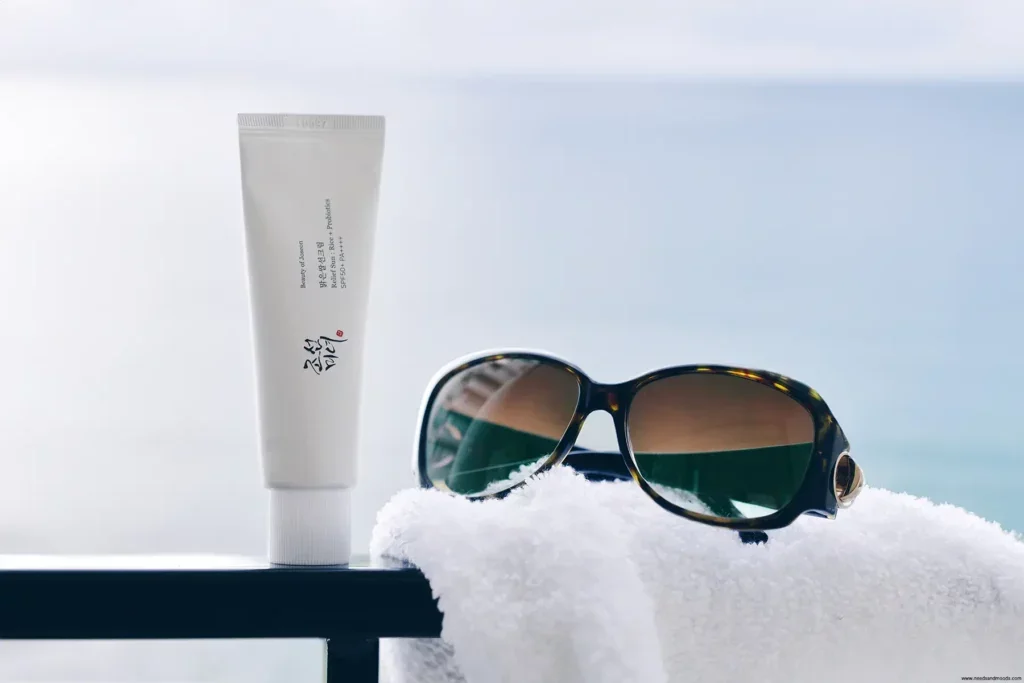
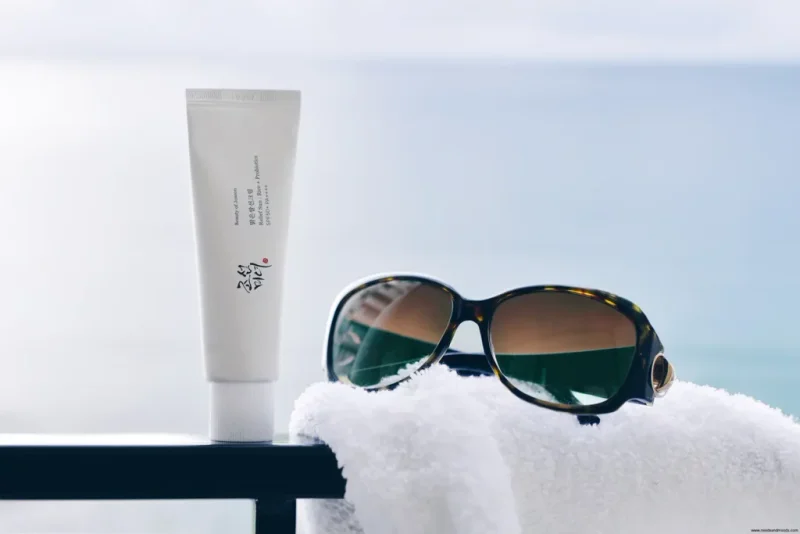
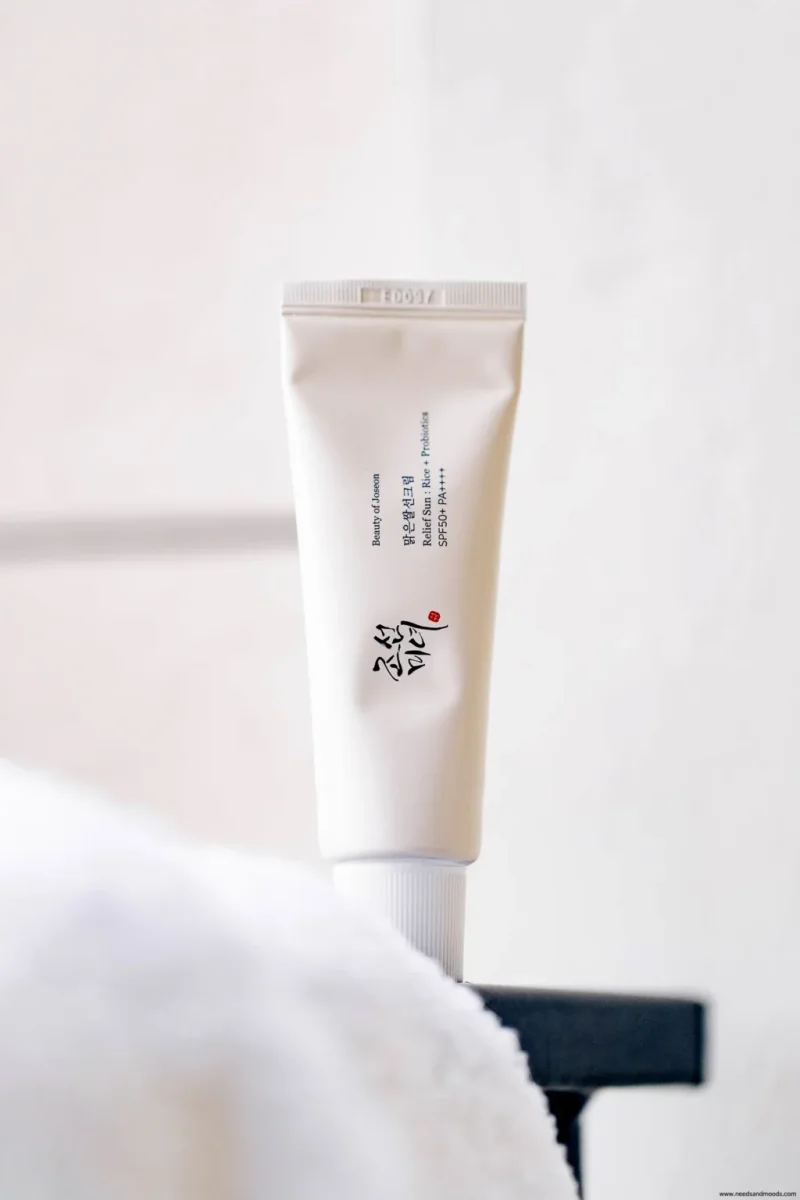
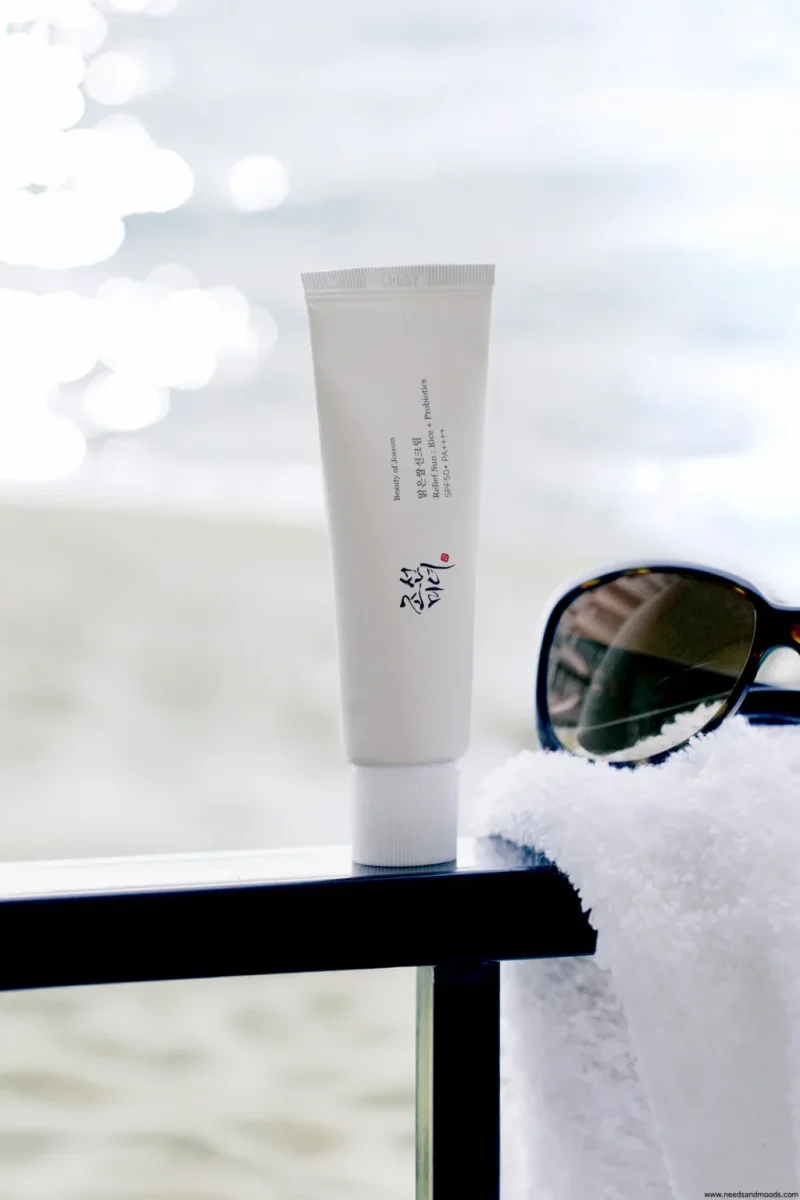
Lastly, I cannot overlook the Korean brand Beauty of Joseon’s sunscreen, which I consider the best for the eye area: it leaves no white residue, has no oily finish, and features a fragrance-free and alcohol-free formula that is perfect for this sensitive zone. It’s truly exceptional!
What About Sunglasses and Accessories?
Finally, it’s essential to remember that even the best sunscreen will not block all UV rays. To maximize protection for the eye area, I recommend combining your SPF with physical barriers. The combination of sunglasses and a hat is likely the most effective way to enhance your sun protection arsenal.
Sunglasses
Sunglasses play a crucial role in protecting not only the delicate skin of your eyelids—where applying sunscreen can be tricky—but also your eyes themselves. When purchasing a new pair, ensure the lenses provide complete protection against UVA and UVB rays. Avoid trendy, cheap sunglasses that may not offer adequate UV protection.
It’s important to note that a pair of very dark lenses does not necessarily mean better sun protection. There’s a difference between light filtration (categories 0 to 4) and UV ray filtration. Dark lenses without proper UV protection can even be dangerous; they cause the pupil to dilate due to reduced light perception, allowing more UV rays to penetrate the eye.
In summary, look for sunglasses that indicate "100% UV protection" (or UV400), have a CE marking, and ideally, a wrap-around frame to block UV rays from entering from the sides. This will help you avoid squinting, thus reducing the risk of expression lines.
UV-Protective Hats
Another effective way to shield yourself from the sun’s rays is to wear a hat! Instead of a simple cap, opt for a wide-brimmed model (like a panama or bucket hat). Its shade will protect your entire face, whereas a visor may leave your temples and the outer corners of your eyes exposed. For optimal protection, choose a fabric certified for UV protection (UPF 50+). Unlike regular fabric, which allows some rays to filter through, technical mesh can block at least 98% of UVA and UVB rays. You can find such hats from specialized brands that focus on UV protection.