Is Deep Impact Scientifically Accurate? Examining the Realism of the Film About a Threatening Comet
Deep Impact, directed by Mimi Leder in 1998, is a disaster movie that explores the threat of a comet to Earth. This article examines the film's scientific accuracy and plausibility.
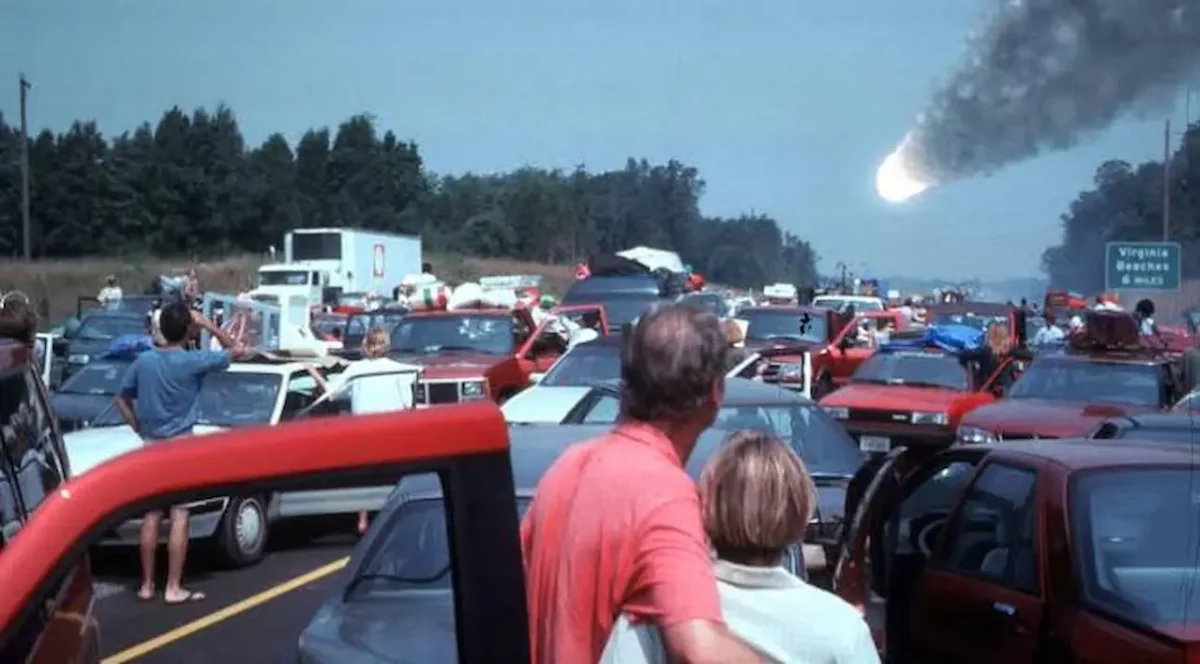
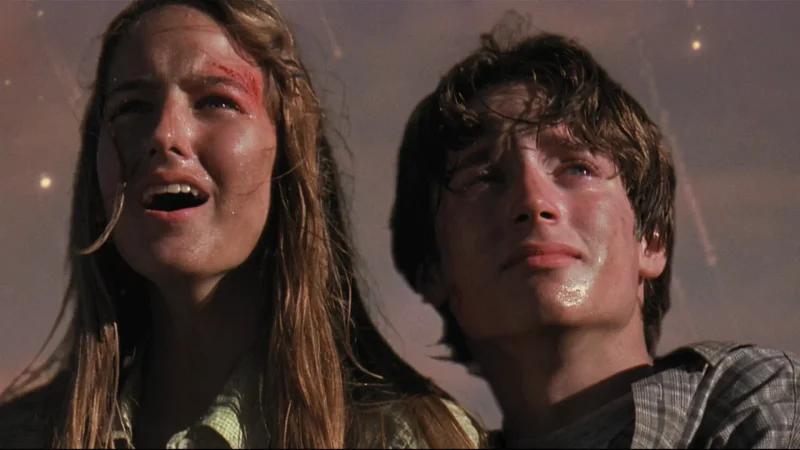
Deep Impact, directed by Mimi Leder and released in 1998, is a notable entry in the disaster movie genre, reflecting a period when Hollywood capitalized on the public's fears of extraterrestrial threats. The narrative centers around a comet serendipitously discovered by teenager Leo Biederman, played by Elijah Wood. This celestial object is later identified by astronomer Marcus Wolf (Charles Martin Smith) as being on a collision course with Earth. As the news breaks, President Tom Beck, portrayed by Morgan Freeman, must coordinate a global response as the countdown to impact ticks away.
The ongoing question surrounding Deep Impact is its balance of entertainment and scientific realism: just how plausible is its scenario? Surprisingly, the film fares well in this regard. Unlike many disaster films, Deep Impact pays considerable attention to the comet's size, the time required for intervention, the physics of space travel, and especially the consequences of an oceanic impact. While some elements are inevitably crafted for narrative purposes, several scientists who have analyzed the film commend its unusually high level of accuracy.
The Discovery of the Comet and the Risk of Impact: How Plausible is the Premise of Deep Impact?
The plot of Deep Impact kicks off when Leo Biederman spots what initially appears to be a new comet during an astronomy event. His discovery is reported to Marcus Wolf, who quickly realizes the true nature of the threat: the object, dubbed Wolf-Biederman, is on a collision trajectory with Earth. The fundamental scientific premise is indeed correct: comets and asteroids can follow orbits that intersect with Earth's, and a sufficiently large impact could have global consequences.
However, the film takes its first narrative liberty at the moment of discovery. It is unlikely that a comet bright enough to be seen by a teenager with an amateur telescope would not have been detected earlier by professional observers. Clark R. Chapman, a planetary scientist with the B612 Foundation, highlighted this aspect as one of the film's main improbabilities. A comet the size of Wolf-Biederman, if bright enough to be visible in that manner, would likely have attracted the attention of astronomers much sooner.
The film does, however, make a more realistic choice by allowing several years to pass between the discovery and the potential impact. This detail is crucial, as a large object should not appear out of nowhere just weeks before a collision. Astronomers continuously monitor near-Earth objects, and for those large enough, their orbits can be calculated and predicted over extended time frames. Having time to prepare a response is thus one of the most credible elements of the premise.
The comet's size is also thoughtfully constructed. Wolf-Biederman measures approximately 11 kilometers, a size compatible with a potentially catastrophic global event. The most striking historical reference is the Chicxulub asteroid, linked to the mass extinction event that wiped out non-avian dinosaurs around 66 million years ago. Therefore, Deep Impact begins with a real astronomical phenomenon and physical consequences that, at least broadly, belong to the realm of science rather than pure fantasy.
From Space Mission to Underground Ark: What’s Scientifically Accurate in the Attempt to Save Earth?
Once the scope of the threat is understood, Deep Impact proposes two strategies. The first involves sending a mission capable of reaching the comet and using nuclear devices to alter its trajectory. The second, conceived as a contingency plan, entails constructing massive underground structures designed to preserve a portion of the population and the resources necessary for rebuilding civilization. This combination makes the film particularly interesting from a scientific perspective: it does not assume a simple and immediate solution but also considers the possibility of the first attempt failing.
Scientists who have examined Deep Impact have praised its representation of physics in space. The astronauts do not move as if they are on Earth, and the extremely low gravity of the comet is factored into the construction of sequences. The spacecraft must also interact with a body of very weak gravity, to the extent that some operations are performed while maintaining a physical connection with the surface. These seemingly minor details help distinguish the film from many sci-fi productions where physics is altered without consequence.
The idea of using a nuclear explosion to change a celestial body's trajectory had, in 1998, a more serious scientific basis than it may seem today. The key issue is not merely destroying a comet but doing so early enough to change its speed and, consequently, its orbit. A relatively small alteration, if achieved with sufficient lead time, can result in a vast distance at the point where the body would intersect Earth's orbit. This is the general principle behind deflecting a near-Earth object.
However, the film takes a significant liberty by deciding to use a nuclear explosion to destroy the body close to impact. If fragmentation occurs too late, the problem is not truly resolved; it merely risks transforming a single large cosmic projectile into several fragments that continue to strike Earth. Sidney Perkowitz, a physics professor at Emory University, emphasized this limitation while acknowledging the film's merit in showing that fragmentation can lead to devastating consequences rather than simply eliminating the threat.
The concept of the underground ark, on the other hand, fits within the logic of risk mitigation strategies. If deflection proves impossible, protecting a portion of the population from the immediate consequences of impact could represent an extreme survival measure. The challenge would naturally be immense: resources, infrastructure, energy, food, ventilation systems, and, above all, significant time would be required to construct truly self-sufficient structures. Joshua Colwell, a planetary scientist who served as a scientific consultant for the film, considered both strategies generally plausible in their overall framework, while highlighting how challenging they would be in reality.

Tsunamis, Global Destruction, and Last-Ditch Deflection Attempts: Where Does Deep Impact Align with Science, and Where Does It Stretch Reality?
The film's most spectacular moment also puts its accuracy to the most challenging test: the impact of a comet fragment in the Atlantic Ocean and the resulting formation of a massive tsunami. This scene has been regarded as particularly successful by various experts because Deep Impact attempts to represent the impact as a physical event capable of producing far-reaching consequences rather than merely depicting a generic explosion. The energy transferred to the ocean would indeed be enormous, and coastal areas would be among the most exposed.
Furthermore, the film introduces an important distinction between the smaller fragment that reaches the Atlantic and the larger one against which a final intervention is attempted. This choice is more reasonable than the notion that a nuclear explosion could simply make a cosmic object of that size disappear. A successful deflection should be achieved well before impact; even a slight trajectory variation could suffice to avoid collision.
Conversely, the idea that an improvised intervention could resolve the problem just days before impact is less credible. Chapman noted that an attempt at fragmentation made so late could leave Earth with debris that has almost equally catastrophic consequences. Orbital physics does not allow for the type of last-minute resolution that cinema often enjoys utilizing: changing the fate of a celestial body requires time, precision, and an enormous amount of energy applied correctly.
Moreover, the hypothesis that the comet was “pushed” into its trajectory toward Earth by another celestial collision is unconvincing. An impact in space tends to produce fragmentation, while significant changes in orbit are primarily caused by gravitational interactions with other bodies, particularly planets. This is one of the more specific inaccuracies identified by experts, alongside the initial representation of the stars Mizar and Alcor and the previously mentioned unlikely amateur discovery of the comet.
However, one aspect where the film achieves a compelling degree of realism is in its depiction of the human response. Deep Impact imagines the involvement of astronomers, NASA, government, military, media, and civilian populations, illustrating how such a threat would quickly become a political and social issue. The construction of the ark, the survivor selection procedures, and the consequences for cities reflect the necessity of viewing the impact as a global event. In this case, science is not separated from the society that must apply it.
This is likely why Deep Impact continues to be regarded as one of the most accurate disaster movies focused on cosmic impacts. David Stevenson, a planetary scientist at the California Institute of Technology, acknowledged the film's elevated level compared to the genre, while reminding us that the likelihood of such an event occurring during a person's lifetime is extremely low. Thus, the film's accuracy does not imply that the scenario is probable; it means that, once the premise is accepted, many of its consequences are treated with scientifically reasonable logic.
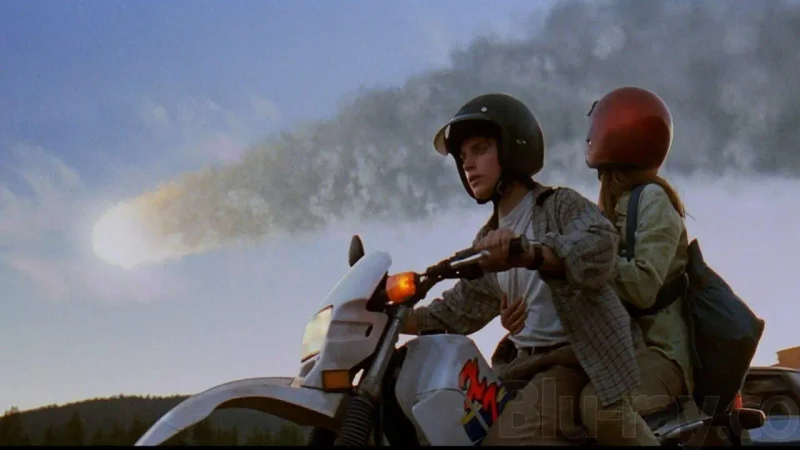
Deep Impact vs. Armageddon: Which Film is More Scientifically Accurate?
The comparison with Armageddon, released in the same year and directed by Michael Bay, further highlights Deep Impact's particular attention to scientific plausibility. Both films start from a similar premise: a massive celestial body threatens Earth, and humanity must find a way to prevent the impact. However, from that point, they take radically different directions. Deep Impact builds a response based on astronomy, politics, preparation, and alternative strategies, while Armageddon transforms the issue into a space adventure centered around a team of oil drillers.