Review | L'Attachement by Carine Tardieu (2025)
Carine Tardieu's film L'Attachement explores life after loss, focusing on the small, everyday gestures that signify enduring connections.
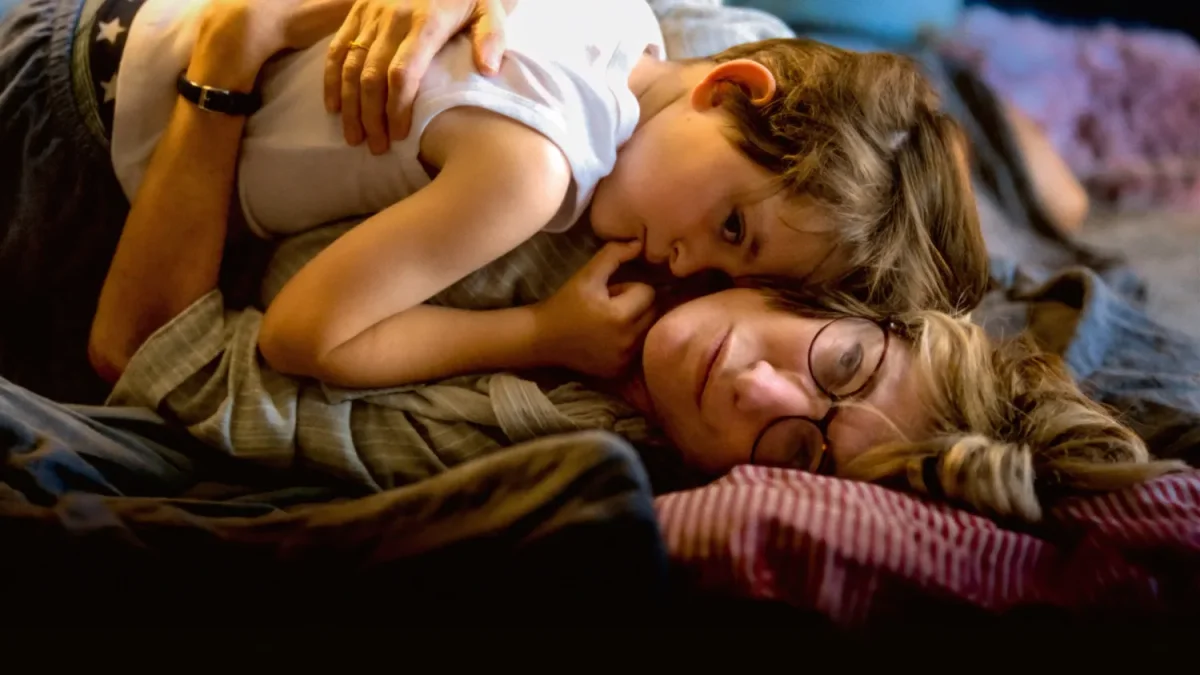
Carine Tardieu's latest film, L'Attachement, offers a poignant exploration of grief, focusing on the remnants of life that persist after loss. Rather than dwelling solely on the sorrow of absence, Tardieu captures the subtle, everyday gestures that signify love and connection.
A Different Perspective on Loss
Contrasting sharply with Jacques Doillon's Ponette (1996), which centers on a young girl's loss of her mother, Tardieu's narrative shifts to what is retained after such a profound event. The film, which received the César for Best Film in 2026, delves into human relationships, particularly between parents and children. The opening scenes introduce viewers to a child's bedroom, where the soft, rhythmic breathing of a sleeping boy fills the air. As the boy awakens, we witness him and his mother engage in their morning routine, a series of mundane yet tender actions: putting on his undershirt, pants, and socks, all guided by his mother's unseen hands. This intimate ritual, filled with warmth and affection, becomes a bittersweet moment, foreshadowing its significance.
The film meticulously captures these seemingly trivial actions—tying shoelaces, playing hide-and-seek, adjusting one's pace to match a child's. These small details, often overlooked, form the emotional core of the story.
A Collective Rebuilding
As the young boy navigates his grief, he forges a new bond with his neighbor, portrayed by Valeria Bruni Tedeschi, an independent woman without children who gradually embraces the boy's life and interests. The narrative also addresses the father's sorrow, a man grappling with the loss of his wife just as he steps into fatherhood. Additionally, the film portrays the anguish of the mother of the neighbor, played by the remarkable Catherine Mouchet, who finds herself unable to cope in the presence of her grandchildren.
Throughout the early months of a newborn girl's life, connections are formed, love blossoms, and unexpected friendships emerge, such as between Pio Marmaï and Raphaël Quenard. These children grow up enveloped in love, supported by adults who are also learning to navigate their own losses and the complexities of relationships that shift with life's changes—moving homes, traveling, and celebrating milestones. Tardieu illustrates the multifaceted nature of recovery following a tragedy, emphasizing that happiness can coexist with sorrow, and that fate is not a predetermined path.
The film features a talented ensemble cast, including Catherine Mouchet and Marie-Christine Barrault, alongside Vimala Pons and Raphaël Quenard, each bringing their unique authenticity to the narrative. Pio Marmaï and Valeria Bruni Tedeschi deliver touching performances that resonate deeply. The film also engages in a broader discussion about feminism and the challenges women face, particularly in the context of childbirth.
In a reflective moment, a character named Alex remarks to Sandra, “You, who are an expert on feminism, it’s quite strange that your favorite story is Snow White.” This line encapsulates the inherent contradictions we all carry.
Conclusion
L'Attachement stands as a testament to the resilience of the human spirit, showcasing how love and connection can flourish even amidst the shadows of grief. Tardieu's delicate storytelling and the film's heartfelt performances create a rich tapestry of life that invites viewers to reflect on their own experiences of love and loss.