Review: Gavagai and Other Misunderstandings
In _Gavagai and Other Misunderstandings_, Ulrich Köhler's film explores the contradictions of its characters, reflecting on communication barriers in a complex world while delivering a satirical take on the film industry.


Gavagai and Other Misunderstandings

Germany, France, 2025 Original Title: Gavagai Director: Ulrich Köhler Screenplay: Ulrich Köhler Cast: Jean-Christophe Folly, Maren Eggert, Nathalie Richard, Anna Diakhere Thiandoum Distributor: New Story Distribution Genre: Dramatic Comedy Duration: 1h31 Release Date: July 22, 2026
3/5
In Gavagai and Other Misunderstandings, a sense of discomfort lingers throughout, likely by design. The film, directed by Ulrich Köhler, often grapples with its own contradictions, much like the characters it portrays. These cinematic artists, depicted with a hint of irony, seem just as lost in their creative journey as the audience observing them. Yet, this does not detract from the viewing experience; rather, it highlights a frustrating truth about the world we inhabit: the aspirations of some are often matched by the survival instincts of others, creating a barrier that complicates communication.
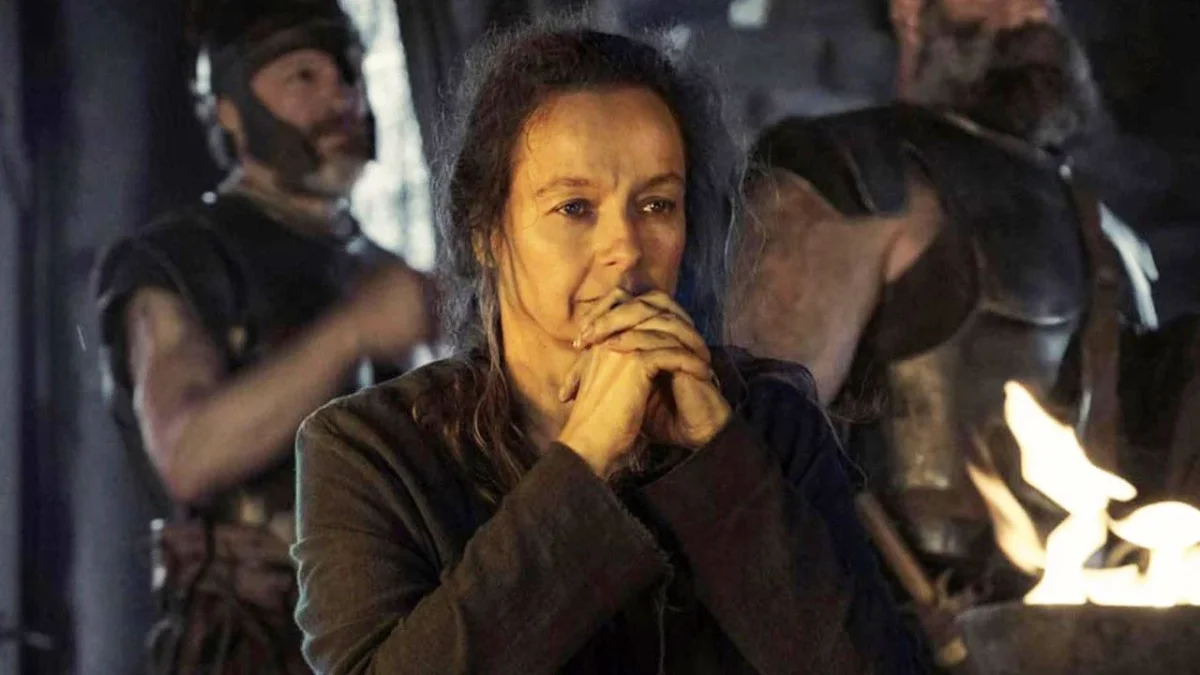
The eternal struggle between being and appearing is vividly illustrated through the interpretations of the three main characters. It is refreshing to see Nathalie Richard take on a more substantial role than in many of her previous films, characterized by both her hairstyles and the affected ease with which her director navigates the obligatory elements of film production. However, it is the two lead actors who truly bring the narrative to life. Jean-Christophe Folly skillfully navigates the clichés surrounding his character, caught between two worlds—Africa and Europe, the glitz of cinema and the harsh realities of daily life. Meanwhile, Maren Eggert convincingly portrays a character seemingly oblivious to the constraints of her bourgeois existence, which dictate her every decision.
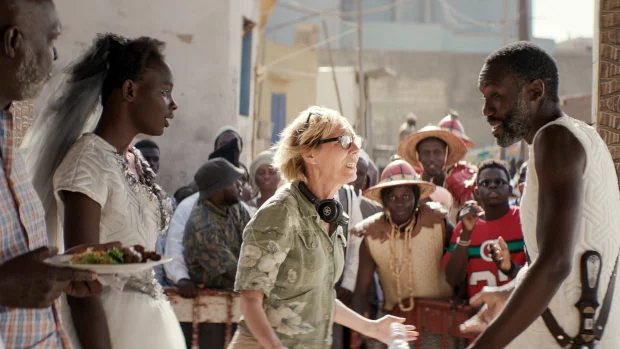
Synopsis: All goes awry during the filming of a contemporary adaptation of Medea in Senegal, directed by Caroline Lescot. The film's two lead actors, Frenchman Nourou Cissokho and German Maja Tervooren, often act on their own whims, leading the production to frequently question its artistic choices. Months later, the team is invited to the Berlin Film Festival to present their work. Nourou, happy to reunite with Maja amid her divorce, encounters an incident at the luxury hotel where they are staying in Germany. While he prefers to brush it off, his on-screen partner, who may soon become more than just a colleague, is determined to confront the issue.
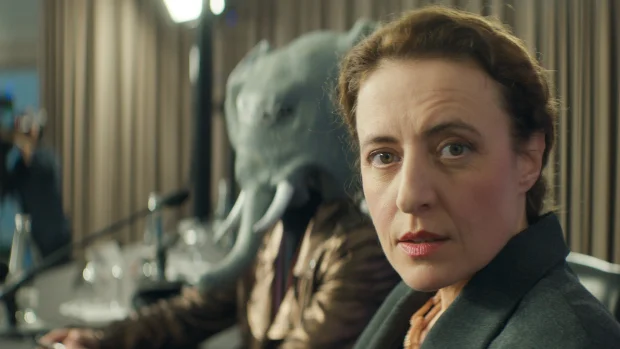
Elephants and Snakes
While Gavagai and Other Misunderstandings does not shy away from the absurdity of certain situations, it never loses sight of the underlying gravity of its narrative. The director's portrayal of the constant meltdowns of the filmmaker and the unpredictable moods of the stars emphasizes the absurdity of filming in Africa. The same mechanisms of exploitation and inequality evident in the colonial past of French history resurface here. A seemingly trivial gesture, such as distributing chicken thighs to hungry extras, underscores the barely concealed arrogance of these cultural invaders, who are reluctant to offer anything more than crumbs to the local population.
This nauseating pretension is amplified by the film within a film, which premiered in France just a week after Christopher Nolan's adaptation of The Odyssey. The project they are creating reflects a similar recycling of archaic myths as seen in the American blockbuster centered on Ulysses, and arguably, it is even worse.
As the chaotic filming unfolds, its disarray ultimately translates onto the grand screen at the Berlin festival. By straying from Corneille's original tragedy, Caroline Lescot and her team inadvertently craft a different narrative—one that is grandiose and deeply improbable, yet also a cinematic work that, in all its vulgar pretension, returns to the caricatured essence of life: children.
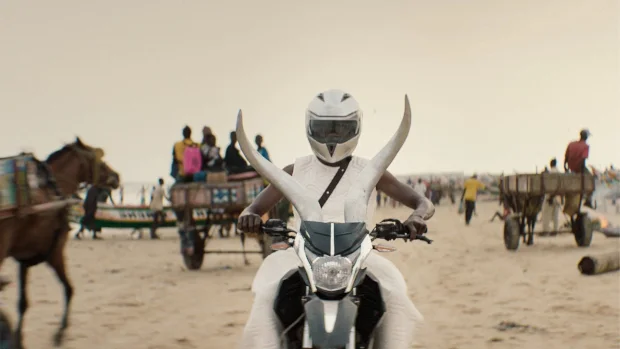
How Do You See Me?
Caught up in their personal dilemmas, the two actors fail to make significant progress in the secondary plot, which, in a more conventional film, would have provided them with romantic and sexual fulfillment. Köhler does not pretend otherwise, leaving his protagonists grappling with their existential crises. For Maja, this means remaining a performer with an opaque emotional expression. Is she even aware of the harm she causes, intentionally or otherwise? Her complex portrayal by Maren Eggert allows for a nuanced exploration of this intriguing character.
On the other hand, Nourou, portrayed by Jean-Christophe Folly, emerges as both a victim and an aggressor in the dramatic aspects of the story. Torn between his homeland of Senegal and his adoptive country of France, he is a prime target for the ignorance that surrounds him.
Fortunately, Köhler's perspective is too nuanced, albeit occasionally indecisive, to cast him in the simplistic role of a martyr for noble causes. Instead, Nourou's evident helplessness becomes painfully clear as he attempts to change the course of events that matter to him—his attraction to Maja and a somewhat relative social integrity. This integrity is impulsively asserted in Germany to mitigate the fallout from his incident upon arrival, yet it becomes less defined in Senegal when it comes to granting a well-deserved break to the driver.

Conclusion
Can cinema, this self-referential cultural machine, truly resonate with a broad audience? Or does its economic and social history doom it to perpetuate the same barriers between peoples and social classes? A film like Gavagai and Other Misunderstandings may be too chaotic, even elitist, to dismantle these abstract boundaries once and for all. Nevertheless, thanks to the inspired performances of its three lead actors, Ulrich Köhler successfully delivers a satire of the film industry that is acutely aware of its limitations.