Review: The Whims of the Child King
A review of 'The Whims of the Child King,' a comedic take on Louis XIV's youth, exploring themes of power and identity while struggling with narrative coherence.

The Whims of the Child King

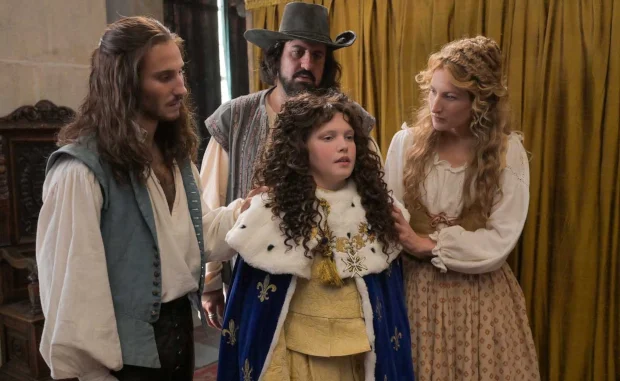
France, 2026 Original Title: – Director: Michel Leclerc Screenplay: Michel Leclerc and Baya Kasmi, based on an original idea by Alexandre Castagnetti and Michel Leclerc Cast: Artus, Julia Piaton, Nemo Schiffman, and Niels Hamel-Brochen Distributor: Le Pacte Genre: Historical Comedy Duration: 1h54 Release Date: June 24, 2026
Rating: 2.5/5
As 2026 unfolds, the French cinematic landscape seems poised for a revival of its historical icons. Following Antonin Baudry's La Bataille De Gaulle, which depicted the general's wartime exploits, and with Fred Cavayé's upcoming adaptation of Victor Hugo's Les Misérables on the horizon, audiences are presented with a whimsical take on a tumultuous chapter in the life of Louis XIV. The Whims of the Child King boldly claims historical accuracy, a claim that historians might contest. Michel Leclerc's eighth feature film offers a reimagining of France's ancient myths, featuring characters from D’Artagnan to Molière and Cyrano De Bergerac.
The film attempts to resonate with contemporary issues, incorporating anachronistic themes such as feminism and queer identity. However, it often loses focus, with multiple storylines vying for the audience's attention. The narrative, which includes romantic entanglements and courtly machinations, struggles to inject vitality into what ultimately feels like a lifeless plot.
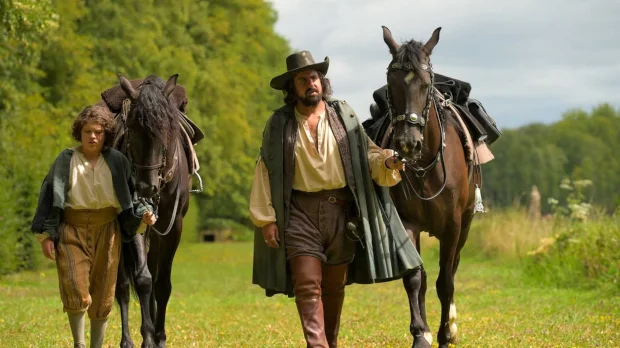
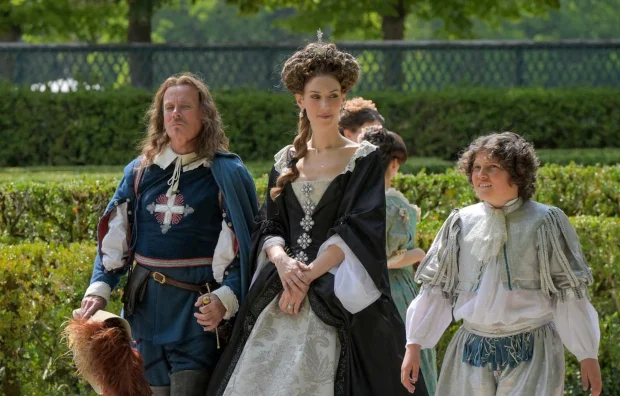
The performances of Franck Dubosc as a declining musketeer, and Nemo Schiffman, who charmingly portrays a young Molière, stand out. Niels Hamel-Brochen is more engaging as a young impostor than as the spoiled child king discovering the joys of everyday life. In contrast, Artus's Cyrano and Julia Piaton's overburdened theater troupe leader come across as less compelling.
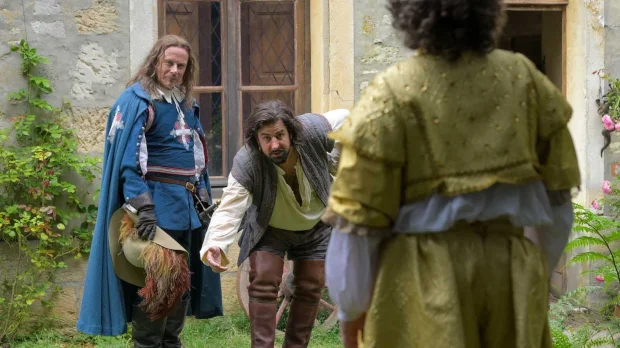
Synopsis: In 1651, the popular Fronde threatens to overthrow the ruling powers in Paris. To protect her son Louis, the future King Louis XIV, Anne of Austria entrusts him to her loyal servant D’Artagnan. D’Artagnan takes the capricious teenager to the provocateur Cyrano De Bergerac, who believes the safest place for the endangered dauphin is within the theater troupe of his friend, Madeleine Béjart, presenting him as his own son, François. The arrival of these two new members complicates matters for Madeleine, a strong woman on the brink of bankruptcy, who secretly loves the flamboyant actor of her troupe, Jean-Baptiste Poquelin, known as Molière. While young Louis struggles as a costumer, Cyrano's writing talents quickly prove essential for refreshing the troupe's repertoire.
The Flair of the Underdog
The intended tone of The Whims of the Child King seems to be one of mischievous irony. Unfortunately, Michel Leclerc's direction falters in pacing. The film often shifts awkwardly between two narrative threads: the sheltered adolescent Louis exploring the richness of ordinary life and the rebellious Louis confronting the hypocritical courtiers with the harsh realities of life. This lack of dramatic tension diminishes the overall impact.
Visually, the film suffers from a lack of excitement, with the sole creative touch being the costumes of the two lovers, which hang on the wall while Madeleine and Molière succumb to their passion. This is insufficient to lend any visual flair to a story set against the backdrop of opulent aristocracy, which would only grow more extravagant during Louis XIV's reign.
As the plot progresses, the narrative disarray becomes increasingly frustrating. With no palpable danger to the heir to the French throne and no significant stakes to propel the story forward, the film remains in the realm of inconsequential farce. While it offers some amusement, it rarely delves deeper into its characters, who are hastily sketched out from the start.
The two female characters engaged in a strategic battle for power receive the most attention. Doria Tillier plays the queen mother, challenged by the composure of her son's temporary replacement, while Suzanne De Baecque embodies Anne-Marie-Louise d'Orléans, representing the ugliest and most vulgar aspects of the power struggle, paradoxically exuding the most modern aura.
Lying to Be Free
The Whims of the Child King repeatedly contrasts the mindset of the 17th century with a more contemporary outlook on life. While the film advocates for the freedoms gained over centuries, particularly for women and gay men, it struggles to convincingly portray this social critique.
The somewhat nuanced portrayals of the two female characters dissolve without significantly challenging the patriarchal world they inhabit. Their hesitant attempts to grasp or maintain power are akin to the superficial vanity displayed by the beleaguered D’Artagnan, who seeks to embellish his legacy in the face of obsolescence.
Artus's portrayal of Cyrano, grappling with his sexual orientation, offers a touch of sincerity. Two years after La Pampa, he again brings sensitivity to a character conflicted about his desires. The relationship between Cyrano and Molière develops a rich subtext, though the script's clumsiness relegates it to a secondary theme, orbiting around a significant dramatic void that hampers the overall narrative. However, a few moments in their doomed love story breathe more life into the film than the farcical antics surrounding the child king.
Conclusion
The past is ripe for reinterpretation through contemporary lenses, especially when it involves timeless figures of French culture like the authors and historical characters featured in The Whims of the Child King. Unfortunately, Michel Leclerc's noble endeavor to modernize this narrative ultimately falls flat, resulting in a harmless comedy that is soon forgotten. Despite the charming performances from Doria Tillier and Franck Dubosc, along with Nemo Schiffman's impressive return to the screen after his breakout role in his mother Emmanuelle Bercot's Elle s’en va, the film leaves viewers with more frustration and regret than a genuine sense of having witnessed an inspired satire of an idealized chapter in French history.