The Allure of Casinos in Cinema: A Deep Dive into the Genre
Exploring the cinematic allure of casinos, from Martin Scorsese's masterpieces to the evolution of gaming in film and its impact on public perception.
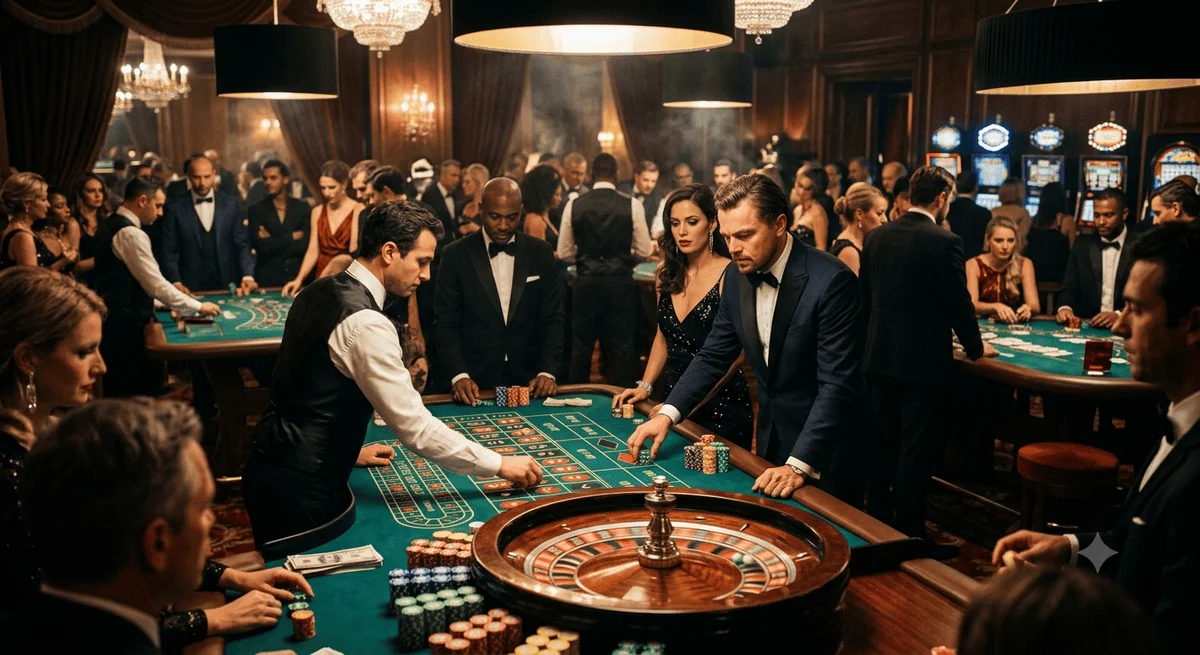
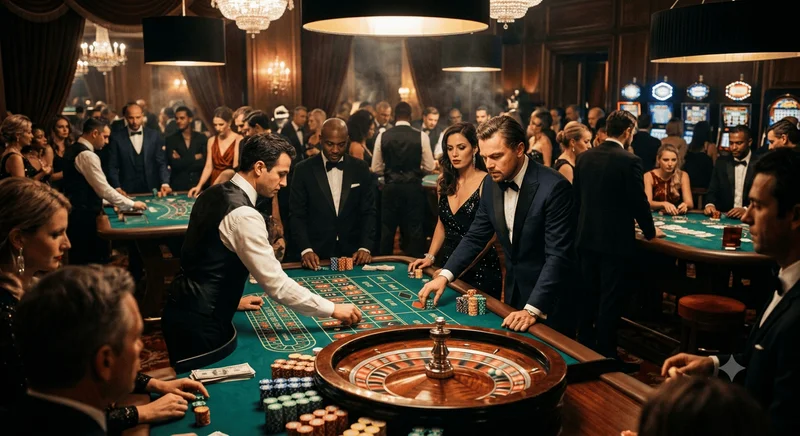
Few settings have inspired filmmakers quite like the casino. These enclosed spaces, where fortunes are won and lost, ambitions clash, and destinies unravel, encapsulate the essence of cinematic storytelling: tension, glamour, wealth, and moral dilemmas. From Martin Scorsese's Casino to the chilling poker scenes in Casino Royale and the meticulously planned heist in Ocean’s Eleven, casino films have carved out a distinct genre, complete with its own codes, masterpieces, and failures. Here’s a look back at the iconic works that have turned gaming tables into significant cinematic characters.
Casinos: A Legendary Backdrop in Hollywood
Before evolving into a genre, casinos in film served as a visual promise: bright lights, green felt, and morally ambiguous characters. Two filmmakers have particularly shaped this cinematic world: Martin Scorsese and the James Bond franchise.
Casino by Martin Scorsese: The Genre's Masterpiece
It's impossible to discuss casino films without mentioning Casino (1995). In this film, Martin Scorsese chronicles the rise and fall of Sam “Ace” Rothstein, portrayed with chilling intensity by Robert De Niro, as he manages the Tangiers on behalf of the mob. Opposite him, Sharon Stone delivers a career-defining performance as Ginger McKenna, while Joe Pesci embodies an uncontrollable gangster.
What sets this film apart is its almost documentary-like realism. Scorsese meticulously dissects the inner workings of a Las Vegas establishment in the 1970s, detailing everything from chip counting to the vault, with the precision of a management manual. The city itself emerges as a predatory character, consuming everything in its path. Even three decades post-release, this nearly three-hour epic remains the definitive reference for casino thrillers. Notably, we previously dedicated a feature to the most memorable casino scenes in cinema history, where Scorsese's film undoubtedly holds a prominent place.
James Bond and the Gaming Tables: From Casino Royale to GoldenEye
Another iconic figure in this genre is, of course, 007. Since the franchise's inception, James Bond has maintained a close relationship with gaming tables, from the baccarat of the early Sean Connery films to the roulette of GoldenEye and, most significantly, the poker in Casino Royale (2006). The tense showdown between Daniel Craig and Mads Mikkelsen at the Casino Royale in Montenegro remains one of the most gripping gaming scenes ever filmed, marked by close-ups on expressions, prolonged silences, and astronomical bets.
The Texas Hold’em game is never just a backdrop; it reveals the character's essence. Composure, bluffing, poise under pressure, and the ability to accept defeat—Bond's approach to his cards encapsulates his entire persona. This is what makes great casino scenes powerful: the game acts as a mirror to the characters' souls.
From Screen to Reality: How Cinema Shaped Perceptions of Gambling
Cinema has not only depicted casinos but has also profoundly influenced how the public perceives gambling. From mafia hideouts to mainstream entertainment, the portrayal of gaming has evolved significantly on screen.
The Realism of Gaming Scenes: Actors Learning to Play
Cinephiles know that nothing betrays a casino film faster than a poorly executed game. That's why serious productions often enlist professional consultants. For Rounders (1998), Matt Damon and Edward Norton underwent actual poker training, even participating in clandestine New York games to capture the atmosphere. Aaron Sorkin did the same for Molly’s Game (2017), based on the true story of Molly Bloom, who organized private games for Hollywood stars.
This attention to detail pays off, as seasoned players can quickly spot an unrealistic hand or an incoherent raise. Conversely, technical errors in certain films—impossible hands, poorly handled chips—have become running gags within player communities. Realism has become a critical criterion for credibility in this genre.
From Las Vegas to Digital Platforms: A New Era for Gaming
While cinema immortalized the grand casinos of Las Vegas, Monte Carlo, and Macau, the universe it portrayed has largely shifted to the digital realm. Film enthusiasts seeking the ambiance of the iconic tables depicted on screen are increasingly turning to online gaming, particularly in Canada, where the sector is experiencing remarkable growth. Online casinos now replicate the essence of the experiences popularized by films, offering roulette, blackjack, baccarat, and live poker tables with real dealers filmed in studios.
Comparative platforms like Betiton have emerged, specializing in analyzing these sites much like film critics dissect movies: methodology, ratings, comparisons. Significantly, screenwriters are increasingly incorporating this digital reality into their narratives, as seen in recent thrillers where games are played behind screens rather than around a green felt table. The cycle is complete: cinema created the myth, and digital platforms extend it.
Essential Casino Films You Must See
From mafia dramas to lighthearted comedies, the genre encompasses a wide array of styles. Here’s a selection of essential titles, highlighting their key features to help you decide your next viewing.
| Film | Year | Director | Featured Game | Key Takeaway | |---------------------|------|-------------------|-------------------------|------------------------------------| | Casino | 1995 | Martin Scorsese | Casino Management | The ultimate mafia epic | | Casino Royale | 2006 | Martin Campbell | Texas Hold’em | The rebirth of James Bond | | Ocean’s Eleven | 2001 | Steven Soderbergh | Casino Heist | The most stylish heist in cinema | | Rounders | 1998 | John Dahl | Underground Poker | The cult film for poker players | | Las Vegas Parano | 1998 | Terry Gilliam | Psychedelic Vegas | The hallucinatory trip of Hunter S. Thompson | | 21 | 2008 | Robert Luketic | Blackjack (Card Counting)| Inspired by the true MIT team |
Ocean’s Eleven: The Art of Casino Heists
A remake of the 1960 film featuring the Rat Pack, Ocean’s Eleven (2001) by Steven Soderbergh transforms the casino into a playground for ingenuity. Danny Ocean (George Clooney) assembles a team of eleven specialists to simultaneously rob the Bellagio, Mirage, and MGM Grand, with over $150 million at stake. The heist is choreographed like a clockwork piece, featuring a star-studded cast (Brad Pitt, Matt Damon, Julia Roberts) and an elegantly witty humor.
The film's success was so significant that the trilogy surpassed a billion dollars at the global box office. Here, Las Vegas is no longer a mafia hell but a shimmering chessboard—critics and audiences alike have noted how the contrasting visions of the city, tragic in Scorsese's work and playful in Soderbergh's, continue to captivate cinephiles.
Las Vegas Parano, Very Bad Trip, and Other Faces of Sin City
Casinos are not always portrayed in a straightforward manner. In Las Vegas Parano (1998), Terry Gilliam presents them as the stage for a hallucinatory trip led by Johnny Depp and Benicio del Toro, adapting Hunter S. Thompson's cult novel. In stark contrast, Very Bad Trip (2009) utilizes the setting purely for comedy: a bachelor party spirals into chaos, featuring a tiger in the bathroom and a guest appearance by Mike Tyson. Between these extremes, Croupier (1998) featuring Clive Owen offers a cynical perspective from the other side of the table. This diversity of genres—drama, comedy, thriller, satire—demonstrates that the casino is a chameleon-like backdrop, capable of serving a range of directorial intentions.
Final Thoughts on Casinos in Cinema
After decades of films, one thing is clear: the casino remains an inexhaustible setting for cinema. Here’s a summary of the strengths and weaknesses of the genre.
Strengths of the Genre
- Immediate dramatic tension: everything hinges on a single hand
- Stunning aesthetics: lights, costumes, and set designs
- Ambiguous and morally complex characters
- The game as a psychological mirror of characters
Limitations of the Genre
- Risk of clichés: the gangster, the femme fatale, the high roller
- Unrealistic gaming scenes for knowledgeable viewers
- Predictable heist plots
- Often sanitized portrayals of gambling realities
If I had to choose just one title, it would undoubtedly be Scorsese's Casino: no other film has captured the relentless mechanics of Las Vegas with such precision or provided such a showcase for its actors. Casino Royale perfectly complements the podium with its legendary poker scene, while Ocean’s Eleven delights as pure cinematic enjoyment.
The genre still has a bright future ahead: with biopics of players on the horizon and thrillers exploring online gaming, cinema continues to bet on the tables. One thing is certain: as long as there are cards to be dealt, cameras will capture the trembling hand.