Cape Fear: Understanding the Film's Disturbing Conclusion
Martin Scorsese's remake of Cape Fear delves into guilt and morality, transforming the thriller into a profound commentary on justice and vengeance. Explore the film's complex characters and its haunting conclusion.
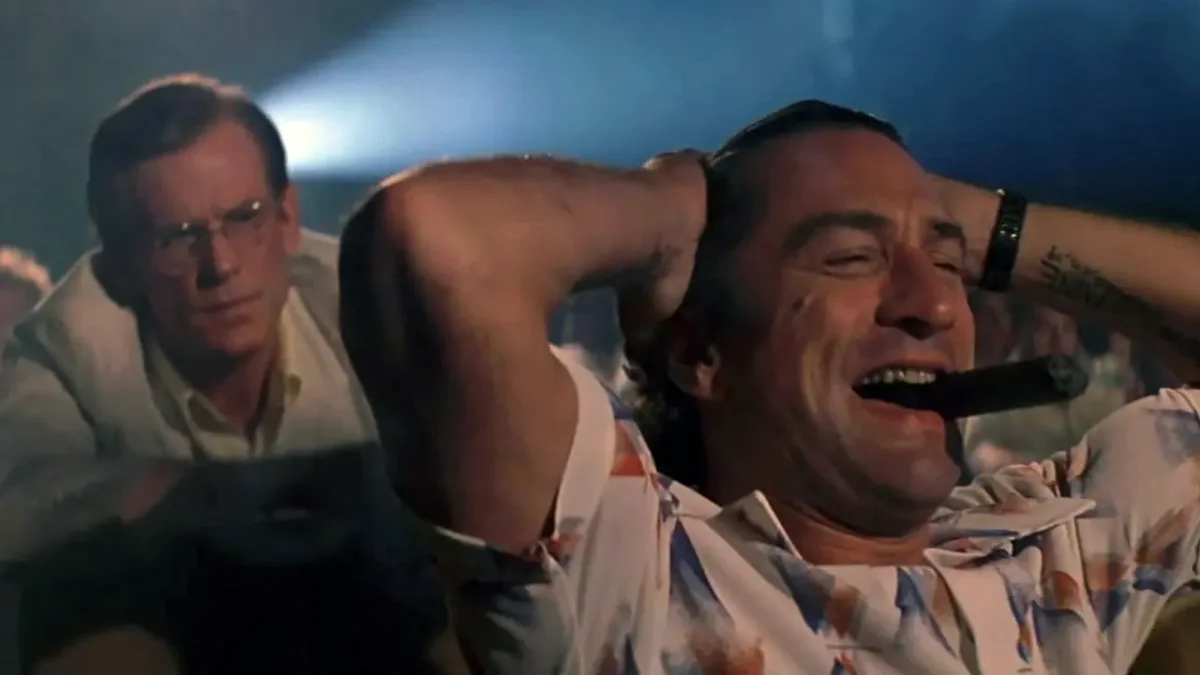
When Martin Scorsese chose to remake Cape Fear, the 1962 classic based on John D. MacDonald's novel The Executioners, he did much more than simply recreate the original. The director transformed the judicial thriller into a profound exploration of guilt, fear, and the moral contradictions of contemporary America, casting Robert De Niro as one of the most unsettling villains in his filmography. The outcome is a work that utilizes suspenseful cinematic language to question the boundaries between justice and vengeance.
The film's conclusion serves as a pivotal moment where all the themes interwoven throughout the narrative converge. The clash between Max Cady and Sam Bowden transcends mere survival; it becomes a definitive trial of a man who has betrayed his profession and another who has turned his quest for justice into an absolute form of fanaticism. To grasp the significance of the epilogue, one must look beyond the physical confrontation and observe how Scorsese constructs a meditation on evil and individual responsibility.
How Martin Scorsese Transforms a Remake into a Morally Complex Thriller
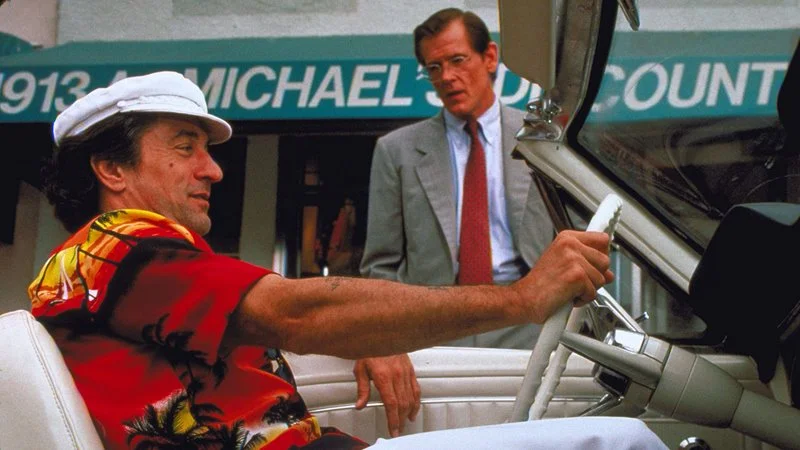
While retaining the narrative structure from J. Lee Thompson's original film, Scorsese radically shifts the perspective. In the 1962 version, Sam Bowden appeared almost blameless, but in this retelling, he emerges as a man filled with moral ambiguity. He deliberately concealed evidence that could have alleviated his client's sentence, believing that Max Cady deserved imprisonment for the heinous crime he committed. Ethically, his choice seems understandable; however, professionally, it represents a betrayal of the attorney's role.
This complexity deepens the conflict. Max Cady, portrayed by a chilling Robert De Niro, is not depicted as a victim but rather as a man who exploits Bowden's mistakes to justify his own madness. During his fourteen years in prison, he studies law, physically prepares himself, and makes vengeance his singular purpose. His legal knowledge becomes a psychological weapon, allowing him to manipulate the law and strike at Bowden through the very rules he has broken.
The inclusion of Nick Nolte, Jessica Lange, and Juliette Lewis expands the conflict to encompass the entire Bowden family. Scorsese illustrates how evil gradually infiltrates their daily lives, corrupting trust, security, and relationships. The suspense originates from this slow invasion of their domestic space, long before physical violence erupts.
The Conclusion of Cape Fear: What Happens on the Boat and Why Max Cady is Defeated
The climax unfolds as the Bowdens seek refuge on the Cape Fear River, believing they can lure Cady into a trap. However, the criminal manages to follow them, hiding beneath their car and eventually reaching their floating home. From this point, the film sheds any semblance of realism, morphing into a nightmare. After killing the housekeeper and the detective assigned to protect the Bowdens, Cady finally confronts the family with his vengeance. He humiliates Sam, threatens his wife Leigh, and terrorizes young Danielle, turning the boat into an impromptu courtroom.
Cady's obsession is not merely to kill; he aims to force Bowden to experience the same helplessness he claims to have endured during his years in prison. It is Danielle who momentarily disrupts this dominance by throwing flammable liquid at Cady just as he lights a cigar. The burns cause him to lose control, allowing mother and daughter to leap into the water. Thus, the final confrontation is confined to the two men.
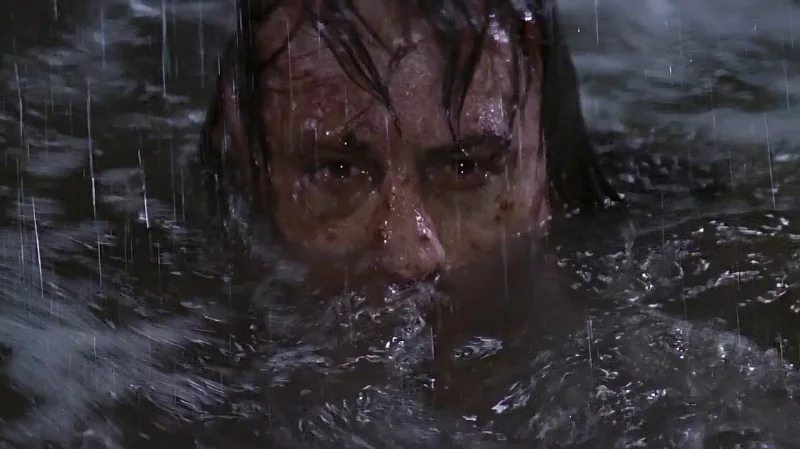
Sam manages to handcuff Cady's leg to the boat's structure, which is then swept away by the current, crashing against the rocks. Ultimately, the criminal is engulfed by the river's waters. Scorsese avoids a triumphant or spectacular death; instead, his antagonist disappears slowly, continuing to stare at Bowden until the very last moment. This imagery leaves a poignant suggestion: while violence can be physically halted, its repercussions continue to haunt the memories of the victims.
The Conflict Between Max Cady and Sam Bowden: The Failure of Justice and the Birth of Vengeance

The most intriguing aspect of the finale is how it challenges the traditional distinction between hero and antagonist. Sam Bowden is undoubtedly justified in wanting to protect his family, yet the film consistently reminds viewers that tragedy also arises from his decision to replace personal judgment with the rules of law.
For Cady, this choice becomes proof of a corrupt judicial system. He uses this argument to construct a delusional philosophy in which vengeance takes on the value of a moral mission. However, the film never legitimizes his stance; every action by Cady illustrates how the quest for justice has been entirely consumed by violence and a desire to annihilate others.
The final confrontation thus takes on the significance of a symbolic trial. Cady continues to accuse Bowden of betraying his professional oath, while Bowden gradually realizes that no moral shortcuts can prevent evil from producing new consequences. Both remain prisoners of their choices, unable to return to their former lives.
The True Meaning of the Ending: Evil is Defeated, but Trauma Forever Changes the Bowden Family

The film's last sequence makes it clear that the Bowdens' victory comes at a tremendous cost. Scorsese rejects the typical consolation found in classic thrillers and instead presents a family profoundly altered by their experience. No one returns to normalcy. Particularly significant is Danielle's perspective; at the film's outset, she views the world with youthful curiosity, but by the end, her gaze has become acutely aware of life's fragility.
The trauma has shattered her innocence, forcing her to confront a violence that the adults failed to contain. Sam emerges morally defeated as well. He has saved his family, yet he fully comprehends that his decisions have contributed to the chain of events. His responsibility does not equate to Cady's guilt, but it nonetheless weighs heavily on his conscience.
This awareness is what makes the conclusion of Cape Fear so memorable. The monster is swept away by the current, yet fear does not vanish with him. It remains etched in the survivors' minds as a wound destined to endure over time. For Martin Scorsese, the true horror lies not in the presence of the criminal but in the realization that a morally ambiguous choice is all it takes for violence to find the necessary space to propagate. The Bowden family survives, but the security that once defined their existence is irrevocably lost, replaced by the understanding that every decision carries consequences that are impossible to erase.