Understanding the Ending of 30 Days of Night: A Deep Dive into Its Themes
Explore the profound themes and tragic ending of 30 Days of Night, directed by David Slade. Discover how the film's narrative intertwines sacrifice, humanity, and love in a chilling vampire tale.
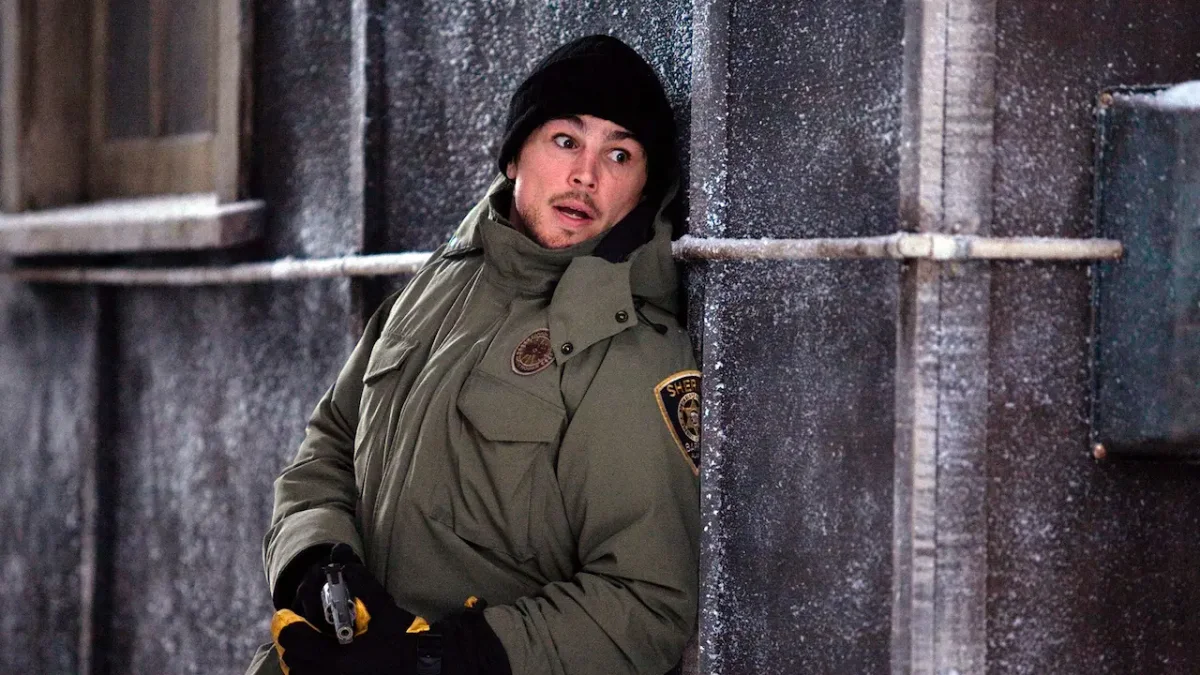
30 Days of Night, directed by David Slade in 2007 and based on the graphic novel by Steve Niles and Ben Templesmith, weaves its horror around a compelling premise: what happens when a community is cut off just as the most dangerous predators arrive? Set in Barrow, Alaska, where the polar night lasts for an entire month, the film explores how vampires exploit this darkness. For Eben Oleson (Josh Hartnett), the town's sheriff, survival becomes a gradual surrender of everything that once gave his life meaning.
The film's conclusion takes this idea to its extreme. Eben realizes that to confront Marlow, he must accept becoming the very creature he has fought against throughout the narrative. This act, seemingly contradictory, represents the culmination of his journey: Eben relinquishes his physical humanity to protect others and, most importantly, to ensure Stella can survive. As the sun rises and his body burns in her arms, 30 Days of Night transforms the victory over the vampires into a tragedy of love, sacrifice, and identity.
David Slade's Use of the Polar Night as a Metaphor for Isolation and Loss
The premise of 30 Days of Night aligns perfectly with David Slade's artistic vision, which emphasizes atmosphere's critical role in shaping character psychology. The depiction of Alaska in the film is not merely a backdrop; the perpetual night progressively strips away any external references, turning Barrow into a natural prison.
This environment allows the vampires to operate with near-absolute freedom. They first destroy communications, then transportation, and ultimately any chance of seeking help. Their plan is to transform the town into a witness-free zone. Fear arises from the inability to see, communicate, or escape.
Eben begins from a clear position: as sheriff, he is responsible for protecting the townsfolk. However, the film continually challenges this role. One by one, citizens fall victim to the vampire onslaught; Beau, Billy, Carter, Jake, and many others are sacrificed in the battle against the vampires, leaving Eben increasingly isolated.
The relationship with Stella becomes central to the narrative. Initially separated, the crisis forces them to reconnect. In a film where almost every bond is shattered by violence, their relationship stands out as one of the last vestiges of humanity.
The Transformation of Eben: A Choice of Sacrifice
As the end of the polar night approaches, Marlow and the other vampires plan to destroy Barrow by igniting the oil that runs through the town, erasing all traces of the massacre before the sun returns. Realizing time is running out, Eben understands he cannot confront the entire horde in his current state.
The predicament of Stella and the young Gail, trapped on the road, intensifies the urgency. Eben requires strength beyond his human limitations, leading him to make a drastic decision: he uses the blood of Billy, who had been bitten, to deliberately transform into a vampire.
This choice is pivotal as Eben consciously accepts losing what he is trying to protect. The transformation empowers him to confront Marlow on equal footing, and after a brutal fight, he manages to kill the vampire leader. This act disrupts the organization of the vampires; without Marlow's guidance, the remaining vampires flee before the sun's arrival.
However, this victory comes at a predetermined cost. Aware that the sun will destroy him, Eben seeks out Stella to share his final moments before dawn. As the light breaks, his body ignites and turns to ash in the arms of the woman he loves. The film avoids any comforting resolutions; while Eben saves Stella, he cannot remain with her. His triumph coincides with his own obliteration.
The Paradox of Eben's Transformation
The strength of the ending lies in the paradox surrounding Eben's transformation. Throughout the film, vampires symbolize the loss of humanity: they kill without remorse, viewing humans as mere prey and reducing life to a matter of sustenance. Eben's fight is against this very logic.
When he chooses to become one of them, it appears he crosses the line separating hero from enemy. Yet, the film introduces a crucial distinction between being a vampire and acting like one. Eben retains his consciousness and wields his new condition as a temporary tool to protect others.
Thus, sacrifice becomes the antithesis of the violence perpetrated by the vampires. Marlow kills because he views humans as inferior, and destruction is part of his nature. In contrast, Eben embraces transformation to prevent further deaths. Therefore, the same physical condition results in radically different behaviors.
The relationship with Stella further enriches this theme. At the film's outset, their bond is marked by distance, separation, and missed opportunities. The night forces them to rediscover intimacy. Aware that their reconciliation will be fleeting, Eben chooses to give her one last moment of peace.
The dawn takes on an opposite function than usual in horror. Typically, the return of light signifies liberation, the end of nightmares, and the defeat of evil. For Eben, however, it heralds death. The light that saves the remaining humans destroys the man who sacrificed his humanity to save them.
The True Meaning of the Ending in 30 Days of Night
The conclusion of 30 Days of Night gains its most profound significance from this contradiction. Eben cannot return to his former life, as what transpired in Barrow has obliterated that possibility. His final choice involves accepting this loss and transforming it into an act of protection.
Thus, Eben's death does not equate to defeat. He loses his body, his town, and nearly all he knew, yet he successfully prevents Marlow from completing the massacre. His actions allow others to witness the dawn.
A particularly poignant detail is that Eben does not die immediately after killing Marlow. He still has a few minutes to live and chooses to spend them with Stella. The film could conclude with the heroic act of the final confrontation; instead, it lingers on the intimacy of two people holding each other as the sun rises.
Here, horror gives way to tragedy. 30 Days of Night recounts a battle against vampires, but its ending speaks primarily to the cost of survival. For Stella and the other survivors, living means carrying the memory of those who have died. Eben becomes a part of that memory.
Ultimately, his transformation encapsulates one of the film's most intriguing ideas: humanity does not solely depend on the nature of the body. Eben becomes a supernatural being yet retains, until the end, what the vampires have lost: the capacity to choose, love, and sacrifice for another.
As the sun illuminates Barrow, the vampire's night is finally over. Yet, Eben fades away. His sacrifice, however, makes that light possible. The true meaning of the ending in 30 Days of Night lies in the notion that salvation may require a definitive renunciation: Eben becomes what he has always fought against, kills Marlow, saves Stella, and accepts to die by her side. His humanity, paradoxically, survives at the moment his human body is erased.