
Understanding the Taper Haircut: Common Mistakes That Ruin the Look
A taper haircut requires a smooth transition from longer hair on top to shorter sides. Discover common mistakes that can lead to a poorly executed taper and how to avoid them for a polished look.
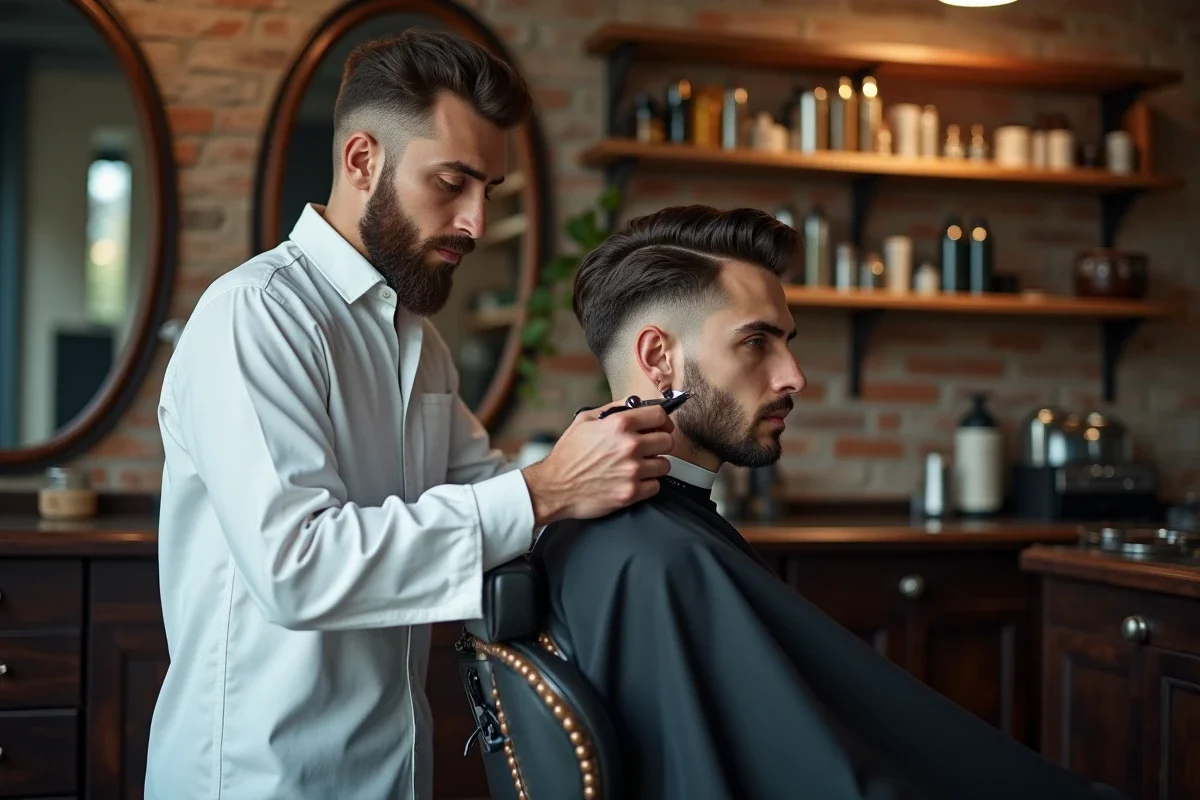
The taper haircut is all about achieving a smooth transition between the longer hair on top and the shorter sides, tapering down towards the temples and neck. A successful gradient relies on precise millimeter adjustments, and even the slightest technical misstep can turn a structured cut into a messy result. By identifying frequent mistakes in men's taper cuts, one can understand why two haircuts done with the same clippers can yield drastically different outcomes.
Anatomy of a Successful vs. Failed Taper
Examining the characteristics of a well-executed taper against those of a poorly managed gradient highlights critical technical turning points. The table below summarizes observable differences in key areas of the haircut.
See also: Tips and advice for a perfect haircut for thick hair.
| Area of the Cut | Successful Taper | Failed Taper | |------------------|------------------|---------------| | Temples | Gradual fade, skin barely visible, smooth transition to the top | Sharp demarcation line, "stair-step" effect between two lengths | | Neck | Clean contours, fade that naturally blends into the neck | Square or irregular neck, visible clipper lines, poorly defined neck line | | Top/Sides Connection | Imperceptible transition, no ridge or excess volume | Abrupt contrast, excess material at the connection line | | Contours (Ears, Sideburns) | Clean line following natural shape, left/right symmetry | Asymmetrical contours, artificial straight line not following the morphology | | Two-Week Hold | Fade still visible, harmonious regrowth | "Mushroom effect," sides grow out bulkily and the fade disappears |
Most discrepancies arise from three specific areas: the neck, the connection between the top and sides, and the contours around the ears. These are the points where the barber switches guards or moves from clippers to scissors, and even minor guiding errors can create visible breaks in the fade.
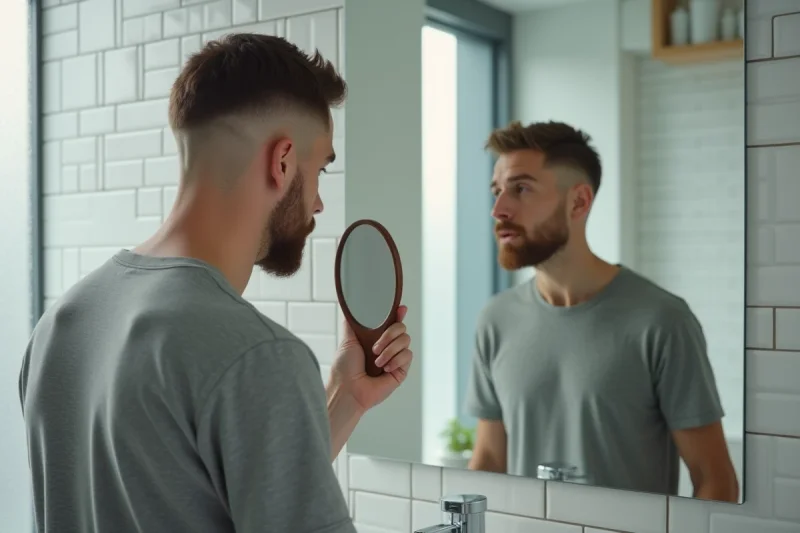
See also: Beginner's guide to taper haircuts: mistakes to absolutely avoid.
The Importance of Fade Placement
The placement of the fade line determines the type of taper (low, medium, or high) and influences the overall appearance based on face shape. A high fade on an elongated face accentuates its length, while a low taper on a round face fails to create enough contrast to define proportions.
A common error is choosing the fade height out of habit rather than analyzing the face shape. An improperly placed taper distorts facial proportions, even if the fading technique is flawless. Barbers or hairstylists who start cutting without assessing the skull shape and hair growth patterns are essentially working blind.
Hair texture also plays a direct role. For thick or curly hair, the fade requires more thinning work to avoid a bulky effect at the transition zone. Conversely, for fine hair, an overly aggressive fade can prematurely expose the scalp, resulting in a sparse rather than clean appearance.
Contours and Symmetry: Details That Reveal the Barber's Skill
The contours around the ears and sideburns are the hallmark of an experienced professional. Asymmetrical contours are noticeable at first glance, especially with short hair where nothing obscures the irregularity.
A frequent mistake is drawing straight lines that do not follow the natural curves of the ear or temple. The result appears artificial and almost geometric. A successful contour follows the morphology, with a clean yet organic line.
Communication with Your Barber: Essential for a Successful Cut
Simply showing a reference photo to the barber does not guarantee the desired outcome. The photo may depict an angle, lighting, or hair type that does not correspond to the client's reality. The reference photo should serve as a discussion starter, not a strict guideline.
Key points to clarify before the haircut include:
- Desired height for the fade (above the ear, at the temple, higher)
- Level of contrast between the top and sides (soft transition like a classic taper or a more pronounced contrast akin to a fade)
- Treatment of the neck (rounded, square, tapered) and contours (natural or reshaped with a razor)
- Anticipated maintenance frequency, as a high taper with a tight fade requires visits every two to three weeks to remain sharp.
Without this preliminary discussion, the barber interprets the request based on their own cutting habits. The gap between expected and actual results often stems from this miscommunication rather than a lack of technique.
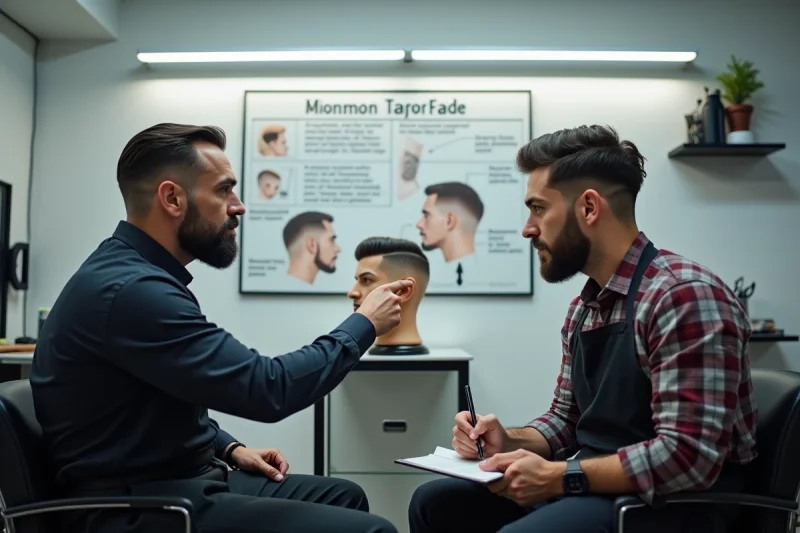
Barber Training and Men's Taper Cuts: A Gap Between Technique and Legal Framework
A rarely discussed factor is the training of professionals who perform these cuts. In France, a barber training alone does not replace the CAP or BP Coiffure in terms of legal requirements. Several training organizations have explicitly communicated this since 2025: technical mastery of fading and tapering does not legally authorize one to work in a salon without a recognized diploma.
This gap has direct consequences on the quality of services. A barber trained exclusively in fading and tapering may master the clippers, but understanding facial morphology and client follow-up are not part of all short training programs. The result is technically correct tapers in terms of fading but poorly suited to the skull shape or hair texture.
For clients, the distinction between a salon employing a qualified stylist (BP or equivalent title) and one where the practitioner holds only a private barber certification is not visible from the outside. Checking qualifications before sitting in the chair remains the most reliable way to avoid a poorly executed taper.
Maintaining Your Taper: Frequency and Timing Errors
A taper loses its definition more quickly than a classic haircut. The fade area, by nature very short, grows back uniformly, causing the gradient to fade within weeks. Waiting too long between visits to the barber negates the benefits of the initial cut.
- A low taper with a soft fade retains its shape longer, as the initial contrast is moderate.
- A high taper with a tight fade requires more frequent maintenance, as regrowth quickly creates a visible discrepancy between the top and sides.
- Razor-defined contours (lineup) lose their sharpness first and need refreshing even before the fade becomes blurred.
The choice of taper type also dictates maintenance rhythm. Opting for a sharply defined fade without planning for regular barber visits sets the stage for a visual degradation of the cut within weeks. Tailoring the taper style to one's own salon visit frequency results in a more coherent outcome over time than a spectacular fade that does not hold up.
You may also like


![Ici tout commence: What to Expect in Episode 1488 on Monday, July 27, 2026 [SPOILERS]](https://glowculturehub.com/cdn/images/b2d3d6d788c39a22a548df320e6d9f77/w1200.webp)