
Copper Balayage for White Hair: Conceal, Blend, or Embrace?
Copper balayage for white hair involves applying copper pigments to naturally depigmented strands. The technique requires understanding how white hair reacts to color for optimal results.
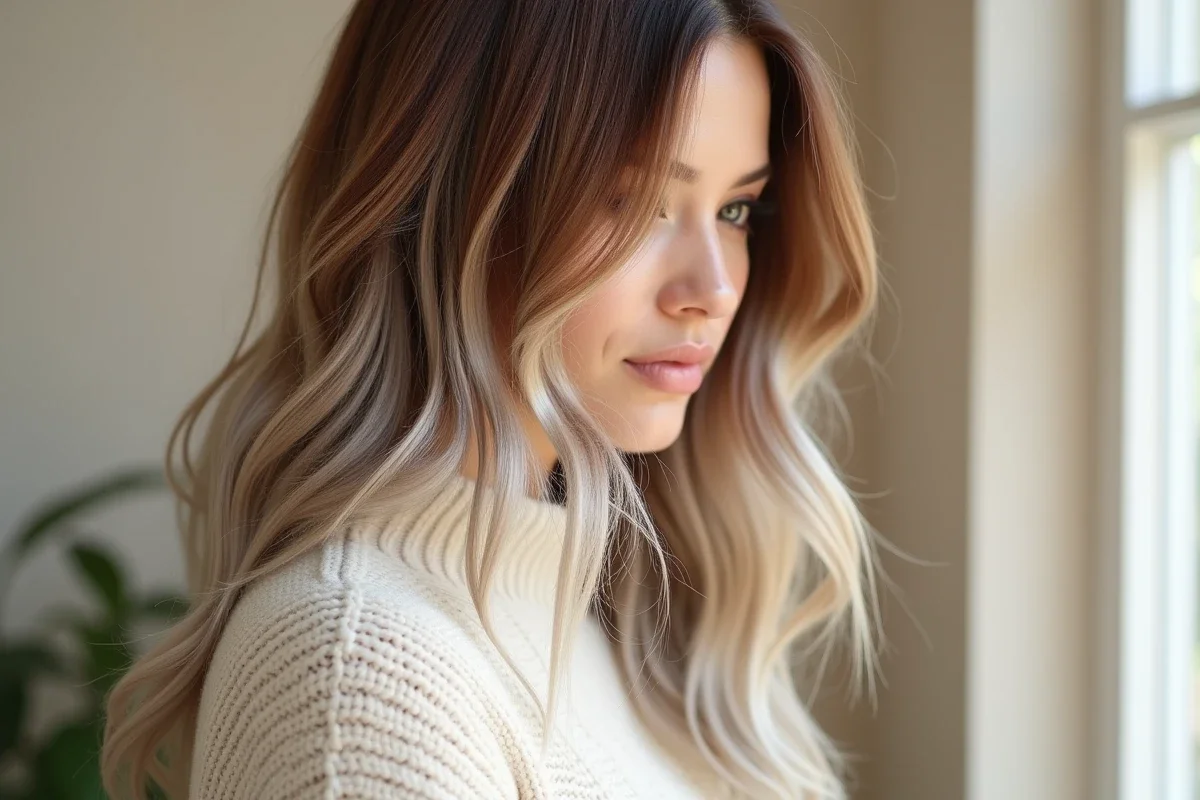
Copper balayage for white hair is based on a specific technical principle: applying copper pigments to naturally depigmented strands, which lack melanin. White hair absorbs color differently than pigmented hair, altering the final appearance of the copper and its longevity.
Understanding White Hair and Copper Pigments
White hair has no melanin, making it more porous, often drier, and finer than pigmented hair. When copper balayage is applied, the copper pigment penetrates a fiber that lacks a natural color base.
On brown hair, the copper overlays a warm decolorization base (orange, golden). In contrast, white hair has no underlying tones. If the formulation is not suitable, the result can skew towards a very bright, almost translucent copper.
The choice of copper shade depends on the percentage of white hair in the overall hair. For those with less than one-third white strands, a classic copper balayage is sufficient to create blended highlights. However, if the amount of white hair exceeds this threshold, the stylist must adjust the pigment concentration to avoid a stark contrast between colored and remaining white strands.

Limitations of Copper Balayage for Concealing White Hair
Balayage is not a full-coverage coloring technique; it only affects a portion of the strands. For individuals with minimal white hair, copper balayage creates a play of coppery nuances that distract from sparse white strands. However, as the percentage of white hair increases, the effectiveness of balayage for camouflage diminishes. Uncolored strands remain visible, and the contrast between bright copper and pure white can highlight the demarcation instead of masking it.
What Copper Balayage Can and Cannot Cover
- The treated strands take on a copper to auburn hue depending on the chosen formula, providing a luminous effect on lengths and around the face.
- White roots grow in without a harsh demarcation if the balayage is applied on the surface (using a comb or freehand technique), allowing for longer intervals between touch-ups.
- Areas that are not balayaged remain white or gray, which means total coverage cannot be achieved without additional coloring.
For those whose primary goal is to hide every white hair, copper balayage alone is insufficient. A stylist may recommend a tonal coloring supplement between balayage sessions to create a more uniform result.
Grey Blending and Copper Balayage: Merging Whites Instead of Hiding Them
Grey blending has emerged as an alternative to full-coverage coloring. The principle here is to integrate white strands into a gradient of shades, creating a controlled salt-and-pepper effect. When applied with copper tones, grey blending produces a mix of copper, golden, and white strands that coexist without visual disruption.
This method is ideal for those looking to reduce the frequency of salon visits. Copper grey blending allows for a transition from monthly touch-ups to maintenance every two to three months, as the white regrowth blends into the desired result.
Concrete Differences Between Classic Copper Balayage and Copper Grey Blending
Classic balayage aims to create a sun-kissed effect by lightening or coloring selected strands. In contrast, grey blending deliberately leaves some white strands visible and frames them with warm shades. The copper serves as a visual link between pigmented and depigmented areas.
On darker bases (brunette, dark brown), copper grey blending creates a particularly natural effect. The copper highlights warm the transition without giving the impression of artificial coloring.
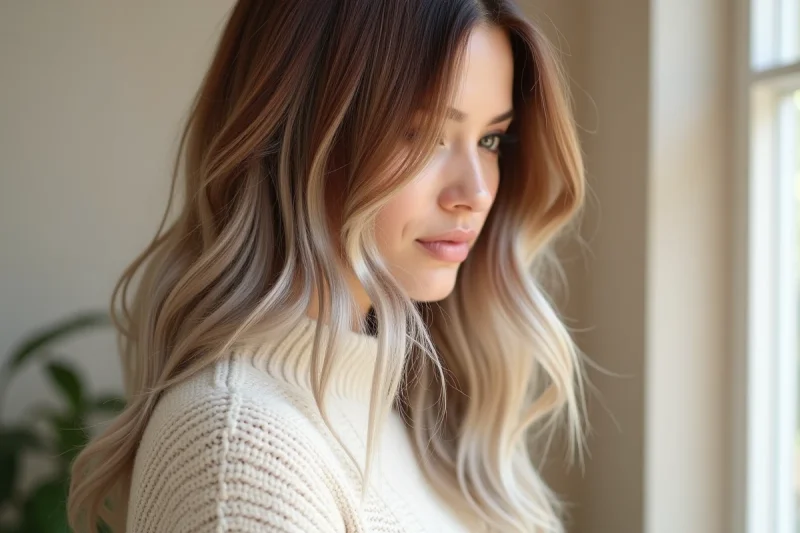
Suitable Copper Shades for White Hair: Bright Copper, Auburn, or Venetian
The term "copper balayage" encompasses a wide range of shades that react differently on a white base.
- Bright copper yields a luminous and visible result, but it fades quickly on porous white hair. Regular repigmenting treatments are necessary to maintain intensity.
- Auburn (brown-red) adds depth without excessive contrast. On predominantly white hair, it creates a more discreet blended effect than bright copper.
- Venetian blond (light golden red) closely resembles the natural tones of graying hair. This shade produces the most gradual transition between white and colored areas.
The choice also depends on skin tone. Intense copper suits warm skin tones (golden or peach undertones), while auburn or Venetian shades are better suited for neutral or cool complexions.
Maintaining Copper Balayage on White Hair: What Changes
White hair, being more porous, absorbs copper pigment quickly but also releases it just as fast. The longevity of copper balayage on white hair is generally shorter than on pigmented hair.
To prolong color, a copper repigmenting treatment (tinted mask or conditioner) applied weekly can slow fading. Sulfate-free shampoos help preserve the pigments deposited on the surface.
Hot water accelerates pigment loss on balayaged white hair. Rinsing with lukewarm or cold water after each shampoo makes a noticeable difference in the duration of the results.
White hair is also more sensitive to UV rays, which oxidize copper pigments and cause them to fade to dull tones. A hair sunscreen becomes a crucial part of the care routine to maintain the vibrancy of the balayage.
Copper balayage on white hair is not just an aesthetic choice; it requires careful consideration of the hair's nature. Factors such as shade, application technique, and maintenance frequency dictate the outcome as much as personal taste. Whether the goal is to conceal, blend with grey blending, or embrace a striking copper contrast against white, success hinges on aligning the percentage of white hair with the chosen formulation.