
Choosing the Perfect Swimsuit: Fit, Style, and Comfort at Luxury Level
Explore the elegance and versatility of swimsuits, focusing on fit, style, and care to achieve a luxurious look at the beach or pool.
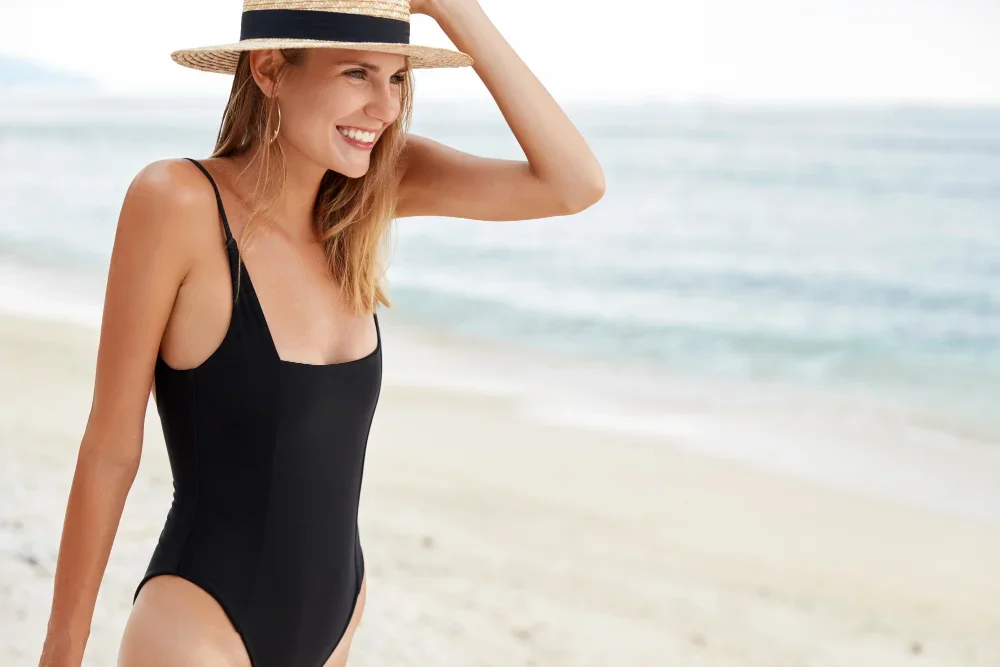
The Elegance of a Swimsuit
A well-crafted swimsuit offers a unique sense of reassurance: once you put it on, you instantly know if it fits. There’s no tugging, sliding, or constant readjusting at the pool's edge. In settings such as resorts, yachts, or spas, a swimsuit often appears more polished and stylish than a bikini, while still maintaining a contemporary flair. It embodies a quiet confidence, akin to a tailored blazer or a crisp white shirt.
Moreover, the practical luxury of a swimsuit is undeniable. It can serve both as swimwear and a stylish foundation. Paired with linen trousers, a long skirt, or a silk kaftan, it effortlessly transforms into a chic look suitable for lunch at a beach club. Anyone who has had to dash to the bar after a swim appreciates this versatility, as the swimsuit becomes not just swimwear but a sophisticated outfit base.
Fit as a New Statement
In everyday life, fit often determines whether something appears expensive or trendy, and this holds true at the beach as well. A swimsuit should be form-fitting without being restrictive. Consider this practical thought experiment: if you find yourself unconsciously pulling your shoulders forward because the neckline is too tight, or if the fabric rolls at the back, something is amiss. Comfort is visible; it changes your posture.
For inspiration, check out current styles under "swimwear for women" to see which cuts and details are trending. Ultimately, it’s less about following trends and more about ensuring the cut complements your body and aligns with your intended activities by the water—be it swimming, sunbathing, strolling, or simply lounging by the pool.
Key Fit Checks
- Bust Area: A swimsuit should provide support without constriction. Look for clear seams, a secure underbust area, and ensure nothing shifts upward when you raise your arms.
- Leg Cut: A high cut can visually elongate the legs but may dig in during movement. A moderate cut often offers a more luxurious feel as it sits comfortably.
- Torso Length: If the fabric creates folds at the stomach, it’s likely too long. Conversely, if it feels noticeably tight, it’s too short. Testing different sizes is crucial, as swimsuits tend to be less forgiving than dresses.
Style Tips that Truly Help
Style is born from clarity rather than complexity. A swimsuit in deep black, navy, or chocolate brown consistently appears high-end, especially with a clean silhouette. For those who love color, luxurious hues like emerald, burgundy, or cool off-white can also exude elegance, provided the fabric is opaque and well-constructed. Patterns are striking when they lead rather than overwhelm, such as graphic lines that highlight the waist or diagonal color blocks that add movement.
A less commonly mentioned tip that can immediately enhance your look is to consider "lines of sight". A V-neckline draws attention upward and elongates the torso, while a square neck appears modern and architectural, reminiscent of couture details. Asymmetrical straps highlight the shoulders and collarbones, perfect for showcasing jewelry that won’t get lost in the fabric.
Subtle Shaping Details
Shaping should be elegant and discreet. High-quality models utilize double-layered fronts, clever seams, or lightly compressive zones to smooth the stomach without hindering breathing. Ensure that shaping inserts don’t end at an unflattering spot, as this can create visible edges. In the luxury segment, the body looks most beautiful when the silhouette remains soft yet defined.
Material, Craftsmanship, and Care: The Quiet Luxury
The difference between a swimsuit that becomes saggy after two vacations and one that remains reliable for years often lies in the material blend and craftsmanship. A high percentage of quality elastane ensures elasticity, while dense, smooth fabrics not only conceal better but also provide a more serene appearance. Inspect seams and edges: flat, clean finishes feel better against the skin and show less under lightweight beachwear.
Care also plays a crucial role in luxury, affecting how long a piece retains its beauty. Rinsing it briefly with fresh water after swimming is a classic yet effective practice, especially after exposure to chlorine or saltwater. Many underestimate how sunscreen, oil, and self-tanner can dull fabrics. If you enjoy applying generous amounts of lotion while on vacation, it’s worthwhile to give your swimsuit a gentle hand wash in the evening and avoid drying it in direct sunlight to maintain elasticity and color.
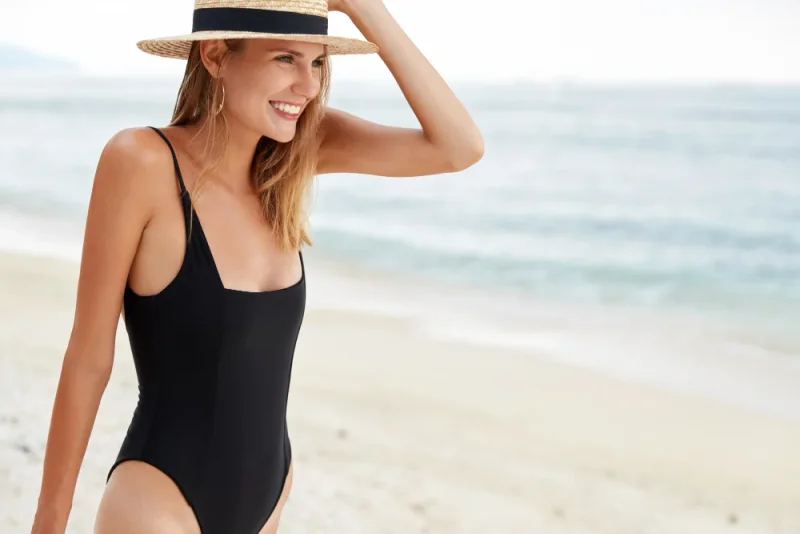
Effortless Poolside Styling
A swimsuit serves as a foundation, while accessories tell the story. A polished look can often be achieved with just three elements: a quality pair of sunglasses, a structured bag, and a lightweight cover-up. Linen shirts exude a relaxed yet refined vibe when not too fitted. A long pareo or wrap skirt is ideal for adding movement and can be quickly removed when you want to dive into the water.
Jewelry by the water is best kept minimal: small hoops, a delicate chain, or a single ring. Anything that jingles or is overly delicate can appear chaotic. Another detail that stands out in luxurious settings is tonal matching. A navy swimsuit paired with sand-colored linen and gold accents creates a serene composition. For bold colors in a swimsuit, neutral companions can ground the look.
Matching Models to Occasions
For athletic swimming, wide straps, a firm back, and a moderate neckline are unbeatable. Smooth fabrics and clear lines with a higher back exude elegance for spa and wellness settings. Beach clubs can accommodate more fashionable details, such as asymmetrical straps, cut-outs at the waist, or lower back designs, provided the fit remains stable. For those wanting versatility, choosing a model that also works as a bodysuit under pants is one of the most stylish "dual roles" for travel.
Common Mistakes Even with Expensive Pieces
The most frequent error is selecting a swimsuit that only looks good while standing still. When trying on, consciously perform some movements: raise your arms, squat, or lean forward. If everything shifts, it won’t improve at the beach. Another common pitfall is focusing too much on size: many opt for a smaller size in hopes of more support, resulting in pressure marks and an unkempt appearance. Support comes from the cut and construction, not from choosing a smaller size.
Lastly, don’t underestimate the impact of color and light. Things appear brighter at the beach, and water reflects every nuance. What looks perfect in the fitting room can appear different outside. If you’re torn between two shades, the calmer option is usually the more timeless choice, and timelessness is ultimately the most luxurious form of style.