
Gunpowder Milkshake: Understanding the Ending and Its Sequel Setup
Explore the ending of Gunpowder Milkshake, directed by Navot Papushado, and its implications for a potential sequel. The film blends comic aesthetics with themes of empowerment.

In Gunpowder Milkshake, directed by Israeli filmmaker Navot Papushado, audiences are treated to an action film that combines comic book aesthetics with neon atmospheres, all while drawing clear inspiration from the John Wick franchise. Central to the narrative is Sam, portrayed by Karen Gillan, an assassin raised within a criminal organization that operates with the efficiency of a multinational corporation. This world prioritizes corporate interests over personal relationships, creating a chilling backdrop for Sam's journey.
The film's conclusion marks a pivotal moment in Sam's quest for emancipation. While the battle against criminals led by Jim McAlester serves as the immediate conflict, the deeper struggle is against the very system that has shaped Sam into a disposable pawn. The ending signifies the formation of a new chosen family, rooted in solidarity among women of different generations, and hints at a larger impending conflict with The Firm, suggesting that Sam's story is far from over.
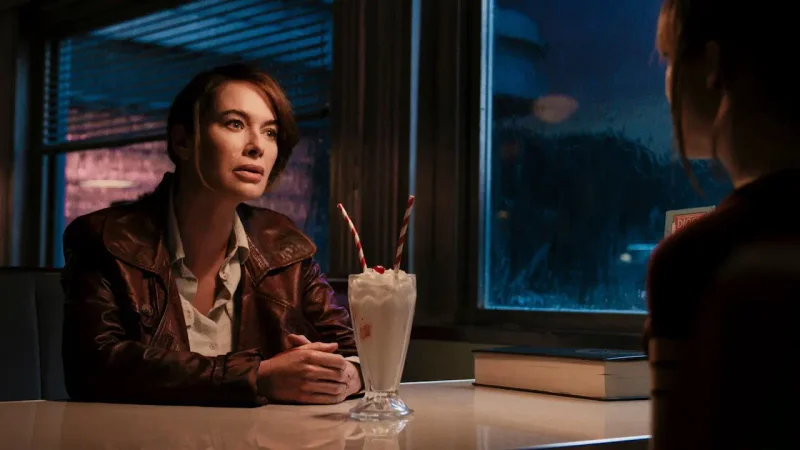
Gunpowder Milkshake navigates the realm of hyper-stylized action films with a unique perspective. Unlike John Wick, whose protagonist fights for personal vengeance and survival, Sam grapples with an identity crisis stemming from her relationship with her mother, Scarlet (Lena Headey), and the organization that raised her after her abandonment.
For fifteen years, Nathan (Paul Giamatti) has played a fatherly role, teaching her the company’s rules. However, as the story unfolds, it becomes clear that this bond is contingent upon the organization's interests. Nathan protects Sam only as long as her presence aligns with The Firm's objectives; when she becomes a liability, he is quick to sacrifice her.
This dynamic transforms the film into a profound examination of the relationship between the individual and the organization. The Firm is depicted as a vast criminal corporation complete with hierarchies and human resources, where individuals are mere replaceable tools. Sam's rebellion thus transcends the notion of simple revenge; it embodies a rejection of a system that values loyalty only when it serves the interests of those at the top.

The climax unfolds as Sam realizes she has been deliberately handed over to her enemies. Following the accidental death of Jim McAlester’s son, The Firm decides to absolve itself of responsibility by sacrificing their assassin to avoid a war between criminal factions.
While protecting young Emily, Sam discovers she can rely on her mother Scarlet and the three assassin librarians: Madeleine, Anna May, and Florence. The library, a symbol of memory and knowledge, becomes the battleground for the final confrontation, subverting audience expectations with a hidden arsenal capable of challenging an entire army.
The ensuing battle against McAlester’s men escalates into a full-scale fight, with the five women coordinating their unique skills to eliminate the mob boss and much of his organization. Tragically, Madeleine falls during a fierce hand-to-hand duel, marking her as the only significant casualty among the group.
Madeleine's death underscores the cost of the hard-won freedom. From that point on, Sam is no longer tied to any organization and definitively severs her ties with The Firm. In the film's finale, she confronts Nathan, threatening him with knowledge of the organization’s leaders, vowing that any attempt on her life will have dire consequences. This moment signifies a complete reversal of power dynamics.
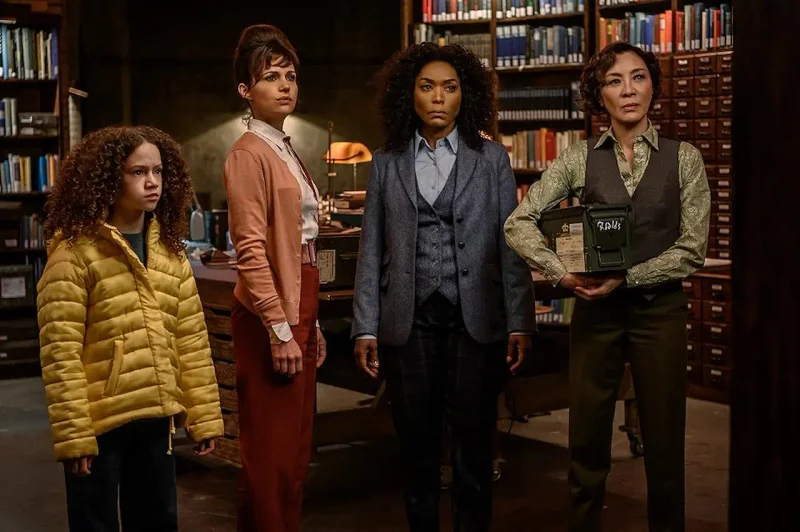
The most compelling aspect of the ending lies in how the film redefines the concept of family. Initially, Sam is portrayed as a woman shaped by abandonment. Scarlet vanished during Sam’s childhood, and Nathan filled that void only to mold her into a tool for the organization.
Sam's relationship with Emily gradually alters this view. The child loses her father due to the mission assigned to Sam and has every reason to resent her. However, upon learning the truth, she realizes that Sam was manipulated by far more powerful forces. Her choice to forgive Sam breaks the cycle of violence that permeates the narrative.
Scarlet also completes her arc, returning to embrace her role as a mother after years of evasion, fighting alongside her daughter instead of remaining distant. The three librarians become an extension of this newfound family: women from different generations who offer their experiences to support Sam.
The film’s final image of the group traveling together suggests the emergence of an alternative community founded on mutual trust rather than the obedience enforced by a criminal organization.

Beneath the vibrant aesthetic and thrilling action sequences, Gunpowder Milkshake presents a clear discourse on power. The Firm symbolizes a system that exploits individuals until they become obstacles, at which point they are discarded. Sam realizes that she has spent her life adhering to rules designed solely to protect those at the top of the hierarchy.
Thus, her final confrontation with Nathan holds greater significance than her battle with McAlester. While the mob boss poses an immediate threat, The Firm embodies the systemic violence that underpins her existence. As long as this organization persists, others will continue to be exploited similarly.
Emily emerges as a symbolic figure, representing the potential to break the cycle of this generational model. Sam has become what Scarlet sought to prevent; now she can ensure Emily does not follow the same path.
Madeleine's sacrifice further reinforces this message. Her death enables the others to forge a different future, illustrating that freedom invariably comes at a personal cost.

The conclusion of Gunpowder Milkshake resolves the primary conflict but deliberately leaves the greater war unresolved. Sam dispatches her pursuers and forces The Firm to retreat, yet the organization remains intact. The final scene with Emily standing before Nathan’s house indicates that the equilibrium achieved is merely temporary.
The essence of the ending lies in this awareness. Sam transitions from being a cog in the system to becoming the master of her own choices. For the first time, she decides whom to protect, whom to fight alongside, and what future to build.
The last image of the car driving away encapsulates a freshly attained freedom, one that will continually be tested. The Firm still possesses resources, power, and influence, while Sam only has the people she has chosen to stand by her.
This is the true legacy of the film: to suggest that strength does not stem from organizations or imposed rules, but from bonds forged freely. The family that Sam discovers along her journey holds greater value than any contract, and it is this core that poses the most significant threat to a system founded on control and fear.
You may also like


![Ici tout commence: What to Expect in Episode 1488 on Monday, July 27, 2026 [SPOILERS]](https://glowculturehub.com/cdn/images/b2d3d6d788c39a22a548df320e6d9f77/w1200.webp)