
Understanding the Ending of Inglourious Basterds
Inglourious Basterds, directed by Quentin Tarantino, reimagines history and explores the power of cinema. The film's ending raises questions about revenge, memory, and the moral complexities of its characters.
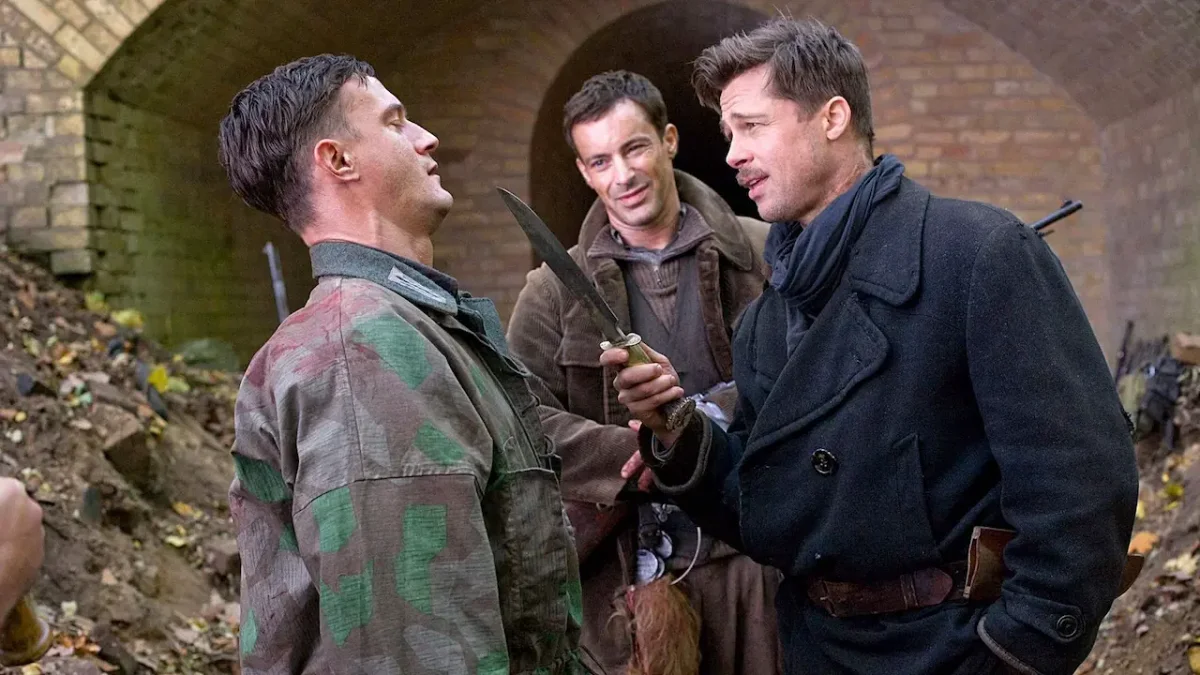
When Quentin Tarantino brought Inglourious Basterds to the big screen in 2009, he did more than just create a World War II film; he crafted a reimagining of history through the lens of cinema, turning the screen into a powerful weapon against Nazism. The narrative, featuring Shosanna Dreyfus, Colonel Hans Landa, and the group led by Aldo Raine (Brad Pitt), unfolds as a thriller and a war movie while also serving as a meditation on the power of imagery, blending reality and fiction in a way that makes them inseparable.
The film's conclusion stands out as one of the most debated moments in Tarantino's oeuvre, deliberately altering a well-known historical event: the death of Adolf Hitler. However, the true significance of the finale lies not in the dramatic explosion at the cinema but in the moral repercussions of the characters' choices. Themes of revenge, memory, and the role of images emerge as central to an ending that rewards some characters, condemns others, and poses a crucial question to the audience: Can cinema rewrite history, or does it merely provide a form of symbolic justice?
The Ending of Inglourious Basterds Completes Tarantino's Reflection on Cinema as a Weapon and Historical Rewriting
From the outset, Inglourious Basterds belongs to a phase in Quentin Tarantino's career where he utilizes genre cinema to reinterpret historical events. This path continues with Django Unchained and Once Upon a Time in... Hollywood, where fiction intervenes directly in reality to amend its most tragic outcomes.
In this film, however, the metacinematic component takes on even greater importance. The entire narrative revolves around films, actors, projectors, and cinemas. Nazi propaganda becomes spectacle through Nation’s Pride, while the cinema run by Shosanna transforms into the site where that very propaganda is obliterated.
Hans Landa, brilliantly portrayed by Christoph Waltz, embodies this ambiguity perfectly. He is a character capable of adapting to any context, changing language, allegiance, and identity with remarkable ease. Tarantino thus constructs an antagonist who survives through intelligence rather than sheer violence, making the final confrontation markedly different from traditional war cinema.
Hitler's Death, Shosanna's Sacrifice, and Hans Landa's Punishment Illuminate the Film's Conclusion
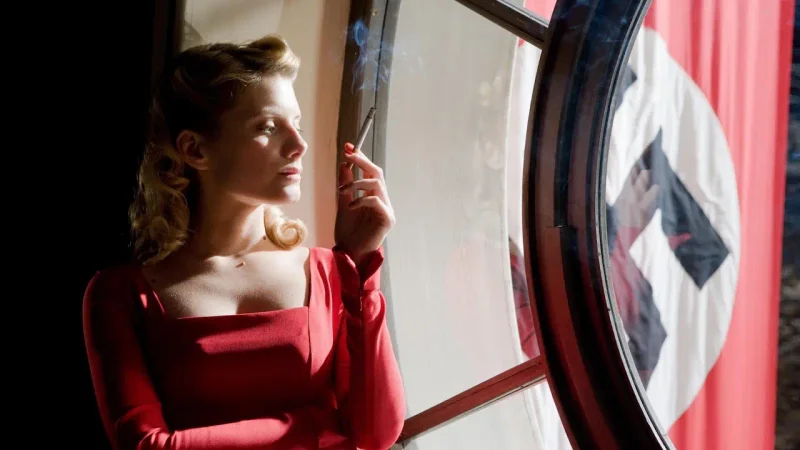
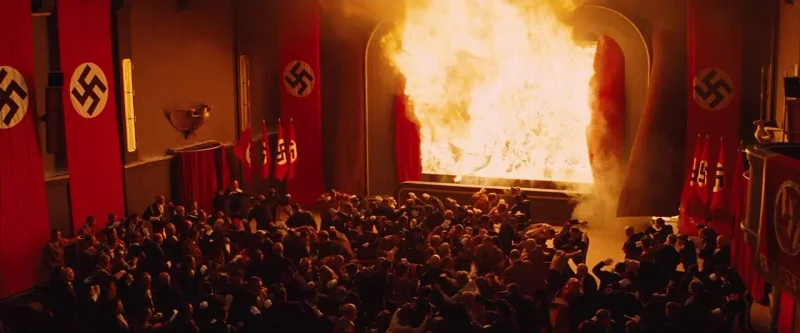
In the film's climactic moment, the various plans devised by the characters converge in the cinema. Shosanna has orchestrated a fire using old nitrate film, a highly flammable material, while the Basterds infiltrate the premiere intended for the Third Reich's elite.
Before the plan unfolds completely, Hans Landa discovers the identities of the fake Italian officers and captures Aldo Raine and Utivich. Instead of halting the attack, he opts to negotiate with the Allies for his future. Realizing Germany is bound for defeat, he decides to switch sides to secure immunity, wealth, and prestige post-war.
Meanwhile, Shosanna's plan progresses, albeit at a tremendous cost. After killing Fredrick Zoller, she lowers her guard for a moment and is fatally shot by a soldier. However, her death does not prevent the plan from succeeding. Her massive smiling face appears on screen, heralding revenge, and as the cinema is engulfed in flames, Donny Donowitz and Omar Ulmer open fire on the trapped audience, eliminating Hitler, Goebbels, and the entire Nazi leadership.
Simultaneously, Landa crosses the border, convinced he has obtained everything he desired. Here, the perspective of the ending shifts dramatically. Aldo Raine formally honors the agreement but decides to carve a swastika on the forehead of the former SS colonel, preventing him from erasing his past.
Revenge, Memory, and Responsibility Transform Each Character into a Morally Ambiguous Figure
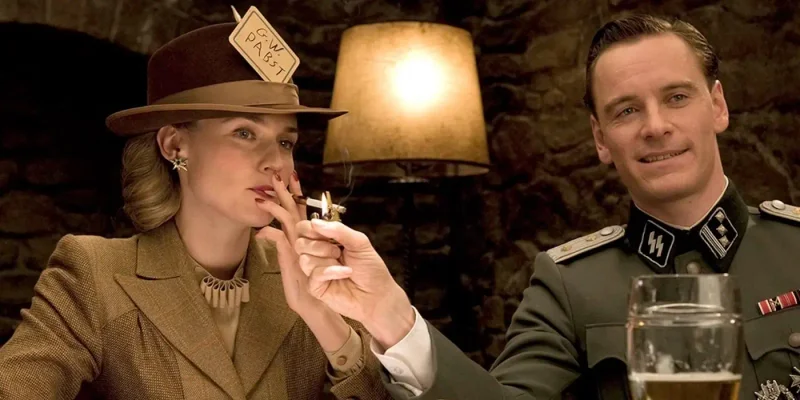
One of the most intriguing aspects of the ending is the differing nature of the revenge pursued by the characters. Shosanna's revenge stems from a profoundly personal trauma: she witnessed Hans Landa exterminate her family and has been living in hiding under a false identity for years. However, her vengeance also aligns with a collective goal, as she eliminates the top tier of the Nazi regime.
In contrast, the Basterds embody a violence that is intentionally reflective of that of their enemies. Tarantino never presents them as immaculate heroes. They scalp German soldiers, brand survivors with a swastika, and turn the war into a brutal manhunt. Their justice operates through the same logic of violence that they oppose.
The character of Hans Landa is even more complex. Throughout the film, he demonstrates that he does not genuinely believe in Nazi ideology but rather in his personal gain. When he realizes the Third Reich is about to collapse, he simply attempts to change uniforms. However, the ending illustrates that there are crimes that no political agreement can erase. History can be manipulated, but individual responsibility remains etched in time.
The Swastika Carved on Hans Landa's Forehead Represents the Refusal to Allow the Guilty to Reinvent Themselves
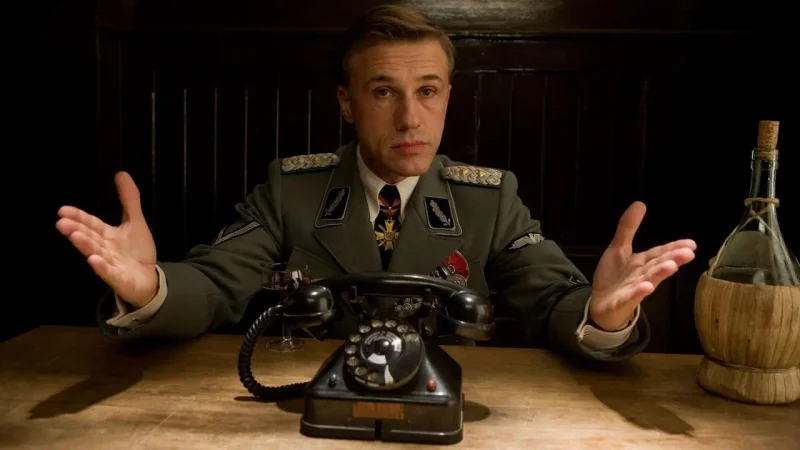
The famous final line from Aldo Raine, who refers to that scar as his "masterpiece," encapsulates the film's deepest meaning. Throughout the mission, the commander of the Basterds has marked captured Nazis to ensure none could conceal their past once the war ended.
This same principle is applied to Hans Landa, with a crucial difference. He is the most intelligent, the most opportunistic, and likely the only one truly convinced he can emerge victorious from any situation. He secures the Allies' surrender, avoids trial, and envisions a new life in the United States.
The swastika ultimately destroys that plan. The mark renders it impossible to separate the man from the war criminal. Tarantino suggests that memory cannot solely depend on courts or diplomatic agreements. Certain responsibilities must remain visible to prevent time from transforming murderers into respectable citizens.
It is significant that this punishment does not coincide with death. Landa will continue to live but will have to confront the symbol of the regime he once served with such efficiency every day.
The True Meaning of the Ending of Inglourious Basterds is That Cinema Can Offer Symbolic Justice Where History Leaves Open Wounds
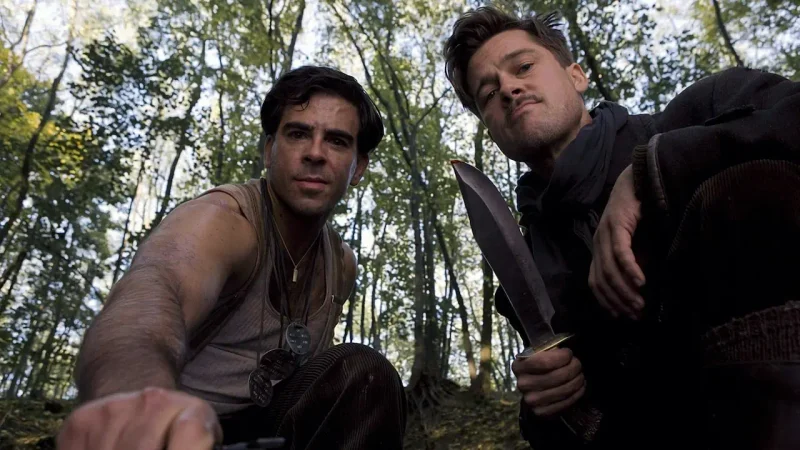
The epilogue of Inglourious Basterds transcends the mere fantasy of seeing Hitler defeated prematurely. Tarantino does not seek to rewrite the past because he deems it wrong, but rather because cinema possesses the freedom to imagine what reality could not grant the victims.
For this reason, Shosanna's face projected on the screen assumes an almost eternal value. Although she dies moments before the explosion, she becomes the image that dominates the final grand representation of the Third Reich. Cinema, used by the Nazis as a propaganda tool, rebels against its creators and condemns them.
The fate of Hans Landa also completes this narrative. The man who turned the hunt for Jews into a profitable profession attempts to reinvent himself as a hero of the Allies. Aldo Raine prevents him from controlling his personal narrative by inscribing an unerasable truth on his body.
The ending thus suggests that memory requires permanent signs. Images, stories, and even scars can become instruments of justice when reality proves insufficient. This is the film's most powerful idea: cinema does not alter the past but can offer its victims a symbolic revenge that transcends time.