
Heart of the Sea: The True Story Behind the Tragedy of the Whaling Ship Essex
Heart of the Sea, directed by Ron Howard and starring Chris Hemsworth, tells the incredible survival story of the whaling ship Essex. The film explores the true events that inspired Moby Dick.
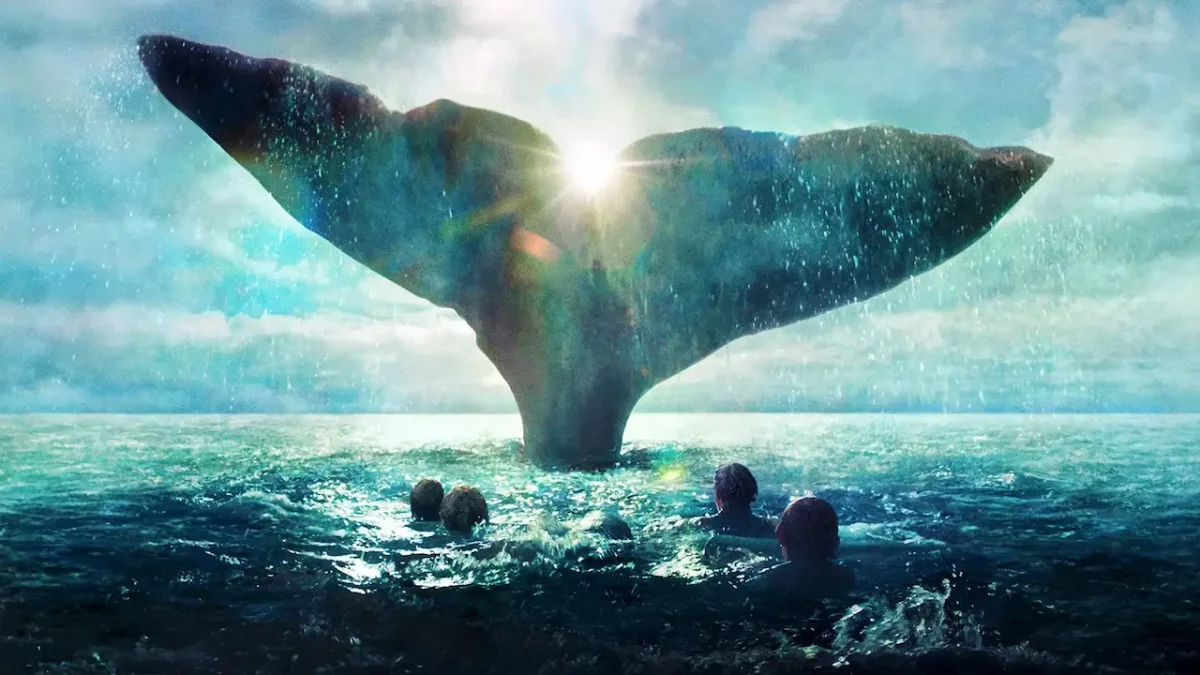
Heart of the Sea, directed by Ron Howard and featuring Chris Hemsworth, presents one of the most astonishing survival stories ever depicted on film. The narrative follows the crew of the whaling ship Essex, whose expedition to hunt sperm whales in the Pacific Ocean turns into a harrowing ordeal when a massive whale sinks their vessel, forcing the sailors into a desperate fight for survival. The film's gripping visuals and the brutality of the events have led many viewers to wonder about the authenticity of this tale.
The answer is indeed remarkable: Heart of the Sea is based on one of the most well-documented maritime disasters of the 19th century. The film draws inspiration from the non-fiction book by Nathaniel Philbrick, which meticulously recounts the sinking of the Essex in 1820. This tragic incident would profoundly influence Herman Melville as he wrote Moby Dick, transforming a true catastrophe into one of the greatest novels in world literature.
The True Story of the Essex Whaling Ship and the Sperm Whale Attack in the Pacific
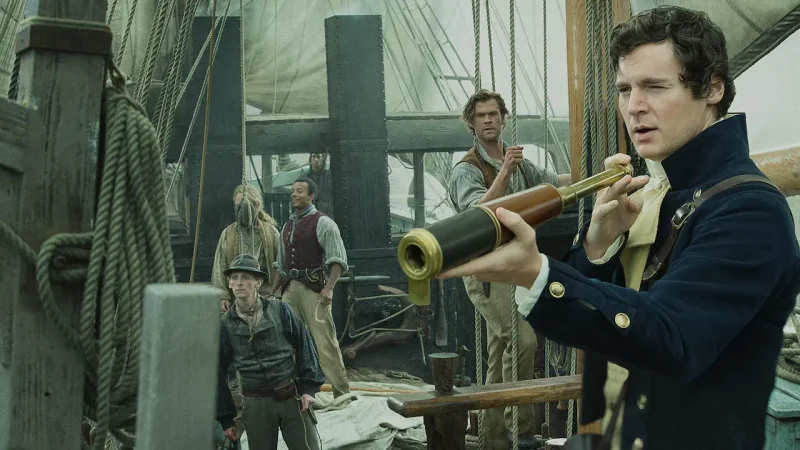
The events depicted in Heart of the Sea are rooted in the history of the whaling ship Essex, which was built in Nantucket, Massachusetts, and launched in 1799. At that time, Nantucket was the global hub for whaling, and while the Essex was smaller than many vessels in the local fleet, it had successfully completed numerous expeditions, earning a reputation as a particularly lucky ship.
In 1820, the vessel set sail on what was intended to be a lengthy commercial mission lasting over two years. The young captain George Pollard Jr. commanded the ship, with Owen Chase, an experienced sailor, serving as first mate and destined to become one of the key witnesses of the tragedy. Among the crew was also fourteen-year-old Thomas Nickerson, a cabin boy on his first voyage.
After months at sea, on November 20, 1820, the ship reached an area teeming with sperm whales, thousands of miles from the South American coast. While part of the crew pursued some whales with traditional harpoons, a gigantic sperm whale struck the Essex. According to Owen Chase, the whale appeared to deliberately target the ship, delivering two violent blows that caused irreparable damage, leading to the vessel's rapid sinking.
After the Shipwreck: Months of Hunger, Thirst, and Desperate Decisions
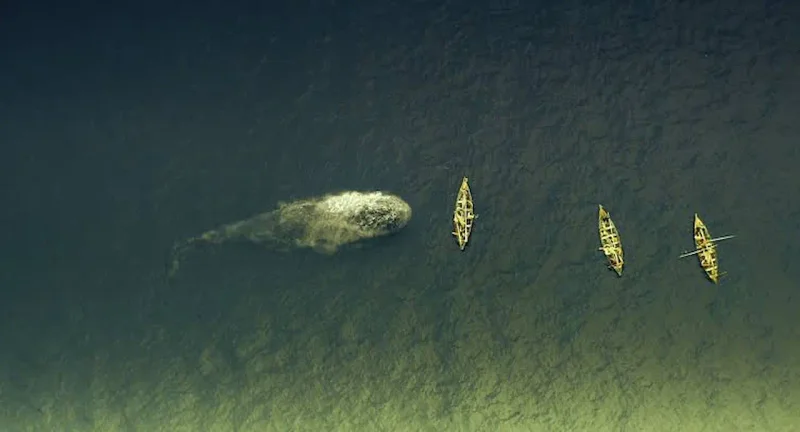
The sinking of the Essex marked only the beginning of a nightmare. All twenty men aboard managed to escape into three small whaleboats, salvaging limited supplies of food and water before the ship disappeared beneath the ocean's surface.
Initially, Captain George Pollard suggested heading toward the nearest islands. However, fearing that those lands were inhabited by what were then considered cannibals, the crew chose a much longer route toward South America. This decision, made to avoid a perceived greater danger, would turn their journey into one of the most harrowing survival stories in maritime history.
After about a month, the men reached Henderson Island, an uninhabited isle where they temporarily found fresh water, fish, and seabirds. However, the available resources were insufficient to sustain the entire group. Three sailors opted to remain on the island, hoping for rescue, while the other seventeen returned to the open sea, unaware that the following weeks would push them beyond their physical and psychological limits.
Hunger and dehydration soon began to take their toll. As documented by Owen Chase and Thomas Nickerson, the men resorted to consuming the bodies of deceased companions in a desperate bid to prolong their survival. This extreme decision, made with profound guilt, is portrayed with great respect in the film, avoiding mere sensationalism.
The Survivors of the Essex, Their Rescue, and the Direct Link to Moby Dick
As weeks passed, the situation deteriorated further. The three boats eventually became separated, and one disappeared without a trace. The remaining vessels continued to suffer losses due to starvation and hardship.
The most tragic episode involved Captain George Pollard's boat. Exhausted, the last survivors decided to draw lots to determine who would be sacrificed for the others' survival. The lot fell on Owen Coffin, Pollard's young cousin. The captain attempted to take his place, but the boy accepted the outcome and was killed. This event stands as one of the most harrowing moments in maritime history, illustrating the depth of despair faced by the crew.
After nearly ninety days adrift, rescue finally arrived. The boat led by Owen Chase was found on February 18, 1821, while Pollard's boat was located a few days later. The three sailors who remained on Henderson Island survived for several months longer before being discovered by an Australian vessel. Of the twenty men aboard the Essex at the time of its sinking, only eight returned home.
Upon returning to Nantucket, Owen Chase quickly published a memoir of the expedition, while Thomas Nickerson wrote a detailed account that would only be rediscovered and published decades later. These accounts allowed Herman Melville to learn about the Essex tragedy, which became the primary inspiration for the latter part of Moby Dick, published in 1851.
How Faithful is Heart of the Sea to the True Story?
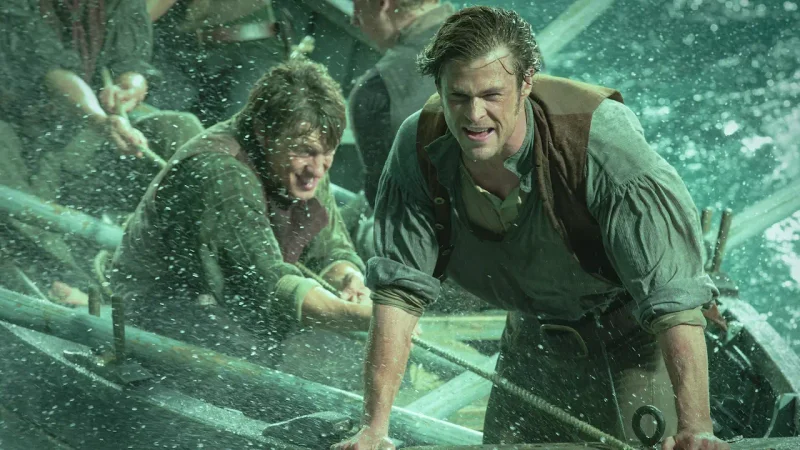
While Heart of the Sea does introduce some narrative simplifications, it remains one of the most accurate films about the tragedy of the Essex. Ron Howard based his work on Nathaniel Philbrick's historical account, limiting fictional elements primarily to dialogue and character dynamics, while the main events closely follow historical records.
The narrative structure, which features an elderly Thomas Nickerson recounting events to Herman Melville, serves as a cinematic device but reflects a real fact: Melville studied the survivors' testimonies and built his novel around this tragedy. The portrayal of the massive sperm whale also originates from a documented event, though the famous Moby Dick was influenced by the legend of Mocha Dick, another notorious whale that eluded Chilean whalers for years.
The film's strength lies in its balance between spectacle and historical reconstruction. Behind the action scenes lies a reflection on the relationship between man and nature, the arrogance of intensive whaling, and the vulnerability of humanity before the ocean's might. This is why the story of the Essex continues to captivate readers and viewers today: it recounts a real tragedy that has left a profound mark on the history of literature and cinema.
You may also like