I Predoni: Analyzing the Film's Complex Finale
I Predoni (_Marauders_) explores the intricate dynamics of justice, corruption, and revenge through its complex characters and moral dilemmas, culminating in a thought-provoking finale.

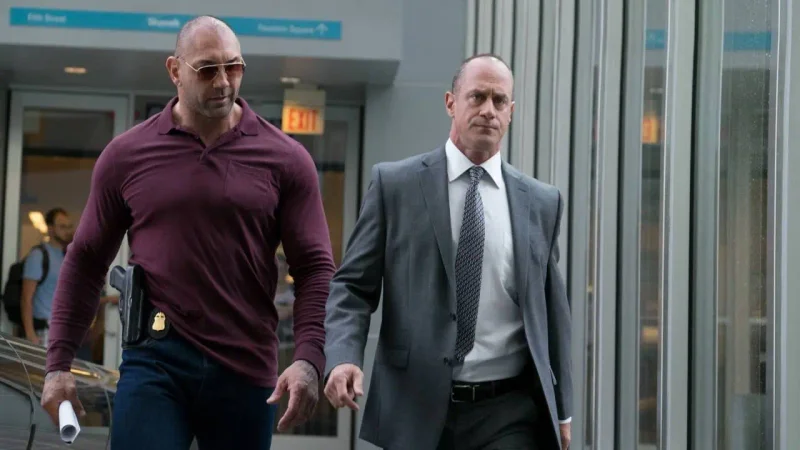
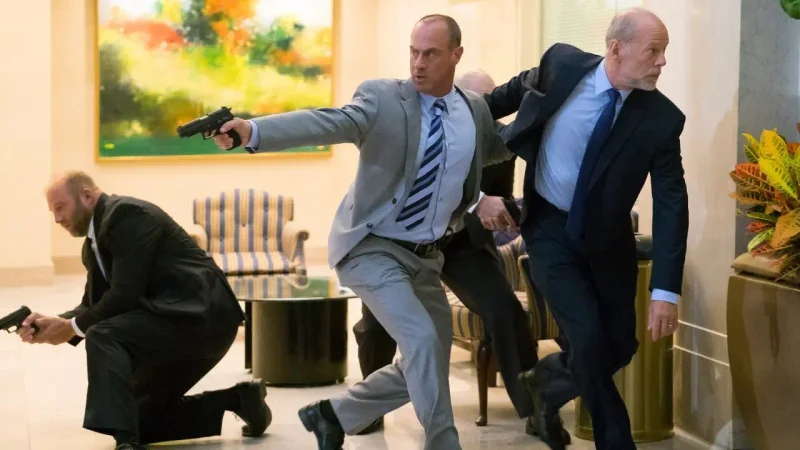
I Predoni (Marauders), directed by Steven C. Miller, initially presents itself as a conventional bank heist thriller. However, as the narrative unfolds, it reveals a far more intricate plot intertwining police investigations, political corruption, and personal vendettas. Featuring Christopher Meloni as FBI agent Jonathan Montgomery, Dave Bautista as Stockwell, and Bruce Willis as the influential banker Jeffrey Hubert, the film continually challenges the audience's perception of justice.
The conclusion of I Predoni subverts many of the assumptions built throughout the film. The robbers are not merely criminals, while some institutional figures are revealed to be deeply compromised. The film does not deliver a clear-cut victory of good over evil; instead, it presents a moral dilemma: how far is it permissible to break the law in order to punish those who have manipulated it for their own gain? This question underpins the film's ending and the choices made by its characters.
A Heist Movie with Depth: Corruption and Revenge
While following the heist movie structure, I Predoni belongs to a tradition of investigative thrillers where each new revelation alters the meaning of previous events. Steven C. Miller crafts the narrative by alternating between the heists and the FBI investigations, gradually unveiling a web of accountability that implicates businessmen, politicians, and military personnel.
At the center of the story is Jonathan Montgomery, a seasoned agent marked by a painful personal history and accustomed to looking beyond appearances. From the outset, he realizes that the robbers' actions follow a precise logic: victims are meticulously chosen, and each heist seems to convey a message to the investigators.
The character of banker Jeffrey Hubert is also portrayed ambiguously. Ostensibly respectable, he represents the public face of economic power, while behind that façade lies a long history of unpunished crimes. The film suggests that the true criminal organization may be much higher up than the masked robbers.
This setup gradually shifts the narrative from a purely police procedural to a moral exploration. The investigation not only aims to identify those responsible for the heists but also serves as a means to uncover truths that have remained buried for years.
Unraveling the Final Acts: Who Leads the Heists and the Fate of Hubert
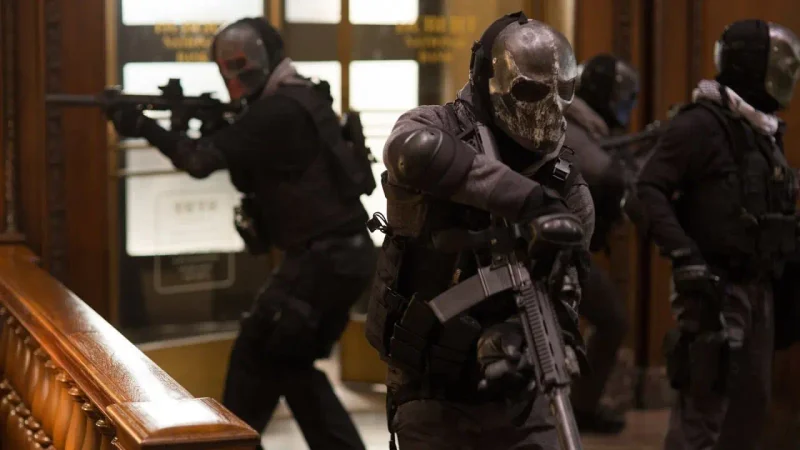
The film's final act clarifies the significance of the heists. The assaults on the Hubert National Bank branches were merely a phase of a much larger plan designed to gather evidence against Jeffrey Hubert and Senator Cook, both responsible for orchestrating a conspiracy that led to the death of Alexander Hubert and the destruction of an entire team of Rangers years earlier.
The most surprising revelation concerns the identity of the mastermind behind the robberies. Special Agent Wells, seemingly one of the young FBI investigators on the case, is actually the leader of the organization. His infiltration of the agency allowed him to monitor every development in the investigation and anticipate the moves of the investigators.
His motive stems directly from that old military operation. Wells was part of the Special Forces team sent against the Rangers, who were believed to be traitors. Only after the massacre did he and his men discover they had been manipulated by Hubert and his accomplices. From that moment on, they dedicated years of their lives to exposing the true perpetrators.
Simultaneously, the narrative arc of Detective Brian Mims comes to a close. A corrupt cop, despised even by himself, he realizes too late the gravity of the situation. When he tracks down Wells in an attempt to stop him, he is fatally wounded in the throat. His final act, though destined for failure, represents an effort to redeem a life spent on the wrong side of the law.
The epilogue shifts to Mexico, where Montgomery confronts Hubert. Wells also arrives to complete his revenge. During their confrontation, the film's true moral conflict emerges: Montgomery reproaches Wells for sacrificing innocent lives in pursuit of a just goal. Yet, moments later, he himself stabs Hubert, deliberately crossing the line he had defended until that point.
Questioning Justice and Revenge Through Imperfect Protagonists
The most intriguing aspect of the finale is that no character can be regarded as entirely innocent. Wells fights against genuinely corrupt individuals, but along his journey, he causes the deaths of people unrelated to the conspiracy. His plan originates from a quest for justice but becomes tainted by the logic of revenge.
Montgomery, on the other hand, embodies faith in institutions. For much of the film, he insists on the necessity of gathering evidence and following legal procedures, convinced that the law can still function. However, each new discovery undermines this belief, revealing how profoundly the system has been manipulated by powerful individuals.
Even Hubert embodies a recurring theme in contemporary thrillers: the criminal who uses social respectability as a shield. His wealth, political connections, and economic control render him virtually untouchable, forcing those seeking the truth to operate at the fringes of legality.
Even Mims, likely the most compromised character in the entire story, finds a form of redemption. His death does not erase his past mistakes but suggests that an awareness of one’s guilt can drive a person to make at least one final righteous gesture.
Montgomery's Final Choice: The Cost of Justice
When Montgomery kills Hubert, he utters a line that encapsulates the film's essence: he is willing to go to hell so that another may go to heaven. While these words are directed at the banker, they also serve as a message to Wells.
The agent understands that the young man has sacrificed his life in an attempt to rectify an unpunished injustice. By personally eliminating Hubert, Montgomery symbolically interrupts that cycle of vengeance and grants Wells a chance to start anew.
This choice is deeply ambiguous. On one hand, the primary architect of the conspiracy is finally punished; on the other, the law's representative chooses to become a vigilante. Thus, the victory comes at a tremendously high moral cost.
This ambiguity sets I Predoni apart from many traditional thrillers. The film avoids a reassuring ending and instead illustrates how, in a completely corrupt system, even the best individuals risk compromising their principles to achieve a just outcome.
The True Meaning of I Predoni's Finale: Institutional Failures Against Power
The conclusion of I Predoni suggests that the true enemy is not the robbers but a system capable of shielding those with money, political influence, and control over information. The heists thus become a narrative tool to expose a much larger mechanism, where institutional responsibilities are even graver than the crimes committed by the protagonists.
Wells' escape deliberately leaves his character's judgment open-ended. He is simultaneously a criminal, a victim of manipulation, and a man who has dedicated years to dismantling a conspiracy that few would dare confront. Montgomery recognizes this complexity and chooses to bear the weight of the final decision himself.
The epilogue does not celebrate revenge as an ideal solution. Instead, it reveals how easy it is to lose one's integrity when institutional justice fails. All protagonists arrive at a profound realization, aware that each choice has incurred an impossible human and moral cost.
This gray area, where heroes and villains often share the same methods, represents the true meaning of I Predoni's finale: when power corrupts the rules, even those fighting on the right side risk ethical defeat.
You may also like