
La Vénus électrique: A Romantic Comedy with Hidden Depths
A review of La Vénus électrique, a romantic comedy directed by Pierre Salvadori, exploring themes of artistic creation and the exploitation of women, showcased at Cannes 2026.
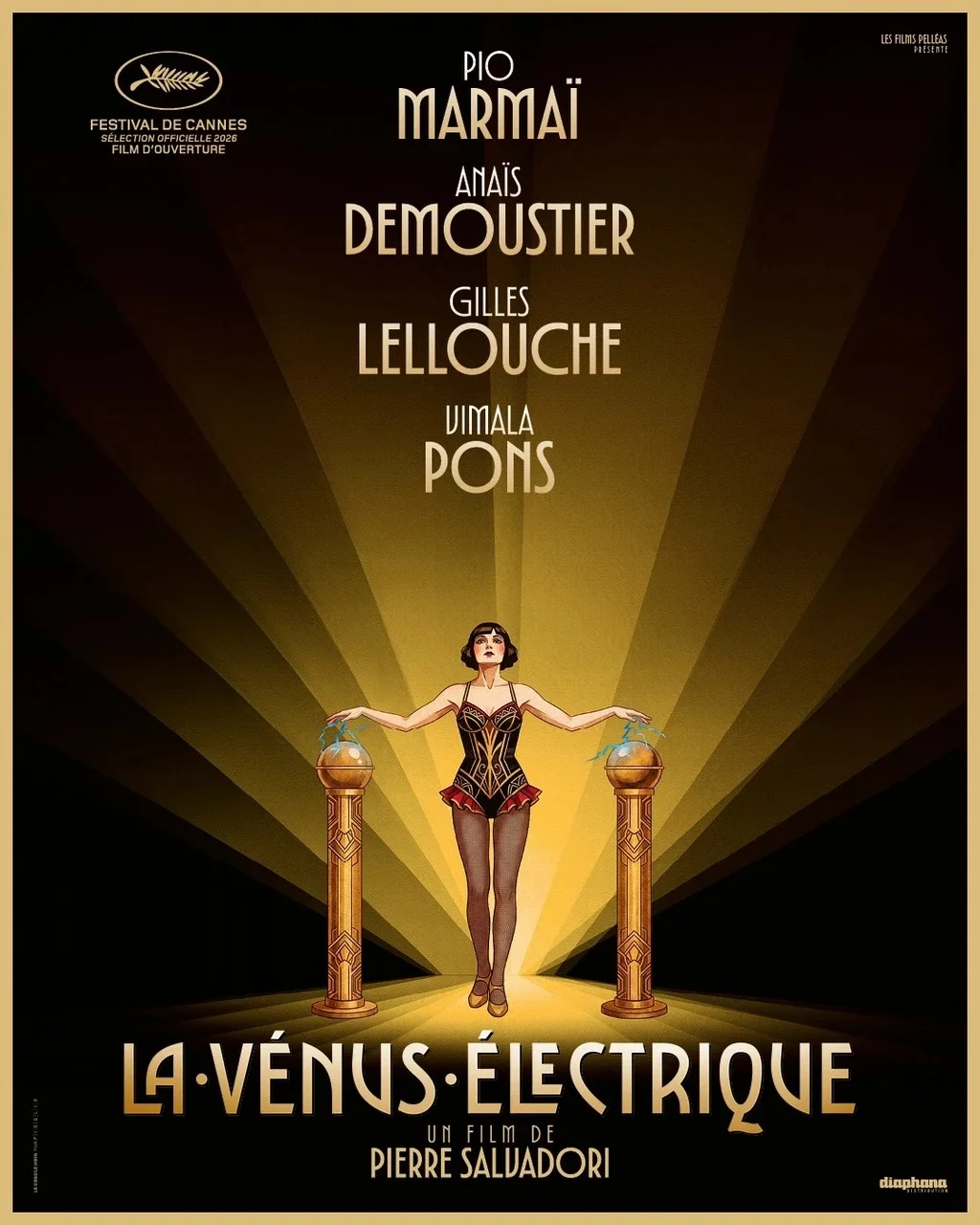
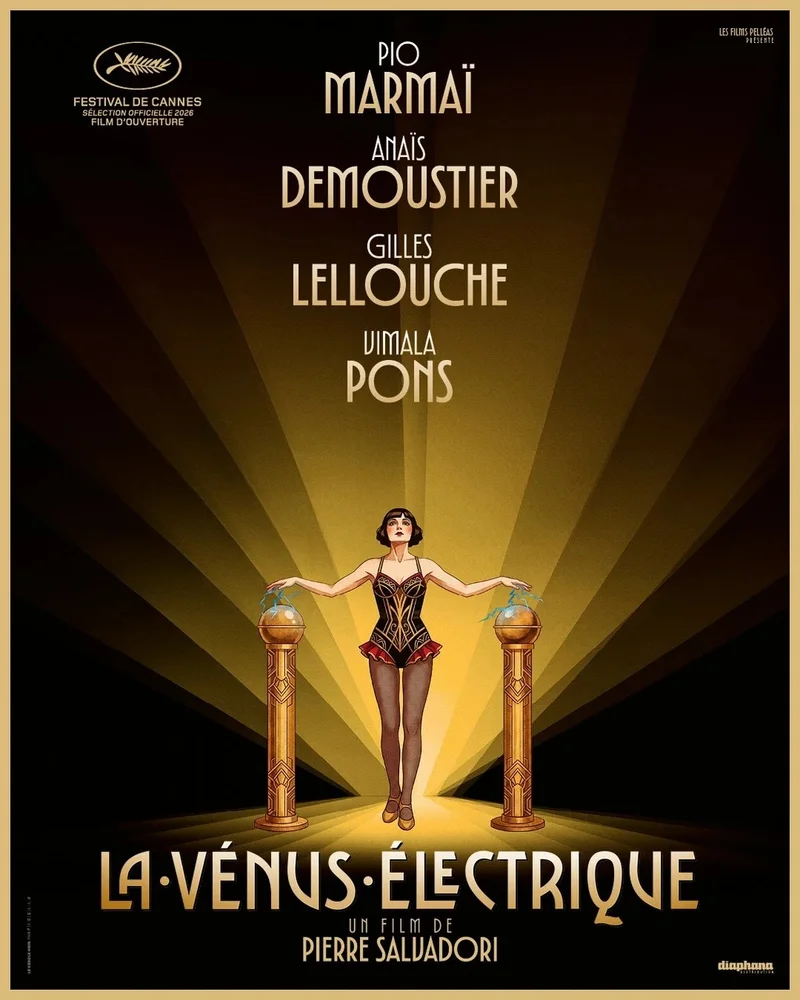
CRITIQUE · CANNES 2026 · HORS COMPÉTITION
La Vénus électrique
de Pierre Salvadori · ★★★☆☆
At the UGC Maillot, I had the opportunity to watch La Vénus électrique during the opening night of Cannes. Following a rather subdued and predictable ceremony, the theater filled with anticipation for this much-awaited film.
Pierre Salvadori makes his foray into romantic comedy with this period piece set in Paris in 1928. The story revolves around Antoine, a grieving painter trying to reach out to his deceased wife through a séance. The fortune teller, however, is actually Suzanne, a struggling fairground worker who concocts the ruse to survive. As the deception unfolds, Antoine finds new inspiration, while Suzanne unexpectedly falls for the man she is deceiving.
The performances are commendable, often eliciting laughter, though the film does experience some pacing issues in the middle. Pio Marmaï delivers a solid performance, while Gilles Lellouche, portraying Antoine's gallery owner friend, steals several scenes. The supporting cast shines as well, and the score by Camille Bazbaz enhances the viewing experience without overwhelming it. Overall, it's an enjoyable film.
However, I grappled with some of the film's unexamined themes.
The Male Gaze in Artistic Creation
The original concept is credited to Robin Campillo and Rebecca Zlotowski, with Salvadori also acknowledging Toledano and Nakache in the credits. Four filmmakers contributed to this narrative before it reached Salvadori. At its core, the film explores artistic creation and the dynamics of who truly pulls the strings. Suzanne is the mastermind behind the scenes, crafting the illusion that allows Antoine to reclaim his artistic voice. Despite her pivotal role, the film celebrates Antoine's success without questioning the implications of Suzanne's contributions.
The Cost of Female Autonomy
What troubled me further was Suzanne's portrayal as a character. She endures significant economic and physical exploitation, yet the narrative frames this as charming. The opening scene at the fairground sets the tone: men pay to kiss the Electric Venus, only to be repelled by a shock. Suzanne earns a living through her body, a fact presented as quaint rather than burdensome.
When a woman in the film seeks her own freedom, she pays a steep price. Those who conform to the expectations can remain unscathed. La Vénus électrique tells a love story from the perspective of a man to whom everything happens. Salvadori approaches this with warmth and kindness, yet even benevolence can overlook critical issues.
Reflections Post-Screening
Upon leaving, I felt compelled to watch Peter Jackson's documentary on the Beatles that same evening. Cannes, even outside of competition, stirs a hunger for more.
In summary, La Vénus électrique is a well-crafted romantic comedy, frequently amusing and supported by an impressive cast. Salvadori remains true to his style, but beneath the film's light-hearted exterior lies a blind spot that deserves acknowledgment.
Technical Details
Director Pierre Salvadori
Screenplay Pierre Salvadori, Benjamin Charbit, Benoît Graffin
Original Idea Robin Campillo, Rebecca Zlotowski
Cast Pio Marmaï, Anaïs Demoustier, Gilles Lellouche, Vimala Pons, Gustave Kervern
Music Camille Bazbaz
Cinematography Julien Poupard
Production Les Films Pelléas / France 2 Cinéma
Distribution Diaphana Distribution
Duration 2h02
Release in France May 13, 2026
Cannes 2026 Opening Film – Out of Competition