
LNGVTY Score: A New Standard for Health-Conscious Hotel Stays
LNGVTY introduces a new hotel evaluation score focusing on health and wellness, assessing how well hotels support a health-oriented lifestyle for travelers.
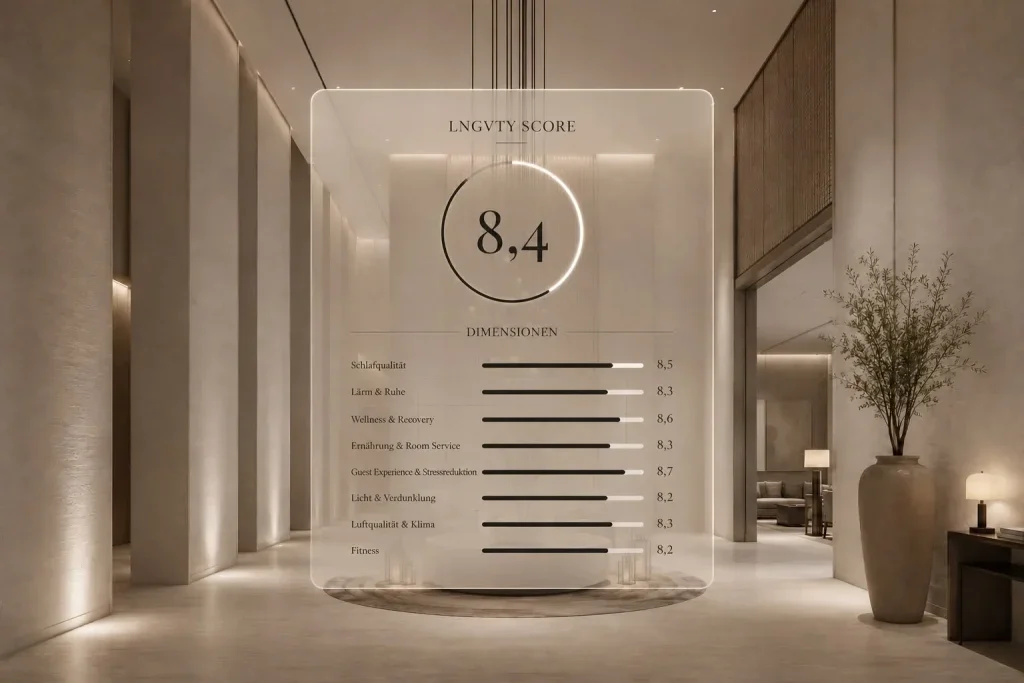
In the realm of luxury travel, a serene spa, a state-of-the-art gym, and a nutritious breakfast are often seen as the hallmarks of a restorative hotel experience. However, traditional hotel ratings rarely provide insight into whether guests can truly sleep well, maintain their workout routines, or find balanced meals through room service. This gap is where the Munich-based startup LNGVTY steps in.
The innovative platform aims to evaluate hotels not based on comfort, service, or room size, but rather on their ability to support a health-oriented lifestyle while traveling. LNGVTY assesses eight critical areas, ranging from sleep quality and nutrition to fitness, light, air quality, and stress reduction.
This approach is particularly appealing to travelers who wish to maintain their routines during vacations or business trips. It signals a potential new standard for luxury hospitality, aligning with a travel philosophy that prioritizes longevity and healthy living even at the hotel selection stage.

For many travelers, enjoying a healthy breakfast by the pool is part of a rejuvenating hotel stay. The LNGVTY Score evaluates not just the offerings available but also how effectively aspects of nutrition, recovery, and other longevity factors are implemented in the hotel environment.
The Limitations of Wellness as a Sole Indicator
Travelers often select hotels based on specific amenities, ticking boxes for wellness, pools, fitness centers, or healthful breakfasts, assuming these features guarantee a restful experience. However, such indicators can be misleading. A pool might be too small for swimming, a fitness center may not open until guests are already occupied with meetings, and a well-furnished room can still hinder restful sleep due to noise or inadequate light-blocking curtains.
LNGVTY aims to bridge this gap by evaluating not only the existence of amenities but also their practical usability. This is crucial for guests who do not want to abandon their routines while traveling. Those who regularly exercise, prioritize sleep, or eat mindfully at home often wish to continue these habits in luxury hotels, wellness resorts, or health-focused accommodations.
A high-quality spa can play a vital role in this experience. Our article on luxury spa vacations illustrates how thoughtful amenities enhance guest satisfaction. However, LNGVTY's evaluation goes further: it emphasizes the practical application of these offerings.
Understanding the LNGVTY Score
At the heart of this platform lies the LNGVTY Score, where each assessed category receives a score between zero and ten, culminating in an overall rating that reflects a hotel's longevity quality. The term longevity fundamentally aims at maintaining health, activity, and performance for as long as possible. In the hotel context, it focuses less on medical guarantees and more on creating conditions that foster sleep, movement, nutrition, and recovery.
LNGVTY examines eight dimensions:
| Evaluation Area | Key Focus According to LNGVTY | |-----------------|--------------------------------| | Sleep Quality | Bed comfort and actual rest achieved | | Noise and Quiet | Sounds in rooms, hallways, and surroundings | | Wellness and Recovery | Usability of spa, sauna, and recovery offerings | | Nutrition and Room Service | Selection, quality, and availability of suitable meals | | Guest Experience and Stress Reduction | Processes, service, and potential stressors | | Light and Blackout | Natural light, lighting, and total blackout capabilities | | Air Quality and Climate | Room climate, ventilation, and temperature control | | Fitness | Equipment, hours of operation, and practical training options |
With 24 percent of the total score dedicated to sleep quality, this category holds the highest weight. This prioritization is logical; no matter how luxurious a stay may seem, poor sleep often undermines the overall experience.
These categories are interconnected. Poor air quality can disrupt sleep, inconvenient hours may hinder workout sessions, and a lack of light dishes can interrupt a guest's dietary routine. Thus, the LNGVTY Score aims to provide a comprehensive view of the guest experience rather than evaluating individual offerings in isolation.
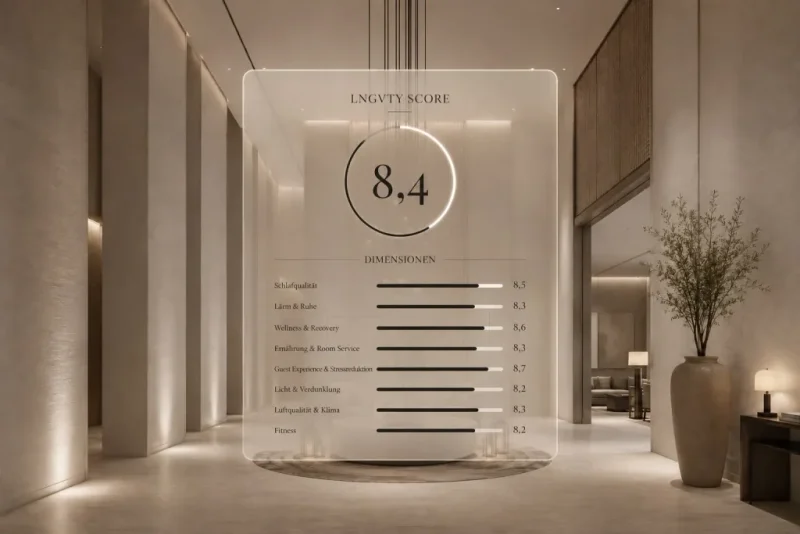
The LNGVTY Score evaluates hotels across eight dimensions, with sleep quality contributing most significantly to the overall score. Other criteria include noise and quiet, wellness and recovery, nutrition and room service, guest experience and stress reduction, light and blackout capabilities, air quality and climate, and fitness.
Incorporating Guest Reviews into the Evaluation Process
A unique aspect of this model is the analysis of publicly available guest experiences. LNGVTY aims to aggregate recurring comments rather than highlight singularly positive or negative reviews. This method can uncover insights that are often absent from official hotel descriptions, such as frequent mentions of thin walls, noisy air conditioning, or limited access to fitness facilities.
Such insights are particularly valuable for longevity assessments. While a hotel website may claim to have a fitness area, it is the collective experiences of guests that reveal whether there are enough machines, suitable hours, and a pleasant environment for training.
Similarly, sleep quality cannot be determined solely from lists of amenities. High-quality mattresses do not guarantee restful sleep if loud doors or light-filtering curtains are present.
LNGVTY posits that it is insufficient for a hotel to merely offer certain amenities. What truly matters is whether guests can use them effectively in their daily routines and whether they contribute positively to sleep, movement, and recovery.
This approach aligns with a shift in the understanding of luxury. For many travelers today, luxury encompasses not just size, exclusivity, or visible comfort, but also tranquility, time, privacy, quality sleep, and physical well-being.
Examples of how a luxury hotel can integrate wellness, architecture, fitness, and longevity can be seen in properties like the Andreus Resort in South Tyrol.

Regular exercise is one of the eight evaluation dimensions of the LNGVTY Score. It is crucial not just to have fitness or sports options available but also to assess how effectively guests can utilize these during their stay.
Three Levels of Hotel Evaluation
Hotels and resorts from Germany, Austria, and Switzerland can apply to be included in the LNGVTY system, which features three levels: Featured, Approved, and Certified. The distinctions are based on the score achieved and the depth of evaluation.
The highest level, Certified, requires a physical inspection to verify that the online information aligns with the actual guest experience.
| Evaluation Level | Scope of Assessment | |-----------------|---------------------| | Featured | Inclusion and editorial presentation on the platform | | Approved | Extended evaluation based on defined criteria | | Certified | Comprehensive assessment including on-site inspection |
The first hotels to receive recognition will gradually be showcased on the platform, although LNGVTY has not yet released a complete list of certified properties.
For travelers, this means that the score is still in its nascent stages. The practical significance of these evaluations will become clearer as more hotels undergo assessment and results can be compared.
For hotels, this analysis can also reveal weaknesses. A property may boast a high-quality spa and excellent dining but lose points due to inadequate light-blocking in rooms or late-opening fitness facilities.
Particularly in the five-star segment, such details may gain greater importance. Guests paying premium rates expect not just beautiful rooms but a cohesive and reliable overall experience. Our article on experiences in five-star hotels contextualizes the standards and expectations typically associated with this highest hotel category.
Differentiating the LNGVTY Score from Traditional Star Ratings
Traditional star ratings primarily assess facilities, service, and minimum standards, indicating the features, services, or dining options a hotel offers. However, they provide limited insight into whether a guest can adhere to their personal health routines. Stars do not automatically clarify how quiet a room is, how long a fitness center remains open, or whether a balanced meal can be ordered late at night.
The LNGVTY Score does not aim to replace star ratings but rather to complement them by providing a specialized perspective. A five-star hotel may meet high service standards but may not be ideal for guests who prioritize early workouts, complete blackout, or flexible health-oriented dining options. Conversely, a smaller hotel without lavish amenities might offer excellent conditions for sleep, relaxation, and exercise.
This could lead to a more nuanced selection process for travelers. Instead of filtering solely by star rating and price, hotels could be chosen based on strengths in sleep, recovery, fitness, and nutrition.
The Impact of Longevity on Luxury Hospitality
Health has become a significant focus in international hospitality. Many resorts are enhancing traditional spa offerings with sleep programs, personalized fitness concepts, nutritional counseling, and medically supervised treatments.
Notable luxury destinations are increasingly emphasizing retreats, recovery, and preventive health services. The concept of longevity is often broadly defined, encompassing serene retreats and healthy cuisine to diagnostics, infusions, and tailored programs.
The growing importance of this topic in upscale hospitality is evidenced by collaborations like the Longevity Cocktail at the Mandarin Oriental Munich, which highlights the integration of mindful consumption, hydration, and luxurious hospitality.
According to LNGVTY's description, the focus is on the everyday hotel experience. Guests should not have to book a multi-day health program; rather, the question is whether a hotel can create good conditions for recovery as part of its regular operations.
You may also like