
Losing Yourself in Motherhood: Why Maternity Can Trigger an Existential Crisis
The house is quiet, the mental load is (almost) under control, and yet, one feels more alone than a rainy Monday morning. We call this 'existential solitude.' Why is losing one's identity an obligatory and downright frightening passage of motherhood? We decode this great void that even a weekend without kids doesn't always fill.
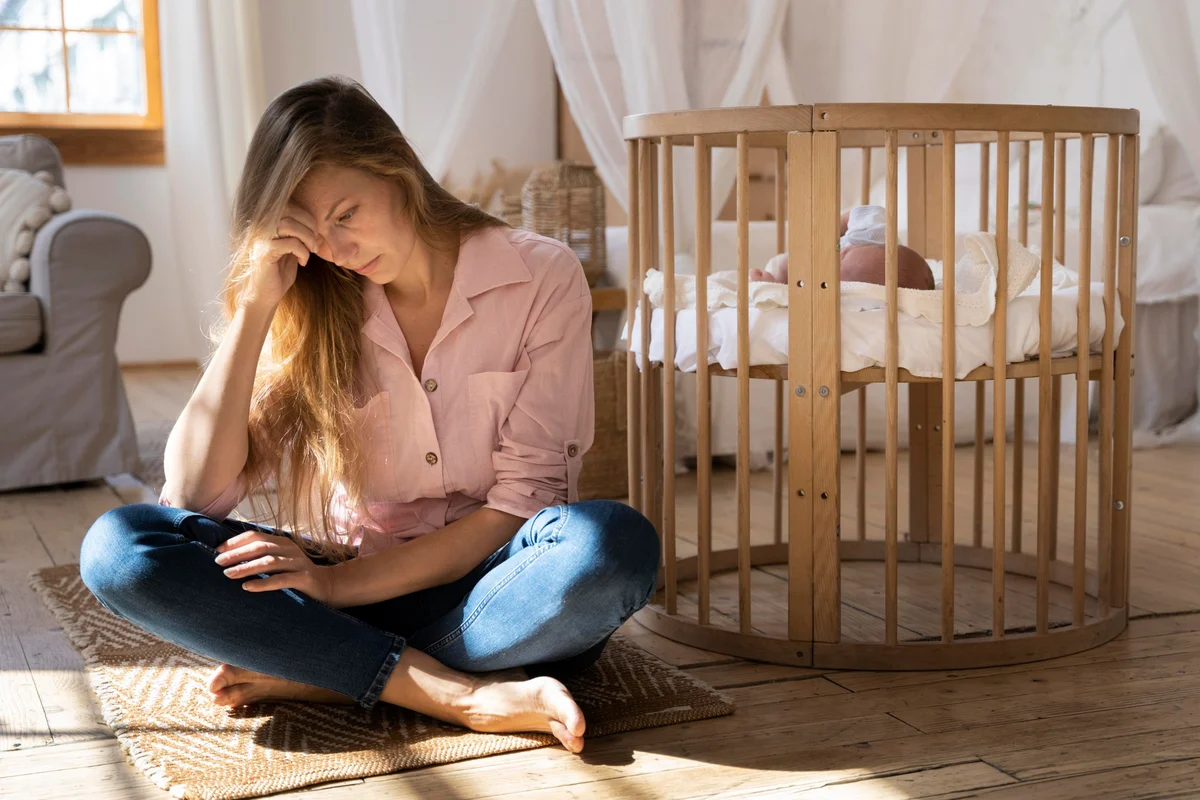
The house is quiet, the mental load is (almost) under control, and yet, one feels lonelier than a rainy Monday morning. We call this "existential solitude." Why is losing one’s identity an obligatory and downright frightening passage of motherhood? We decode this great void that even a weekend without kids doesn’t always fill.
Becoming a mother is a major upheaval. We are warned about fatigue, stretch marks, mental load, and lack of sleep. But no one prepares us for the great emptiness. That precise moment when, between two homemade purees, a washing machine full of white onesies, and a Zoom meeting, we look in the mirror and ask ourselves: "Wait, where did the old me go?"
If you feel this way, know that you are neither crazy, nor ungrateful, nor a bad mother. A recent publication on the American site Motherly examined this phenomenon that conventional medicine has long ignored or summarized as mere postpartum depression. This feeling has a name: existential solitude, and it is intrinsically linked to matrescence.
A Loneliness That Mommy Meetups Can't Cure
When we dare to say that we feel alone or that we no longer recognize ourselves, those around us often have the same reflex (well-intentioned, of course): "Take some time for yourself, go out with friends!" or "But you have so much support, your partner is doing great!"
The problem is that this kind of solitude cannot be cured with yet another playdate at the park or a glass of rosé on the terrace. As Dr. Trinko explains in the Motherly article, existential solitude is "a deep disconnection with one’s own inner experience." When you no longer know who you are outside of your role as a parent, no external validation, no supportive message can reach that void. You are surrounded, but deeply alone with your identity crisis.
The Grief of Losing Oneself (And That’s Normal)
Becoming a mother is not a long, calm river. Current clinical models tend to oversimplify what is actually a major developmental and multidimensional transformation. In short: you can check all the boxes of mental health, not be in clinical depression, and yet actively struggle with a sense of grief.
Because yes, matrescence involves a part of grief. The grief of absolute freedom, the grief of one’s pre-baby body, the grief of the fluidity of one’s thoughts. We face a significant cognitive dissonance: “Everything is fine, my children are healthy, I’m lucky, so why do I feel like I’m dying inside?”
Moreover, this crisis doesn’t necessarily strike when we expect it. It doesn’t always happen during the first three months after the baby arrives. It is cyclical. It can resurface with the arrival of a second child, upon returning to work, or when the children grow up and become independent, leaving us facing a deafening silence.
How Do We Find Ourselves Again (Without Throwing Everything Away)?
The good news is that we can traverse this tunnel. But be careful, the goal is not to become the woman you were before: that’s impossible, and that’s a good thing. The aim is to become a broader and better-integrated version of oneself.
Researchers Sarewitz and Trinko conducted a pilot study with mothers to see what truly helps them emerge from this existential solitude. Here are some concrete suggestions:
- Education on Matrescence: Understanding that what we are experiencing is a normal hormonal, brain, and social transition (and not a personal failure) significantly reduces the pressure. Just knowing that it has a name changes the game.
- Practice Self-Compassion: Stop feeling guilty for longing for your single or child-free life. We have the right to adore our kids and miss our previous freedom at the same time. Both feelings are valid.
- Create Spaces for Intimate Reconnection: This doesn’t mean going to the spa. It means taking time to listen to your own voice. What do you love to do, just for yourself, without any productive or parental value? Writing? Painting? Watching nature documentaries without anyone screaming?
- Find a Community of Vulnerability: Talk to other moms, but not to compare baby sleep or daycare choices. Talk about it for real, without pretense, to realize that we are thousands staring at the ceiling at 3 AM wondering where our life went.
Being a mom is just one line on your extraordinary woman CV. It’s high time to awaken the others.