
Transforming Short Nails with Dip Powder: A Guide to Porcelain Techniques
Explore how to effectively use dip powder for short nails, including techniques for application, nail art, and maintenance for optimal results without tips.
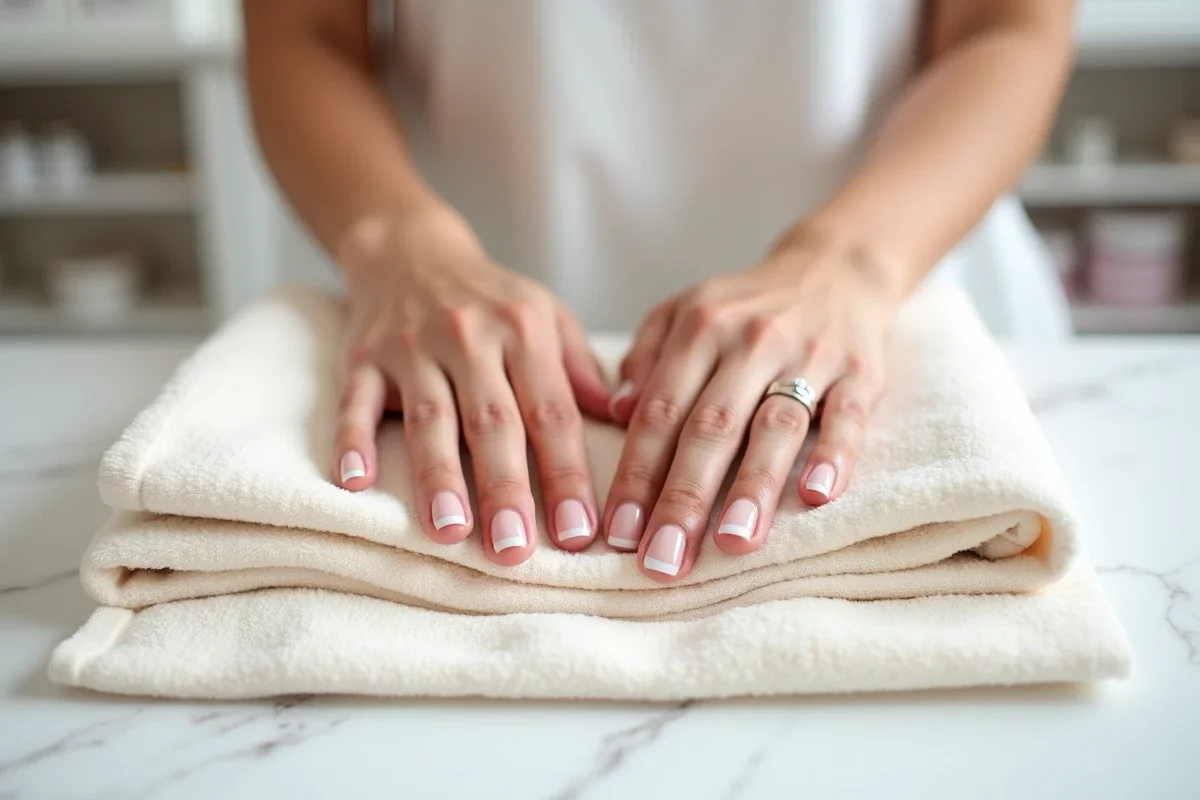
The dip powder method, popularized by ongle-porcelaine.com, is based on a straightforward principle: dipping the nail into a porcelain powder that is set with a resin, without the need for UV light. This technique is applicable to all nail lengths, including short ones. However, most online tutorials and kits primarily showcase results on medium to long nails, often enhanced with tips. For those with short nails, the challenges and outcomes differ significantly.
Technical Adjustments for Dip Powder on Short Nails
On longer nails, the porcelain powder spreads over a larger surface area, allowing any excess to naturally smooth out along the length. In contrast, the margin for error is significantly reduced on short nails.
The first critical consideration is the number of layers. Each dip into the powder adds thickness. For a nail with just a few millimeters of free edge, two layers of powder are sufficient for a clean result. Adding a third layer, commonly suggested in standard tutorials, risks creating an overly rounded appearance that does not align well with the nail's surface.
Another important factor is the application area of the base coat resin. On short nails, this resin must be applied with increased precision to avoid overflowing onto the cuticles or side grooves. An overflow that may seem trivial on longer nails becomes noticeable, creating an irregular line as the nail grows out.
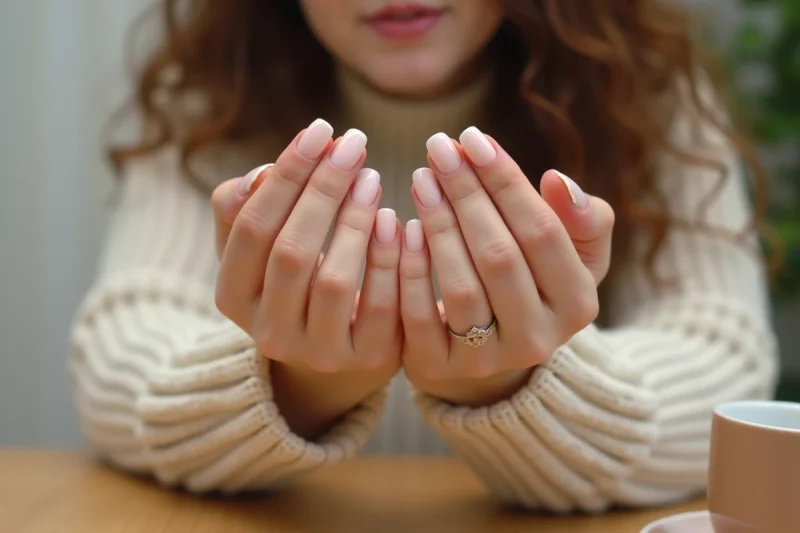
The removal process follows a similar logic. Porcelain dip powder is removed by soaking in acetone. On short nails, if the application has been calibrated correctly, the layer is thinner, resulting in a reduced soaking time. Prolonged exposure to acetone on a thin layer can weaken the underlying nail plate.
Nail Art for Short Nails: Scale Over Design
Trend guides for 2026 emphasize a rarely discussed technical aspect: on short nails, the scale of designs must be minimized to avoid visually compressing the nail plate. Techniques such as micro-french tips, tiny flowers, and limited accents on one or two nails per hand are recommended.
This principle directly applies to the porcelain technique. With dip powder, color effects can be achieved by alternating powders between layers or incorporating glitter powders. For short nails, a gradient of two closely related shades (such as nude to pink or beige to off-white) creates a more flattering optical elongation than a single vivid color.
Feedback from users varies on this topic: some report that a dark, opaque color on short nails appears more "finished" than a transparent nude. Perception can also depend on finger morphology and the chosen shape.
Choosing Between Squoval or Oval Shapes for Short Nails
The shape of the nail is not merely an aesthetic choice when using porcelain dip powder; it also influences the mechanical strength of the cured layer.
- The oval shape reduces tension points at the corners of the nail, minimizing chipping on very short free edges. This shape is most recommended for nails that barely extend beyond the fingertip.
- The squoval (square with rounded corners) offers a slightly wider surface at the tip, facilitating powder application. However, even rounded corners remain weak points if the porcelain layer is too thin.
- A strict square shape, commonly seen in online tutorials, increases the risk of snagging on short nails. The lack of length prevents the porcelain from compensating for the rigidity of straight edges.
The short oval shape provides the best balance between durability and aesthetics for applications without tips, while the squoval remains a solid second choice for those preferring a more structured line.
Understanding the Limitations of Results without Tips
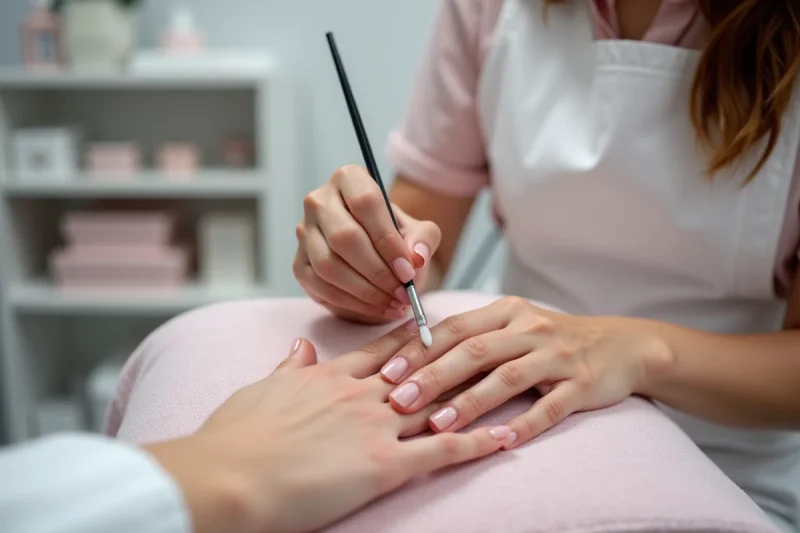
The promise of ongle-porcelaine.com, which emphasizes the simplicity of at-home application without UV light, encounters a physical limitation: porcelain cannot extend a nail that is too bitten down. If the nail plate does not extend beyond the fingertip, there is no free surface for the powder to adhere to properly. In such cases, the result may only last a few days.
For porcelain to adhere effectively without tips, a minimal free edge is necessary. A few millimeters are sufficient, but they are essential. Current data does not specify an exact threshold, as adhesion also depends on the quality of the base resin, nail preparation (degreasing, cuticle pushing), and the type of powder used.
Another point often overlooked in tutorials is that porcelain on short nails alters tactile sensation. With the hardened layer close to the fingertip, the feel when typing or using a touchscreen changes slightly. This is not a defect but an adjustment to anticipate, especially for those who work extensively on computers.
Maintenance and Touch-Up Schedule for Porcelain Manicure on Short Nails
On longer nails, regrowth becomes noticeable after two to three weeks. However, on short nails, the gap between the porcelain and the cuticle appears more quickly simply because the total nail surface is smaller. A regrowth line occupies a proportionally larger space.
Two options are available:
- Completely redo the application (using acetone for removal followed by a new application) more frequently than on long nails.
- Apply a thin layer of resin and powder only to the regrowth area, leaving the rest untouched. This "filling" technique requires skill but preserves the nail plate while reducing the number of removals.
- Alternate with regular nail polish for a few days between applications to allow the nail to breathe. Post-semi-permanent maintenance guides recommend spacing out applications to limit keratin weakening.
Gel and polygel provide alternatives for those who find the porcelain touch-up schedule too demanding. However, these methods require a UV or LED lamp, which negates one of the main advantages of the dip powder technique.
Transforming short nails with dip powder porcelain remains a viable option, provided the technique is adapted to the available surface. The choice of shape, number of layers, and calibration of designs significantly influence the distinction between a polished result and a thickened nail that fails to enhance its appearance.
You may also like


![Ici tout commence: What to Expect in Episode 1488 on Monday, July 27, 2026 [SPOILERS]](https://glowculturehub.com/cdn/images/b2d3d6d788c39a22a548df320e6d9f77/w1200.webp)