Ulf the White's Transformation in House of the Dragon: A New Chapter in Tumbleton's Battle
The finale of House of the Dragon – Season 3 transforms Ulf the White into one of the most unpredictable figures in the Dance of the Dragons, reshaping his story significantly.
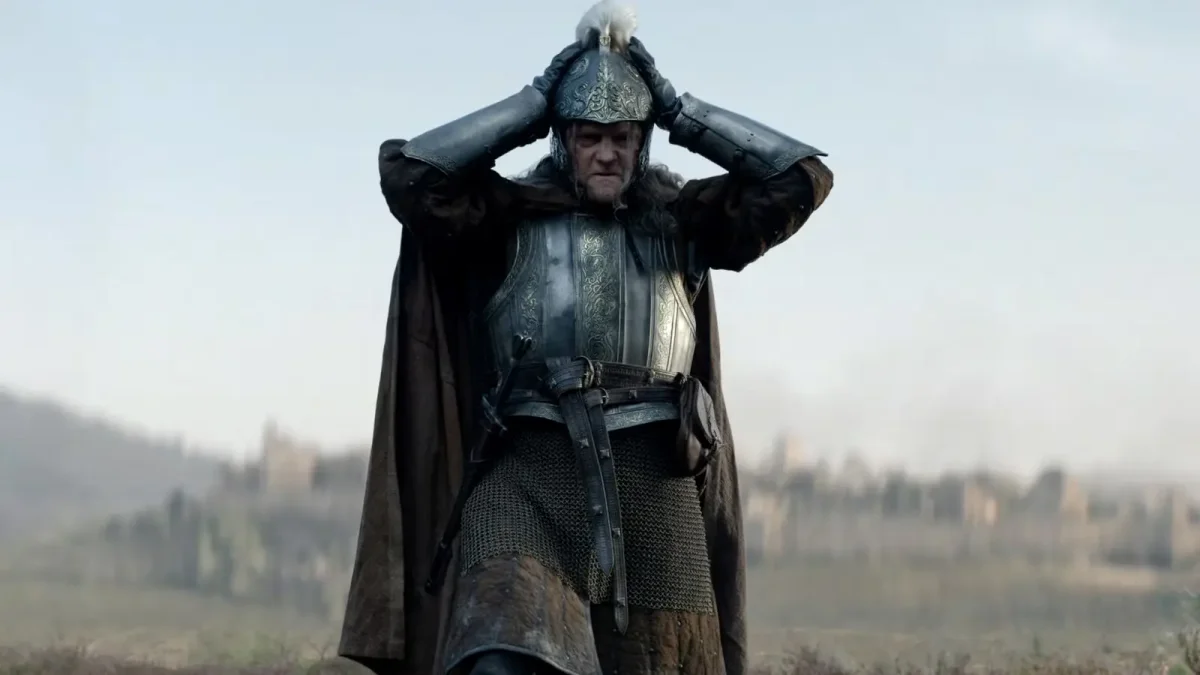
The finale of House of the Dragon – Season 3 reimagines Ulf the White as one of the most unpredictable characters in the Dance of the Dragons. After capturing Silverwing and becoming a pivotal figure allied with Rhaenyra Targaryen, Ulf's relationship with the Blacks deteriorates, primarily due to the queen's treatment of him and the humiliation inflicted by Daemon Targaryen. His switch to the Greens seems almost inevitable, but the series takes an additional step beyond Fire & Blood: Ulf not only changes sides but ultimately betrays those to whom he had just pledged loyalty.
This choice makes his fate particularly compelling. At Tumbleton, Ulf honors his promise to Ormund Hightower and unleashes one of the most devastating displays of dragon power seen in the series so far, yet he spares no one, even those he was supposed to serve. The outcome diverges significantly from George R.R. Martin's narrative, compelling House of the Dragon to carve a new path for the character in the fourth season. Given how predetermined his fate was in the book, the pressing question is not whether Ulf will die, but how different his journey to that end will be.
Ulf the White Burns Tumbleton and Betrays Both Rhaenyra and the Greens
Ulf's path to betrayal begins as his position within Rhaenyra's camp becomes increasingly untenable. Unlike the nobles surrounding him, Ulf is a bastard who has gained significant power through his claim to Silverwing. This should have made him a vital asset for the Blacks, but Rhaenyra fails to treat him as a truly important figure. Coupled with Daemon's violence, which escalates further resentment, Ulf's shift to the Greens is motivated not just by convenience but also by the realization that he is seen as useful but never truly respected.
The season three finale escalates this logic to a new level. Ormund Hightower repeats the same mistakes made by Rhaenyra: instead of valuing the knight of Silverwing, he treats him with contempt, pushing him to the ground, striking him, and calling him a worthless bastard. Ulf had already vowed to burn his enemies, and once he mounts his dragon, he fulfills that promise. Silverwing descends upon the battlefield, decimating Daemon's forces, but the fire does not stop there. Ulf directly targets the Hightowers, killing Ormund and Roderick Dustin, also known as Roddy the Ruin. This act transforms his choice from a mere faction switch to becoming an uncontrollable element of the war.
After turning Tumbleton into a smoldering wasteland, Ulf escapes on Silverwing, pursued by Vermithor and Caraxes. This imagery encapsulates his new position: he no longer truly belongs to either faction. He has betrayed Rhaenyra, turned against the Greens, and demonstrated that possessing a dragon can elevate a marginalized man into an inescapable threat. Thus, the series does not frame his betrayal as a simple political maneuver but as the extreme consequence of a character who has never found a stable place within the hierarchy of the Dance.
The True Meaning of Ulf's Double Betrayal: When Dragon Power Makes It Impossible to Control Its Rider
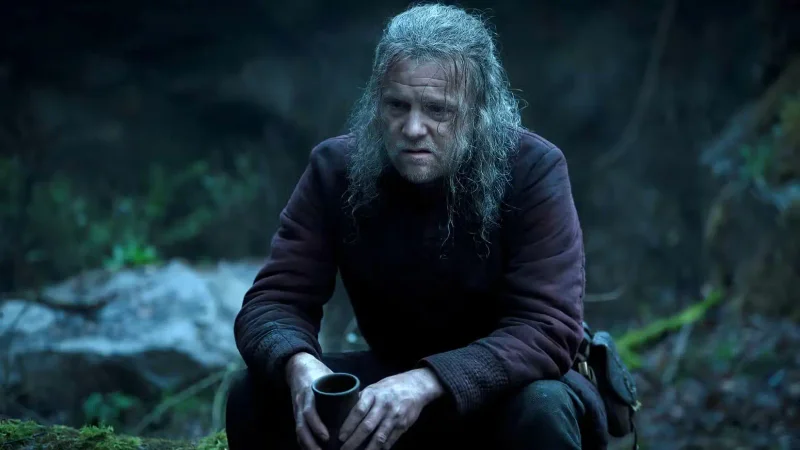
The most intriguing modification introduced by the series concerns not just Ulf's fate but the very significance of his character within the story. In Fire & Blood, Ulf is one of the so-called Two Traitors alongside Hugh the Hammer: both switch to the Greens and participate in the destruction of Tumbleton while remaining formally within their new faction. The series instead transforms Ulf into something even more unpredictable. His double betrayal suggests that the issue is not merely his loyalty but the impossibility of genuinely integrating him into a power structure that continues to treat him as an outsider.
Ulf exemplifies a central idea of the Dance of the Dragons: the power of dragons cannot be separated from the people who ride them. Rhaenyra may need Silverwing, just as the Greens may require his strength, but neither faction can truly control the man who rides it. Lacking the political savvy, prestige, or noble blood of the other war protagonists, Ulf reacts to power differently. His greatest weapon becomes not just Silverwing but the awareness that he can act freely without being easily stopped.
His actions at Tumbleton also carry symbolic weight. Ulf indiscriminately burns men from opposing factions, illustrating how swiftly the Targaryen war can spiral beyond the intentions of those who initiated it. The dragon was meant to be a tool for the cause; with Ulf, it becomes an autonomous force. Thus, the character represents a natural consequence of granting immense power to individuals who have never been fully integrated into the system that seeks to utilize them.
His flight from Tumbleton reinforces this interpretation. Ulf does not secure a stable power position or receive a reward for his loyalty. Instead, he ends up isolated from both factions. His rise and fall are linked to the same factor: Silverwing. The dragon makes him indispensable, yet it simultaneously renders it nearly impossible for him to vanish after betraying everyone. This paradox makes Ulf's future particularly challenging to predict.
From Fire & Blood to the HBO Series: Why House of the Dragon Rewrote Ulf's Fate at Tumbleton
In George R.R. Martin's novel, Ulf the White's trajectory after the first siege of Tumbleton is quite different. After switching to the Greens, he is appointed Lord of Bitterbridge by Daeron Targaryen and remains alongside Hugh the Hammer in Tumbleton. The two become the Two Traitors, and Hugh's behavior, which culminates in his declaration as king, contributes to a fracture within the Greens' army. This context gives rise to the Caltrops conspiracy, a group of thirteen nobles intent on eliminating both.
This situation leads to the Second Battle of Tumbleton. Hugh is quickly killed, while Ulf paradoxically survives because he is drunk and sleeps through most of the clash. His death comes later, through a more elaborate scheme. Hobert Hightower decides to poison him, presenting two barrels of wine—one Arbor Gold and one Dornish Red. Ulf suspects the ruse and demands that Hobert drink first. The man complies but ultimately dies alongside Ulf after consuming the poisoned wine.
However, the series has radically complicated this path. Ulf does not stay in Tumbleton with Hugh and does not engage in the political dynamics that lead to the formation of the Caltrops. His double defection distances him entirely from the narrative depicted in the book, making it challenging to envision that the fourth season could faithfully reproduce that segment of the story. Additionally, Hugh's fate is now separate from Ulf's, while the destruction of Tumbleton has been anticipated and reworked through Ulf's role in a massacre involving both armies.
This alteration is not necessarily a drawback for the adaptation. On the contrary, it allows House of the Dragon to leverage Ulf as an unpredictable element within a narrative that, while rooted in Fire & Blood, has already shown a willingness to alter how certain events are portrayed. The consequence, however, is that Ulf's death will need to be almost entirely reinvented. The book offers a clear path; the series has rendered it impractical.
 What Will Happen to Ulf in Season 4 and Why His Fate May Differ Significantly from the Book
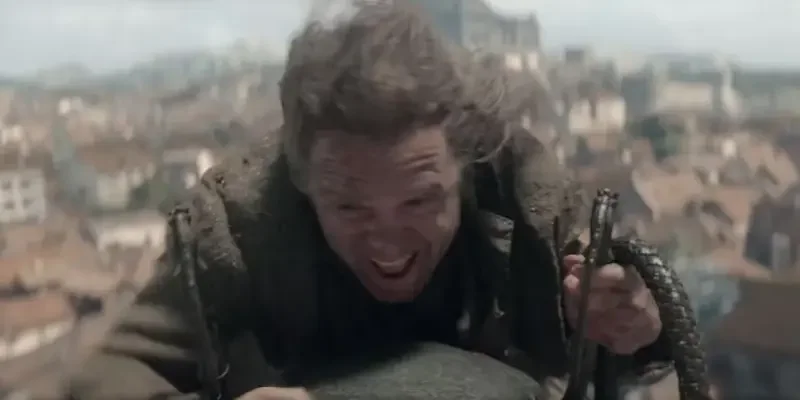
The most pressing question left by the finale concerns what will happen to Ulf the White after his escape from Tumbleton. The Caltrops solution now seems extremely unlikely, and it appears challenging for the character to simply revert to the same narrative sequence as the book. He is no longer in Tumbleton with Hugh and lacks a defined position within the Greens' army. His situation has become that of a wanted man on both sides, with a massive dragon by his side and very few chances of rejoining the ranks without repercussions.
One possibility is that Ulf could ultimately be captured by one of the two factions and sentenced to death. This would align with what the series has established: after betraying both, Ulf might be viewed as an enemy by all. Another hypothesis is that the series may still retain the idea of his death by poisoning but completely alter the circumstances. It could even lead to a demise caused by his own behavior, perhaps through excessive drinking, thus maintaining the concept of a character unable to escape the consequences of his choices.
However, there is an even more surprising possibility: that Ulf might actually survive. His flight from Tumbleton opens a path that does not exist in the same form in the book. Ulf could attempt to distance himself from the war and forge a new life, but the presence of Silverwing complicates this solution significantly. A man may disappear; a massive dragon, much less so. His very strength thus represents the main obstacle to any chance of definitively escaping the Dance.
Whatever direction the writers choose, one thing is now clear: House of the Dragon has transformed Ulf from a mere traitor into a figure embodying the chaos unleashed by the dragon war. His story is no longer solely about loyalty to Rhaenyra or the Greens but about the consequences of placing immense power in the hands of someone neither faction has managed to respect or control. After Tumbleton, Ulf is alone, hunted, and unpredictable. And because the series has dismantled the path leading to his death in Fire & Blood, the fourth season will finally have the opportunity to genuinely surprise us regarding his fate.