Understanding the Ending of 'Un matrimonio di troppo'
Explore the ending of 'Un matrimonio di troppo' and its themes of family dynamics, love, and personal growth through the lens of a comedic narrative.
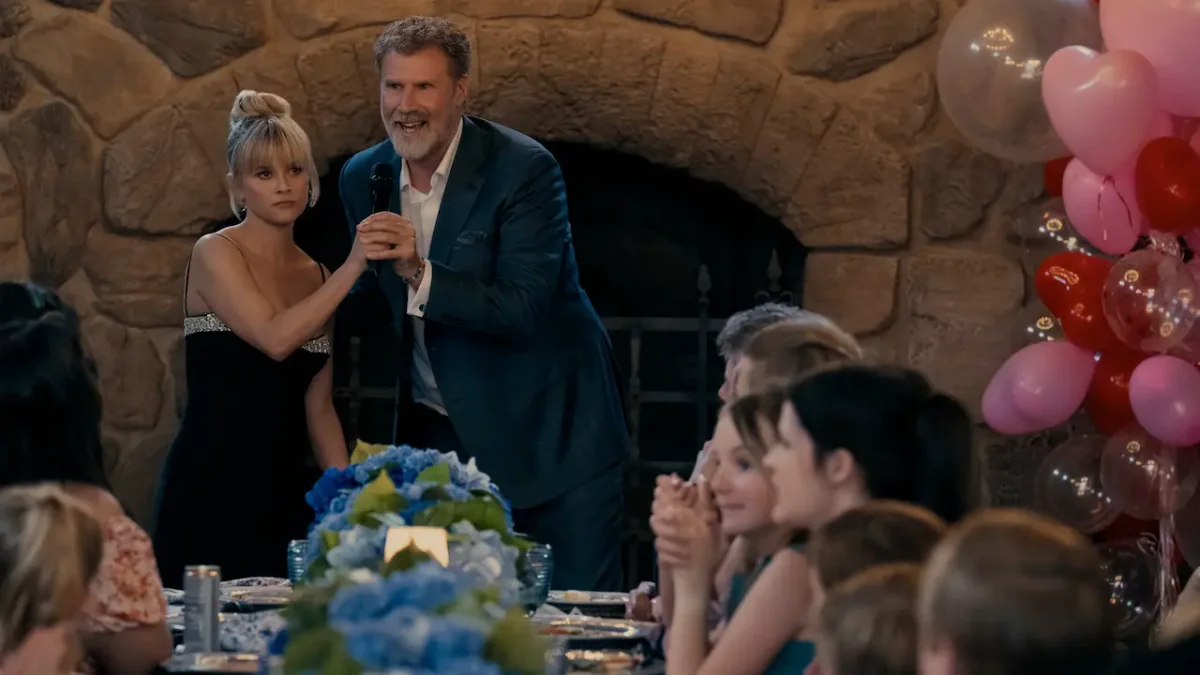
Un matrimonio di troppo is rooted in a classic comedic premise: two weddings mistakenly scheduled at the same venue over the same weekend. This explosive setup ignites a fierce rivalry between Jim, played by Will Ferrell, the father of the bride, and Margot, portrayed by Reese Witherspoon, the sister of the bride. Amid increasingly absurd gags, sabotage, and grotesque situations, director Nicholas Stoller crafts a narrative that delves into themes of family, grief, and the challenge of letting go of loved ones.
The film's conclusion encapsulates this journey. The apparent conflict between Jim and Margot gradually evolves into a mutual understanding that alters the fate of both families. The final act reveals that the true struggle isn't merely about the double booking of the resort; it centers on how the characters confront their fears of loneliness and their desire to control the lives of those they hold dear. This transformation imbues the romantic conclusion with a deeper significance.
The Film's Context: Nicholas Stoller Uses Romantic Comedy to Explore Family Dynamics
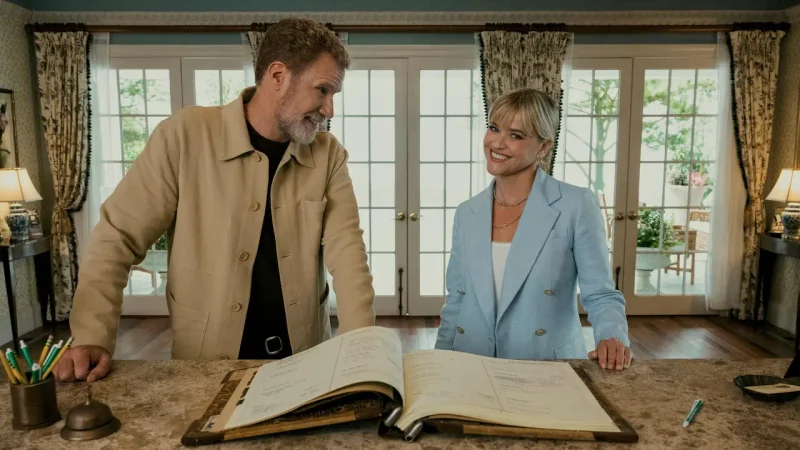
While it presents itself as a typical American comedy, Un matrimonio di troppo fits well within Nicholas Stoller's filmography, known for employing farcical situations to examine profound emotional dynamics. Here, the organizational chaos serves as a springboard to explore two protagonists struggling to find balance in their personal lives.
On one side is Jim, a widower who has devoted all his energy to his daughter Jenni, creating an almost exclusive bond. On the other is Margot, a career-driven woman who has gradually sacrificed familial and romantic relationships for her job, finding herself isolated just as she should be celebrating her sister Neve's happiness.
Casting Will Ferrell and Reese Witherspoon in these roles enhances the contrast. Ferrell embodies a generous man who struggles to accept his daughter's newfound independence, while Witherspoon portrays a sharp-witted character who uses sarcasm as a shield against vulnerability. Their ongoing opposition fuels the film's comedy, yet it also sets the stage for a more emotional evolution than the early sequences suggest.
What Happens in the Ending of Un matrimonio di troppo
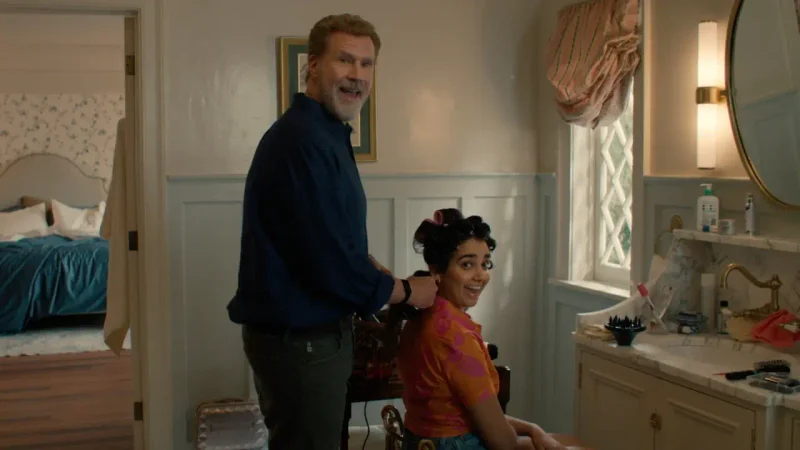
The film's climax resolves both weddings, albeit through different paths. Neve and Dixon finally tie the knot, overcoming familial resistance and addressing uncertainties related to the young woman's pregnancy. Their marriage symbolizes their decision to build a family free from external judgments.
Conversely, Jenni and Oliver face a different scenario. A series of misunderstandings leads Jim to believe that his son-in-law is cheating on Jenni, prompting him to intervene impulsively and triggering a crisis that forces the couple to reevaluate their relationship. Although they continue to love each other, they decide to postpone their wedding after leaving the island, recognizing that they need more time before making such a significant commitment.
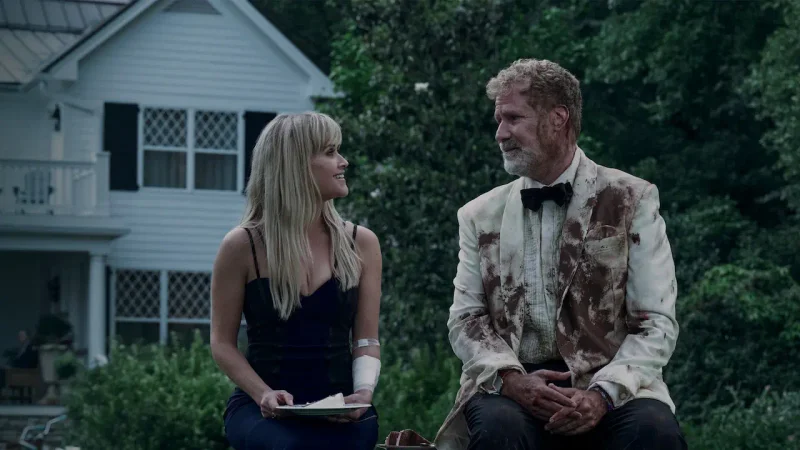
Meanwhile, the dynamic between Jim and Margot undergoes a radical shift. After spending much of the film as rivals, both characters come to realize that their behaviors stem from fears that are quite similar. The tension between them gives way to a growing camaraderie, culminating in a final kiss. The closing credits imply that their story will continue, potentially leading to a stable relationship, humorously anticipated by Margot with far less fanfare than the events just experienced.
Jim and Margot Discover Their Shared Struggle: The Difficulty of Letting Go

The romantic twist resonates because it arises from a shared inner transformation. Although Jim and Margot seem like entirely different individuals, the film gradually reveals that they both grapple with the same vulnerabilities.
Jim has centered his entire existence around Jenni after losing his wife. His genuine desire to protect her inadvertently stifles her ability to live independently. Every choice Jenni makes directly impacts his emotional stability, creating a potentially suffocating relationship.
On the flip side, Margot has maintained distance from her family for years, believing that her career would suffice to fill her life. Upon returning to organize Neve's wedding, she realizes how that detachment has impoverished her relationships with her mother and siblings, leaving her profoundly alone.
Their meeting becomes an opportunity to acknowledge these limitations. Jim learns that loving a daughter also means allowing her to make mistakes and forge her own path. Margot discovers that showing vulnerability does not equate to losing control. Their romantic connection only blossoms when both abandon their conflict as an emotional barrier.
The True Theme of the Ending: The Importance of Boundaries in Family Relationships

The most intriguing aspect of the ending lies in how the film addresses the concept of balance in relationships. Every family depicted in the story suffers from a lack of authentic communication.
Jenni struggles to confide her doubts to her father for fear of hurting him. Simultaneously, Jim interprets each of his daughter's decisions as a direct reflection on him. Margot, on the other hand, avoids confronting conflicts with her mother, allowing years of misunderstandings to morph into emotional distance.
The pivotal moment arrives when all characters finally begin to communicate sincerely. Margot's mother admits to repeating the same mistakes she made with her own family. Margot acknowledges her voluntary estrangement. Jim truly listens to Jenni and realizes that protecting her means respecting her autonomy.
For this reason, the film attributes different significance to the two weddings. Neve's marriage symbolizes a fresh start grounded in mutual trust. In contrast, Jenni's wedding is postponed as the couple opts for honesty with themselves rather than chasing a happy ending dictated by circumstances.
The Meaning of the Ending of Un matrimonio di troppo
The conclusion of Un matrimonio di troppo suggests that the strongest relationships are forged when individuals relinquish control and embrace their true selves. According to the film, love demands sincerity far more than perfection.
Jim learns that the memory of his wife shouldn't prevent him from opening up to new connections. His relationship with Margot becomes feasible only after he accepts that Jenni no longer needs him in the same way she did during her childhood. Concurrently, Margot realizes that professional success cannot replace the relationships built with patience and emotional availability.
The fates of the two young couples reinforce this message. Neve and Dixon face challenges together, while Jenni and Oliver exhibit maturity by choosing to delay a wedding for which they do not yet feel prepared. In both instances, authenticity prevails over expectations.
Thus, the final scene carries precise significance. The kiss between Jim and Margot doesn't merely signify the romantic resolution of a comedy of errors; it represents the outcome of personal growth affecting both families. After spending the film attempting to orchestrate the perfect wedding for others, the protagonists discover that no relationship can thrive without trust, dialogue, and respect for mutual boundaries. This realization, far more than the dual ceremonies, lends meaning to the ending, transforming Un matrimonio di troppo into a reflection on second chances and the ability to start anew.
You may also like