Understanding the Longevity of Hair Color for Men with Gray Hair
Men coloring gray hair for the first time often notice uneven fading. Learn about the differences between semi-permanent and permanent dyes, how to maintain color, and tips for choosing the right option.
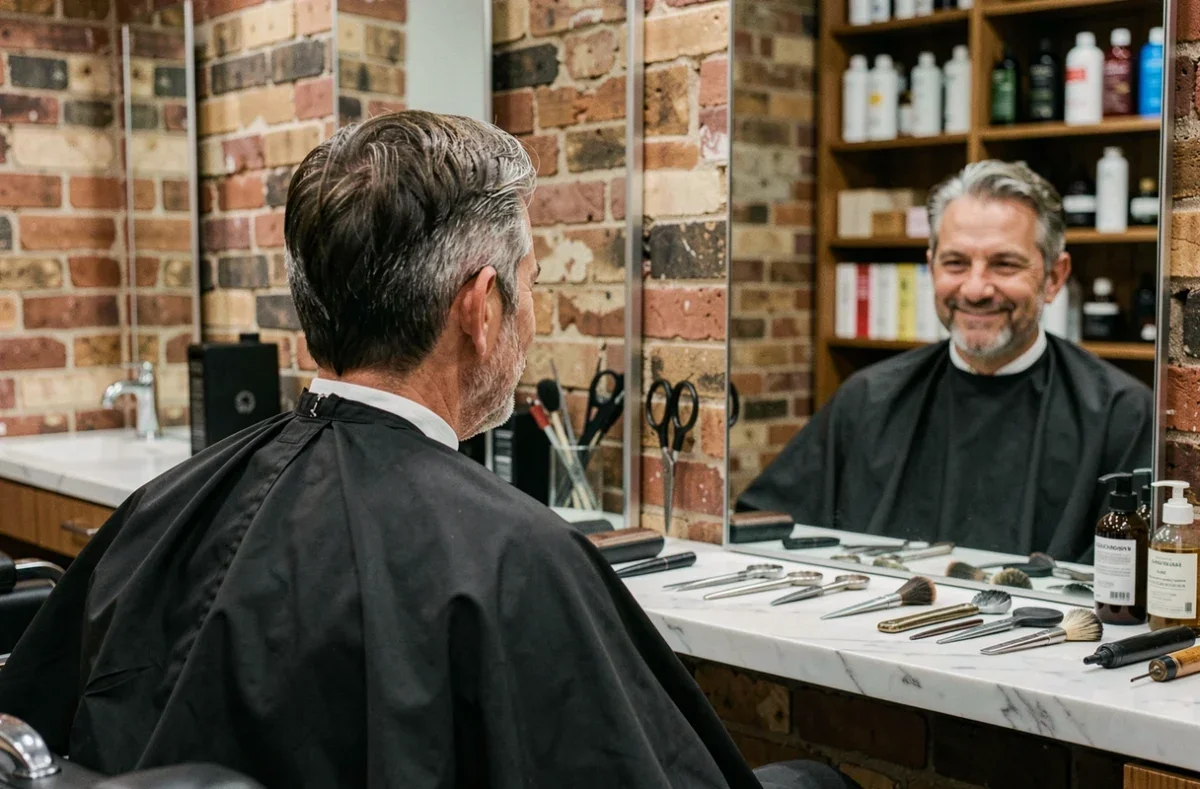
For men coloring their gray hair for the first time, a common observation is that the color tends to fade more quickly on the temples compared to the top of the head after just a few washes. This phenomenon occurs because gray hair does not react to dye in the same way as pigmented hair, and its longevity is influenced by factors that product instructions may not always clarify.
Why Gray Hair Absorbs Color Differently
Gray hair lacks natural melanin pigments, resulting in a fiber that is often drier and more porous. The cuticle, the outer layer of the hair, may also be slightly raised. Consequently, the dye penetrates the hair quickly, sometimes too quickly, and does not adhere as firmly as it would on pigmented hair.
This leads to two direct consequences: the color appears intensely after the first application, which can be surprising, and it fades more quickly because the porous fiber releases pigments with each wash.
On predominantly gray hair, the most exposed sections to sunlight and friction (such as the temples and forehead) lose their color first. In contrast, less exposed areas, like the back of the head, retain their color longer. This uneven fading is normal and does not indicate a product failure.

Semi-Permanent Hair Dye for Gray Hair: Actual Duration and Limitations
Semi-permanent hair dye is ammonia-free and does not penetrate deeply into the hair fiber. Instead, it deposits pigments on the surface, making it a popular choice for men looking to reduce gray without a stark result.
In practice, semi-permanent color fades gradually over a few weeks. Experiences vary: some individuals notice a distinct fading after about ten washes, while others find the color remains acceptable for a longer period. The frequency of washing plays a crucial role in this.
Factors That Accelerate Color Loss
- Frequent washing, especially with aggressive sulfate formulas, opens the cuticle and washes away the surface pigments.
- Hot water during rinsing dilates the hair fiber, facilitating color loss.
- Prolonged sun exposure degrades pigments, particularly on short hairstyles typical for men, where hair is less protected.
The semi-permanent option offers a clear advantage for men new to coloring: if the result is unsatisfactory, it simply fades away without a harsh line or visible demarcation. The transition back to natural gray is smooth.
Permanent Hair Color for Men: Retention, Growth, and Maintenance
Permanent hair color alters the internal structure of the hair. It employs an oxidizing agent to open the cuticle, allowing pigments to embed in the cortex of the fiber. For gray hair, this method provides the most comprehensive and lasting coverage.
Unlike semi-permanent dye, permanent color does not fade with washing in the same manner. The color remains within the fiber. The primary issue is not the fading of the dyed hair but rather the appearance of white roots.
With a short haircut (less than five centimeters), the regrowth becomes noticeable relatively quickly, as hair typically grows about one centimeter per month. Within a few weeks, a white line appears at the base. For longer hair, the demarcation takes longer to become apparent.
Retouch Frequency Based on Haircut Style
A man with a very short haircut on the sides (such as a fade) will need more frequent touch-ups than someone with medium-length hair. The reason is straightforward: on three centimeters of hair, one centimeter of white regrowth represents one-third of the visible length. Conversely, on ten centimeters of hair, the same centimeter is less noticeable.
In practice, retouching the roots is necessary when the demarcation becomes bothersome. For most short male hairstyles, this typically means recoloring every three to five weeks.

Maintenance Tips to Extend Color Longevity
Making a few adjustments to hair care routines can significantly impact the longevity of hair dye, regardless of the type chosen.
- Use a shampoo formulated for colored hair, free from harsh sulfates. These products clean the hair without stripping away the pigments.
- Rinse with lukewarm water instead of very hot water. Heat opens the cuticle and accelerates color loss, especially with semi-permanent dye.
- Space out washes when possible. Transitioning from daily washes to every other day can notably extend color retention.
- Protect hair from sun exposure during summer with a hat or hair products containing UV filters to minimize pigment oxidation.
While these practices will not turn a semi-permanent dye into a permanent one, they can delay the need for touch-ups by one to two weeks, reducing the chemical stress on the hair over time.
Choosing Between Semi-Permanent and Permanent for Gray Hair Coverage
The choice between semi-permanent and permanent hair dye depends on two key factors: the percentage of gray hair and the desired outcome.
When gray hair is dispersed (the salt-and-pepper effect), semi-permanent dye is often sufficient. It softens the contrast, creates a more uniform appearance, and the gradual fading avoids the root effect. This is a good starting point for testing hair coloring without commitment.
When the hair is predominantly gray and the goal is to achieve a solid color, only permanent dye provides complete coverage of gray hair. The trade-off is the need for regular root maintenance and a greater impact on the hair fiber with each application.
It's also important to note that the chosen color affects the perception of regrowth duration. A shade close to the natural brown on gray hair will show regrowth more quickly than a light chestnut or dark blonde, as the contrast with the white root is more pronounced. Choosing a slightly lighter shade than the original color can make the transition less abrupt and extend the time between touch-ups.
Ultimately, the longevity of hair dye for men with gray hair does not adhere to a fixed number of days stated on the product box. Its actual duration is contingent on the type of dye used, the hair fiber's porosity, washing frequency, and the style of haircut. Testing a semi-permanent option first remains the simplest approach to gauge how one's hair reacts before committing to a permanent solution.