Blu-ray Review: Jumpers - A Heartfelt Animation Adventure
Jumpers, directed by Daniel Chong, offers a whimsical exploration of animal consciousness and communication, showcasing Pixar's signature blend of humor, adventure, and ecological themes.
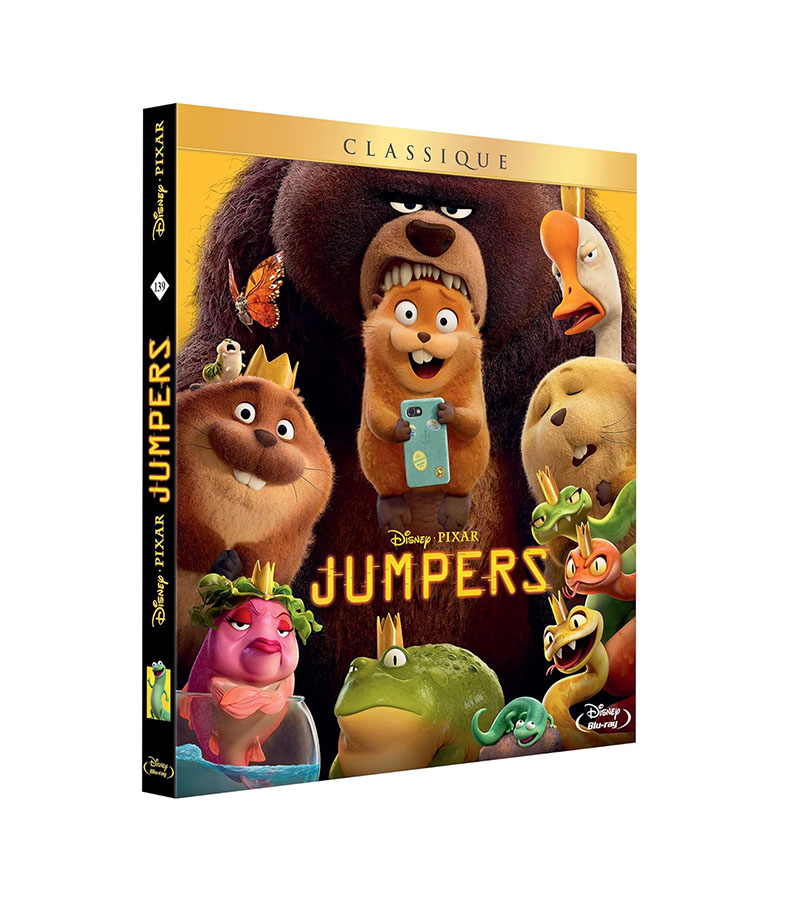 United States: 2026
Original Title: Hoppers
Director: Daniel Chong
Writers: Jesse Andrews, Daniel Chong
Voice Cast: Jon Hamm, Piper Curda, Bobby Moynihan
Distributor: Disney – PIXAR
Runtime: 1h45
Genre: Animation
Theatrical Release Date: March 4, 2026
DVD/BR/4K Release Date: July 8, 2026
United States: 2026
Original Title: Hoppers
Director: Daniel Chong
Writers: Jesse Andrews, Daniel Chong
Voice Cast: Jon Hamm, Piper Curda, Bobby Moynihan
Distributor: Disney – PIXAR
Runtime: 1h45
Genre: Animation
Theatrical Release Date: March 4, 2026
DVD/BR/4K Release Date: July 8, 2026
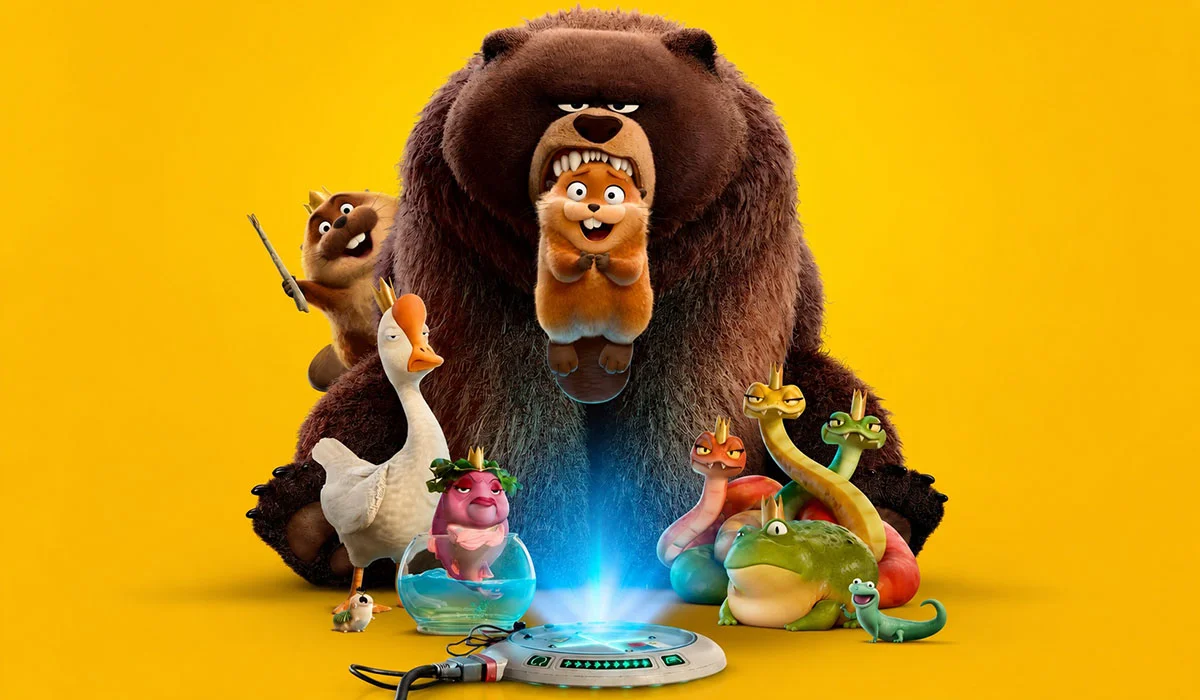
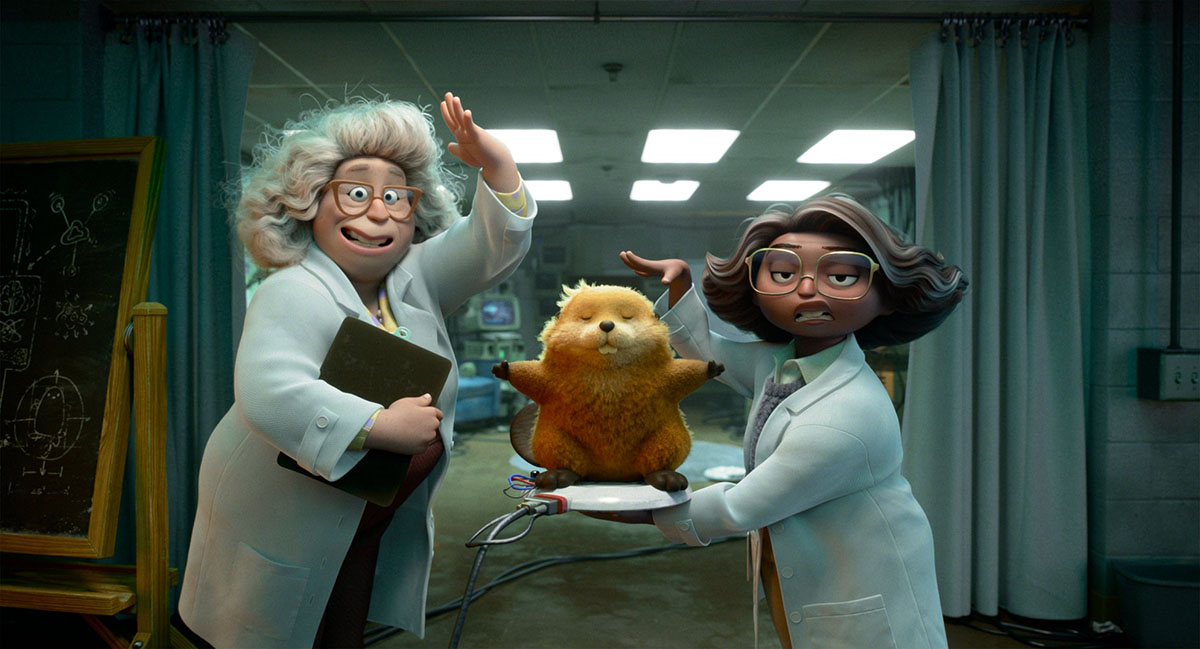
Mabel, a teenager with a passion for animals, leaps (literally!) at the chance to try a groundbreaking technology that allows her to communicate with them in a completely new way... by slipping into the body of an adorable female beaver. Designed by visionary scientists, this device enables the transfer of human consciousness into lifelike robotic animals. Mabel embarks on a unique adventure filled with discoveries in the animal kingdom...
The Film
Rating: 4.5/5
Some directors have a unique ability to create a cast of endearing characters simply by their name. Daniel Chong has now earned a place in this esteemed category. Known for the delightful series We Bare Bears, which explored three bears desperately seeking their place in a world that didn’t quite fit them, Chong brings back this same fascination with beings observing humanity from a different perspective in Jumpers. While the setting shifts and the ambitions scale up to a Pixar feature, the heart of the film beats with a profound curiosity for life, a tenderness that never veers into syrupy sentimentality, and humor that transforms a simple beaver into an impromptu philosophy professor. This animated film addresses ecology, artificial intelligence, and biodiversity without ever feeling like it’s assigning homework. In a time when environmental discussions flood social media and everyday conversations, Jumpers opts to weave its messages into the fur of its heroes rather than display them on a neon sign. This elegant approach is worth its weight in acorns (Ha! Ha! Ha!).
The concept envisioned by Daniel Chong is delightfully whimsical: transferring human consciousness into robotic animals to communicate with wildlife. While this idea could easily come off as a cold technological demonstration, Jumpers takes a different route. As Mabel explores the animal world, the film emphasizes that understanding a species doesn’t necessarily mean resembling it. One must accept its strangeness, its language, its priorities, and its fears. Amidst the comical situations and dialogue that spark like a colony of fireflies on caffeine, Pixar subtly challenges the age-old human tendency to believe that everything exists to be explained, cataloged, or dominated. This perspective aligns with We Bare Bears, where the bears sought acceptance for who they were rather than trying to become human. Here, Jumpers tells a story of integration but flips the viewpoint: this time, it’s humans who must learn to be respectful guests in a realm that isn’t theirs.
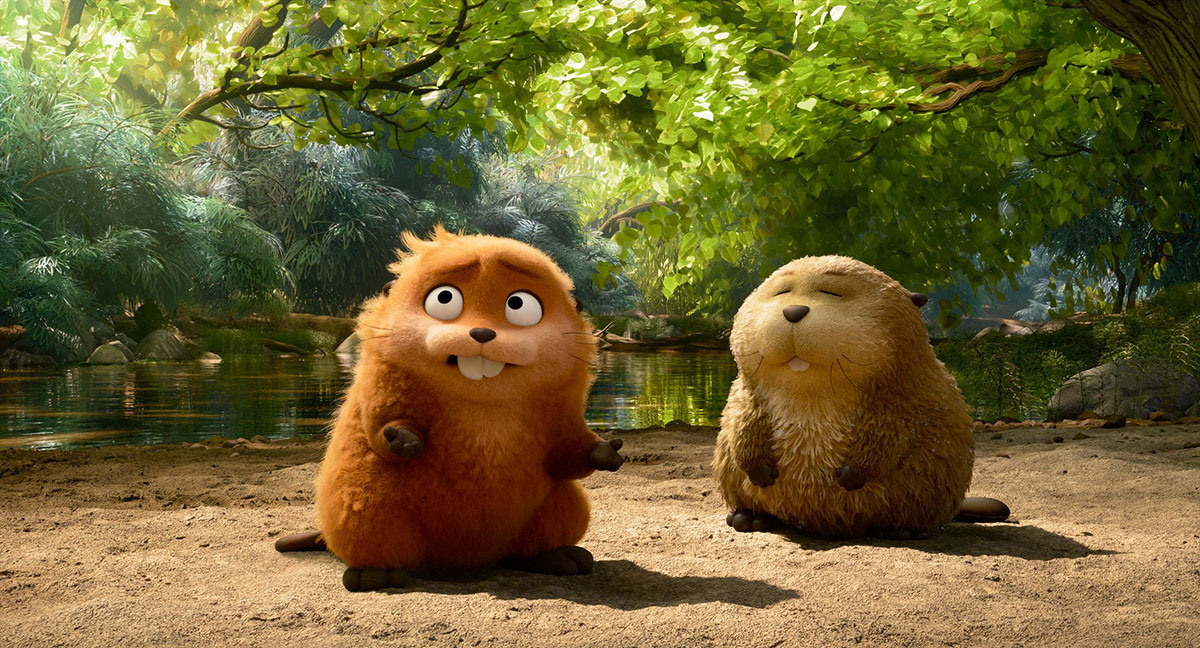
The thematic richness is mirrored in the film's direction. Jumpers refuses to treat nature as a mere photorealistic backdrop designed to dazzle the eyes. Each clearing, river, and beaver dam seems to possess its own personality, as if the landscapes themselves are part of the conversation. The camera movements often mimic those of the animals, abandoning the vertical gaze of humans to adopt bouncing, low, or aquatic trajectories. This results in an almost physical sensation of scale change: a tree trunk becomes a cathedral, a burrow resembles a secret subway station, and a pond occasionally appears as a miniature galaxy. The Pixar team plays with proportions without losing sight of the characters' emotions, giving Jumpers a visual identity reminiscent of the studio's golden age as well as works like The Iron Giant and Zootopia, with its focus on organized animal societies.
However, this visual generosity would amount to little without characters capable of breathing life into it. Jumpers takes its time to allow each character to exist beyond their narrative function. The animals are never reduced to mere gags or mascots meant to sell plush toys; the film grants them logic, social organization, and a form of wisdom that doesn’t resemble a caricature of human behavior. This aspect likely preserves the most significant legacy of We Bare Bears: beneath the smiles and absurd situations lies a straightforward, almost childlike reflection on the difficulty of communicating with others. Not just because they speak a different language but because they view the world from a radically different perspective. Jumpers thus reminds us that empathy is not a spectacular superpower but an exercise in humility. This disarmingly simple idea resonates particularly in a world where everyone sometimes seems trapped in their own digital burrow.
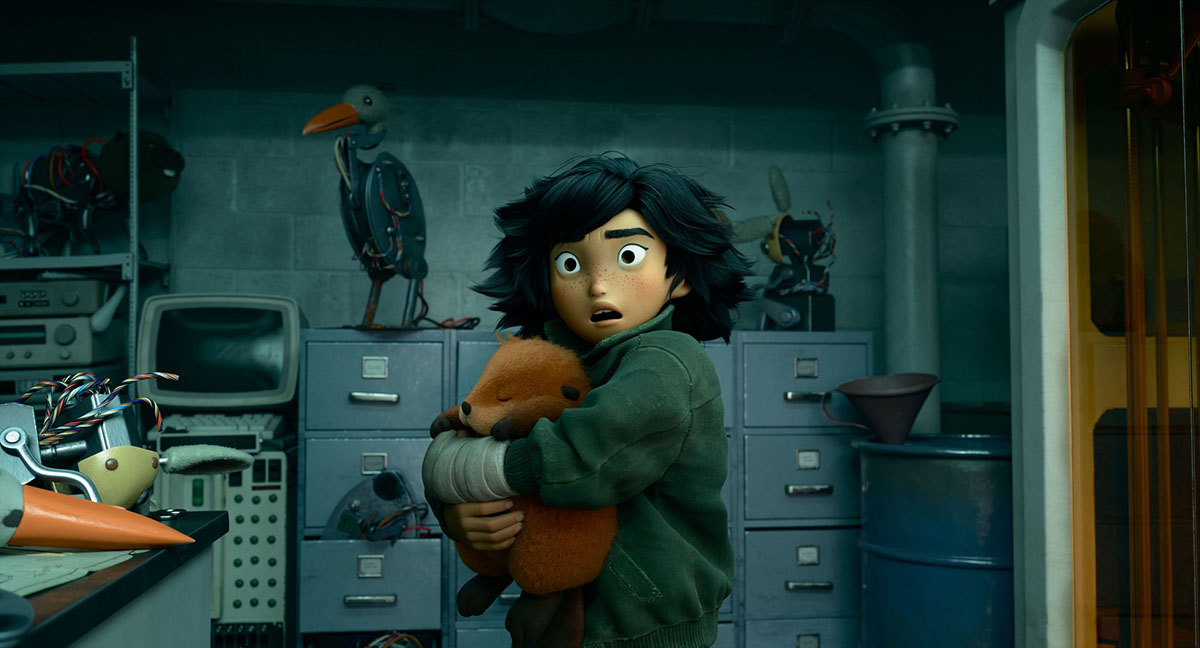
Humor plays a significant role in this achievement. The dialogue takes some wonderfully absurd turns, certain situations flirt with outright cartoonish slapstick, and some visual gags make it seem as if the laws of physics have temporarily gone off to observe squirrels. Sometimes, a single image can provoke laughter before yielding to a more subtle emotion. Jumpers possesses the rare quality of trusting its audience, avoiding the urge to turn every intention into a fluorescent sign. The film favors subtle smiles over emotional hammer blows, and this restraint ultimately enhances its impact. The Pixar team behind Daniel Chong demonstrates once again that spectacle can remain captivating without needing to pile on digital explosions or plot twists every three minutes.
Finally, it’s impossible to discuss Jumpers without acknowledging a particularly engaged voice cast, both in the original and French versions. The actors infuse a constant warmth into characters whose emotions are conveyed through both their expressions and intonations, naturally balancing humor, adventure, and melancholy. This direction of actors contributes significantly to the overall coherence that permeates the feature. Without aiming to revolutionize animation, Jumpers reminds us why Pixar continues to generate such anticipation: when the studio stops chasing technical demonstrations to rediscover the taste for deeply human stories, even when told by beavers, bears, or other woodland inhabitants, it rekindles that spark that cannot be captured by an algorithm or microscope. Daniel Chong thus delivers a debut feature of remarkable maturity, naturally extending the insights of We Bare Bears while offering them a new breadth.
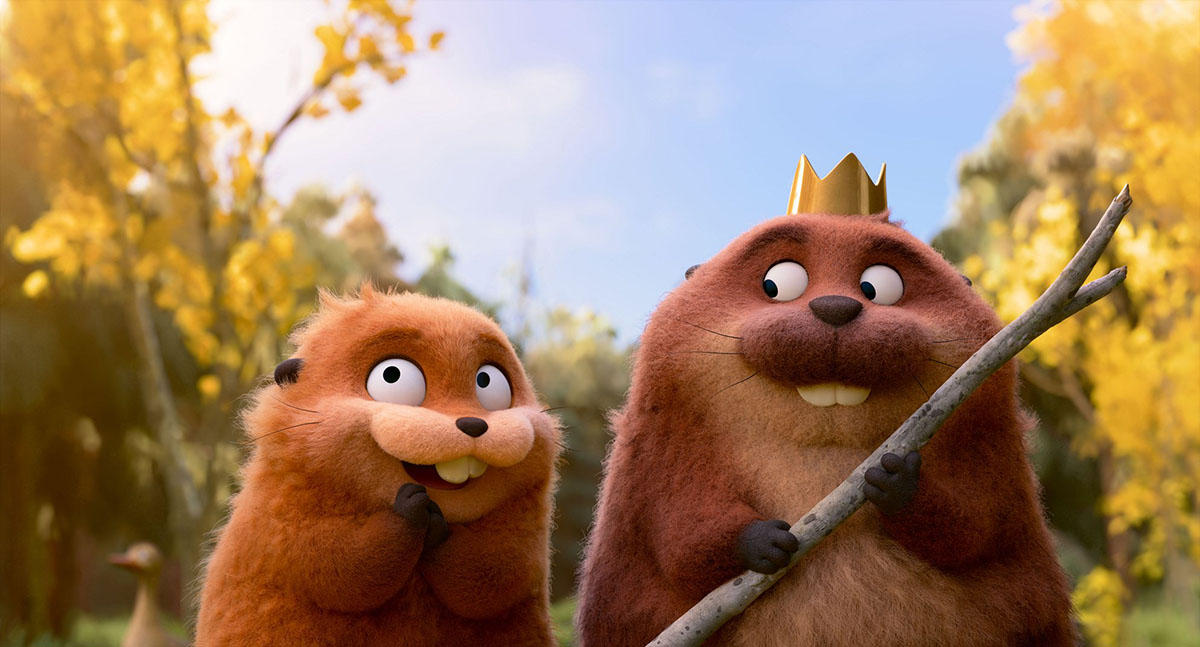
The Blu-ray
Rating: 4/5
On the technical side, the Blu-ray of Jumpers released by Disney / Pixar immediately showcases the distributor's expertise in video presentation. It is unfortunate that they did not deem it necessary to offer the film in 4K Ultra HD Blu-ray in the French market, especially since an American edition exists. This decision is perplexing given that Jumpers relies on a visual richness that would likely have benefited from UHD encoding and Dolby Vision. Nevertheless, in its current state, the Blu-ray has no reason to be ashamed of its performance. The definition is remarkably precise, revealing both the textures of the animals' fur and the details of the forest settings, while the shades of greens, browns, and blues benefit from a particularly generous color palette. The contrasts remain solid, the compression is virtually unnoticeable, and the numerous nighttime scenes maintain exemplary clarity without sacrificing black depth. On the audio front, the original version mixed in DTS-HD Master Audio 7.1 impresses with its depth, offering an enveloping soundstage where the rustling of the forest, animal movements, and music are spatially rendered with fluidity. The French version in Dolby Digital+ 7.1 also holds its own. Disney / Pixar continues to show evident care in its French dubbing, delivering dialogues, ambient effects, and numerous action sequences with great energy. The dynamics remain strong, the rear channels are frequently engaged, and the subwoofer effectively supports the most spectacular moments. While the English track retains a slight edge in terms of finesse and overall airiness, the gap is narrow enough to make the French version a perfectly recommendable choice, especially considering it features an excellent voice cast.
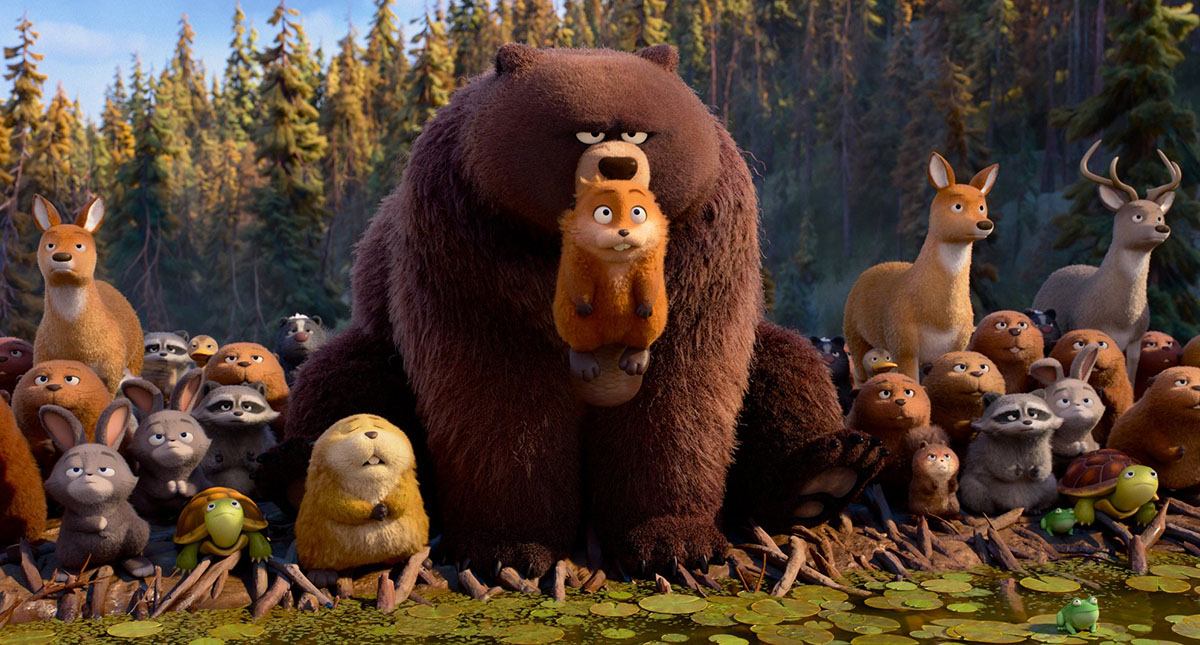
The bonus features are also a pleasant surprise. Disney / Pixar does not simply stack a few hastily produced promotional modules but instead offers a coherent set that intelligently accompanies the film's discovery. It begins with a module on animal observation in Yellowstone Park (10 minutes), which opens the proceedings beautifully. This short documentary follows Daniel Chong and several Pixar artists into Yellowstone National Park to observe the real behavior of beavers and many other animals that inspired Jumpers. Far from being a mere tourist postcard, the module illustrates how this documentation phase informs every artistic decision made by the studio. The animators analyze movements, postures, instinctive reactions, and even anatomical details to maintain animal credibility while allowing enough freedom to develop each character's unique personality. Following this, a short making of (12 minutes) perfectly complements this initial approach by detailing the project’s evolution from its early concepts to the finished film.
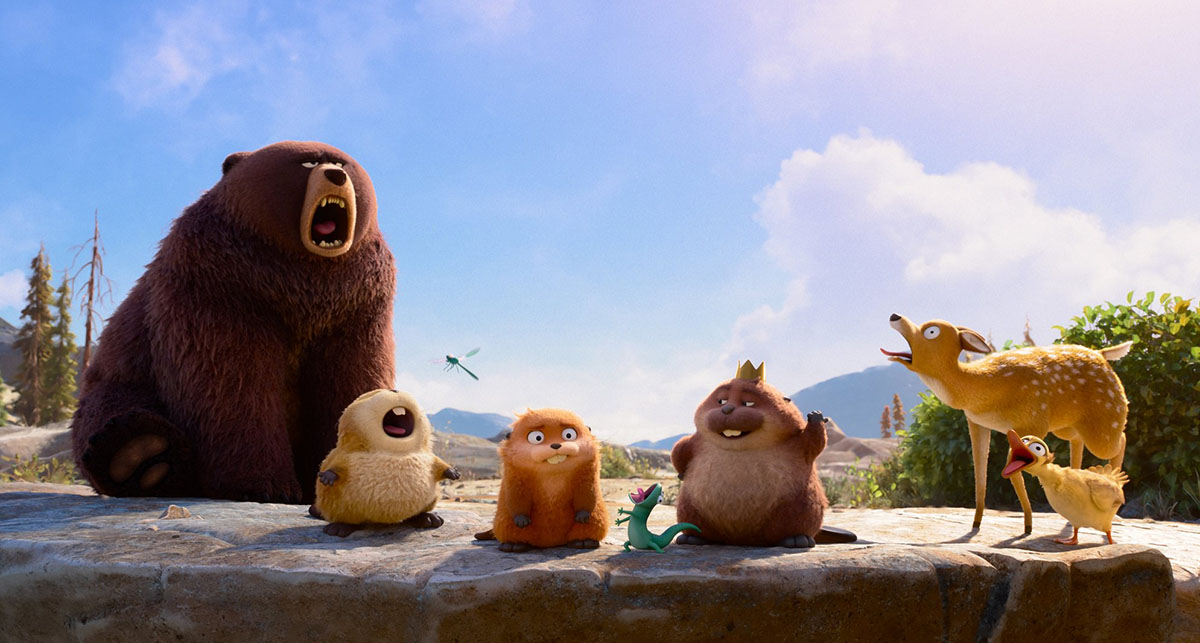
The festivities continue with a generous collection of deleted scenes (20 minutes), presented and contextualized by Daniel Chong and editor Axel Geddes.