Scarlet and Eternity: A Cinematic Journey Beyond Revenge
Scarlet and Eternity, directed by Mamoru Hosoda, is a visually stunning animated film that explores themes of vengeance, forgiveness, and the emotional journey of its heroine in the Land of the Dead.
 Japan: 2025
Original Title: Hateshi naki Sukaretto
Director: Mamoru Hosoda
Screenplay: Mamoru Hosoda
Voice Cast: Mana Ashida, Masaki Okada, Koji Yakusho
Distributor: Sony Pictures
Duration: 1h51
Genre: Animation, Science Fiction
Theatrical Release Date: March 11, 2026
DVD/BR Release Date: July 15, 2026
Japan: 2025
Original Title: Hateshi naki Sukaretto
Director: Mamoru Hosoda
Screenplay: Mamoru Hosoda
Voice Cast: Mana Ashida, Masaki Okada, Koji Yakusho
Distributor: Sony Pictures
Duration: 1h51
Genre: Animation, Science Fiction
Theatrical Release Date: March 11, 2026
DVD/BR Release Date: July 15, 2026
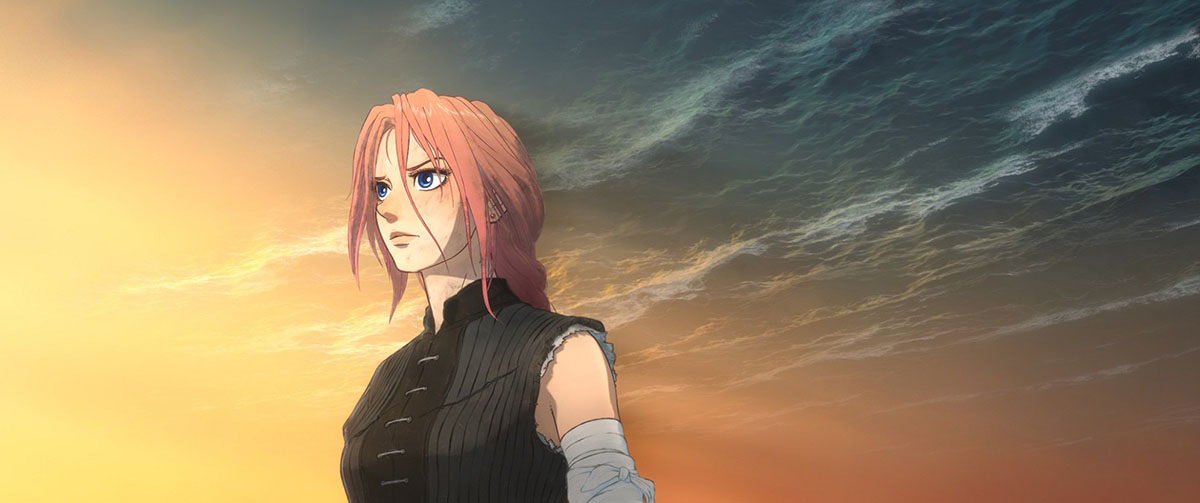
Scarlet, a medieval princess skilled in sword fighting, embarks on a perilous quest to avenge her father's death. When her plan fails, she is grievously injured and finds herself transported to another realm, the Land of the Dead. There, she encounters an idealistic young man from modern times who helps her heal and introduces her to the possibility of a world free from resentment and anger. Confronted by her father's murderer, Scarlet must engage in her greatest battle: to break the cycle of hatred and find meaning in her life beyond her thirst for vengeance.
The Film
[4.5/5]
The opening moments of Scarlet and Eternity evoke the essence of an ancient tale that has traded its slippers for a battered suit of armor. In Mamoru Hosoda's world, the princess does not wait for a white horse to resolve her issues; she draws her sword, stumbles, bleeds, rises again, and relentlessly pursues a ghost named vengeance. While the film draws loose inspiration from Hamlet, it does not merely recite Shakespeare's lines. Instead, it shakes the narrative until it showers down contemporary sparks. The story follows a young woman thrust into a bizarre Land of the Dead, where anger becomes a form of currency, and every soul carries its past like a backpack filled with stones. Hosoda continues to explore a recurring theme: how individuals rebuild their lives when a catastrophic event shatters their existence.
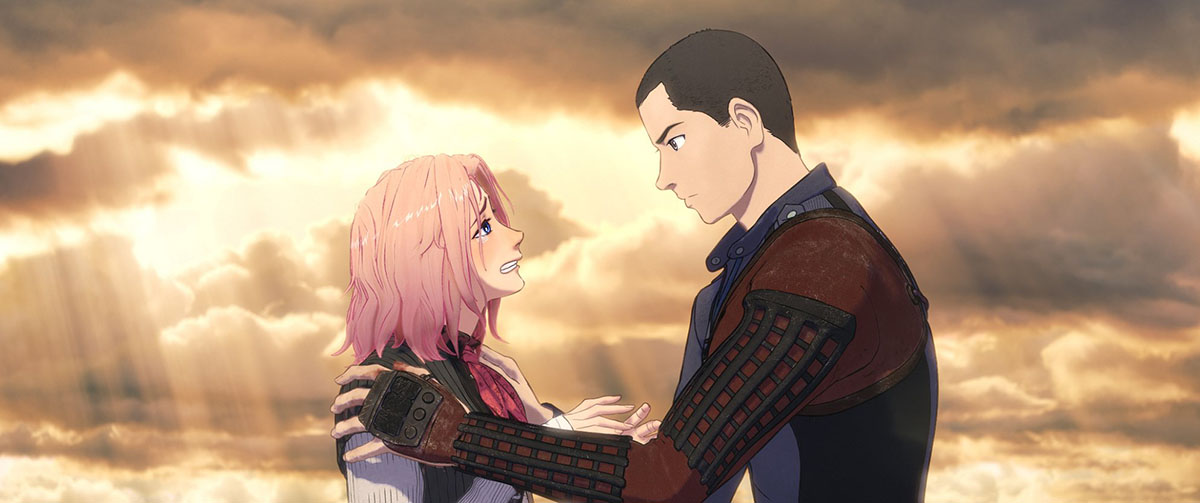
Hosoda's storytelling takes an intriguing turn in this film. His previous works often centered on themes of family, childhood, or virtual worlds, as seen in Ame and Yuki: The Wolf Children, Belle, The Boy and the Beast, and Mirai, My Little Sister. In Scarlet and Eternity, he seems to have opened a rougher, almost mineral door. The landscapes traversed resemble paintings where emotions override geography. Mountains become scars, deserts resemble collapsed cathedrals, and battlefields transform into obsidian gardens where a few hopeful petals bloom. This simple yet effective idea illustrates that the more Scarlet fixates on her desire for revenge, the more the world around her seems to freeze, as if the universe holds its breath, waiting for her to look beyond her past. This logic grants the film an emotional coherence that transcends the often-mysterious rules of its fantastical universe. It is less about understanding every mechanism of the Land of the Dead and more about feeling how it reflects the heroine's turmoil.
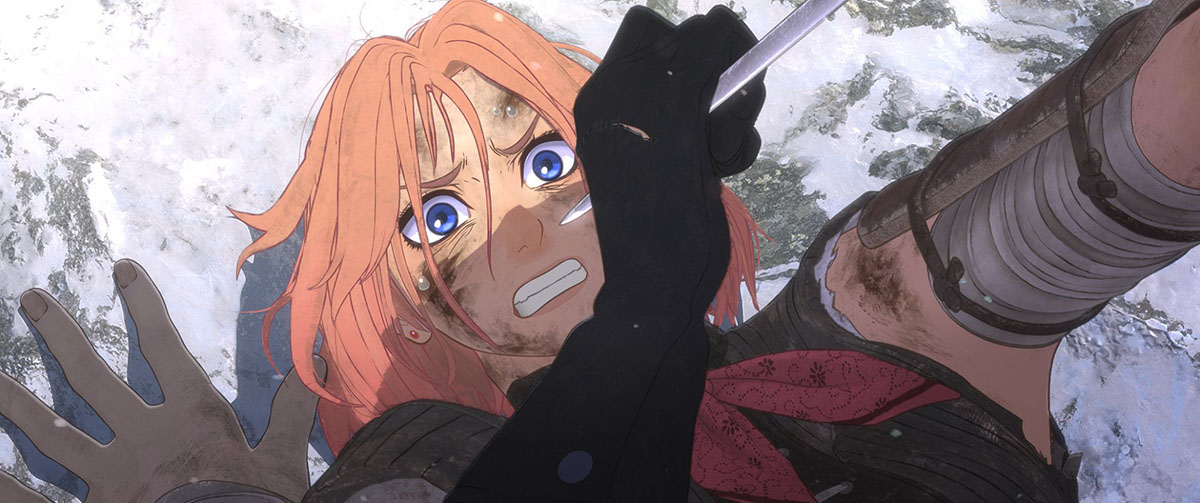
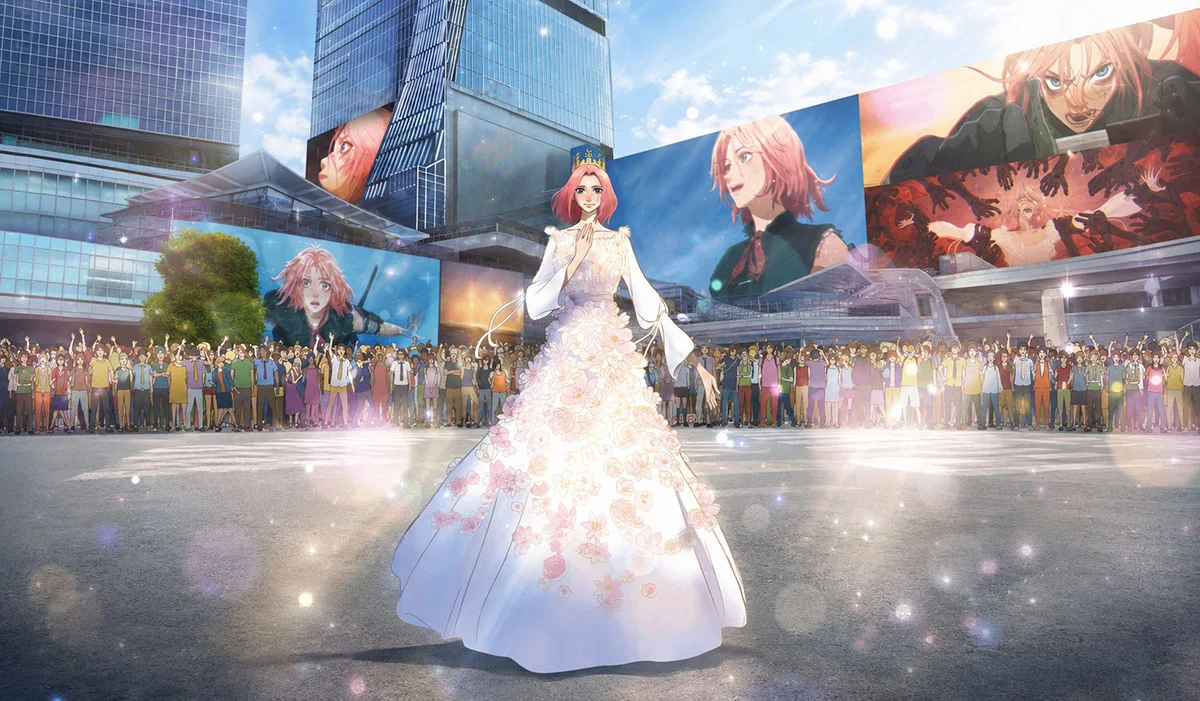
Additionally, Scarlet and Eternity dazzles with its visual splendor. Hosoda and his team constantly experiment with textures, materials, and contrasts. A white dress adorned with flowers can become the brightest point in a blood-red landscape; moments later, a contemporary city bursts with light as massive screens seem to transform memories into monuments. The animation does not merely aim to impress with technical virtuosity; it accompanies emotional states, conveys hesitations, and allows colors to express what characters have yet to articulate. Some images possess that strange quality of dreams, which, though hard to recall upon waking, leave a lingering sensation throughout the day, clinging to the memory like a particularly stubborn kite. This beauty is never gratuitous; it becomes a natural extension of Hosoda's perspective on his characters, caught between the weight of the past and the fragile possibility of a different future.
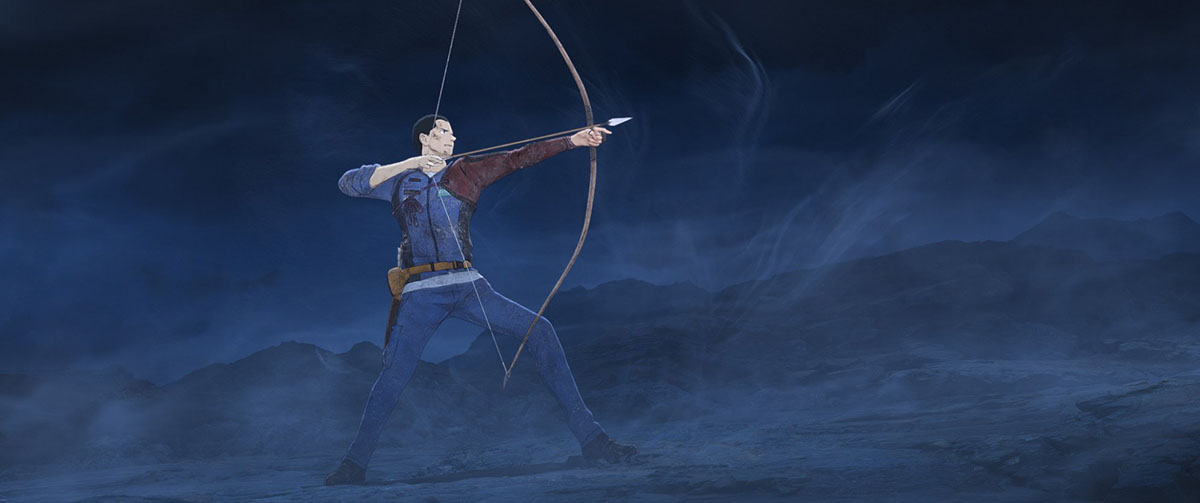
The film's internal quest resonates in its refusal to reduce vengeance to a mere spectacle. Many stories built around a desire for revenge ultimately present violence as an exhilarating and almost morally acceptable fireworks display. Hosoda takes an almost opposite approach. Each confrontation leaves a scar, and every victory carries a bittersweet aftertaste, subtly reminding viewers that no sword can slice sorrow into pieces small enough to vanish. Beneath its grand fantasy facade, Scarlet and Eternity poses a simple yet profound question: what remains when the anger, nurtured for years like an old lamp that one refuses to extinguish, suddenly stops illuminating the path? This inquiry permeates the narrative and deepens the interactions Scarlet has with others. Each character she meets represents a different way of coping with their wounds—some retreat into fortresses, while others choose to use their pain as a passage to something new.
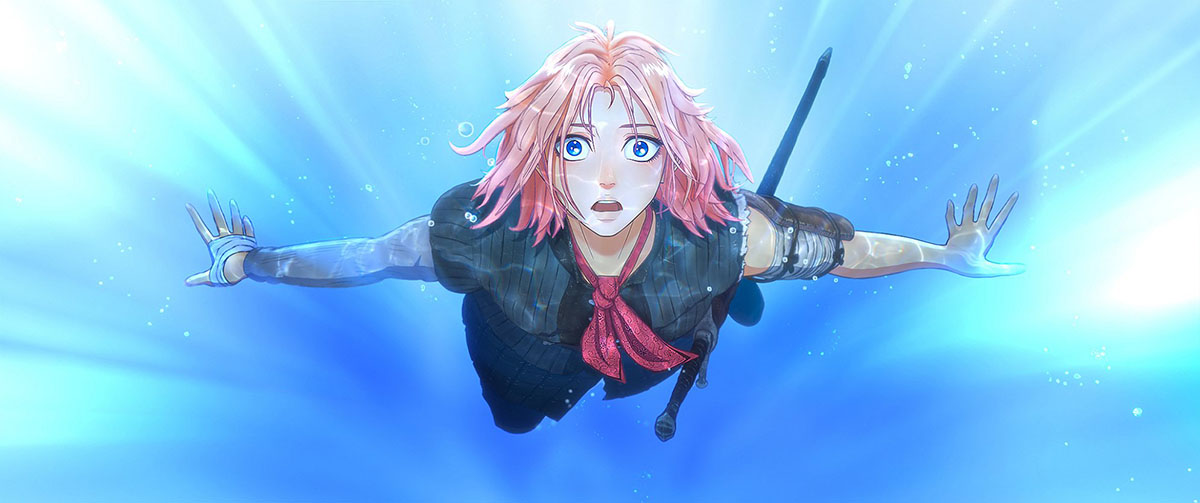
Remarkably, Scarlet and Eternity manages to convey this message without sacrificing the thrill of adventure. The action sequences maintain an infectious energy, bolstered by a remarkable sense of space and movement. Hosoda possesses the rare ability to make large-scale confrontations comprehensible. The characters' movements always convey something about their state of mind, and the camera work enhances emotions rather than overwhelming them with an avalanche of effects. The settings become true partners in the narrative: a monumental door feels as heavy on Scarlet's shoulders as it does on the audience, while vast desert expanses seem to swallow characters whole, reducing them to mere shards of light lost in an immense world. This elegance in directing reminds us that Hosoda is one of the great artisans of contemporary Japanese animation, capable of blending precision with a lyricism that never veers into showiness.
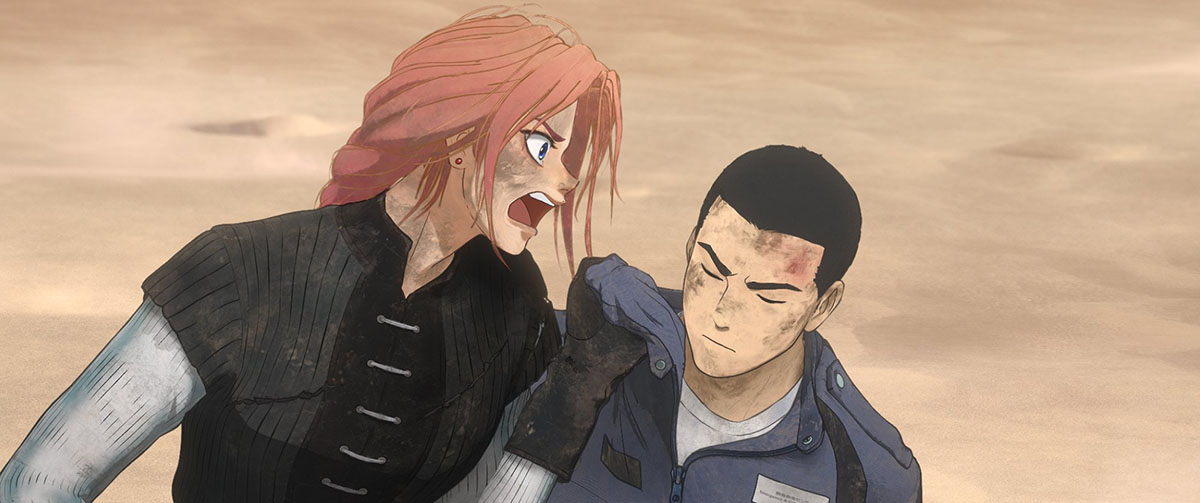
The musical score beautifully complements this ambition, alternating between orchestral crescendos and moments of silence where the sound of a footstep or the rustle of fabric becomes profoundly moving. This restraint allows Scarlet and Eternity to resonate even in its most spectacular moments. The film never forcefully imposes its ideas; instead, it lets them seep in through a glance, a landscape, or a moment of hesitation. Behind the creatures, battles, and vertiginous landscapes lies a deeply human reflection on forgiveness, memory, and the strange ability of beings to continue moving forward despite the weight of their ghosts. Hosoda thus crafts a visually stunning work, but more importantly, a film that shuns easy answers. Scarlet gradually realizes that the eternity promised in the title may not be one of suffering, but rather the invisible bonds that connect the living to those they have lost. This notion is infinitely more profound than a simple tale of revenge and perhaps represents the film's most significant triumph.
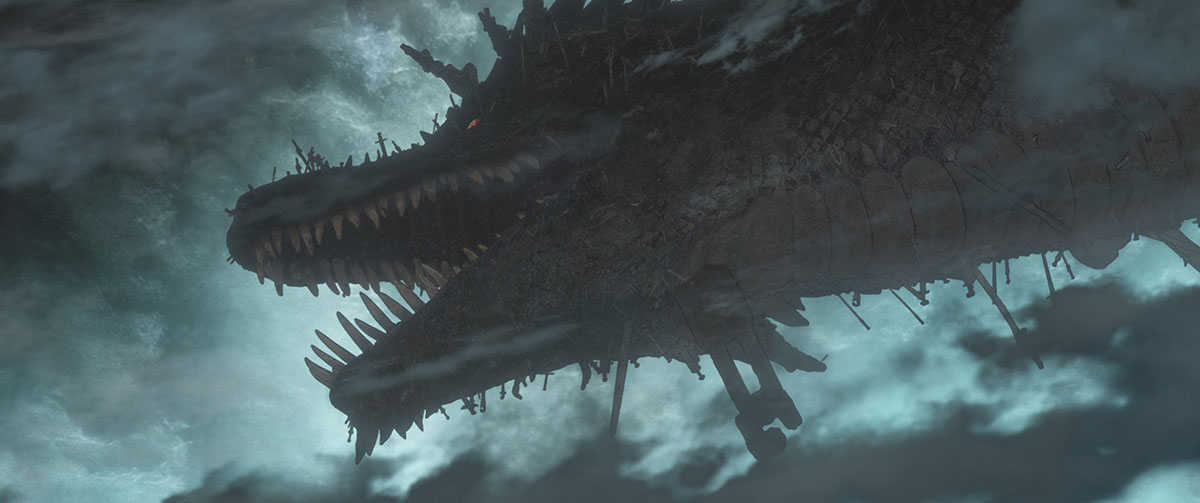
The Blu-ray 4K Ultra HD
[4/5]
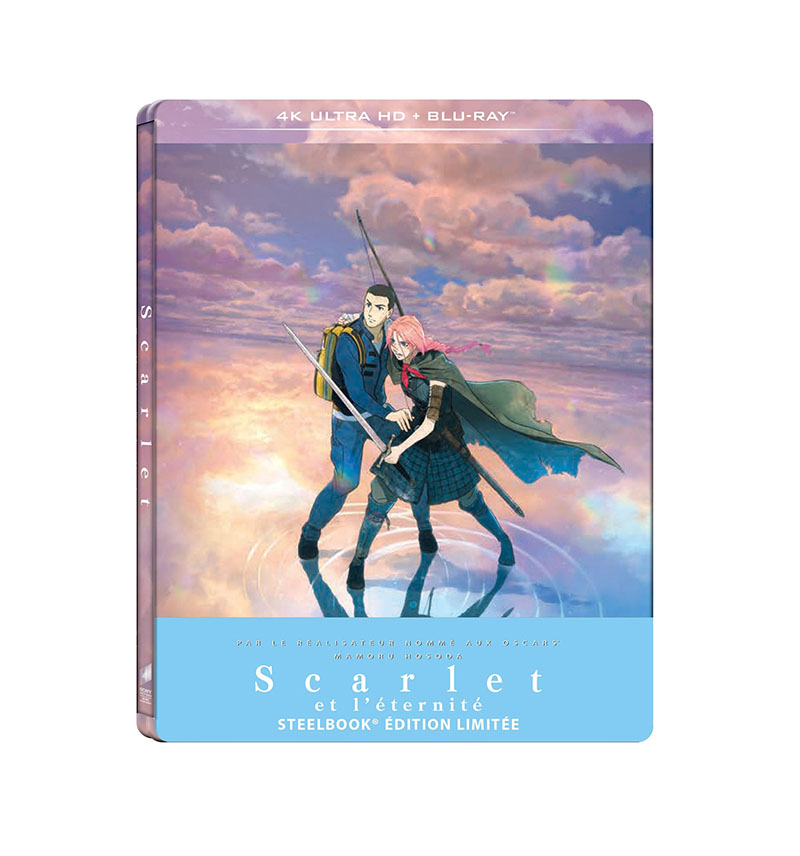
The Scarlet and Eternity Steelbook is difficult to resist, boasting an elegant design that reflects the film's visual identity. This Blu-ray 4K Ultra HD edition from Sony Pictures makes a striking entrance with a clean visual featuring Scarlet prominently, resembling an artbook illustration rather than a mere commercial package. It invites display as much as viewing, an excellent start for a collector's edition.
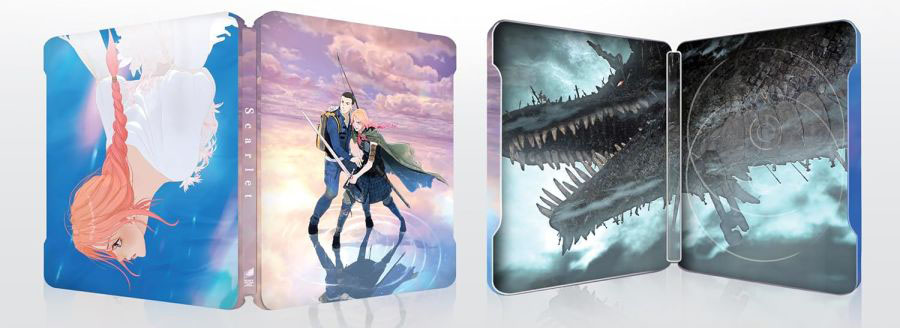
In terms of image quality, it's essential to note that Scarlet and Eternity originates from a 2K master, now presented in HDR10. Fans expecting a significant boost in definition may find themselves disappointed, as character outlines, backgrounds, and numerous animation details do not show substantial improvement compared to the standard Blu-ray edition also available in the Steelbook. However, the work done on color grading and dynamic range noticeably alters the perception of many sequences. Where the Blu-ray sometimes favored a warmer, almost sunny palette, this HDR10 presentation adopts cooler, more nuanced tones, adding depth to the blood-red hues that dominate parts of the narrative and the twilight skies Scarlet traverses. The contrasts also gain subtlety, with better-controlled highlights that avoid some of the excessive brightness seen in the standard Blu-ray. The audio experience is equally impressive. The original Japanese version features an immersive Dolby Atmos mix that skillfully utilizes verticality during spectacular sequences without falling into constant showiness. The atmospheres of the Land of the Dead envelop the viewer, while atmospheric effects, reverberations, and character movements benefit from precise spatialization. Action scenes exhibit remarkable scale, yet the mix also knows when to recede, allowing emotion to take center stage. In contrast, the French version, presented in DTS-HD Master Audio 5.1, holds its own. Sony Pictures delivers a solid, dynamic, and well-balanced mix. Dialogues remain crystal clear, the music retains its orchestral richness, and the surround effects contribute effectively to immersion without ever feeling artificial.
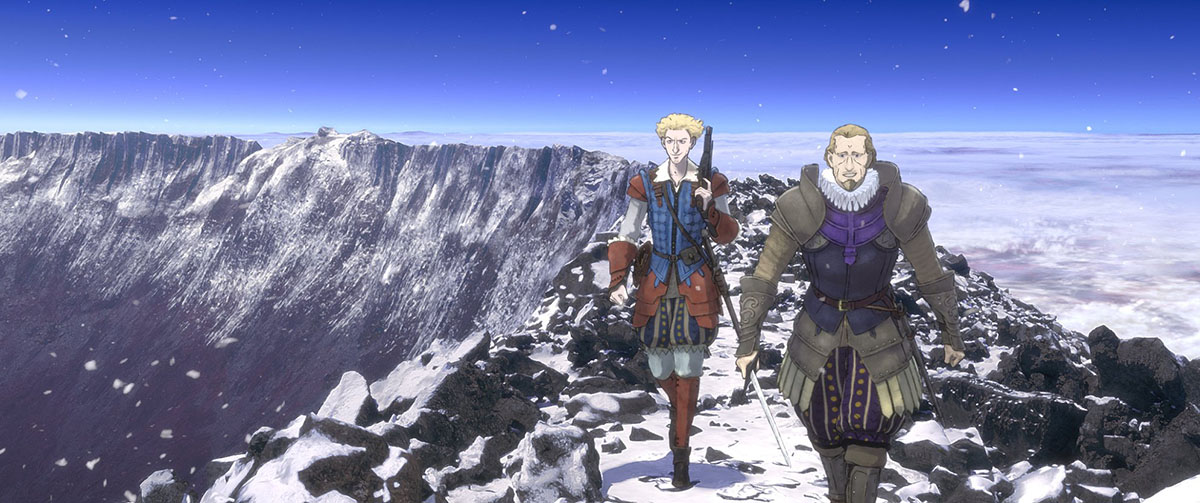
The special features included by Sony Pictures intelligently extend the exploration of Scarlet and Eternity. While the quantity may seem modest at first glance, the focus clearly lies on quality rather than accumulation. It begins with an interview with Mamoru Hosoda (9 min ...