
Café Society: Understanding the Film's Poignant Conclusion
Café Society explores the poignant themes of love, memory, and missed opportunities in Woody Allen's 2016 film, revealing a melancholic ending that resonates with the complexities of life choices.
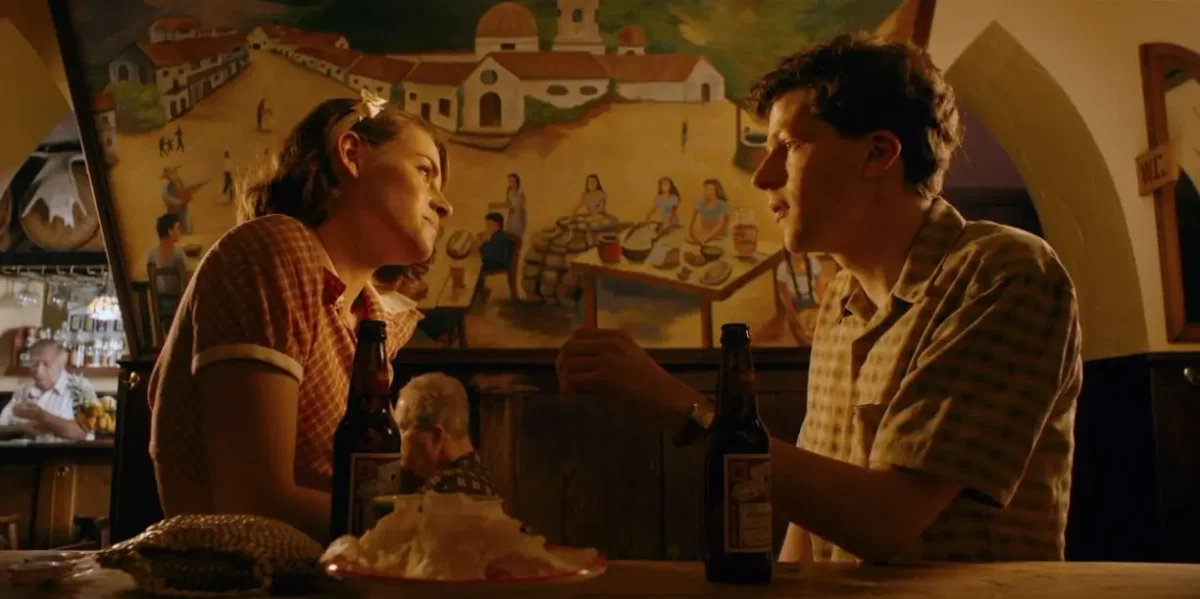
In 2016, Café Society marked what many perceived as Woody Allen's return to the grand romantic melodramas that have characterized parts of his filmography. Starring Jesse Eisenberg and Kristen Stewart, the film is set against the backdrop of 1930s Hollywood and the elite social scene of New York. It tells a seemingly simple love story that gradually evolves into a contemplation on time, missed opportunities, and the impossibility of living all the lives we envision for ourselves. Beneath the elegant cinematography of Vittorio Storaro and the light-hearted tone of the romantic comedy lies one of the director's most melancholic endings.
The film's conclusion deliberately evokes a sense of incompleteness. Bobby and Vonnie do not truly reunite, yet the final sequence suggests that something between them has never truly faded. This ambiguity has fueled interpretations over the years. The ending of Café Society does not depict an impossible love in the traditional sense; rather, it speaks to the weight of choices and how the past continues to linger in the present, even when life appears to have taken a definitive turn.
The Melancholic Romanticism of Woody Allen: Hollywood as a Factory of Illusions
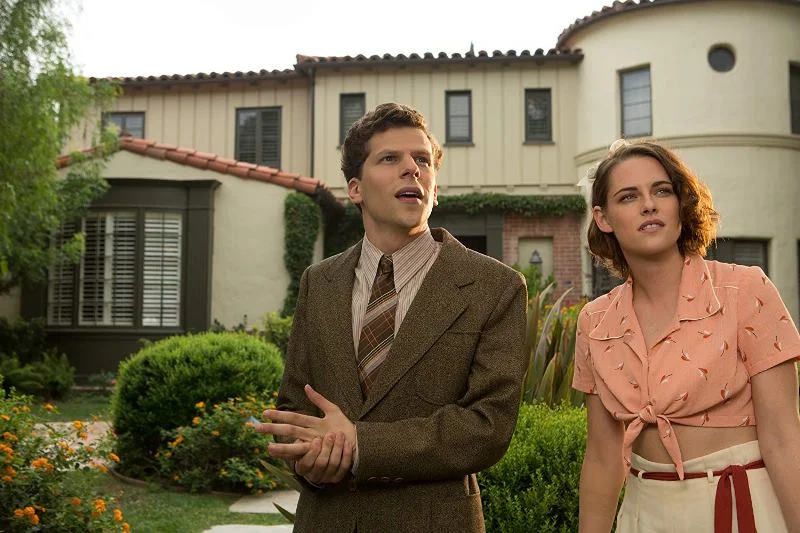
Café Society holds a unique place in Woody Allen's oeuvre as it revisits many themes present in works like Manhattan, Hannah and Her Sisters, Midnight in Paris, and Blue Jasmine. While the settings and historical periods may change, the idea that existence is governed more by chance than by individual will remains constant. Characters make rational decisions, following what they believe to be the best choice, only to discover too late that every decision inevitably entails a sacrifice.
Bobby arrives in Hollywood chasing a dream and falls for Vonnie, drawn to her authenticity amid the artificiality surrounding him. However, when she chooses to marry Phil, Vonnie gradually becomes absorbed into the world of privilege, celebrity, and appearances that she initially seemed to reject. Years later, when Bobby encounters her again in New York, he is struck by her transformation: the girl he remembered has become an integral part of the very society he once viewed with curiosity and skepticism.
Bobby himself undergoes significant changes. Back in New York, he builds an exclusive venue frequented by politicians, actors, and gangsters, marries Veronica, and achieves financial success. Almost imperceptibly, he ends up becoming part of the same elite he initially regarded with hesitation. This dual transformation leads the film to avoid labeling winners and losers; both protagonists attain their social desires but lose something far more challenging to reclaim.
What Really Happens in the Ending of Café Society
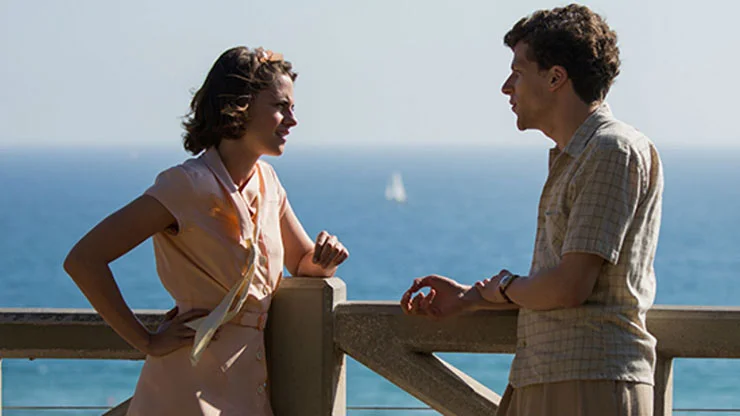
The film's final act seems to reopen the possibility for Bobby and Vonnie to finally be together. During their visit to New York, they spend hours reminiscing about their past, strolling, conversing effortlessly, and even sharing a kiss in Central Park. This moment suggests that their feelings have never truly vanished, yet it also highlights how much they have changed.
That kiss represents a suspended moment, almost timeless. For a few hours, Bobby and Vonnie manage to envision the life they could have built together, only to realize that this possibility belongs to the past. Separating from their respective spouses would mean dismantling families, relationships, and responsibilities built over the years in pursuit of an idealized memory. It is a prospect neither of them truly has the courage to confront.
The New Year's Eve epilogue makes this awareness explicit. Bobby celebrates with a pregnant Veronica, while Vonnie attends a party with Phil. On the surface, they have achieved stability, success, and security. However, their expressions reveal a shared thought. They are not necessarily regretting their marriages or longing to escape with one another; instead, they reflect on the version of their lives that never came to be. This distinction is crucial, as the film does not imply they chose the wrong partner but rather that every choice entails the irrevocable abandonment of another possibility.
Time, Regret, and Identity: The Hidden Themes Behind the Love Story
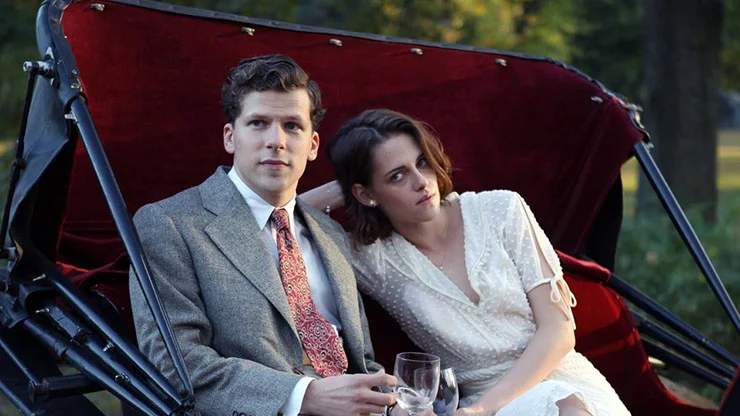
In Café Society, memory is arguably the true protagonist. Woody Allen weaves a narrative where time alters individuals far more than dramatic events do. Bobby and Vonnie slowly change, adapting to the environments they inhabit and the lives they construct. When they reunite, they find that their memories of each other remain frozen in youth, while reality has inevitably shifted.
Vonnie perfectly embodies this transformation. Initially, she seems alien to the machinations of Hollywood's major producers and celebrities. After marrying Phil, she adopts the very behaviors that once irritated her. Bobby is taken aback as he realizes that the idealized image of the girl he fell in love with now belongs more to his memories than to the person standing before him.
Bobby experiences a similar transformation. The naive young man who arrived from the East Coast becomes a refined entrepreneur, owner of one of New York's most exclusive venues. His success allows him to enter the very “café society” that gives the film its title, demonstrating how ambition and circumstances have reshaped him as well. When they meet again, they still recognize each other, but they now inhabit incompatible existences.
Thus, the film suggests a broader reflection: often, we do not grieve for what we have truly lost but for what we imagine could have happened. The love between Bobby and Vonnie continues to thrive precisely because it was never fully consummated. It remains suspended, idealized, and immune to the wear and tear of everyday life.
The True Meaning of the Ending: A Glimpse into Lives Not Lived
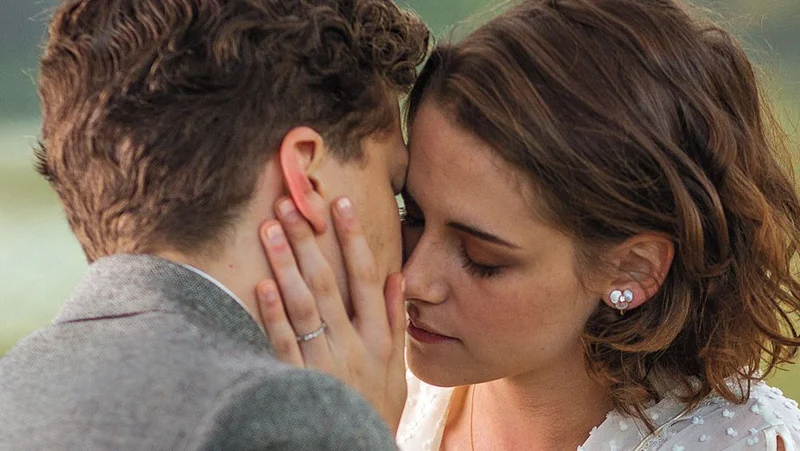
The final shot of Café Society is one of the most significant in Woody Allen's recent cinema, as it rejects any definitive resolution. Bobby and Vonnie gaze into the void while everyone around them celebrates the arrival of the new year. There is no promise of reunion, nor any regret capable of altering the course of events.
This gaze instead narrates the relationship each person has with their past. There is always a path not taken, an alternate choice that continues to captivate us precisely because it remains unrealized. Bobby and Vonnie understand that their love survives precisely because of the distance that separates them. Had they stayed together, that relationship would likely have encountered compromises, difficulties, and disappointments.
Consequently, the ending takes on a universal significance. Woody Allen encourages viewers to accept that maturity also involves living with missed opportunities. The past can be remembered with tenderness, even nostalgia, without becoming a mistake to rectify.
Thus, the final exchange of glances does not symbolize hope for a future together. It is a silent acknowledgment that some stories remain significant precisely because they belong to a time that cannot return. Life goes on, and the characters have built new families and responsibilities, while that memory remains frozen, preserved in a space of memory where time can no longer alter it. It is a bittersweet conclusion, profoundly romantic and perfectly aligned with Woody Allen's worldview, which suggests that existence is shaped as much by the choices made as by those that will forever remain mere possibilities.
You may also like

![Ici tout commence: What to Expect in Episode 1488 on Monday, July 27, 2026 [SPOILERS]](https://glowculturehub.com/cdn/images/b2d3d6d788c39a22a548df320e6d9f77/w1200.webp)