
Christopher Nolan's 'The Odyssey': A Modern Epic
Christopher Nolan's adaptation of Homer's The Odyssey reinterprets the classic tale, exploring themes of memory and human consciousness through a modern lens.
Film Details Original Title: The Odyssey Director and Screenwriter: Christopher Nolan Based on: Odissea by Homer Cinematography: Hoyte van Hoytema Editing: Jennifer Lame Production Design: Ruth De Jong Costumes: Ellen Mirojnick Music: Ludwig Göransson Country: USA, 2026 – Genre: Epic/Drama/Adventure – Duration: 178 minutes Cast: Matt Damon, Tom Holland, Anne Hathaway, Zendaya, Charlize Theron, Lupita Nyong’o, Robert Pattinson Release Date: July 16, 2026 Distributor: Universal Pictures

Christopher Nolan's latest cinematic venture, The Odyssey, reinterprets Homer's classic tale, aiming to resonate with contemporary audiences. Known for his ability to weave complex narratives that challenge viewers, Nolan's adaptation promises to delve into themes of memory and the human psyche, rather than merely recounting the adventures of Odysseus.
Nolan, a filmmaker who has consistently sought to push the boundaries of mainstream cinema, takes on the formidable task of transforming a foundational Western text into a narrative that speaks to the modern age. Following in the footsteps of cinematic giants like Stanley Kubrick, Nolan aspires to present intricate ideas in a manner that remains engaging and accessible. His previous works, such as Inception and Interstellar, have demonstrated his knack for exploring challenging concepts, and now he turns his lens to the struggles of Odysseus as a metaphor for contemporary conflicts.
Critics have raised eyebrows at the prospect of reimagining a classic, often treating such adaptations as sacred relics. However, Nolan's approach acknowledges that classics are meant to be retold and reinterpreted, much like Apocalypse Now did with Joseph Conrad's Heart of Darkness.
In this version, Odysseus, portrayed by Matt Damon, is not the invincible hero of traditional narratives but rather a man grappling with his own fragmented memories. The film opens with scenes from the conclusion, set against the backdrop of Calypso's island, where the hero's past has been obscured. This unconventional start sets the tone for a psychological exploration rather than a straightforward adventure.
As the narrative unfolds, it reassembles itself like a mosaic, featuring iconic encounters with figures such as Polyphemus, Circe, and the Sirens. Yet, in a significant departure from the original, the divine beings are notably absent. Instead, they manifest as constructs within Odysseus's mind, reflecting his internal struggles and regrets. Athena serves as a psychological comfort, while Poseidon embodies his guilt, highlighting that the true adversary is the deception within.
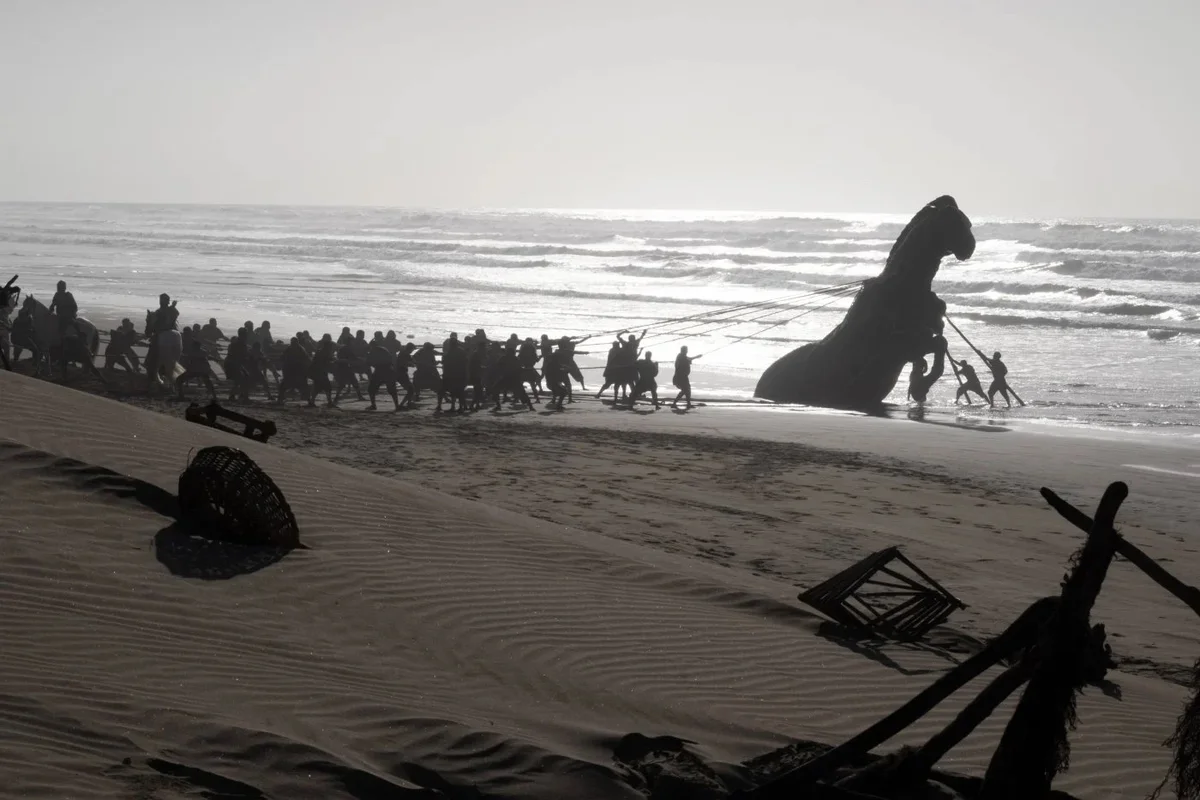
Nolan's radical interpretation positions Odysseus as the architect of his own downfall. The fall of Troy is not merely a tale of brute force but a cautionary story about the perils of betrayal and manipulation. The infamous Trojan Horse, rather than a symbol of military genius, becomes a metaphor for the original sin of political deceit. In a time when misinformation is rampant, the film draws eerie parallels between ancient and modern warfare.
The inclusion of Sinon, a character borrowed from Virgil's Aeneid, further emphasizes this theme. Nolan’s creative liberties serve not as provocations but as reminders of the timelessness and adaptability of classical narratives.
Interestingly, many cast members have backgrounds in superhero films, with Damon, Tom Holland, Zendaya, and Robert Pattinson all having played iconic comic book characters. This casting choice seems intentional, bridging the gap between modern heroism and the ancient tales of valor, suggesting that today’s superheroes are merely descendants of Homeric heroes.
From a technical standpoint, The Odyssey showcases Nolan's mastery of visual storytelling. Hoyte van Hoytema's cinematography transforms the sea into a metaphysical entity, while Ludwig Göransson's score enhances the narrative without overwhelming it. Jennifer Lame's editing ensures that the film maintains its tension throughout its nearly three-hour runtime. Although some critics may argue that Nolan's focus on structural precision occasionally overshadows emotional depth, this has become a hallmark of his distinctive style.
Nolan's preference for practical effects shines through in pivotal scenes, such as the depiction of Circe, who transforms Odysseus's companions into swine with a mere touch. This moment encapsulates the film's essence: rather than simply recounting the story, Nolan interrogates the themes and moral dilemmas inherent in it.
Ultimately, The Odyssey serves as a stark reminder that the most formidable monsters are not those lurking on distant shores but rather the ones residing within the minds of those returning from war, believing they have triumphed.
Rating: 10
Paolo Dallimonti
Cineclub
16 July 2026