Exploring Fundamentalism in Cristian Mungiu's 'Fjord'
Cristian Mungiu's 'Fjord' explores the clash of fundamentalist ideologies in child-rearing, winning the Palme d’Or at Cannes 2026. The film raises critical questions about education and protection.
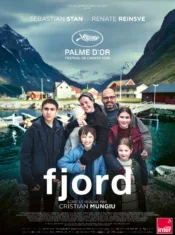 Roumanie, France, Norvège, Danemark, Finlande, Suède : 2026
Titre original : –
Réalisation : Cristian Mungiu
Scénario : Cristian Mungiu
Interprètes : Sebastian Stan, Renate Reinsve, Alin Panc
Distribution : Le Pacte
Durée : 2h26
Genre : Drame
Date de sortie : 19 août 2026
Roumanie, France, Norvège, Danemark, Finlande, Suède : 2026
Titre original : –
Réalisation : Cristian Mungiu
Scénario : Cristian Mungiu
Interprètes : Sebastian Stan, Renate Reinsve, Alin Panc
Distribution : Le Pacte
Durée : 2h26
Genre : Drame
Date de sortie : 19 août 2026
4/5
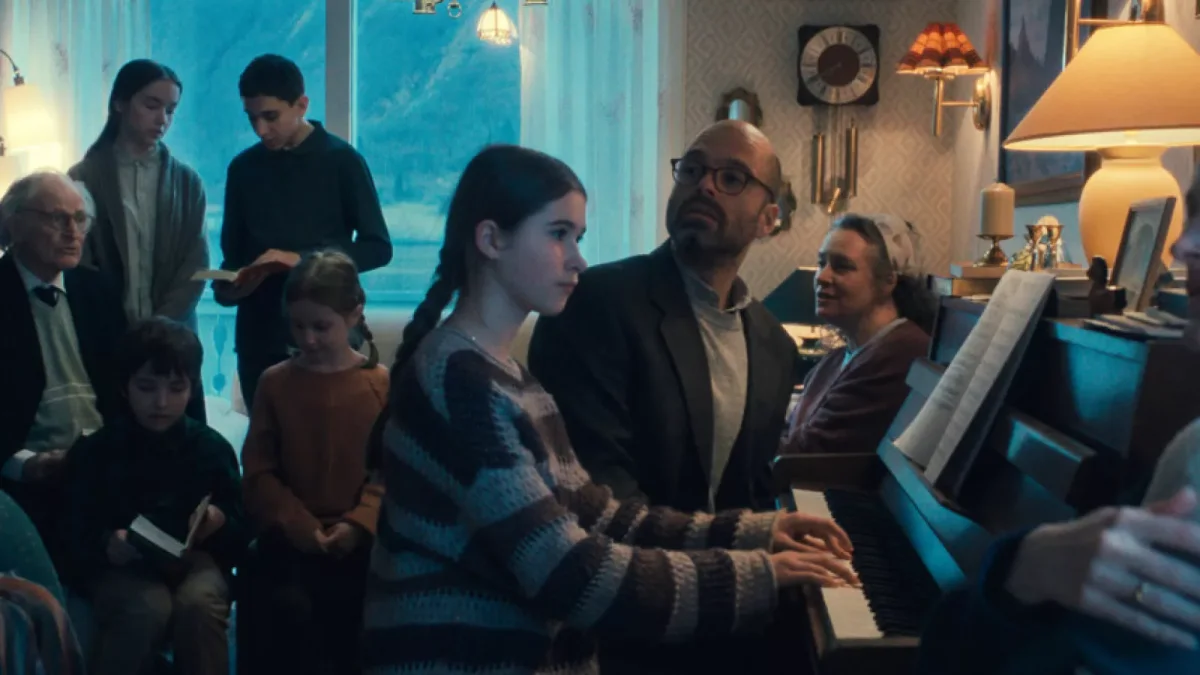
Synopsis : Les Gheorghiu, un couple roumano-norvégien très pieux, s’installent dans un village au bout d’un fjord où ils se lient rapidement d’amitié avec leurs voisins, les Halberg. Les enfants des deux familles deviennent très proches, malgré des éducations différentes. Lorsque le corps enseignant découvre des ecchymoses sur le corps d’Elia, l’aînée des enfants Gheorghiu, la communauté se demande si l’éducation traditionnelle que les enfants Gheorghiu reçoivent de leurs parents pourrait en être la cause.
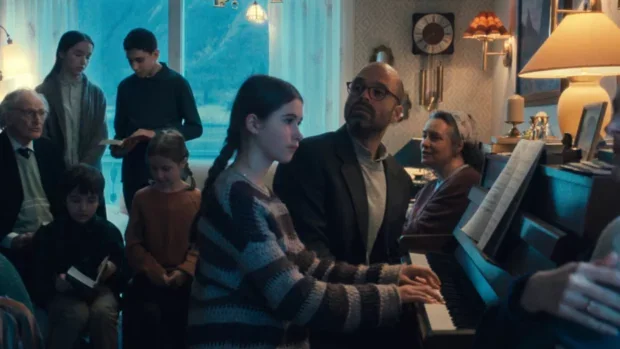
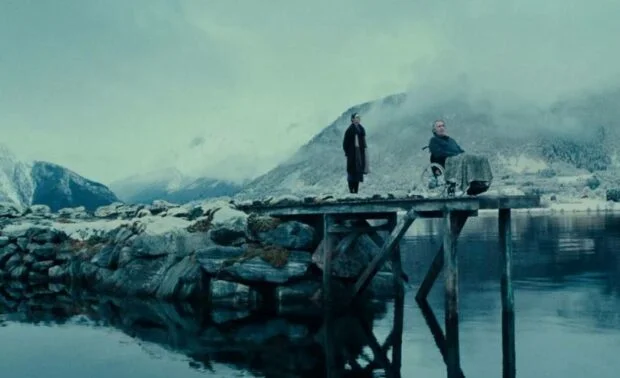
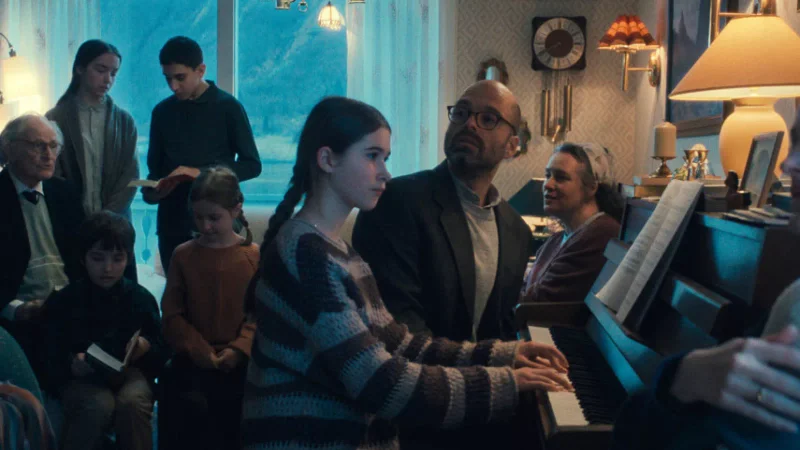
In Fjord, Cristian Mungiu's latest film that won the Palme d’Or at the recent Cannes Film Festival, the narrative tackles the complex themes of child protection and differing educational philosophies. The story unfolds in a serene Norwegian village, where the deeply religious Gheorghiu family, hailing from Romania, quickly befriends their neighbors, the Halbergs. Their children form a close bond, but tensions arise when Elia, the eldest child, is found with bruises, prompting the community to question the Gheorghiu family's strict parenting methods.
The film delves into the contrasting approaches to child-rearing, highlighting how cultural differences can lead to misunderstandings. The Gheorghius adhere to conservative beliefs, banning activities like dancing and modern music, which starkly contrasts with Norway's progressive stance on child upbringing. This clash of ideologies becomes critical when the Barnevernet, Norway's child protection services, get involved. The agency, known for its stringent measures, faces scrutiny for its actions, particularly in cases involving foreign families, which have previously led to diplomatic tensions.
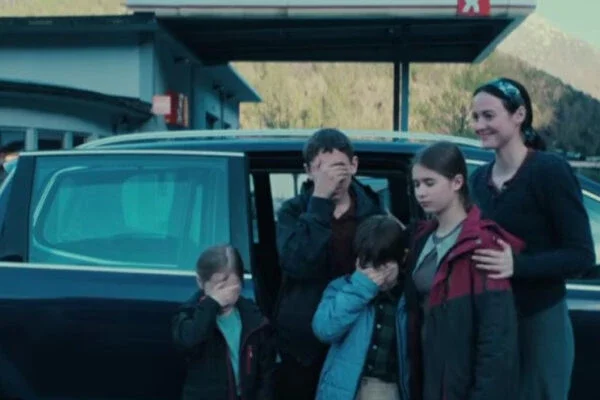
Mungiu's decision to explore this subject stems from his concern over societal divisions and the rise of extremism. He aims to reignite the spirit of doubt and dialogue, showcasing the confrontation between two fundamentalist views on child education and protection. This thematic choice has resonated with audiences, earning him the Palme d’Or for the second time, nearly two decades after his first win for 4 Months, 3 Weeks, 2 Days.
Interestingly, Mungiu's portrayal is not neutral; he invites viewers to empathize with the Gheorghiu family, despite their conservative values. Critics have noted that this bias could provoke polarized reactions, with some labeling Fjord as the most controversial entry in the Cannes 2026 competition. Mungiu himself expressed a desire for the film to challenge viewers' preconceived notions rather than merely reinforce them.
The film's visuals, crafted by cinematographer Tudor Vladimir Panduru, reflect Mungiu's meticulous direction. However, some casting choices, particularly that of Renate Reinsve as Lisbet, the mother, have drawn criticism for her youthful appearance, which some feel undermines the character's intended gravitas.