Exploring the Real Inspirations Behind Gone Girl
Exploring the inspirations behind David Fincher's Gone Girl, this article examines the real-life case of Scott and Laci Peterson and how it influenced the film's narrative.
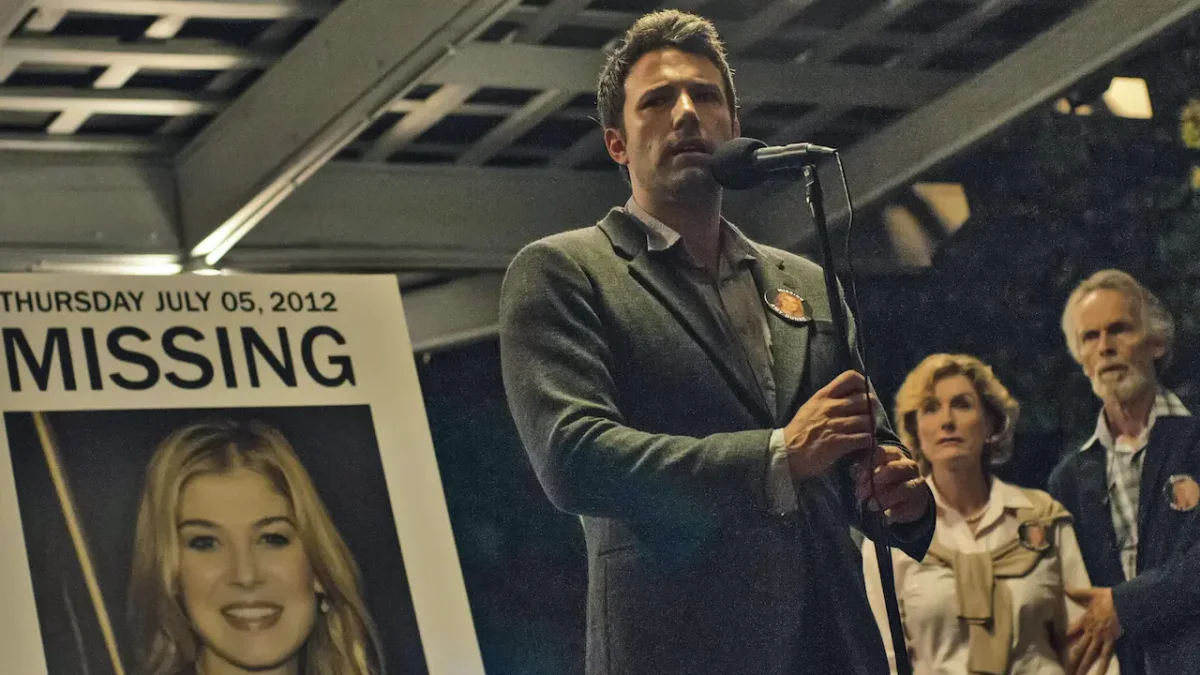
When Gone Girl hit theaters in 2014, it captivated both audiences and critics with its twist-laden narrative. Directed by David Fincher and based on the novel by Gillian Flynn, who also penned the screenplay, the film delves into the mysterious disappearance of Amy Dunne (Rosamund Pike) and the subsequent transformation of her husband Nick (Ben Affleck) into the prime suspect. This intricate tale weaves together themes of investigation, psychological manipulation, and media sensationalism, leaving viewers questioning the truth long after the credits roll.
The film's striking realism in depicting the roles of investigators, media pressure, and public opinion has led many to wonder if Gone Girl is based on a true story. The answer is nuanced: while the film does not recount a specific real-life event, it draws inspiration from one of the most discussed criminal cases in the United States, transforming it into a distinct narrative in terms of motives, development, and especially its conclusion.
The Scott and Laci Peterson Case as a Primary Inspiration

The case most frequently linked to Gone Girl is that of Scott Peterson and Laci Peterson, a scandal that shocked the nation in the early 2000s. On Christmas Eve 2002, Laci, who was eight and a half months pregnant with their son Connor, vanished from their California home. From the outset, the case garnered immense media attention, quickly becoming one of the most followed criminal stories in the country.
The couple's public image played a significant role in the story's escalation. Young, attractive, and seemingly perfect, the Petersons epitomized the ideal American family, thrust into the spotlight when tragedy struck. News outlets closely monitored every development, providing continuous coverage, press conferences, and interviews, effectively crafting a real-time narrative where the husband became the primary suspect.
This media dynamic particularly intrigued Gillian Flynn while she was writing the novel. She has often expressed her fascination with how the media transforms certain tragedies into national events, especially when they involve couples perceived as flawless. However, she has consistently denied that her book is a direct adaptation of the Peterson case, stating that it was inspired more by a broader media phenomenon than by any single incident.
Media's Role: Striking Parallels Between Fiction and Reality
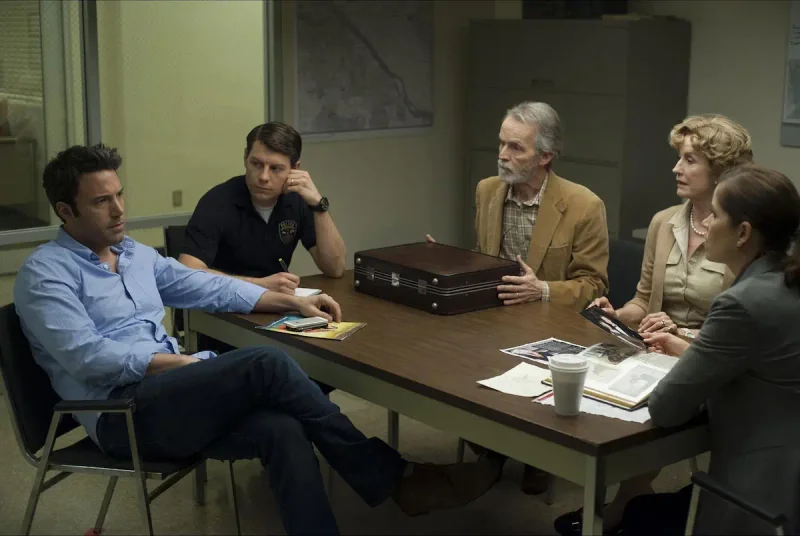
Although Gone Girl is not a direct retelling of the Peterson story, it shares several similarities. In the film, Nick Dunne (played by Ben Affleck) is under constant media scrutiny as he attempts to prove his innocence following his wife Amy's disappearance. Every action, smile, and statement is dissected by public opinion.
This mirrors the scrutiny faced by Scott Peterson, whose demeanor during the weeks following his wife's disappearance was often described as detached and unconvincing. His televised appearances fueled growing doubts, exacerbated by the revelation of his extramarital affair with Amber Frey, whom he had misled about his marital status. Additionally, financial troubles and other aspects of their private life quickly made headlines.
The film adeptly captures this media exposure, illustrating how public image can overshadow actual events, with news outlets eager to create narratives even before investigations conclude. This exploration of the interplay between news, spectacle, and public perception represents the true connection to the Peterson case.
Divergent Endings: Fiction vs. Reality
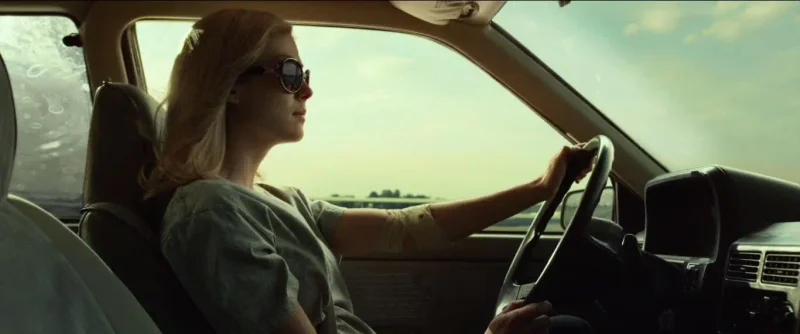
While the beginnings of both stories share common threads, their trajectories diverge significantly. In Gillian Flynn's narrative, Amy Dunne's disappearance is part of a complex scheme she orchestrates to exact revenge on her husband and manipulate the criminal justice and media systems. She returns alive, eliminates an ex-boyfriend, and ultimately forces Nick to remain by her side.
In stark contrast, the real-life story ended tragically. In April 2003, the bodies of Laci Peterson and her unborn son were discovered in the San Francisco Bay, several months after her disappearance. The trial against Scott Peterson began the following year, culminating in his conviction for first-degree murder of his wife and second-degree murder of their son Connor. Although his death sentence was overturned in 2020, his life sentence remains intact, and ongoing appeals have kept the judicial debate alive.
David Fincher has publicly acknowledged the visual resemblance between Ben Affleck and Scott Peterson, explaining that this association enhances the credibility of the suspicion surrounding the protagonist. However, this connection serves as a narrative device rather than an indication that the film directly recounts that case.
Gone Girl: A Reflection on Manipulation and Narrative Power

Gone Girl excels at utilizing recognizable elements of real-life crime to craft a wholly original story. Gillian Flynn draws upon the collective fascination with criminal cases involving seemingly perfect couples, transforming this material into a psychological thriller that contemplates marriage, identity, and the human capacity to create varied versions of reality.
The saga of Scott and Laci Peterson serves as a foundational backdrop, particularly regarding the media climate and the husband's transformation into the prime suspect. However, aspects related to Amy's character, her plans, the twists, and the ending are entirely products of the author’s imagination.
Thus, the answer to whether Gone Girl is based on a true story is twofold. The film does not recount the Peterson case or reconstruct actual events. Simultaneously, it emerges from a close examination of one of the most infamous judicial cases in the United States and, crucially, the manner in which media outlets and public opinion can transform a criminal investigation into a collective spectacle. This connection to reality is what makes the film so unsettling and relevant even today.