He-Man and the Masters of the Universe - 2026 - USA - Travis Knight
An in-depth look at the new He-Man film, exploring changes to character dynamics and themes within the context of modern cinema and societal shifts.
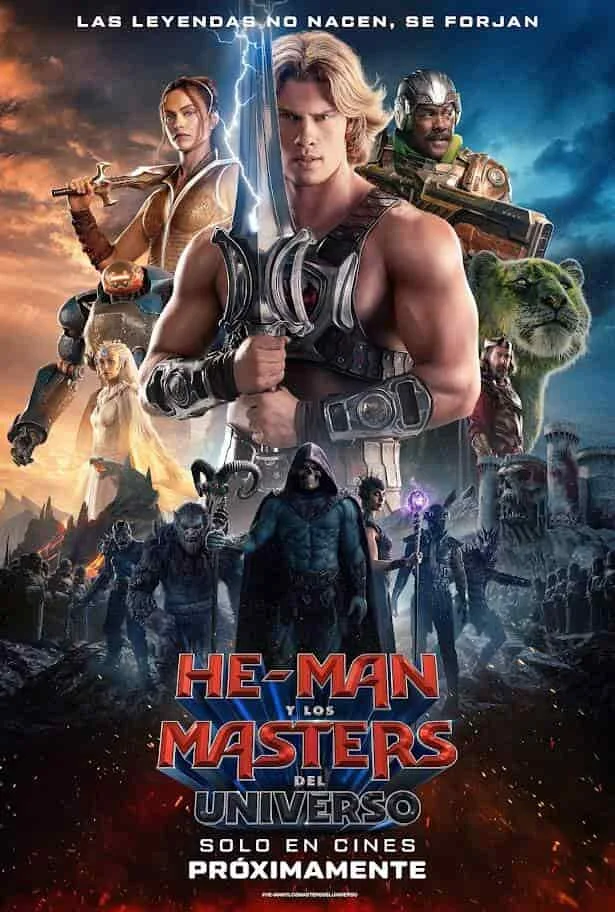
It’s worth mentioning upfront that I was never a fan of He-Man.
Masculine Action Figures
I have fond memories of the 1980s animated series, not because I enjoyed it, but due to the nostalgic moments associated with watching it in Scarborough. My memories revolve more around the context of television and personal experiences rather than the series itself. The action figures were equally unappealing to me: grotesquely muscular characters clad in absurd outfits and wielding weapons that defied the laws of nature, logic, and taste. In fact, the concept of "good taste" was entirely absent from this realm.
The figures were ugly—so ugly that I could imagine giving them to Sid Phillips, the psychopathic neighbor of Andy from Toy Story. Do you see where I’m heading? The grotesque and crude figures of muscular men who would weigh about 140 kilos from pure steroid-induced muscle were simply not my cup of tea.
However, I must acknowledge that while I didn’t like He-Man or any of the figures in the collection, I respected the characters they represented. They were consistent with their nature: a band of macho men who behaved, spoke, and fought like macho men.
Deconstructed Machismo
The new iteration of He-Man has lost my respect. The rugged man is no longer in vogue; instead, we see a sensitive hero. The character who relished in battle has been replaced by a fragile figure. Gone are the days when a hero would draw a line in the sand, declaring, "Cross this line and I will crush you." This He-Man shies away from confrontation and avoids fighting, which is a disservice to the warrior he was meant to be. He-Man was designed to be a fighting beast, not someone who dons a tutu and dances ballet. He is not a literature teacher (like myself) or a hairstylist. He-Man is a warrior—he is the most powerful man in the universe!
Another aspect that detracts from the film is the unnecessary saturation of humor. While it’s acceptable to lighten the drama or violence with a well-placed joke, turning a superhero into a comedic figure diminishes their dignity. Just ask Thor or any character from MARVEL, or the latest Superman, who often come off as punchlines rather than heroes. This trend of forced humor reminds me of my uncle Eduardo Maestro from Seville, who couldn’t finish a sentence without making a bad joke.
Prince Adam
Let’s not forget that the true character is Prince Adam, who hides his alter ego, He-Man, behind a facade that barely conceals the truth. If you told me he transformed from a weakling into a steroid-fueled warrior, I wouldn’t mind, but the change is hardly noticeable, occurring mainly through a costume switch—from a questionable prince in a tight shirt and pink vest to a man wearing a loincloth. The movie version dons a skirt, while the original wore a leather thong.
Even if Adam isn’t the bold warrior that He-Man is, he shouldn’t be portrayed as a coward. Unfortunately, the film depicts him as an idiotic and timid character, reminiscent of Kevin Beckam, the dim-witted blonde played by Chris Hemsworth in the 2016 Ghostbusters movie. This portrayal transforms the main character into the comic relief of his own film, a common occurrence in the current woke era.
Alpha Males
Given the final product (the film), it’s no surprise that it passed through the hands of NETFLIX, who initially intended to produce it. However, the project spiraled out of control, leading the streaming giant to withdraw, allowing AMAZON MGM to take over. While that seemed fine, the existing script was neither discarded nor completely rewritten; it was merely revised. Consequently, the woke undertones that NETFLIX had infused into the script remain present in the film.
We are now forced to witness the deconstructed masculinity of this He-Man, akin to what we see in the series Alpha Males, or worse, a character that could be dubbed Coward-Man. This film also reflects the ongoing trend of racial quotas, as characters from our past are altered to meet modern representation standards. We are witnessing a shift in characters, books (like the upcoming The Odyssey), films, heroes, and the broader historical and literary canon, all rewritten to offend.
This is all reminiscent of Kathleen Kennedy’s approach, who has been accused of ruining, trampling, and destroying the foundational saga of all things geeky: Star Wars. This was not done by mistake or negligence, but with the intention to offend male, middle-aged viewers—the original fans who eagerly awaited a new film, only to have it explode in their faces.
He-Man and the Masters of the Universe
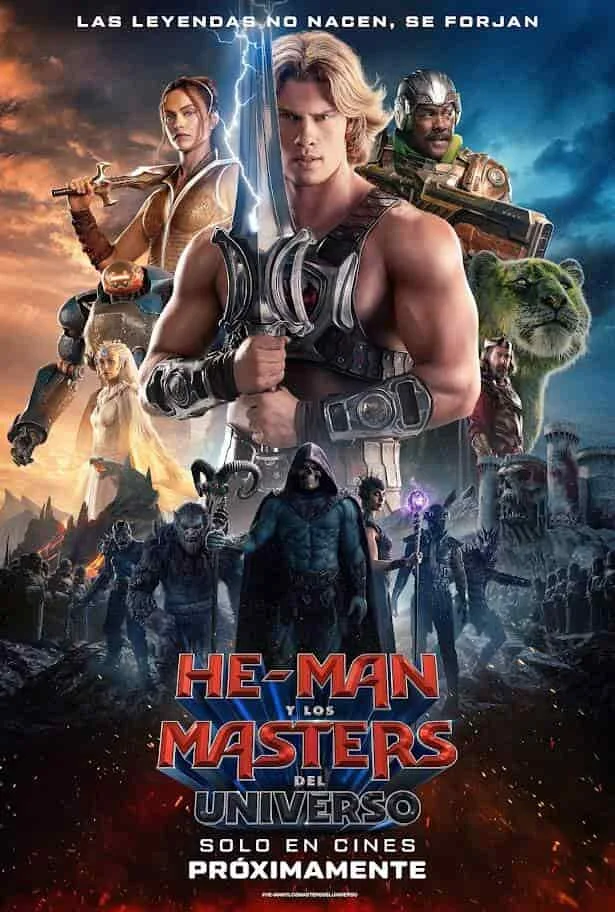
This is the title used in Spain; elsewhere, it’s simply called Masters of the Universe, except in Latin America, where they tend to be more purist in their Spanish and refer to it as Amos del Universo.
In the past, when we wanted to learn about a hero’s journey before they became heroes, we were shown the struggles they faced, much like Conan. One such struggle involved being forcibly removed from their family, with the narrative focusing on their quest for vengeance. Today, in these new versions, if the children are Caucasian, they are portrayed as traumatized by their fathers (Alpha Males) who feared their sons would grow up weak and cowardly.
This serves as a clear message from the woke agenda, indicating that the traditional Western patriarchal model is flawed. This model has brought about freedom, justice, democracy, leisure time, private property, women’s rights, and freedom of speech. However, for the woke movement, which is a conscious cancer of the West, all of this is viewed as "cow dung."
This is evident from the film’s opening, where we see the delicate Prince Adam, a weak child humiliated by his father for lacking the strength and skill to wield a weapon. Simultaneously, we are introduced to the first woke character swap, changing the race of the head of the royal guard: Man-At-Arms.
Who or What is Skeletor?
When discussing Skeletor, I assume everyone knows who or what he is, but let’s clarify.
There have been at least three different origins for the villain of Masters of the Universe.
A Demon from Another Dimension in the Mini-Comics
In the mini-comics that accompanied the action figures, Skeletor was depicted as a demon from another dimension. At that time, he had no ties to the royal family of Eternia. He was simply one of many from another dimension who infiltrated Eternia after a cosmic war opened a dimensional portal.
This version of Skeletor settled in Castle Grayskull with the aim of reopening the portal for his kind to invade Eternia—a plot reminiscent of the later Warcraft: The Origin.
An Exiled Apprentice in the 1980s Series
Similarly from another dimension, Skeletor was portrayed as an acolyte of his master Hordak. After a betrayal, they found themselves trapped in different dimensions: Hordak in Etheria and Skeletor in Eternia, based in Snake Mountain.
Skeletor as Prince Keldor
The third and most widely accepted version, established in the 2002 television series and later adaptations, reveals that Skeletor was originally named Keldor, the older brother of King Randor (He-Man’s father) and thus He-Man’s biological uncle.
The Official Origin: Keldor's Tragic Past
In the modern lore, Skeletor's backstory as Prince Keldor is explained through three main points:
- Keldor was of mixed heritage; his mother was not human but Gar, which led to his rejection from the royal line. This resulted in deep resentment towards his brother Randor, who inherited the throne.
- Much like Batman from Tim Burton’s 1989 film, Keldor incited an armed rebellion against Randor. During a climactic battle, Keldor threw a vial of acid at Randor, who deflected it, causing Keldor to become disfigured.
- Keldor was rescued by Beast Man, who took him to Hordak, who saved his life using dark magic, leaving him with a skeletal visage that became his trademark.
This latest version, while the most recent, provides a coherent explanation for the villain’s unusual appearance.
Castle Grayskull
You will read the name Castle Grayskull multiple times in this article. But what exactly is it?
Castle Grayskull serves as the center of power on the planet Eternia. Built by King Grayskull, who is presumably Adam’s ancestor, it was originally known as the Hall of Wisdom. The castle is the object of desire for Skeletor, along with He-Man's sword. When Adam invokes the power of Grayskull, he transforms into He-Man to engage in battle.
In Adam’s time, or even his father’s, it is home to the Sorceress, the realm's most powerful sorceress. Should Skeletor seize the castle, he would be well on his way to absolute power, augmented by wielding the legendary sword of Grayskull, commonly known as "the sword of power." This sword, with its impossible design, would render it useless for any practical application.
You may also like