Israeli Cinema Festival Concludes Amid Rising Antisemitism
The 26th Israeli Cinema Festival in Paris showcased films amidst rising antisemitism, attracting a large audience despite challenges. Discover the award-winning films and their poignant themes.
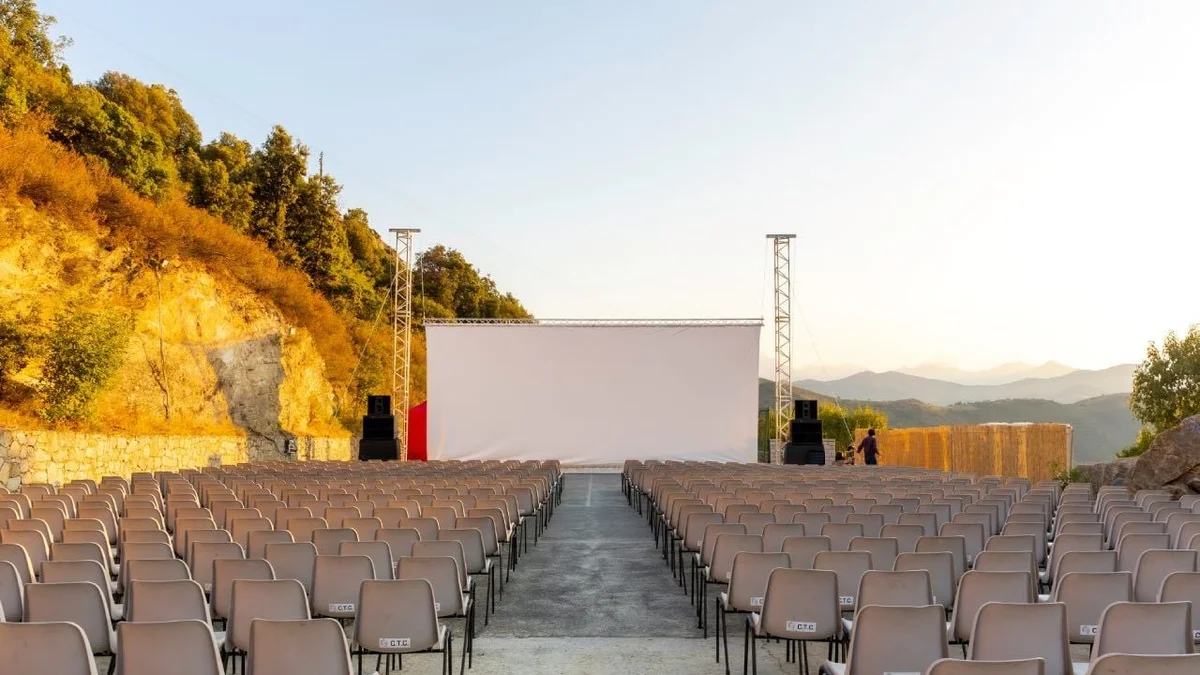
The 26th Israeli Cinema Festival in Paris took place from March 16 to 24, 2026, at the Majestic Passy, set against a backdrop of unprecedented antisemitism in France and beyond. Since October 7, 2023, antisemitic incidents have surged, marking the highest levels since World War II. Jewish artists face boycotts, their works are censored, and programmers are intimidated. In such a climate, showcasing Israeli films in a Parisian venue is a bold act, and doing so for ten consecutive days, in front of a large audience, is even more significant.
Challenges for Filmmakers
Most filmmakers were unable to attend this year’s festival. Hélène Schoumann, President of the FCIP, poignantly remarked in Hebrew that "the skies have remained closed." Since the onset of conflict, air travel from Israel has been severely disrupted, with foreign airlines suspending flights, making departures from Tel Aviv a daunting task. Others were unable to leave due to direct or indirect involvement in ongoing hostilities.
In France, the festival's promotion was intentionally subdued, a precautionary measure reflecting a changed world. This is compounded by the increasing difficulties in distributing Israeli films outside the country. International sales are dwindling, programming opportunities are closing, and media coverage—when it occurs—treads lightly around a vibrant and diverse cinema that grapples with themes of memory, violence, transmission, and desire. The Israeli Cinema Festival in Paris remains one of the few Francophone platforms where this cinema can be viewed, discussed, and defended.
Despite the surrounding violence, audiences turned out in strong numbers to engage with the films.
Several films left a lasting impression on me.
Award Winners
At the closing ceremony, attended by Sophie Dulac, the awards were announced:
- Best Short Film: Not My Weekend by Rona Segal
- Best Documentary: Unraveling UNRWA by Duki Dror
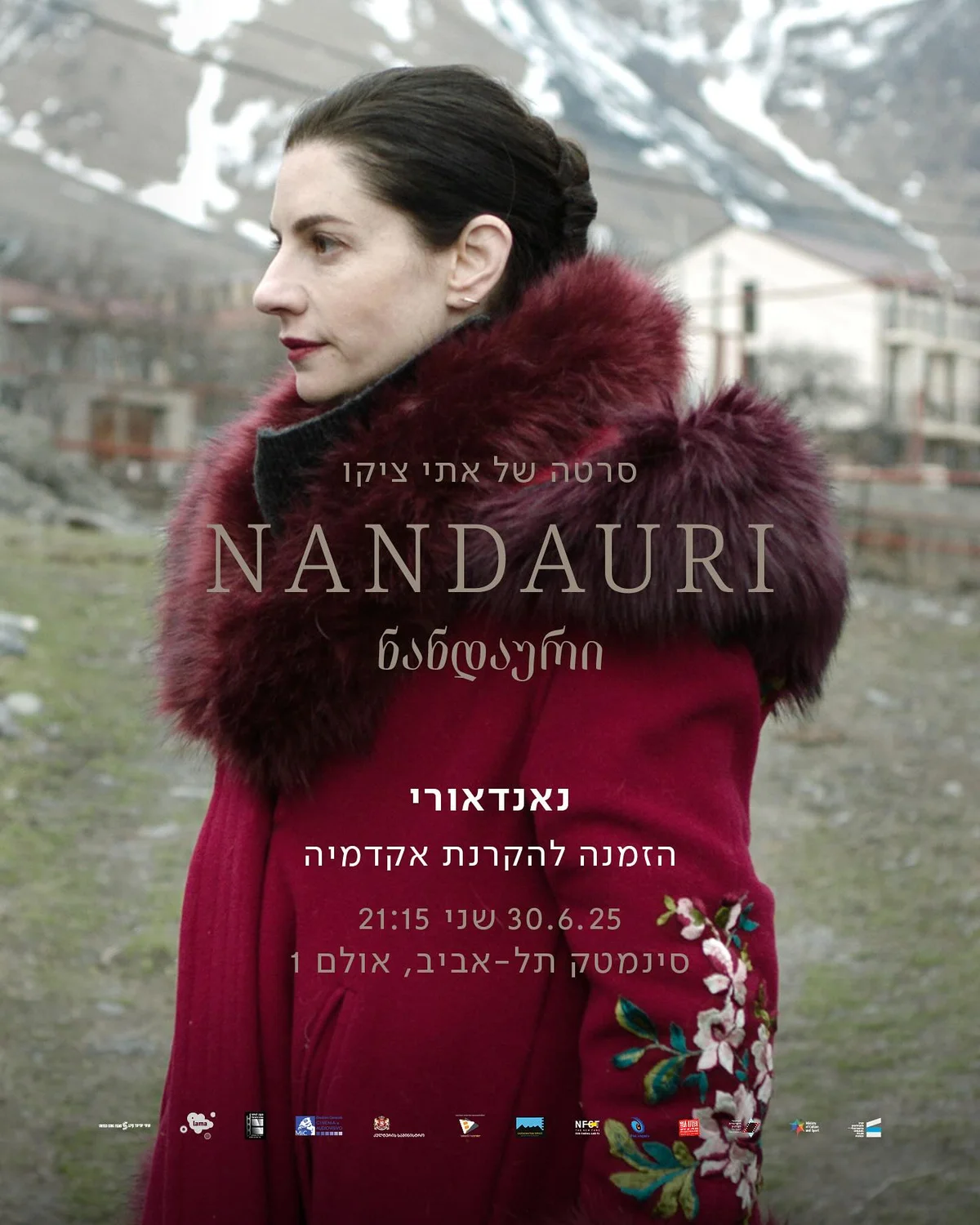
- Best Film: Nandauri by Eti Tsicko.
Feature Films
A Burning Man — Eyal Halfon
Fiction · 2025 · 1h43 · Opening Film · Best Actor and Grand Prize for Best Israeli Film, Haifa 2025
A Father's Struggle
This film stands as one of the festival's most impactful entries. It follows Jonas as he drives his son Omer to his military enlistment but struggles to let him go. He accompanies Omer to the desert, where he remains under an acacia tree for days, unable to leave.
The film encapsulates a powerful and absurd gesture. Jonas does not prevent anything, save anyone, or make any decisions; he simply waits, as if his presence might stave off disaster. Shai Avivi portrays a tragicomic character—exhausted, self-absorbed, and poignant, yet sometimes ridiculous. Separated from his wife for years and an uninspired writer, he reveals that Omer, born premature and fragile, is his favorite child, the champion rower now turned soldier.
Encounters in the Desert
Halfon populates the desert with unexpected figures—a debt-ridden truck driver, a young woman organizing a festival, an overly familiar real estate agent, and a father whose son left the army to make a protest film. Each encounter reflects contemporary Israeli society.
The acacia tree also hosts aravit—the only bird in Israel that lives in groups year-round, nurturing its young and feeding one another. Halfon includes this scene without commentary.
Grossman wrote A Woman Fleeing the Announcement during the 2006 Lebanon War, knowing his son Uri was at the front. Uri died on the last day before the ceasefire. Jonas, too, waits under an acacia for a similar reason.
A Script Born from Personal Experience
Eyal Halfon crafted the screenplay when his own son joined the army. The character Yona, from the Torah, is a prophet sent to warn Nineveh of impending doom. He flees, falls asleep in a ship's hold, is cast into the sea, swallowed, and spat out on the shore before continuing on his journey. Halfon noted in a video message before the screening that the script was completed before October 7, with only the ending altered.
The viewer in 2026 understands the implications of a techno festival in the desert, with the events of October 7 woven into the film's fabric, though never explicitly named. A Burning Man explores themes of war, fatherhood, fear, and denial through a nearly minimalist approach, which enhances its emotional impact.
Nandauri — Eti Tsicko
Fiction · 2025 · 1h33 · Horizons Section · Starring Neta Riskin · Five Ophirs 2025, including Best Director and Best Actress. Best Film, 26th Israeli Cinema Festival in Paris.
A Director's Personal Journey
Eti Tsicko, born in Ashkelon to Georgian immigrant parents, draws from her own life experiences. Her older sister had an arranged marriage, prompting Tsicko to leave home at eighteen. Fifteen years later, she penned the script for her debut feature, filmed entirely in Georgia.
The story follows Marina, an Israeli lawyer, who returns to Georgia to represent Nino, a mother wishing to reclaim her child after abandoning him eleven years prior. In a remote mountain village, she encounters Dato, Nino's brother and the child's guardian, in a society where women marry at sixteen and the silence surrounding domestic violence is institutionalized.
Desire as Resistance
The film gradually builds tension between Marina and Dato, who initially clash but ultimately support one another. The desire that emerges in their silences and resistance culminates in a powerful, liberating moment. Tsicko captures this scene with intense emotion.
Neta Riskin, known for her role as Giti in Shtisel, learned Georgian for the part and is present in every scene, earning her the Ophir for Best Actress. Cinematographer Shai Goldman employs wide, slow shots inspired by Antonioni, while Marina's red coat—symbolic of pomegranate—reflects her dual cultural identity.
Filming Context
The film was shot in spring 2023, six months before October 7, and transcends the immediate conflict. In a poignant moment, a thirteen-year-old sings Nandauri, "the one I desire," in a world where women's desires are suppressed from childhood.
Oxygen — Netalie Braun
Fiction · 2025 · 1h35 · Starring Dana Ivgy · Best Israeli Film, Jerusalem 2025
A Mother's Dilemma
Anat, a passionate poetry teacher and single mother, awaits her son Ido's return from military service, planning a trip to India together. However, when a soldier is kidnapped at the Lebanese border, a new war erupts, and all leaves are canceled. Anat learns that Ido has volunteered to stay at the front, a choice she had consented to by signing a waiver for her only child to serve in a combat unit.
Set in Haifa, just thirty kilometers from the Lebanese border, the film captures the sirens as part of daily life. This context is embodied in Anat's actions as she cooks to distract herself, monitors her phone, and sees Ido as the child she once carried. The radio broadcasts praise mothers who support the war effort.
Water as a Visual Thread
Water serves as a recurring visual motif throughout the film. The sea and port symbolize escape, while the washing of a windshield signifies approaching limits. Water represents motherhood in its primal form: the body that contains, protects, and holds on. The film explores the painful reality of a son moving away toward conflict. Braun, whose own son has asthma, found this imagery resonant: waiting for someone to return the air.
Generational Trauma
Anat's grandfather, a war hero, suffers from PTSD, reflecting a cyclical pattern of trauma across generations. The ongoing war in Lebanon looms over the film's production, and Dana Ivgy, a three-time Ophir winner, experienced her hair turning gray within weeks of shooting, as she has a brother in the military.
Documentaries
Unraveling UNRWA — Duki Dror
Documentary · 2025 · 1h30 · In partnership with Actions Avocats · Best Investigative Documentary, Haifa 2025 · Best Documentary, 26th Israeli Cinema Festival in Paris
A Permanent Structure from a Temporary Agency
Duki Dror, known for Supernova: The Music Festival Massacre (2023) and Mossad: Israeli Agents Speak (2015), examines the UNRWA: an agency established in 1949 as a temporary structure to manage the Palestinian refugee crisis following the 1948 war, which has persisted for seventy-five years, entrenching the refugee status across generations.
His central question is: how did an agency designed for eighteen months become central to the conflict?
On October 7, 2023, the largest massacre of Jews since the Holocaust occurred, with 1,219 killed and 251 taken hostage, some of whom were UNRWA employees. Six infiltrated Israel, four participated in kidnappings, and others transported weapons, all while working for an agency funded primarily by European nations, amounting to about one billion euros annually.
Structural Anomalies
What sets UNRWA apart from other UN agencies is its structural anomaly: it is the only agency that passes down refugee status through lineage. This raises questions about how 600,000 refugees from 1948 have grown into six million today. A naturalized Palestinian in Belgium remains classified as a refugee according to UNRWA, as does their child.
Mohammed Dajani, a Palestinian academic whose family once guarded David's tomb in Jerusalem, embodies the complexities often overlooked in the broader narrative. His presence on screen highlights that the Palestinian story is multifaceted, yet UNRWA has contributed to its suppression.
Disturbing Revelations
One of the most striking sequences is filmed covertly in an UNRWA school in Balata, near Nablus, where a teacher tells her students, "Our families had beaches, houses, villas. And then the wolf came. Who is the wolf? The Jews." European funds support this curriculum. Textbooks rewritten after 2007 erase any mention of coexistence, teaching children from a young age to kill Jews to reclaim a distorted history.