
John Wayne's Frustrating Experience with Director Stuart Millar
John Wayne's discontent during the filming of "A Bible and a Gun" stemmed from the director's inexperience, leading to a notable decline in Stuart Millar's career.
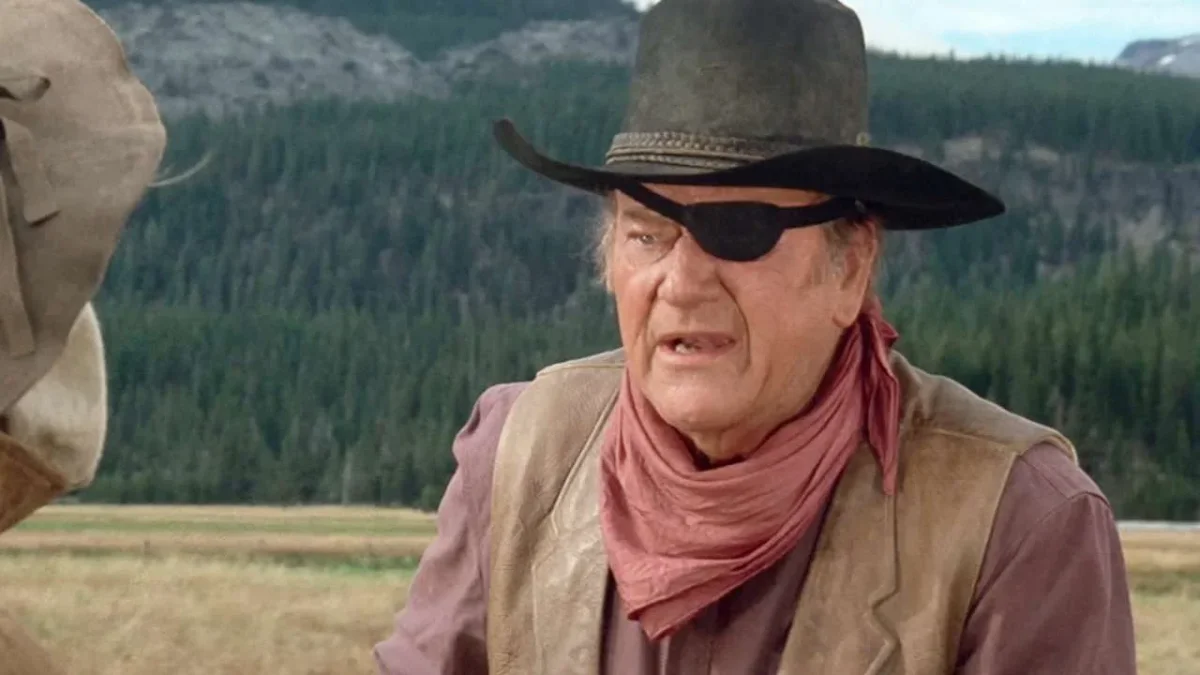
John Wayne's experience filming the western "A Bible and a Gun" was marred by his dissatisfaction with the director's lack of experience.
Did Wayne's harsh critique impact Stuart Millar's career? Following their sole collaboration on this film, Millar never directed another movie again.
A "Completely Ridiculous" Script
 Hal Wallis Productions
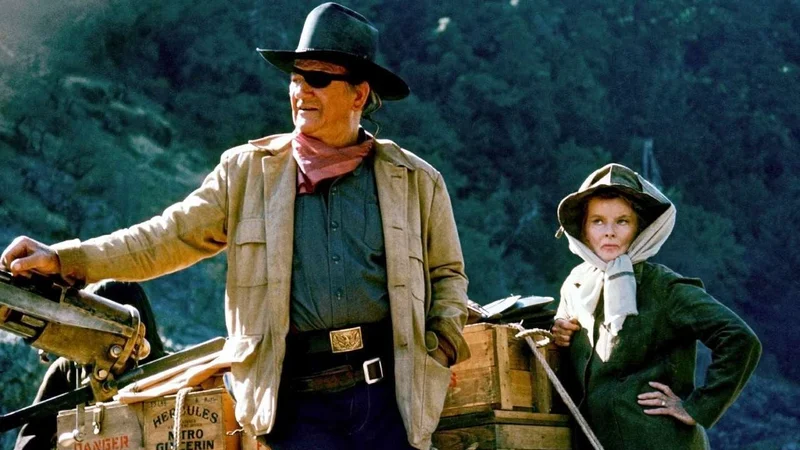
The project originated from producer Hal Wallis, who approached Henry Hathaway to direct a sequel to "$100 for a Sheriff," a film that earned Wayne an Oscar. This time, Wayne was set to star alongside Katharine Hepburn in a comedy western titled "A Bible and a Gun" (1975). The screenplay was written under pseudonyms by Wallis and his wife, Martha Hyer, an actress nominated for an Oscar for her role in "Like a Torrent."
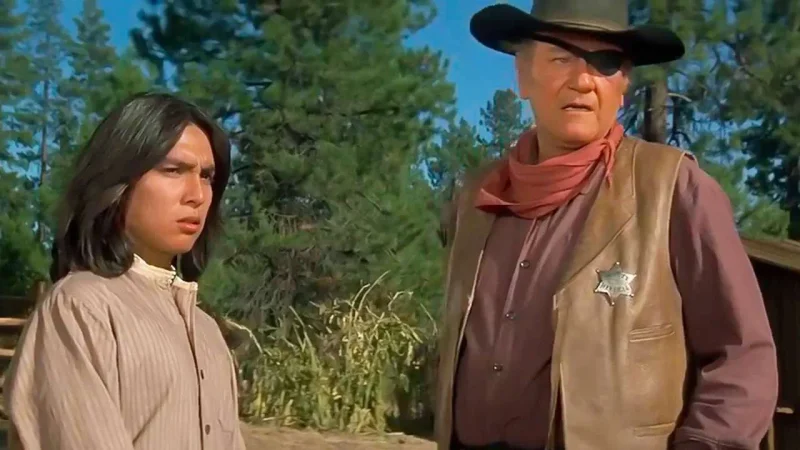
In "A Bible and a Gun," Wayne's character, Rooster Cogburn, is tasked with recovering stolen weapons and explosives. He teams up with a young indigenous guide (Anthony Zerbe) and insists that the pastor's daughter accompany him for her safety.
However, Hathaway criticized the script, calling it "worthless" and "completely ridiculous," likening it to a western version of "The African Queen." He ultimately declined to direct the film and suggested Richard Fleischer as a replacement.
Wayne rejected Fleischer and urged Hathaway to reconsider, but to no avail. Wallis then proposed Stuart Millar, a former assistant to William Wyler, hoping to launch Millar's directing career with this project. Unfortunately, the outcome was far from what they envisioned.
A Disastrous Shoot
 Hal Wallis Productions
The inadequate script was rewritten daily by the Wallis-Hyer couple, forcing Wayne and Hepburn to improvise their lines. Millar, lacking experience, resorted to multiple takes, which frustrated Wayne, who exclaimed, "Damn it, Stuart, we can't keep repeating these lines indefinitely without them losing all meaning!"
Millar struggled to assert himself or find his footing alongside Wayne, who was determined to recapture the Oscar-winning magic of "$100 for a Sheriff," even if it meant overacting. Wayne's disdain for the filming process led him to insult Millar, referring to him as a "talentless 6-foot giant." This experience severely tarnished Millar's reputation, and he never directed a feature film again.
With a budget of $10 million, "A Bible and a Gun" grossed only $4.5 million in the United States and a mere $17 million worldwide, in stark contrast to the $31 million earned by "$100 for a Sheriff."
Who Was Stuart Millar?
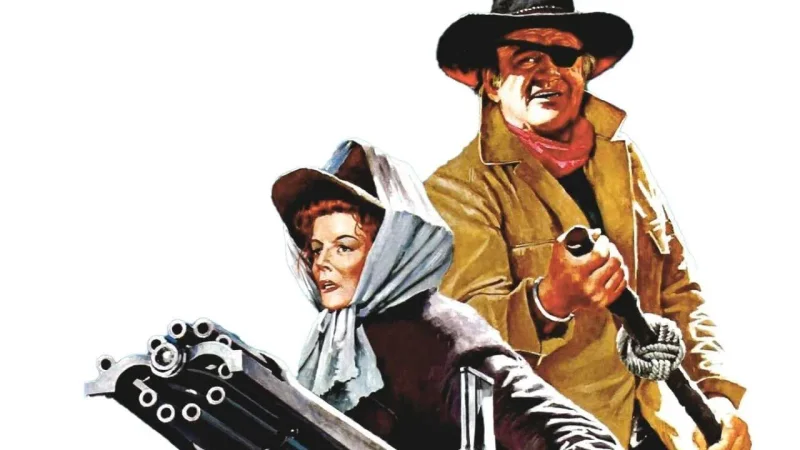 Hal Wallis Productions
Stuart Millar may not be a recognizable name today, but he entered the film industry in 1957 by financing "The Young Stranger," the first feature by John Frankenheimer, marking one of the last projects for RKO Studios before its closure.
He also produced notable films such as "The Stagecoach" (Sydney Lumet's second film, 1958), "The White Coats" (Phil Karlson, 1961), and "Birdman of Alcatraz" (again by Frankenheimer, 1962), among others.
In 1972, Millar ventured into directing with the modern western "When Legends Die," featuring Richard Widmark and Frederic Forrest, which addressed the plight of Native Americans in the 1950s. However, his tenure as a director ended with "A Bible and a Gun" (1975), marking his last feature film in the industry.