
Navigating Sibling Rivalry: Understanding and Managing Jealousy Among Children
Sibling jealousy is a normal developmental phase that can be managed with understanding and communication. Learn how to navigate these emotions and foster a supportive family environment.
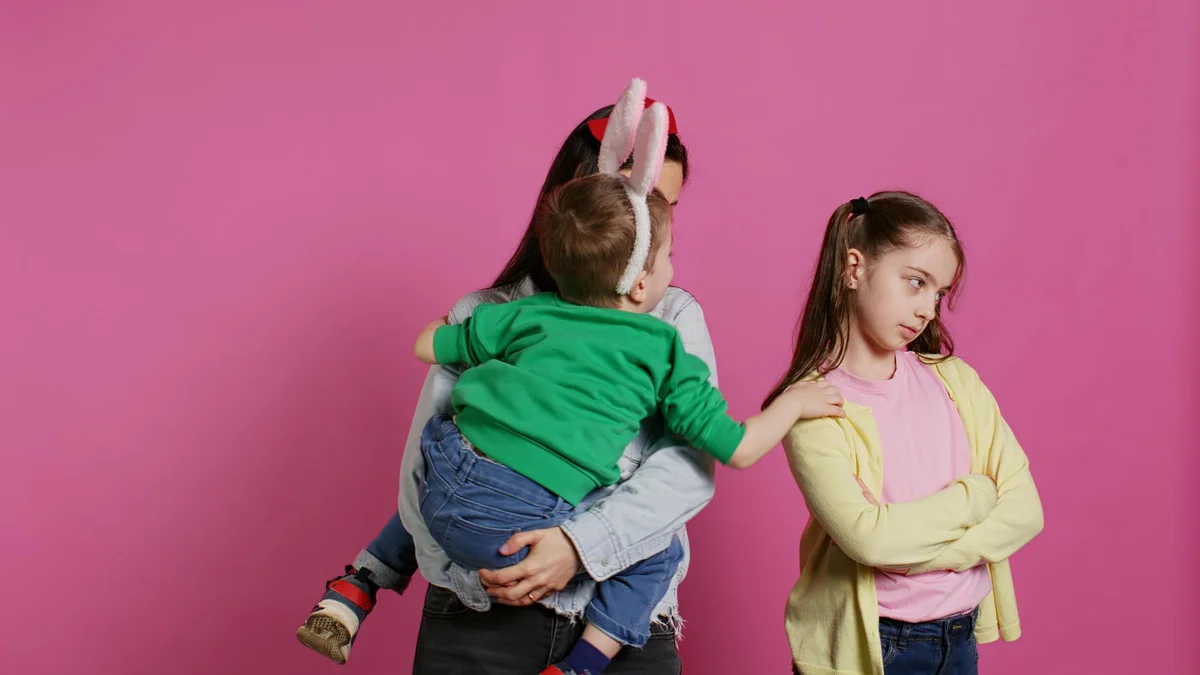
The arrival of a second child or daily sibling rivalries can quickly turn a peaceful home into a battleground. However, sibling jealousy is a completely normal developmental phase. Simple tools and shifts in perspective can help ease tensions and restore balance among siblings.
A familiar scene unfolds: a calm afternoon disrupted because the youngest has claimed the blue cup, or the older sibling believes their sister received a few more spoonfuls of puree. Beneath these tears and accusations of favoritism lies a complex emotional landscape that goes beyond mere disputes over toys.
Jealousy is not an urgent flaw to correct. For children, who initially view the world in a highly egocentric manner, the notion of sharing parental love, attention, or time can be overwhelming. Understanding these dynamics allows parents to shift from a judgmental role to one that is more reassuring.
Jealousy as a Normal Developmental Stage
When a child expresses envy or anger towards a sibling, it primarily signals an inner insecurity. They are seeking to affirm their worth and place in their parents' hearts. The arrival of a new baby exemplifies this upheaval: for the older child, it feels akin to a partner announcing that someone new will be moving in, and they are expected to be happy about it.
Attempting to eliminate this feeling is a futile endeavor. Jealousy also serves as a means for children to learn about their own position, assess their strengths, and understand others. The goal is not to banish jealousy but to manage the behaviors that arise from it. Children are entitled to feel anger or envy, but they must not resort to hitting, insulting, or hurting others.
Expert Insights to Calm Crises
To assist children in navigating these emotional episodes without succumbing to aggression or guilt, the choice of words is crucial. Parenting specialists agree on several key phrases that can validate a child's feelings while defusing the situation.
Acknowledging the emotion without judgment is the first step: “I understand that you are angry; it’s okay to find this difficult” or “Feeling jealous doesn’t make you a bad person.” These statements help prevent the child from layering shame onto their distress.
Reassuring children about the permanence of parental love is equally important. Phrases like “I love you just as much as before” or “You will always have a unique place in our family” reaffirm emotional security. For younger children, the metaphor of a heart that expands to include each family member often resonates more than lengthy theoretical explanations: love does not divide, it multiplies.
The Pursuit of Perfect Equality Fuels Rivalry
Many parents strive for strict mathematical equity to avoid conflicts: equal numbers of gifts, identical speaking times, and precisely measured portions of cake. This approach often backfires, as it encourages children to constantly compare themselves to one another.
Each child is unique, with needs specific to their age and personality. Providing the same for everyone is not necessarily fair. Explaining differences in treatment based on need rather than preference is much more constructive: the older child may stay up later because their biological clock allows it, while the younger one may need more carrying because they cannot walk yet.
Similarly, cross-comparisons (“Look at your sister; she eats neatly”) act as fuel for rivalry. They trap children in labels and foster envy. It is better to comment on individual behavior without reference to siblings.
Exclusive Time Builds a Child's Confidence
Beyond verbal reassurances, tangible expressions of attention can alleviate feelings of threat. Dedicating ten to fifteen minutes each day to one child, in a distraction-free environment, often suffices to fill their emotional reservoir.
Engaging in activities appropriate for their age can also validate their position. Going for a bike ride, cooking a recipe, or playing a game that is off-limits to the youngest demonstrates to the older sibling that growing up comes with real privileges. Temporary exclusivity from a parent shows them that they don’t need to scream or regress to feel valued within the family.
Ultimately, each episode of jealousy presents an opportunity for children to learn to articulate their emotions and trust the bonds that unite them. With time, listening, and clear guidelines, these everyday tensions can lighten, paving the way for a more harmonious sibling relationship.